
 Lina Irawan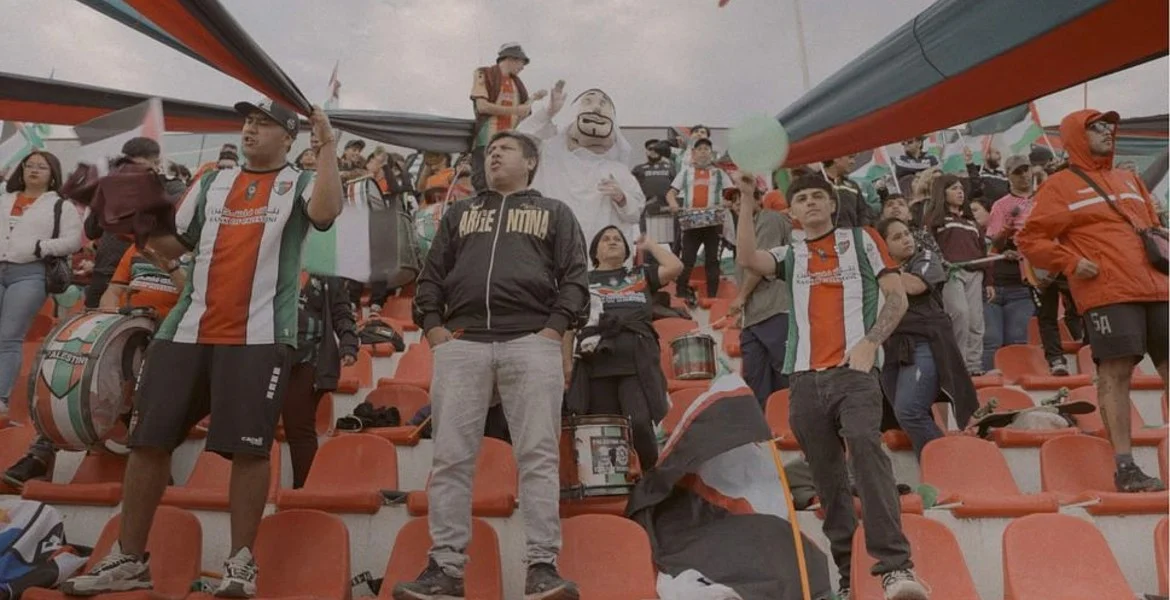
The 48th edition of Cinéma du Réel, one of the world’s most prestigious international documentary film festivals, has officially opened its doors in Paris, marking a significant moment for Latin American cinema with the inclusion of six diverse regional projects in its official competition. Running from March 21 to March 28, the festival serves as a global platform for non-fiction storytelling, and this year’s selection highlights the region’s robust tradition of political inquiry, archival exploration, and transnational collaboration. The Latin American presence is defined by two short films and four minority co-productions, each carrying a distinct political imprint that reflects the complex contemporary and historical realities of countries such as Colombia, Chile, Peru, and Venezuela.
The Evolution of Cinéma du Réel: A Bastion of Documentary Excellence
Founded in 1978 by the Bibliothèque Publique d’Information and held at the Centre Pompidou, Cinéma du Réel has long been recognized as a premier venue for ethnographic and sociological documentary filmmaking. Over the decades, it has evolved into a space that blurs the lines between traditional documentary and experimental cinema, prioritizing works that challenge formal boundaries. The 48th edition continues this legacy, curating a program that emphasizes the "real" through a lens of artistic innovation.
For Latin American filmmakers, selection at Cinéma du Réel is more than just a screening opportunity; it is a validation of the region’s cinematic maturity. The festival’s rigorous selection process ensures that only works with significant cultural and aesthetic weight are presented to the Parisian audience, which includes critics, distributors, and fellow auteurs from across the globe. This year, the focus on the region is particularly poignant, as many of the films grapple with themes of displacement, environmental degradation, and the lingering echoes of political upheaval.
Archival Resonance: Diana Bustamante and the Colombian Political Memory
Among the highlights of the short film competition is "El león," directed by the acclaimed Colombian filmmaker and producer Diana Bustamante. Bustamante, a central figure in the resurgence of Colombian cinema over the last two decades, returns to the director’s chair following her 2022 feature debut, "Nuestra película." With "El león," she continues her profound investigation into the collective memory of her homeland, utilizing archival footage to reconstruct and interrogate the recent political history of Colombia.
The film arrives in Paris after a successful world premiere in the Forum Expanded section of the Berlin International Film Festival. Bustamante’s approach to the archive is not merely nostalgic; it is an analytical exercise that seeks to understand how images of the past shape the national identity of the present. By recontextualizing historical broadcasts and forgotten footage, "El león" offers a haunting reflection on violence, power, and the cyclical nature of political struggle in Colombia. As a producer, Bustamante has been instrumental in bringing films like "Memoria" (Apichatpong Weerasethakul) and "Buy Me a Revolver" (Julio Hernández Cordón) to international acclaim, and her directorial work reflects that same commitment to high-level artistic rigor.
Sport and Solidarity: The Transnational Narrative of Baisanos
Another significant entry in the short film category is "Baisanos," a collaborative effort between Chile, Palestine, and Spain. Directed by Andrés Khamis Giacoman and Francisca Khamis Giacoman, the film provides an intimate and emotionally resonant portrait of the supporters of Club Deportivo Palestino. Founded in 1920 by Palestinian immigrants in Chile, the football club has become a powerful symbol of identity for the largest Palestinian community outside the Middle East.
"Baisanos" constructs a dialogue between the Chilean landscape and the Palestinian struggle, exploring how sports can serve as a vehicle for cultural preservation and political solidarity. The film suggests that through the shared experience of the "hinchada" (the fans), there remains the possibility of a victorious future, even in the face of historical displacement. Produced by Brisa Films and The New Flesh, the documentary makes its way to Paris following an extensive festival run that began at the Locarno Film Festival, underscoring its international appeal and the universal relevance of its themes.
Minority Coproductions: Strengthening the Franco-Latin American Cinematic Bond
The 48th edition of Cinéma du Réel also showcases the strength of international co-productions, with four projects led by minority Latin American partners. Three of these films are spearheaded by French production companies, illustrating the deep institutional and creative ties between the French film industry and Latin American auteurs.
One of the most anticipated world premieres is "Los niños sin tierra," the third feature film by Chilean director René Ballesteros. Ballesteros, who is based in France, is a familiar face at Cinéma du Réel, having previously presented "Los sueños del castillo" and "La quemadura" at the festival. His latest work follows two children who were adopted in Europe as they return to Chile in an attempt to reconnect with their biological roots and understand their heritage. The film is a production of the French outfit Les Films D’Ici, in co-production with the Chilean companies La Madre and La Ballesta. It delves into the complexities of identity and the psychological impact of transnational adoption, a subject that carries significant weight in the context of Chile’s social history.
Similarly, Colombian filmmaker Guillermo Quintero returns to the Parisian stage with "Relicto." This film marks the conclusion of an ambitious trilogy focused on the disappearance of the Colombian jungle, following his previous works "Homo Botanicus" and "Río Rojo." Quintero’s cinema is characterized by a meticulous, almost scientific observation of nature, which he uses to comment on the broader ecological crisis facing the planet. "Relicto" received crucial institutional support from Colombia’s FDC (Fondo para el Desarrollo Cinematográfico) and France’s CNC (Centre National du Cinéma et de l’image animée), highlighting the importance of state-funded grants in bringing auteur-driven documentaries to fruition.
Ecological and Political Trilogies: The Works of Guillermo Quintero and Sanaz Sohrabi
The festival’s program also includes "An Incomplete Calendar," the final installment of a trilogy by Iranian artist Sanaz Sohrabi. While Sohrabi is Iranian, the film is a truly international endeavor, produced between Canada, Iran, Turkey, and Venezuela. The Venezuelan involvement is particularly notable, as the film was co-produced with the Universidad Central de Venezuela (UCV).
"An Incomplete Calendar" offers a radical reimagining of oil, moving away from its status as a mere commodity to examine its role as a political lever for liberation struggles. Specifically, the film looks at the period between 1960 and 1970, focusing on the construction of pan-Arab solidarity and the Palestinian cause. By linking the geopolitical histories of the Middle East and South America—two regions deeply defined by their petroleum resources—Sohrabi creates a cinematic essay that is both historically dense and visually arresting. International sales for the project are handled by Kino Rebelde, a boutique agency known for representing politically engaged and formally daring documentaries.
Rounding out the regional participation is "Rose Moderne, Huancor, Pakatnamu Prémonition, Trois Formes Courtes," a short film directed by Marseille-based artist Louidgi Beltrame. This co-production between France and Peru explores the intersections of archaeology, modernism, and indigenous history, further expanding the diverse range of subjects covered by the Latin American contingent this year.
Chronology and Programming of the 48th Edition
The 48th Cinéma du Réel follows a carefully structured timeline designed to maximize the visibility of its competitive entries. The festival kicked off on March 21 with an opening ceremony that emphasized the importance of documentary film in an era of global misinformation.
- March 21-23: Initial screenings of the short film competition, including "El león" and "Baisanos," followed by Q&A sessions with the directors.
- March 24-25: Focus on feature-length co-productions. The world premiere of "Los niños sin tierra" and the final installment of Quintero’s trilogy, "Relicto," are scheduled during these dates to attract industry professionals and critics.
- March 26-27: Screenings of "An Incomplete Calendar" and "Rose Moderne…", accompanied by panel discussions on the role of archival material and the politics of resource extraction.
- March 28: The festival concludes with the awards ceremony, where the Grand Prix and other technical and thematic prizes will be announced.
Economic and Institutional Frameworks Supporting Regional Documentaries
The strong presence of Latin American films at Cinéma du Réel is a testament to the efficacy of international co-production treaties and national film funds. The CNC in France remains one of the most significant contributors to world cinema, providing "Aide aux cinémas du monde" (World Cinema Support) to many of the projects featured in this year’s lineup.
In Colombia, the FDC has been instrumental in fostering a generation of filmmakers like Bustamante and Quintero, who are able to bridge the gap between local narratives and global audiences. In Chile, the collaboration between independent houses like Brisa Films and European partners has allowed for the production of high-quality documentaries that might otherwise struggle to find financing in a market dominated by commercial interests.
These institutional frameworks do more than just provide money; they facilitate a cross-pollination of ideas and technical expertise. The fact that many of these films are co-produced with French companies ensures they receive distribution in Europe, which is often the primary market for high-concept documentary work.
Broader Implications for Latin American Documentary Global Reach
The selection of these six works at the 48th Cinéma du Réel underscores a broader trend: Latin American documentary is no longer seen as a peripheral or purely regional curiosity. Instead, it is recognized as a vital component of the global cinematic discourse. These films deal with universal themes—memory, identity, environment, and resistance—through a lens that is uniquely informed by the Latin American experience.
By participating in such a high-profile festival, these filmmakers are able to influence the global narrative surrounding their respective countries. For instance, Bustamante’s work challenges the often-simplistic international media portrayal of Colombian violence, offering instead a nuanced look at the psychological scars left by decades of conflict. Similarly, the Khamis Giacoman siblings highlight a facet of the Palestinian diaspora that is rarely seen in mainstream media, emphasizing the role of the Latin American South in global solidarity movements.
As the 48th edition of Cinéma du Réel progresses, the impact of these films is expected to resonate far beyond the screening rooms of the Centre Pompidou. They represent a thriving, politically conscious, and artistically innovative sector of the film industry that continues to push the boundaries of what documentary can achieve. The success of these projects in Paris will likely pave the way for further international distribution and provide a blueprint for future generations of Latin American storytellers looking to make their mark on the world stage.


 Eva Lovia
 Julia Chirkova
 Julia Prastini
 Nila Kartika Wati
 Jia Lissa