
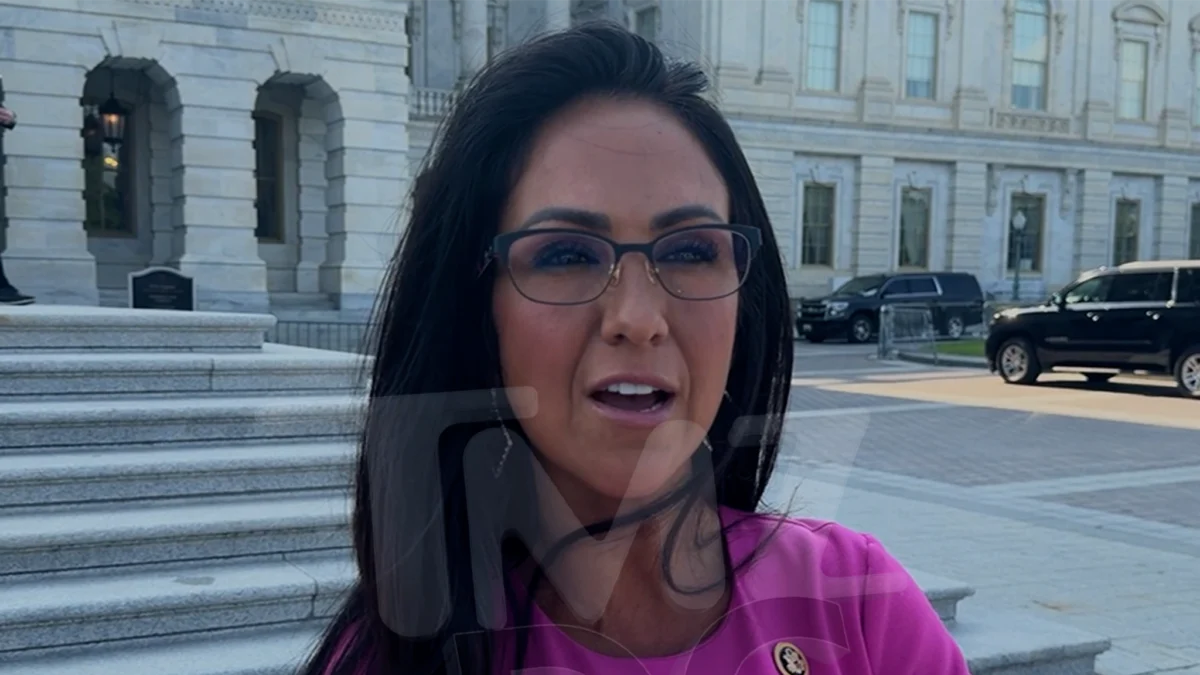
United States Representative Lauren Boebert (R-CO) finds herself at the confluence of a fervent political dispute and an unexpected personal predicament, publicly decrying what she describes as a betrayal by Republican leadership in Congress while simultaneously navigating the aftermath of a recent cosmetic procedure that has left her with an uneven facial expression. The Congresswoman’s dual challenge, articulated during an impromptu encounter with media on Wednesday evening, has cast a spotlight on the intricate dynamics of legislative deal-making, the fragility of intra-party trust, and the unique pressures faced by public figures.
The core of Representative Boebert’s political grievance stems from a missed vote on a critical piece of legislation, the National Defense Authorization Act (NDAA), the annual bill that outlines the budget and expenditures for the U.S. Department of Defense. According to Boebert, she was actively negotiating with Republican staffers regarding a specific provision within the NDAA – a "tech swap" arrangement between the U.S. and Israel – to which she had strong objections. She claims she was explicitly assured that the vote would be held open to allow her to participate after her negotiations concluded. However, this assurance, she alleges, proved false, as the vote was closed, and the bill passed without her casting her intended vote to strip the contentious provision. This incident, she asserts, is a stark manifestation of "poor leadership" within the Republican party, necessitating a fundamental reckoning among its members.
The National Defense Authorization Act: A Critical Annual Bill
The National Defense Authorization Act is one of the most vital pieces of legislation passed by Congress each year. Far from a routine procedural matter, the NDAA sets policy and funding levels for the U.S. military, national security programs, and related agencies. Its passage is considered a bipartisan priority, often requiring extensive negotiations and compromises between various factions within both parties. The bill covers everything from troop pay raises and equipment procurement to strategic alliances and global defense initiatives. Missing a vote on such a pivotal bill, particularly when actively seeking to influence its content, can be seen as a significant legislative setback for any member of Congress and can highlight deeper fissures within a political party. The 2026 iteration of the NDAA, like its predecessors, would have encompassed billions of dollars in defense spending, shaping American foreign policy and military capabilities for the coming fiscal year. The stakes for individual members to shape its provisions, or at least register their opposition, are therefore considerably high.
The Contentious "Tech Swap" Provision
Representative Boebert’s specific objection centered on a "tech swap" provision involving the United States and Israel. While the precise details of the provision were not publicly elaborated by Boebert, such agreements typically involve the transfer, co-development, or exchange of military technology, intelligence, or defense systems between allied nations. These arrangements can be highly complex, often touching upon intellectual property rights, national security interests, and geopolitical strategy. For some lawmakers, concerns might arise regarding the specific nature of the technology being exchanged, its potential implications for regional stability, the cost-benefit analysis for the U.S., or even the ethical considerations of military cooperation. Representative Boebert, known for her conservative stance and often critical approach to certain foreign policy expenditures, likely viewed this provision through a lens of fiscal responsibility or a concern for American sovereignty and technological advantage. Her determination to see it stripped from the bill underscores the depth of her opposition and her commitment to influencing legislative outcomes, even against the prevailing sentiment of her party’s leadership.
A Promise Unkept? The Voting Controversy
The sequence of events leading to Representative Boebert’s missed vote paints a picture of intense, last-minute legislative maneuvering and a breakdown of communication, or perhaps trust, within the Republican caucus. Congressional voting procedures are typically highly structured, but exceptions and accommodations can be made, especially during contentious debates or for members engaged in critical negotiations. The practice of "holding a vote open" allows members a brief extension to cast their vote after the official time has elapsed, often facilitated by party whips or leadership to ensure maximum participation or to secure votes for a critical measure.
Boebert’s claim that unnamed GOP staffers assured her the vote on the NDAA would be kept open for her suggests an expectation of such a courtesy. The subsequent closure of the vote, with the bill passing and her provision remaining intact, represents not just a legislative defeat but a perceived personal and political slight. This incident highlights the often-unspoken rules of engagement within Congress, where trust and adherence to informal agreements can be as crucial as formal rules. For a member to feel that such an agreement was violated can severely strain relationships between individual lawmakers and their party’s leadership, raising questions about accountability and transparency in the legislative process. The Congresswoman’s frustration, articulated to reporter Jacob Wasserman, was palpable, transforming a procedural mishap into a public accusation of betrayal.
Navigating Public Scrutiny with a "Frozen Face"
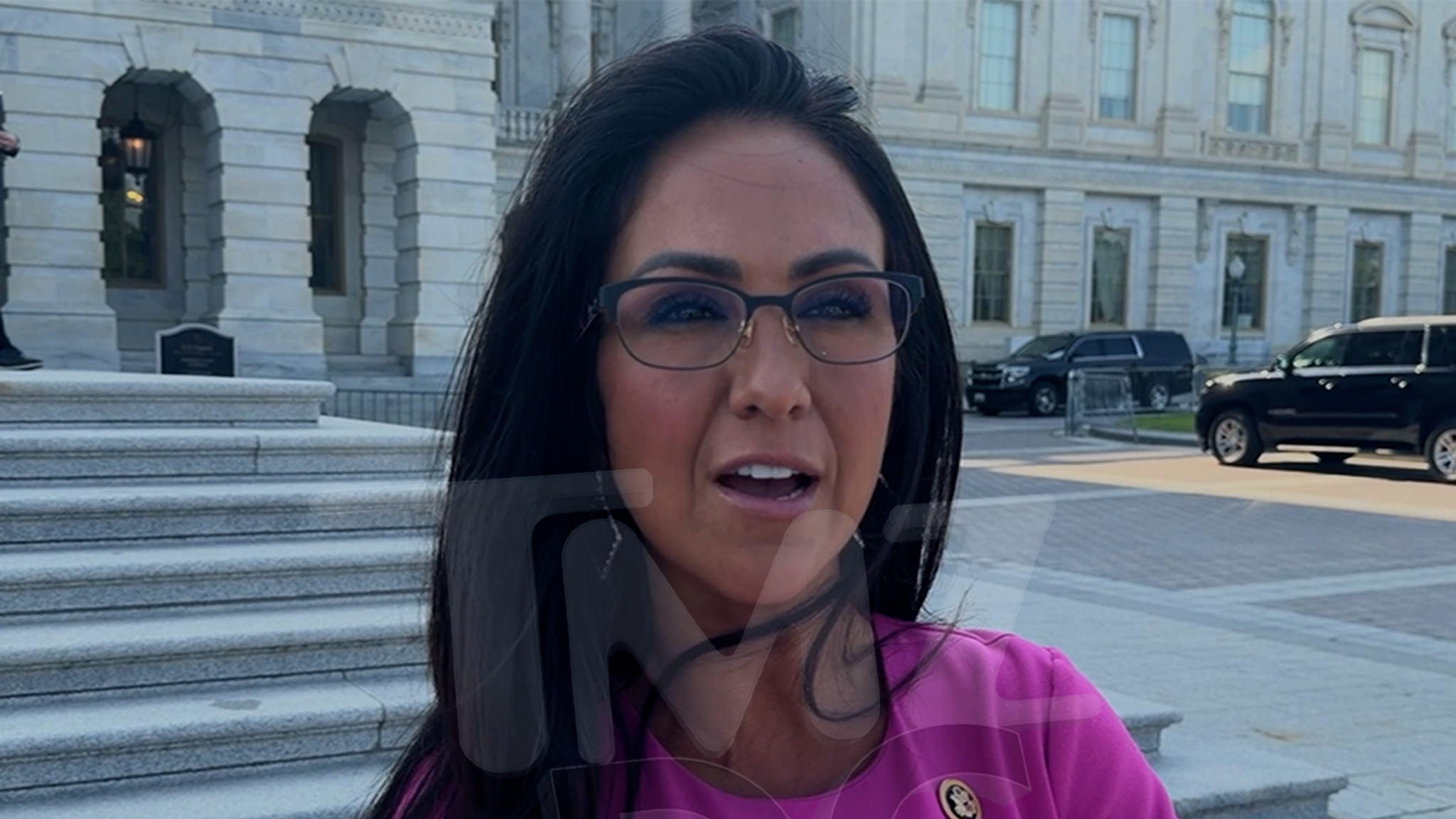
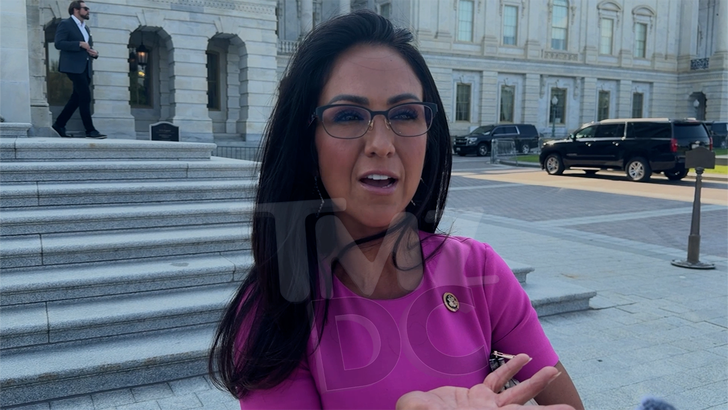
Adding an unusual layer to this political drama is Representative Boebert’s revelation that she had recently undergone a Botox procedure. The cosmetic treatment, typically used to reduce the appearance of wrinkles by temporarily paralyzing facial muscles, had evidently resulted in an uneven effect, causing her to speak "out of the side of her mouth like a damn politician," as she candidly described it. This personal detail, while seemingly trivial in the context of national defense legislation, became intertwined with her political statement.
In the highly scrutinized world of Washington, D.C., public appearance is often meticulously managed. For a lawmaker to appear before the media with a visibly altered or uneven facial expression could be a source of embarrassment or an opportunity for ridicule. Representative Boebert, however, chose to confront the media directly, acknowledging her appearance rather than attempting to conceal it. She quipped that she "could’ve snuck into the back entrance of the Capitol to dodge reporters given her current look," but instead opted for transparency. This decision, to face the cameras head-on despite a potentially distracting physical manifestation, can be interpreted as an act of defiance, demonstrating her resolve to address the political issues regardless of personal discomfort. It also adds a humanizing, albeit somewhat unusual, element to an otherwise serious political critique, potentially inviting both sympathy and further scrutiny.
Rep. Boebert’s Critique of GOP Leadership
Representative Boebert’s assertion that the Republican party’s "poor leadership" does not "bode well for the party’s future" and that it needs to have a "come to Jesus" with its members is a strong indictment from within. Such public criticism from a sitting member directed at their own party’s leadership is not uncommon in the current era of deep ideological divisions and often-fractious caucus dynamics. However, it underscores a deeper dissatisfaction that extends beyond a single missed vote.
In recent years, the Republican party has grappled with internal divisions, particularly between its more traditional conservative wing and a populist, often anti-establishment faction. Representative Boebert is frequently aligned with the latter, known for her outspoken nature and willingness to challenge party norms. Her critique suggests a fundamental disconnect between the expectations of some rank-and-file members and the operational style of the leadership, which is tasked with uniting disparate voices to pass legislation. The phrase "come to Jesus" implies a need for a serious, honest discussion and a re-evaluation of principles and strategies, suggesting that the current approach is unsustainable. This public challenge could embolden other dissatisfied members or, conversely, lead to further isolation within the party structure.
Broader Implications for Republican Unity
The incident involving Representative Boebert and the NDAA vote has broader implications for Republican unity, especially in a legislative environment often characterized by slim majorities and the need for every vote. A perceived betrayal of a member by party leadership can erode trust, making it harder to secure votes on future critical legislation. If members believe that agreements are not honored or that their concerns are not genuinely addressed, it can lead to increased dissent, splintered voting blocs, and an overall weakening of the party’s legislative agenda.
The role of party whips and leadership is to count votes, build consensus, and ensure party discipline. When a member publicly accuses leadership of lying or mismanagement, it directly challenges the effectiveness and integrity of this system. In the context of upcoming elections and the ongoing struggle for control of Congress, such internal strife can be detrimental. Voters often look for a unified front from a political party, and public spats, especially those involving accusations of dishonesty, can detract from the party’s overall message and perceived competence.
Legislative Integrity and Trust in Congress
Beyond the immediate political fallout for Representative Boebert and Republican leadership, this episode raises important questions about legislative integrity and the level of trust that can be placed in congressional processes and the individuals who manage them. If a member of Congress cannot rely on assurances from party staffers regarding voting procedures, it creates an environment of suspicion and makes collaborative legislative work more difficult. The functioning of Congress relies heavily on both formal rules and informal understandings, and a breach of the latter can be particularly damaging.
The incident could also serve as a cautionary tale for other members, influencing how they engage in negotiations or whether they trust promises made during the frantic pace of legislative sessions. It highlights the inherent power dynamics at play, where individual members, particularly those from smaller factions or who are less aligned with leadership, may feel marginalized or vulnerable to procedural maneuvers.
The Intersection of Politics and Public Image
Finally, Representative Boebert’s decision to openly address her cosmetic procedure alongside her political grievances offers a unique insight into the intersection of personal life and public service in the modern political landscape. In an age dominated by social media and constant scrutiny, public figures are often judged not only on their policy positions but also on their appearance and personal conduct. Her transparency about the Botox, while potentially inviting jest, also allowed her to control the narrative to some extent, preempting speculation or criticism. It demonstrates a certain resilience and a willingness to be authentic, even if that authenticity comes with an uneven smile. This approach contrasts sharply with the often-polished and carefully curated images presented by many politicians, adding a layer of raw, unfiltered reality to her political commentary.
In conclusion, Representative Lauren Boebert’s public pronouncements regarding a perceived betrayal by Republican leadership and her candid revelation about a recent cosmetic procedure paint a vivid picture of the multifaceted challenges faced by lawmakers. The incident underscores the complexities of legislative negotiation, the critical importance of trust within political parties, and the ever-present pressure of public image in a hyper-connected world. Her critique of "poor leadership" resonates within a party grappling with internal divisions, suggesting that the "hot war" she describes is far from over and may indeed require the "come to Jesus" moment she advocates for to chart a more unified and effective path forward.

0 Comments