
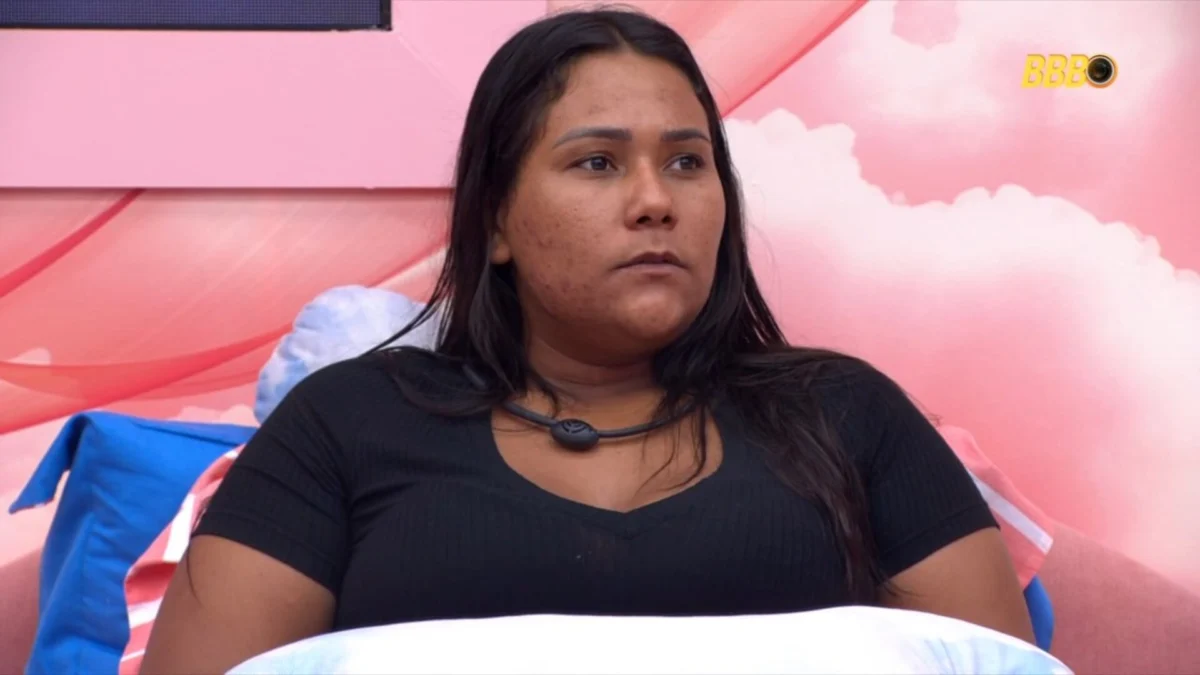
The administration team representing Chaiany Andrade, a participant in the current season of Big Brother Brasil 26 (BBB26), has issued a robust public statement addressing a surge of online accusations alleging her involvement in theft. The team leveraged Andrade’s official Instagram platform to strongly refute these claims, simultaneously issuing a stern warning about the severe legal ramifications of calumny, specifically citing Article 138 of the Brazilian Penal Code. This incident underscores the escalating challenges public figures, particularly those within high-visibility reality television environments, face regarding online defamation and the swift response mechanisms now deemed essential for reputation management in the digital age.
The Genesis of the Controversy: Unsubstantiated Online Allegations
The controversy began to unfold recently as numerous comments and posts accusing Chaiany Andrade of theft started circulating widely across various social media platforms. The nature of these accusations, though varied in their specifics, consistently aimed to link the reality TV participant to criminal activity without providing any verifiable evidence. This phenomenon is not uncommon in the highly charged atmosphere surrounding Big Brother Brasil, where participants are under constant scrutiny, and public opinion can sway dramatically based on narratives, whether factual or fabricated. The rapid dissemination of such unsubstantiated claims highlights the double-edged sword of social media, which, while enabling direct fan engagement, also provides fertile ground for misinformation and smear campaigns that can severely damage an individual’s public image. The sheer volume and coordinated nature of some of these posts suggest a deliberate attempt to construct a negative narrative, transcending mere fan commentary and venturing into the realm of targeted character assassination.
Chaiany Andrade’s Team Takes a Firm Stance: A Legal Rebuttal
In response to the escalating online attacks, Chaiany Andrade’s management team released a detailed statement via her official Instagram profile. The pronouncement commenced by expressing grave concern over the alarming trend: "It is concerning what has been circulating in recent days. A series of publications began to gain traction on social media, with insinuations of theft and attempting to associate, without any proof, Chaiany’s image with a crime. This is not opinion. It is the construction of a narrative based on suppositions, which has been repeated and amplified in a coordinated manner, exceeding any acceptable limit." This initial framing clearly distinguishes between legitimate criticism or opinion, which is part and parcel of reality TV participation, and what they identify as a deliberate, baseless campaign of defamation.
The team’s statement unequivocally condemned the actions of internet users who were attributing criminal acts to Andrade without any supporting evidence. They explicitly referenced the legal framework, stating, "Attributing a crime to someone without proof constitutes calumny, as per Article 138 of the Penal Code, in addition to also generating civil liability for moral damages." This direct invocation of legal statutes signals a zero-tolerance approach and moves the discussion from the informal arena of social media discourse into the formal domain of legal accountability. Furthermore, the team confirmed that all incriminating publications had been systematically documented and preserved, serving as crucial evidence. They declared that "the appropriate legal measures are already underway, both in the civil and criminal spheres. The platforms will be notified for the identification of those responsible, and all will answer for their actions." This commitment to pursuing legal avenues against the perpetrators underscores the seriousness with which they view the attacks and their resolve to protect Andrade’s reputation. The statement concluded with a powerful affirmation of boundaries: "Freedom of expression does not authorize the dissemination of false accusations. We will remain firm, adopting all necessary provisions to safeguard Chaiany’s honor and image." This final declaration serves as a reminder that while online platforms facilitate open dialogue, they are not exempt from legal principles governing defamation and personal integrity.
Understanding the Legal Ramifications: Calumny, Defamation, and Slander in Brazil
The team’s reference to Article 138 of the Brazilian Penal Code highlights the specific legal offense of calumny (calúnia). In Brazil, offenses against honor are meticulously categorized, each carrying distinct legal implications:
- Calumny (Art. 138): This occurs when someone falsely attributes a fact defined as a crime to another person. The crucial element here is the attribution of a crime. For instance, accusing someone of theft, murder, or fraud without proof constitutes calumny. The penalties can include imprisonment from six months to two years, plus a fine. If the calumny is spread through social media, the penalty can be increased by one-third.
- Defamation (Art. 139): This involves attributing a fact that, while not necessarily a crime, is offensive to someone’s reputation, making them appear dishonorable or morally reprehensible. Examples include falsely accusing someone of infidelity or professional incompetence. The penalty for defamation is detention from three months to one year and a fine, with an increased penalty if spread via social media.
- Slander (Art. 140): This is a direct insult to a person’s dignity or decorum. It does not involve attributing a specific fact but rather directly attacking a person’s character with offensive words or gestures. The penalty is detention from one to six months or a fine, also with potential increases for online dissemination.
In addition to criminal proceedings, individuals who are victims of such online attacks can also pursue civil action for moral damages. This means that beyond facing potential criminal charges, those found guilty of calumny, defamation, or slander may also be ordered by civil courts to pay monetary compensation to the victim for the emotional distress, reputational harm, and other non-material damages suffered. The process of identifying anonymous online users, often critical for such lawsuits, typically involves court orders to social media platforms and internet service providers to release user data, provided there is sufficient prima facie evidence of illegal activity. This legal framework underscores Brazil’s commitment to protecting individual honor and reputation in the digital sphere, recognizing the profound impact online attacks can have.
The Big Brother Brasil Phenomenon: A Crucible of Public Opinion
Big Brother Brasil (BBB) is more than just a reality show; it is a cultural phenomenon in Brazil. Consistently one of the most-watched television programs in the country, BBB draws millions of viewers and generates an unparalleled level of public engagement. Participants, often ordinary citizens, are thrust into the national spotlight, their every action, word, and interaction scrutinized by an avid audience. This intense public gaze, while creating instant celebrity, also exposes them to unprecedented levels of criticism, judgment, and, unfortunately, online abuse.
The history of BBB is replete with controversies, ranging from heated arguments within the house to external legal battles and public outcries. The show’s format, which isolates participants from the outside world while exposing them to relentless public commentary, creates a unique psychological pressure cooker. For participants like Chaiany Andrade, who are unaware of the external narratives forming around them, their management teams bear the critical responsibility of monitoring and responding to these external pressures. Social media platforms, particularly Instagram, X (formerly Twitter), and TikTok, serve as the primary arenas where these narratives are built, debated, and amplified. The speed with which a rumor can transform into a widespread "truth" in the online ecosystem poses a significant challenge for reputation management, necessitating swift, decisive, and often legal interventions to protect the participant’s image and mental well-being. The blurred lines between public opinion, critical commentary, and outright defamation are constantly tested in the context of such high-stakes reality television.
Public Reaction and the Call for Accountability
Following the statement from Chaiany Andrade’s team, her supporters swiftly rallied in solidarity, expressing overwhelming approval for the decisive legal action being taken. Comments on the Instagram post reflected a strong desire for accountability and an end to online impunity. "It’s time to file a lawsuit, it has crossed the line," opined one follower, capturing the sentiment of many who feel that online discourse has become excessively aggressive and harmful. Another fan declared, "They can contact the virtual crimes police station. It’s no longer about the game; they are trying to offend someone’s honor and image," highlighting the distinction between game-related criticism and personal attacks. A third comment, "How do these people sleep with a clear conscience?", underscored the moral outrage directed at those spreading false accusations.
This wave of support demonstrates a growing public awareness of the severity of online defamation and a collective desire for a more responsible digital environment. It also reflects the strong emotional connection that Big Brother Brasil fans develop with their favorite participants, often viewing attacks against them as personal affronts. The incident has thus sparked a broader conversation among internet users about the limits of free speech, the responsibility of online platforms, and the importance of holding individuals accountable for their digital actions. This public endorsement of legal action can further empower victims of online abuse and encourage stricter enforcement of existing laws against defamation.
Broader Implications for Participants and Digital Ethics
The situation involving Chaiany Andrade carries significant implications, not only for her individual journey within BBB26 but also for the broader landscape of reality television and digital ethics. For Andrade, while she remains isolated from the direct impact of the accusations within the Big Brother house, the external legal battle can profoundly affect her post-show career and personal life. Even if the accusations are definitively disproven, the mere existence of such a controversy can leave a lasting stain on one’s reputation, a phenomenon often referred to as "cancel culture," where careers can be prematurely curtailed due to public condemnation, regardless of factual basis. The psychological toll on individuals targeted by widespread online smear campaigns is also immense, potentially leading to anxiety, depression, and other mental health challenges.
From a broader perspective, this incident serves as a stark reminder of the responsibilities that come with online engagement. The ease with which information—or misinformation—can be disseminated across social media platforms necessitates a heightened sense of critical thinking and ethical conduct from users. The proactive legal measures taken by Andrade’s team could establish an important precedent, signaling that online spaces are not lawless frontiers and that individuals who engage in calumny and defamation will face real-world consequences. This could contribute to fostering a more respectful and accountable digital environment, encouraging users to verify information before sharing it and to consider the potential harm their words might inflict. Moreover, it places renewed pressure on social media companies to implement more robust mechanisms for content moderation, user identification, and cooperation with legal authorities to combat online abuse effectively.
In conclusion, the legal action initiated by Chaiany Andrade’s team against online theft accusations during her participation in BBB26 highlights the critical juncture where reality television fame intersects with the complexities of digital reputation management and legal accountability. The decisive stance taken by her representatives, invoking specific articles of the Brazilian Penal Code, underscores the seriousness of online calumny and the commitment to safeguarding individual honor. This event not only impacts Andrade’s personal and professional trajectory but also contributes to the ongoing global discourse on freedom of expression versus the right to reputation in the ever-evolving digital landscape. The outcome of these legal proceedings will undoubtedly resonate as a significant case study in the fight against online defamation within Brazil’s vibrant and often tumultuous public sphere.

0 Comments