
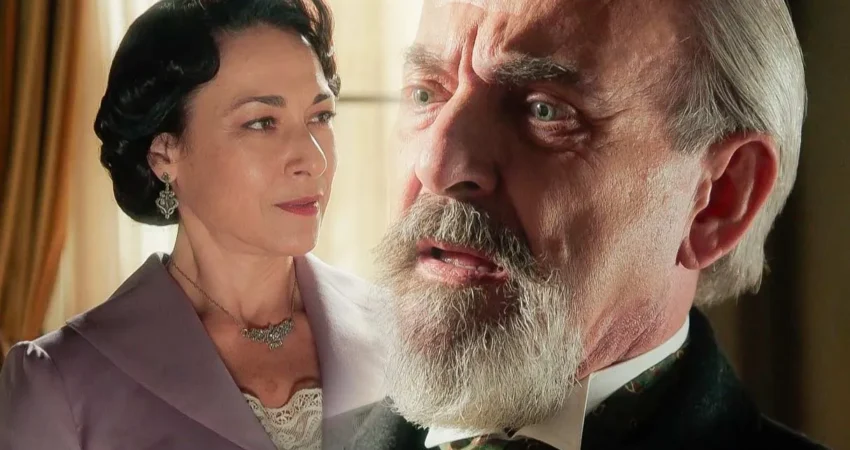
The halls of La Promesa have once again become the stage for a proposal, but this instance, it was devoid of romantic ardor, instead characterized by a chilling pragmatism. Leocadia, a figure whose motivations have consistently been under scrutiny, confronted Máximo with a proposition that more closely resembled a corporate merger than a declaration of love. This meticulously orchestrated exchange, unfolding within the gilded confines of the estate, has ignited conversations among viewers about the true nature of alliances and aspirations within the series’ intricate narrative.
The pivotal scene commences with Máximo seeking clarity. His need to understand the terms of Leocadia’s proposition is palpable. He requires a precise outline of what is expected of him and, in turn, what he can anticipate. Leocadia, never one to shy away from directness, lays bare her proposal without any attempt at embellishment.
Her offer is starkly transactional: she pledges to leverage her influence to persuade Ángela, Máximo’s daughter, to accept his accompaniment to the altar on her wedding day. This is not presented as a gesture of familial reconciliation, but rather as a strategic maneuver. In exchange for this crucial intervention, Máximo is expected to reciprocate by escorting Leocadia. "If I manage to convince Ángela that you are the one to walk her down the aisle, then you will take me afterward," she states, her voice steady and unwavering, betraying no hint of emotional vulnerability.
Máximo’s reaction is a testament to the audacity of Leocadia’s proposition. His simple, yet loaded, question, "¿Cómo?" ("How?"), encapsulates a complex blend of disbelief, bewilderment, and perhaps a grudging admiration for Leocadia’s sheer nerve. It is a query that seeks to unravel the mechanics of such an improbable arrangement, highlighting the perceived chasm between the emotional stakes of a wedding and the cold logic of Leocadia’s proposal.
Undeterred, Leocadia presses her advantage, delivering a confession that leaves little room for misinterpretation. "I want to marry you, Máximo. I’m looking forward to it, in fact," she declares. While this statement, viewed in isolation, might possess a veneer of romantic sentiment, within the context of the scene, it is revealed as pure pragmatism cloaked in the guise of burgeoning affection. The underlying driver of her desire is not a deep emotional connection but a calculated ambition.
The true nature of Leocadia’s aspirations is unequivocally laid bare with her subsequent declaration: "I want to be the new Duchess of Buenaventura." This candid admission removes any lingering ambiguity. Her objective is not the pursuit of love or companionship, but the acquisition of a title and the elevated social standing that accompanies it. She is not seeking a husband in the traditional sense, but rather a pathway to a ducal coronet, a symbol of power and prestige within the hierarchical structure of La Promesa.
What is particularly unsettling about this exchange is the disarming naturalness with which Leocadia articulates her ambitious plan. She has astutely identified Máximo’s most significant vulnerability: his strained and fractured relationship with his daughter, Ángela. Without any apparent moral qualms, she weaponizes this familial discord, transforming it into a potent bargaining chip in her pursuit of a transactional marriage.
Máximo finds himself ensnared in a poisoned dilemma. On one hand, the prospect of mending his relationship with Ángela, of being a part of such a significant milestone in her life, represents a profound emotional prize. The opportunity to bridge the chasm that has separated them is a powerful draw. On the other hand, the price for this reconciliation is a marriage of convenience, a union with a woman who has made no secret of her primary motivation: social ascendancy. The implications of such a pact weigh heavily, forcing him to confront the potential erosion of genuine emotional connection in favor of strategic advantage.

The narrative arc of this "contractual marriage" aligns seamlessly with the prevailing tone that has characterized events within the palace walls in recent weeks. The series has increasingly depicted unions forged through pacts and alliances, where marriages devoid of genuine affection seem to have become the norm rather than the exception. This recurring theme underscores a cynical perspective on relationships within the aristocratic circles of La Promesa, where power, status, and inheritance often supersede matters of the heart.
As of the latest developments, Máximo’s response remains in suspense. The narrative has deliberately left the audience in anticipation, withholding his decision on whether he will accept Leocadia’s audacious pact or endeavor to find an alternative route to reconnect with Ángela. However, one element remains undeniably clear: Leocadia has strategically presented her hand with a level of calculated coldness that few characters within the intricate tapestry of "La Promesa" have hitherto exhibited. Her actions are a stark illustration of the complex interplay between personal ambition and familial obligation that defines the series’ dramatic tension.
This brief yet intensely charged scene serves as a potent microcosm of the series’ overarching themes. Each word exchanged carries the weight of a contractual clause, underscoring the transactional nature of relationships within this fictional world. In the universe of "La Promesa," love is frequently a commodity to be negotiated, and the altar, far from being solely a symbol of romantic union, can also serve as a stepping stone towards power and influence. The implications of Leocadia’s proposal extend beyond her immediate personal gain, potentially reshaping alliances and power dynamics within the estate.
Background and Context of the Proposition
The estate of La Promesa has long been a crucible for complex interpersonal dynamics, where personal desires often collide with societal expectations and ingrained traditions. The current narrative arc, focusing on the impending marriage of Ángela, has amplified these tensions. Ángela’s wedding is not merely a personal event but a significant social and political occasion, with potential ramifications for the future standing of the families involved. Máximo’s estranged relationship with his daughter has been a recurring source of dramatic conflict, highlighting his past failures as a parent and his deep-seated longing for reconciliation. Leocadia, observing this familial rift, has identified it as a strategic opportunity. Her background, while not fully elucidated, suggests a history of navigating social complexities and a keen understanding of how to leverage advantageous situations. Her presence in the lives of the Buenaventura family has been marked by an undercurrent of ambition, and this proposal represents the most direct and audacious manifestation of that ambition to date.
Chronology of Leocadia’s Ambition
While the precise timeline of Leocadia’s strategic planning is not explicitly detailed in the scene, her actions suggest a period of careful observation and calculation.
- Initial Arrival and Observation: Leocadia likely arrived at La Promesa with pre-existing objectives, subtly observing the dynamics between the residents, particularly the strained relationship between Máximo and Ángela.
- Identifying the Opportunity: The impending wedding of Ángela would have presented a clear and opportune moment to act on her ambitions. The emotional weight of this event, coupled with Máximo’s desire to be part of it, would have been evident.
- Formulating the Proposition: Leocadia’s proposal is not spontaneous. It is the product of a calculated assessment of Máximo’s vulnerabilities and desires, and her own capacity to influence the situation. The "contractual" nature of her offer indicates a deliberate structuring of the terms.
- The Confrontation: The scene depicts the culmination of this planning, where Leocadia directly confronts Máximo, laying bare her terms and her ultimate goal: to become the Duchess of Buenaventura. This marks a decisive escalation in her pursuit of power.
Analysis of Implications and Broader Impact
Leocadia’s proposal has far-reaching implications for the narrative of "La Promesa."
- Shifting Power Dynamics: If Máximo accepts, Leocadia’s ascension to the position of Duchess would significantly alter the power structure within the estate. Her influence could extend to decision-making processes and social maneuvering, potentially impacting other characters.
- The Nature of Marriage in La Promesa: This event reinforces the series’ exploration of marriage as a tool for social advancement and political alliance, rather than solely a union of love. It raises questions about the authenticity of relationships within the aristocratic class.
- Máximo’s Character Arc: Máximo’s decision will be a critical turning point for his character. Accepting the proposal means potentially sacrificing genuine emotional connection for a desired familial reconciliation, while rejecting it might mean losing the opportunity to reconnect with his daughter. This presents a profound moral and emotional quandary.
- Audience Engagement: The calculated nature of Leocadia’s proposal, and the ethical ambiguity it presents, is likely to resonate with viewers, sparking debate and anticipation for the unfolding consequences. It challenges traditional notions of romance and highlights the pragmatic realities that can underpin seemingly romantic narratives. The series consistently employs such intricate plotlines to maintain viewer engagement and explore the complexities of human motivation within its historical setting. The strategic use of character vulnerabilities, particularly in the pursuit of status and familial acceptance, is a hallmark of "La Promesa’s" storytelling.

0 Comments