
The Historical Trajectory of Soap and Hygiene in Perfumery
The association between soap and scent was not always a matter of personal luxury. Historical records from Girsu, in ancient Mesopotamia, dating back approximately 4,500 years, provide some of the earliest written evidence of soap production. These early iterations were primarily functional, consisting of a mixture of animal fats and alkaline substances derived from wood ash. Their primary purpose was the processing of textiles, specifically the washing of wool, rather than personal grooming. These precursors to modern soap lacked the refined, floral, or balsamic notes we associate with cleanliness today; instead, they possessed a harsh, chemical odor that reflected their industrial utility.

Over millennia, the transition of soap from textile workshops to the domestic bathroom transformed the public’s sensory expectations. By the 19th century, with the advent of the industrial revolution and improved understanding of microbiology, hygiene became a social virtue. Perfumery followed suit, attempting to capture the ephemeral "scent of water" and the creamy texture of high-end milled soaps. This led to the creation of "clean" accords—abstract olfactory constructions that do not exist in nature but are deeply embedded in the human psyche as symbols of purity and order.
The Chemistry of Cleanliness: Aldehydes and White Musks
The "clean" profile in modern perfumery is largely a triumph of synthetic chemistry. At the heart of this category are aldehydes, a family of organic compounds that revolutionized the industry in the early 20th century. Most famously utilized in Chanel No. 5 in 1921, aldehydes provide a distinctive "fizz," a metallic brilliance, and a sensation of cold air or "effervescence" that mimics the bubbles in a lather of soap. In technical terms, aldehydes act as olfactory amplifiers, lifting floral notes and providing a sense of expansive volume to a fragrance.

Complementing these are white musks. Unlike the heavy, animalic musks of the past, modern white musks (such as Galaxolide or Habanolide) are designed to evoke the scent of sun-dried linen and warm skin. They provide a structural "fixative" quality, ensuring that the fragrance lingers on the body. When combined with white flowers—such as lily of the valley (muguet), orange blossom, or jasmine—these molecules create a "soap accord" that can range from the sharp and medicinal to the soft and powdery.
Market Trends: The Rise of the "Skin Scent" and Quiet Luxury
The current resurgence of interest in soapy, clean fragrances can be attributed to broader cultural shifts. In the post-pandemic era, there has been a marked move toward "quiet luxury" and the "clean girl" aesthetic, which prioritizes minimalism and understated sophistication over ostentatious displays. In the fragrance world, this translates to "skin scents"—perfumes that do not announce themselves aggressively but rather enhance the wearer’s natural aroma.

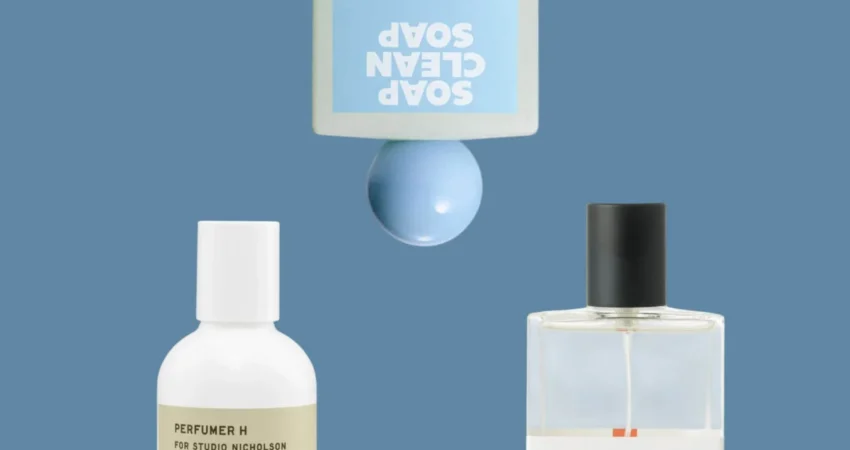
According to market analysis, the niche perfume sector has seen a 10-15% growth in "clean" and "laundry-inspired" categories over the last three years. Consumers are increasingly seeking fragrances that are "office-safe" and versatile, moving away from the heavy gourmands and ouds that dominated the previous decade. The three fragrances highlighted below—Perfumer H’s Soap, Sennok’s Soap Clean Soap, and J-Scent’s Paper Soap—represent the pinnacle of this movement, offering unique interpretations that bypass the clichés of the genre.
Analysis of the Top Three Niche Clean Fragrances
1. Soap by Perfumer H: The Textural Interpretation
Created by renowned British perfumer Lyn Harris in collaboration with the minimalist fashion label Studio Nicholson, Soap is an exercise in textural realism. Harris, known for her ability to capture atmospheric moments, designed this fragrance to replicate the specific sensation of a crisp, white cotton shirt against the skin.

The composition avoids the standard citrus opening, opting instead for a spicy "tickle" of white pepper and cardamom. This dry, piquant introduction leads into a heart of aldehydes and orange blossom, which provides the "transparent whiteness" central to the scent’s identity. The inclusion of ambroxan and tonka bean in the base ensures that the fragrance retains a human warmth, preventing it from feeling too sterile. At €220 for 50ml, it is positioned as a luxury item for connoisseurs who value the intersection of fashion and fragrance.
2. Soap Clean Soap by Sennok: The Atmospheric Bath
Representing the burgeoning South Korean fragrance market, Sennok’s Soap Clean Soap takes a more atmospheric approach. While Western clean scents often focus on laundry, many Asian niche brands focus on the "bathhouse" experience—the scent of steam, damp tiles, and fresh water.

This fragrance opens with a bright combination of bergamot and mint, which provides an immediate sense of cooling. The aldehydes here are used to create an "efervescent" effect, mimicking a fresh bar of soap hitting water. The heart is a classic floral bouquet of rose and jasmine, which is smoothed over by a base of sandalwood and white musk. Priced at approximately €130, it offers a more accessible entry point into the world of high-end clean scents while maintaining a sophisticated, non-commercial profile.
3. Paper Soap by J-Scent: The Nostalgic Accord
J-Scent is a Japanese house dedicated to capturing specific cultural moments and traditional scents of Japan. Paper Soap (released in 2017) draws inspiration from "kami-sekken"—thin sheets of soap used by travelers and children. This fragrance is perhaps the most nostalgic of the three, leaning into the powdery, floral qualities of traditional toilet soaps.

The scent features a prominent lavender note, which adds an aromatic, herbal cleanliness, supported by a lush floral heart of geranio, lily of the valley, and rose. As it dries down, the musk takes on a "creamy sweetness," evoking the scent of a wooden drawer where linens and soaps have been stored together for years. At €122, it remains a "hidden gem" in the perfume community, praised for its delicacy and its ability to trigger "Proustian" memories of childhood.
The Psychological Connection: Olfactory Memory and Well-being
The appeal of these fragrances is rooted deeply in human psychology. A study published in the journal Brain Sciences highlights the uniquely strong link between the olfactory bulb and the hippocampus, the area of the brain responsible for autobiographical memory. Scents associated with cleanliness often trigger feelings of safety, domestic stability, and parental care.

For many, the scent of a soapy aldehyde or a soft musk is not merely a cosmetic choice but a tool for emotional regulation. In an increasingly chaotic world, the "clean" fragrance serves as a sensory "reset," providing a private sanctuary of order. This psychological grounding is why the "clean" category remains resilient to changing fashion trends; it taps into a fundamental human desire for purity and renewal.
Broader Implications for the Fragrance Industry
The success of these niche "clean" scents signals a shift in how brands approach product development. There is a growing emphasis on "transparency"—both in terms of the scent profile and the ingredient list. As consumers become more educated about perfumery, they are moving away from "perfumey" smells toward "experiential" scents that tell a specific story.

Furthermore, the rise of brands from South Korea and Japan (like Sennok and J-Scent) suggests a globalization of the "clean" aesthetic. While the French tradition has long dominated the industry with its complex, layered compositions, the East Asian influence brings a focus on minimalism, nature, and subtle transitions. This cross-cultural exchange is enriching the palette of modern perfumery, ensuring that the "clean" category will continue to evolve beyond the simple smell of soap.
In conclusion, while the market is saturated with generic "fresh" scents, the sophisticated use of aldehydes, musks, and white flowers in niche perfumery offers a way to rediscover the beauty of the mundane. These fragrances prove that "clean" does not have to mean "boring." By blending historical context with modern chemistry, perfumers are creating scents that are as intellectually stimulating as they are pleasant to wear, turning the daily ritual of hygiene into an art form.

0 Comments