
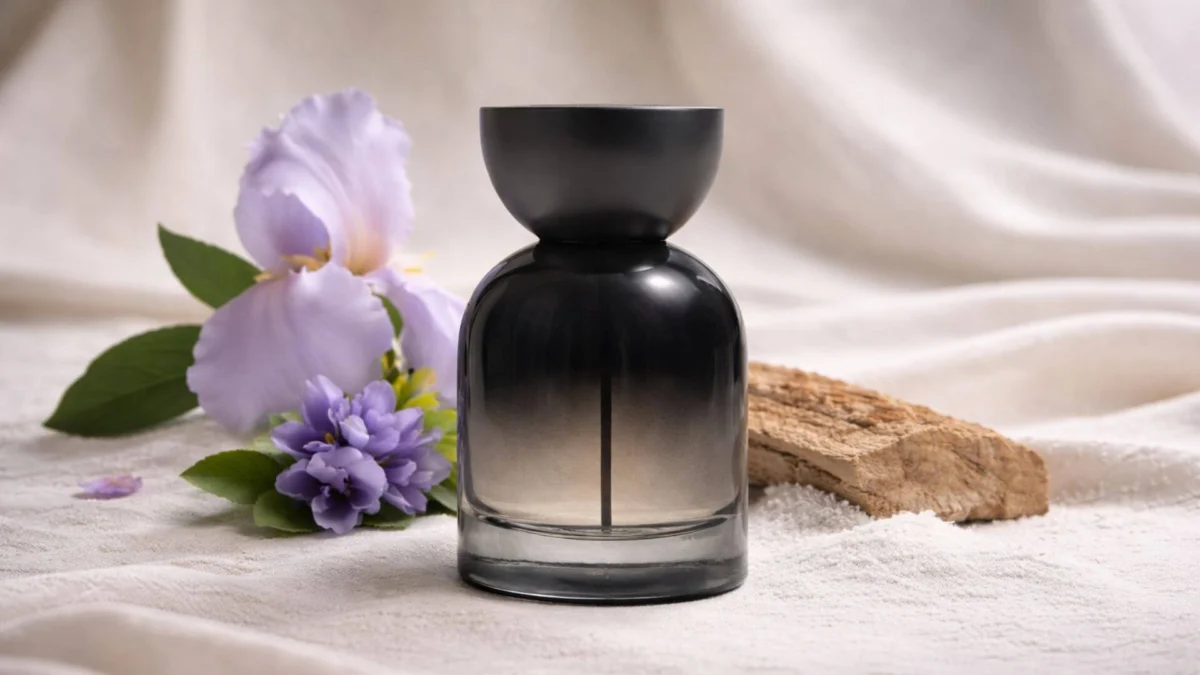
The global fragrance market is currently witnessing a significant paradigm shift as high-street retailers transition from generic, mass-market scents toward sophisticated, "niche-adjacent" compositions. At the forefront of this evolution is Massimo Dutti, the premium subsidiary of the Inditex Group, which has recently garnered critical acclaim for its latest olfactive offering, Iris Illusiona. This fragrance, characterized by its complex blend of velvety iris, fresh violet leaf, and creamy sandalwood, represents a broader corporate strategy to capture the burgeoning "affordable luxury" segment. Industry analysts and fashion journalists have noted that the scent defies traditional commercial boundaries, offering a profile typically reserved for high-end artisanal perfumery at a fraction of the cost.
The release of Iris Illusiona comes at a time when consumer preferences are pivoting toward "clean" and "powdery" scent profiles—a trend often referred to in the industry as the "clean girl" aesthetic or "quiet luxury" in liquid form. While the fragrance is marketed as a commercial product, its structural integrity suggests a more meticulous development process. By centering the composition on iris—one of the most expensive and time-consuming raw materials in the world of perfumery—Massimo Dutti is signaling its intent to compete with heritage fragrance houses and boutique labels.

The Olfactive Architecture of Iris Illusiona
To understand the impact of Iris Illusiona, one must examine the technical composition that distinguishes it from its contemporaries. The fragrance is built around a tripartite structure that balances floral, green, and woody elements.
The protagonist of the scent is the iris, specifically the rhizome of the plant, which provides a distinctive "powdery" (talco) texture. According to data from the Perfume Academy, the iris is prized for its ability to imbue a fragrance with a sense of nostalgia and elegance. Unlike top-heavy citrus scents, iris acts as a powerful anchor, providing a lingering trail (sillage) that evolves on the skin over several hours. In Iris Illusiona, this note is handled with a velvety finish, avoiding the overly sweet or "juvenile" connotations often associated with powdery scents.
Supporting the iris is the leaf of the violet. In perfumery, violet leaf is distinct from the violet flower; it offers a green, aqueous, and slightly metallic profile that provides a necessary counterpoint to the dryness of the iris. This addition ensures the fragrance maintains a "fresh" and "clean" quality, making it suitable for daytime wear and professional environments.

The base of the fragrance is grounded in sandalwood. This choice is strategic, as sandalwood provides a creamy, milky, and warm finish that extends the longevity of the floral notes. The interaction between the sandalwood and the iris creates what experts describe as a "niche soul"—a depth and complexity that is rarely found in fragrances priced under 50 euros.
Chronology of Inditex’s Fragrance Evolution
The development of Iris Illusiona is not an isolated event but the result of a decade-long evolution within the Inditex Group’s beauty division.
- The Early 2010s: Massimo Dutti and Zara primarily offered "dupe" style fragrances—scents that closely mimicked popular bestsellers from luxury brands like Chanel or Dior. These were functional products designed for impulse purchases at the checkout counter.
- 2019 – The Jo Malone Pivot: A turning point occurred when Zara announced a partnership with Jo Malone CBE, the founder of Jo Loves. This collaboration introduced "Zara Emotions," a collection that focused on high-quality ingredients and minimalist storytelling. This move educated the Inditex consumer on the value of "niche" scent profiles.
- 2021-2023 – Premiumization: Massimo Dutti began revamped its "Scents of the World" collection, moving away from simple aromatics toward more complex Eau de Parfums. During this period, Manhattan Lights was released, establishing the brand’s reputation for "clean-smelling" sophisticated scents.
- 2024-2026 – The Niche-Commercial Hybrid: The launch of Iris Illusiona represents the current phase of the strategy. The brand is now producing scents that do not merely mimic luxury but stand as original, high-quality compositions capable of winning over fragrance connoisseurs.
Market Data and Pricing Analysis
The economic positioning of Iris Illusiona is a key factor in its market success. Retail priced at 49.95 euros for a 100 ml bottle, the fragrance occupies a "sweet spot" in the consumer market.

Comparatively, iris-centric fragrances from niche houses carry significantly higher price tags. For instance, Iris Wallpaper by Bibbi Paris, which shares several powdery characteristics with the Massimo Dutti offering, is priced at approximately 245 euros for 100 ml. Other luxury iris staples, such as those from the Prada Infusion line or Dior Privée, typically range from 150 to 300 euros.
By offering a similar olfactive experience at a 75-80% discount compared to niche brands, Massimo Dutti is practicing "price disruption." This strategy appeals to the "prosumer"—a consumer who is knowledgeable about ingredients like orris butter and sandalwood but is looking for a sustainable way to maintain a high-end fragrance wardrobe.
The Chemistry of the "Clean" Scent Trend
The success of Iris Illusiona is deeply intertwined with the "clean" scent movement that has dominated the industry post-pandemic. Market research suggests that consumers are increasingly seeking fragrances that evoke a sense of hygiene, order, and calm. This is achieved through notes that mimic the smell of freshly laundered linens, expensive soap, or skin-warmed talcum powder.

Iris and violet leaf are the "gold standard" ingredients for this profile. Unlike heavy orientals or gourmand scents (which rely on vanilla and sugar), powdery florals interact with the wearer’s natural skin chemistry to create an aura rather than a mask. Journalists specializing in beauty and lifestyle have reported that Iris Illusiona excels in this "aura" creation, leading to high levels of consumer engagement and social media "word-of-mouth" marketing.
Industry Reactions and Consumer Sentiment
While official statements from Inditex are rare regarding specific scent formulations, the industry’s reception has been overwhelmingly positive. Beauty editors from major publications like Marie Claire have highlighted Iris Illusiona as a standout performer in the "high-street" category.
The consensus among fragrance critics is that the scent succeeds because it does not try to be "everything to everyone." By focusing on the specific, somewhat polarizing note of iris, it targets a sophisticated demographic. Consumer feedback across European markets indicates that the fragrance is frequently mistaken for a "boutique" or "hotel lobby" scent, which are hallmarks of the luxury experience.

Furthermore, the packaging and presentation of the Massimo Dutti fragrance line—minimalist glass bottles with heavy caps—reinforce the premium perception. This holistic approach to product design ensures that the physical experience of using the perfume matches the quality of the juice inside.
Broader Impact and Future Implications
The rise of fragrances like Iris Illusiona has broader implications for the global beauty industry. First, it forces traditional luxury houses to justify their high price points. When a 50-euro fragrance offers comparable longevity and ingredient quality to a 200-euro fragrance, brand heritage alone may no longer be enough to sustain market share.
Second, it democratizes access to "high perfumery." Ingredients like iris were once the exclusive domain of those who could afford luxury boutiques. Now, these sophisticated notes are available on every major high street. This "democratization of the nose" is raising the collective olfactive intelligence of the general public.

Looking ahead, the success of Iris Illusiona likely paves the way for even more daring compositions from Massimo Dutti and its parent company. We can expect to see further explorations into resins, rare woods, and experimental green notes. As the line between "commercial" and "niche" continues to blur, Massimo Dutti has firmly established itself as a credible player in the fragrance world, proving that elegance and accessibility are not mutually exclusive.
In conclusion, Iris Illusiona is more than just a seasonal release; it is a testament to the changing landscape of retail. By combining the velvety nostalgia of iris with a modern, creamy base, Massimo Dutti has captured the zeitgeist of the mid-2020s: a desire for luxury that is both understated and attainable. For the consumer, it offers a "love at first sight" olfactory experience; for the industry, it serves as a masterclass in strategic brand elevation.

0 Comments