
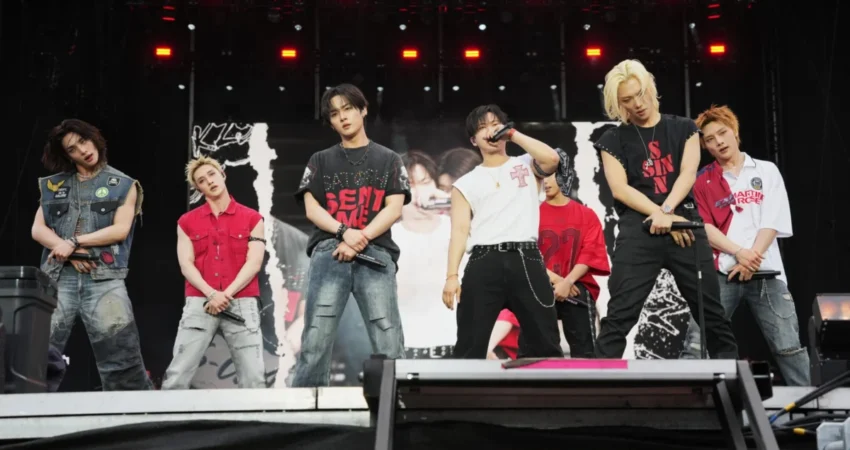
Mexican President Claudia Sheinbaum has candidly admitted her expectation that the globally acclaimed K-pop group Stray Kids would accompany South Korean President Lee Jae Myung during his official visit to the National Palace. This realization came after the popular music ensemble did not appear at the presidential headquarters as she had previously announced hours earlier. The band is currently in Mexico City for two highly anticipated concerts scheduled for September 25-26 at the Estadio GNP Seguros.
A Misunderstanding at the Presidential Level
The public acknowledgment of this miscommunication occurred on Thursday evening, September 24th, when President Sheinbaum shared a video on her official TikTok account. "We are seeing off the president of the Republic of Korea, Lee Jae Myung," she stated in the video. "We thought perhaps he was coming with the group Stray Kids. They are performing tomorrow at one of Mexico City’s most important venues. And we have already invited them to come to our country on another occasion." This statement revealed a significant disconnect between the President’s public announcements and the actual itinerary of the South Korean delegation.
Earlier that day, during her morning press conference, President Sheinbaum had enthusiastically announced Stray Kids’ impending visit alongside the South Korean leader. "The group coming is called Stray Kids," she had stated, attempting to contextualize their popularity for a broader audience. "They’re kind of like BTS, but younger. I don’t know if they’re boys and girls – they’re young, younger than the members of BTS." This comparison, while intended to inform, highlighted a slight inaccuracy in her understanding of the group’s composition and age demographics, as Stray Kids members range from 25 to 28 years old, while BTS members are between 29 and 33.
Fan Anticipation and Public Reaction
The President’s initial announcement regarding Stray Kids’ presence at the National Palace triggered a considerable response from the group’s dedicated fanbase, known as "STAY." Dozens of fans converged outside the National Palace, anticipating a glimpse of their idols alongside the visiting dignitaries. However, the reality of the situation became apparent when only President Sheinbaum and President Lee Jae Myung appeared on the presidential balcony. They proceeded to greet the gathered crowd at the building’s entrance. Videos documenting this moment, showcasing the presence of only the two presidents and the disappointed fans, quickly gained traction and went viral across social media platforms. The discrepancy between the announced expectation and the observed reality led to widespread discussion and some confusion among the public and media.
The Shadow of BTS’s Presidential Visit
This incident inevitably drew comparisons to a previous high-profile event involving another immensely popular K-pop group, BTS. In May of the same year, BTS members had indeed met with President Sheinbaum. During their visit, the members of BTS appeared on one of the balconies of the presidential residence, waving to an estimated 50,000 members of their fanbase, ARMY, who had gathered in the Zócalo, the main public square of Mexico City. This event, meticulously documented and widely covered, set a precedent for high-profile cultural engagements at the National Palace and likely contributed to the expectation surrounding Stray Kids’ potential appearance. The contrast between the two events underscored the nuances of diplomatic and cultural exchanges, where appearances and expectations can sometimes diverge.
Stray Kids’ Highly Anticipated Mexican Tour
The concerts by Stray Kids are a significant event for their Mexican fanbase. The group is known for its dynamic performances, powerful music, and strong connection with their global audience. Their upcoming shows at the Estadio GNP Seguros, a prominent venue in Mexico City, are expected to draw large crowds, reflecting their substantial popularity in the region. This tour marks a significant moment for K-pop in Mexico, further solidifying the genre’s strong presence in the Latin American market. The group’s music often explores themes of youth, identity, and societal pressures, resonating deeply with a diverse demographic of listeners. Their discography includes a range of hit songs and critically acclaimed albums, contributing to their status as one of the leading groups in the current K-pop landscape.
The Broader Context of K-Pop Diplomacy
The intersection of K-pop global phenomenon and international diplomacy has become increasingly prominent in recent years. South Korea has actively leveraged the soft power of its cultural exports, including K-pop, to enhance its global image and foster stronger international relations. The visits of groups like BTS and Stray Kids to various countries often include engagements with government officials, underscoring the cultural significance attributed to these artists. These interactions serve multiple purposes: they provide a platform for cultural exchange, foster goodwill between nations, and offer a unique opportunity for political leaders to connect with younger demographics and broader segments of the population.
In Mexico, the government’s engagement with K-pop reflects a broader trend of recognizing and incorporating popular culture into diplomatic efforts. The initial announcement by President Sheinbaum, despite the subsequent misunderstanding, demonstrates an effort to leverage the excitement surrounding Stray Kids to connect with a younger, digitally-native audience. This approach aligns with contemporary strategies for public diplomacy, where cultural influence is seen as a vital component of international relations.
Analysis of Implications and Future Engagement
The incident at the National Palace, while a minor misstep, offers insights into the evolving landscape of cultural diplomacy. It highlights the importance of clear communication and precise coordination when orchestrating high-profile events involving international celebrities and political figures. For President Sheinbaum’s administration, the situation presents an opportunity to refine communication protocols for future engagements and to further understand the dynamics of fan culture and its influence.
The enthusiastic response from Stray Kids’ fans, even in the face of disappointment, underscores the powerful connection between the group and their followers. This dedication is a testament to Stray Kids’ ability to create meaningful content and foster a strong sense of community. Their ongoing tour in Mexico is expected to be a resounding success, reinforcing their position as a major force in the global music industry.
Looking ahead, it is plausible that future diplomatic engagements involving K-pop artists will be planned with even greater attention to detail, ensuring alignment between public announcements and actual schedules. The incident also serves as a reminder of the significant cultural capital wielded by K-pop groups and their potential role in fostering cross-cultural understanding and international goodwill. The Mexican government’s continued engagement with such cultural phenomena suggests a strategic approach to leveraging popular culture for diplomatic and public relations purposes, aiming to enhance its international appeal and connect with a diverse citizenry. The experience, though perhaps initially embarrassing, ultimately reinforces the significant global reach and impact of K-pop artists like Stray Kids.

0 Comments