

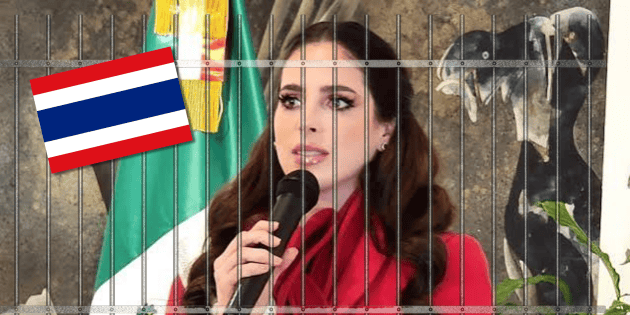
The reigning Miss Universe 2025, Fátima Bosch of Mexico, finds herself at the center of a burgeoning international legal and diplomatic entanglement, facing the unprecedented prospect of arrest in Thailand. This dramatic turn of events stems from an escalating conflict with prominent Thai entrepreneur and pageant industry figure, Nawat Itsaragrisil, whose allegations have prompted a potential judicial proceeding that threatens to cast a long shadow over her historic reign. The controversy has ignited a global discussion on the boundaries of power, freedom of expression, and the defense of personal dignity within high-profile international competitions.
An Unfolding Legal Challenge on a Global Stage
What began as an isolated incident during the preliminary stages of the Miss Universe 2025 pageant in Thailand has now evolved into a complex cross-border legal battle, drawing the attention of media outlets worldwide. Authorities in Bangkok are reportedly evaluating an accelerated procedure that could lead to the issuance of an arrest warrant for the acclaimed Mexican model. This alarming development was first publicly disclosed by Itsaragrisil himself through his official social media platforms, amplifying the gravity of the situation and sparking widespread alarm among Bosch’s supporters and the international pageant community.
The specific charges leveled against Fátima Bosch are severe under Thai law, encompassing defamation, the dissemination of false accusations, and the propagation of misinformation via digital channels. These offenses are not only considered highly serious but also carry stringent penalties within the Thai justice system, which is known for its rigorous enforcement of laws pertaining to public reputation and digital conduct. The specter of legal action against a sitting Miss Universe introduces an unprecedented dimension to the traditional narrative of beauty pageants, transforming a period typically associated with global ambassadorship and celebration into one fraught with legal uncertainty.
The Genesis of the Dispute: A November 2025 Altercation
To fully grasp the intricate nature of this dispute, it is essential to revisit its origins during the intense pre-final activities of the Miss Universe 2025 pageant, held in Thailand in November 2025. The host nation, renowned for its vibrant culture and hospitality, had anticipated a spectacular competition, but instead, it became the unwitting stage for a contentious confrontation that would later resurface with profound legal implications.
During these preliminary events, Nawat Itsaragrisil, who was significantly involved in the local organization and hosting of specific segments of the pageant in Thailand, allegedly directed a derogatory remark towards the Mexican delegate, labeling her a "cabeza hueca" (empty-headed). This verbal outburst reportedly occurred after Bosch declined to participate in a promotional video, which, crucially, was not a mandatory requirement for contestants. The incident, witnessed by several other delegates and pageant personnel, marked a pivotal moment in the escalating tension between the two parties.
Rather than silently enduring the verbal aggression, Fátima Bosch, exhibiting remarkable composure and courage, chose to publicly defend herself in front of her peers. Her assertive response, a stand for personal respect and professional integrity, reportedly incensed Itsaragrisil. In a swift reaction, he allegedly demanded her immediate expulsion from the event, reportedly summoning security personnel to enforce his directive. This public confrontation laid the groundwork for the current legal imbroglio, highlighting a clash between perceived authority and a contestant’s right to self-respect.
From Coronation to Controversy: The Resurgence of Tensions
Months following her historic coronation, which saw her ascend to the coveted title of Miss Universe 2025, the underlying tensions with Itsaragrisil have dramatically re-emerged. The catalyst was the online publication of what has been described as a "supuesto informe policial" (alleged police report). This document, purportedly issued by the Wat Phraya Krai police station in Bangkok, was circulated across various internet platforms, reigniting the scandal and transforming a past incident into an active legal threat. The circulation of such a document, even if its official status remains unconfirmed by judicial authorities, served to formalize the accusations and propel the matter into the public and legal spheres.
Thailand’s Strict Legal Framework: The Computer Crime Act
The legal landscape in Thailand is notably stringent, particularly concerning digital communications and public reputation. The country’s Computer Crime Act (CCA) is a formidable piece of legislation, designed to regulate online content and penalize various forms of cyber-related offenses. This act is particularly relevant to Bosch’s case, as it prescribes severe penalties for the dissemination of false information online, with potential prison sentences extending up to five years. This legal framework has been frequently invoked in cases involving perceived defamation or the spread of information deemed harmful to individuals or institutions.
Beyond potential incarceration, individuals found guilty under the Computer Crime Act can face substantial financial penalties, with fines that may reach up to 200,000 baht (approximately 5,500 USD). For a high-profile international figure like Miss Universe, these severe sanctions complicate an already precarious legal situation, underscoring the seriousness with which Thai authorities approach such digital infractions. The application of these laws to an international celebrity, especially one representing a major global brand, adds layers of complexity, raising questions about jurisdiction, international legal cooperation, and the potential for diplomatic engagement.
Despite the pervasive media coverage and the public claims made by Itsaragrisil, it is crucial to note that no Thai judicial authority has yet officially confirmed the issuance of an arrest warrant for Fátima Bosch. The situation remains in a state of legal flux, with the progression of the case entirely dependent on the ongoing evaluation and formal procedures within the Thai court system. This lack of official confirmation keeps the precise legal standing of Bosch in a delicate balance, while public and media scrutiny intensifies.
Fátima Bosch’s Resolute Response: A Stance Against Intimidation
Faced with this renewed legal and media offensive, Fátima Bosch has responded with a powerful message of defiance and empowerment. Utilizing her extensive digital platforms, she issued a compelling statement that quickly resonated with her millions of followers across the globe. Her message, characterized by its unwavering resolve, swiftly went viral, underscoring her commitment to defending her integrity.
The Tabascan model unequivocally characterized Itsaragrisil’s recent actions as a "clear and systematic attempt at intimidation." She expressed profound concern that a woman could face such severe reprisals simply for establishing boundaries and demanding respect within the context of an international competition. Her words highlighted a broader societal issue concerning the treatment of women in positions of visibility and influence, particularly when they challenge perceived authority.
In a poignant declaration, Bosch asserted, "No me arrepiento de haber defendido mi lugar aquel día" (I do not regret defending my place that day). Through these resolute words, the beauty queen emphatically conveyed that "su dignidad no es negociable" (her dignity is not negotiable), irrespective of the legal threats or professional pressures she might encounter. Her statement has been widely interpreted as a rallying cry for self-respect and empowerment, especially within the often-scrutinized world of international pageants.
Unwavering Support from the Miss Universe Organization and Global Allies
In a significant show of solidarity, the Miss Universe Organization has formally closed ranks around its reigning representative. The international franchise issued an official statement unequivocally condemning any attempts to silence women or infringe upon their fundamental rights. This declaration from the parent organization lends substantial credibility and institutional backing to Bosch’s position, signaling a unified front against what they perceive as an unjust and intimidating campaign. The organization’s support underscores its commitment to the welfare and rights of its titleholders, particularly in the face of legal challenges that could impact their personal and professional standing.
The outpouring of international support for Fátima Bosch has grown exponentially in recent hours and days. Numerous voices, including other delegates who witnessed the original altercation, former Miss Universe titleholders, national directors, and prominent public figures, have expressed their solidarity. Many of these individuals have corroborated Bosch’s account of the events, lending further credence to her version of the incident and challenging the narrative put forth by Itsaragrisil. Social media platforms have become a primary arena for this support, with hashtags and messages advocating for Bosch quickly gaining traction.
According to Bosch’s perspective, the world was an eyewitness to the true sequence of events that transpired that day, largely due to the pervasive presence of cameras and recording devices. She firmly maintains that the available visual evidence speaks for itself, categorically refuting the accusations of defamation lodged against her. This assertion implies that a comprehensive review of existing footage would exonerate her and expose the veracity of her claims.
Conversely, Nawat Itsaragrisil remains steadfast in his insistence that his professional reputation has been irreparably damaged by Bosch’s actions and public statements. He has publicly articulated his unwavering intent to pursue the case to its "últimas consecuencias legales" (ultimate legal consequences) within the jurisdiction of his native Thailand. His determination signals a protracted and potentially acrimonious legal battle, with both parties committed to defending their respective positions.
Broader Implications for the Pageant Industry and International Law
This high-stakes confrontation between a global beauty queen and a prominent pageant entrepreneur carries significant implications that extend far beyond the immediate legal proceedings. It forces a critical examination of the ethical treatment of participants in international competitions, the contractual obligations that bind them, and the delicate balance between brand protection and individual rights.
The Miss Universe organization’s explicit condemnation of attempts to silence women sets a precedent for how future disputes involving contestants and organizers might be handled. It underscores a growing awareness within the industry of the need to safeguard the well-being and freedom of expression of delegates, particularly in an era where social media amplifies every interaction. The case could lead to a re-evaluation of codes of conduct, dispute resolution mechanisms, and even the language used in contestant contracts to better protect individuals from potential exploitation or undue pressure.
Furthermore, the involvement of Thailand’s Computer Crime Act highlights the increasing legal risks associated with online communication for public figures. The case serves as a stark reminder of how differing national laws, particularly those pertaining to defamation and digital content, can intersect with international celebrity, creating complex legal dilemmas that require careful navigation. For Fátima Bosch, a Mexican citizen facing charges in Thailand, the situation could involve considerations of international legal assistance, extradition treaties, and diplomatic support from her home country.
The global attention on this case also underscores the power of social media in shaping public opinion and serving as a platform for both accusations and defense. While Itsaragrisil used his digital channels to announce the potential legal action, Bosch effectively leveraged her own online presence to rally support and articulate her stance, demonstrating the dual-edged nature of digital communication in high-profile disputes.
Ultimately, the resolution of this contentious legal battle in Thailand remains deeply uncertain for all parties involved. However, irrespective of the final judicial outcome, the case has already carved out an indelible historical precedent concerning the ethical conduct and treatment of participants in international pageants. It has ignited a crucial conversation about accountability, respect, and the fundamental right of individuals, particularly women in highly visible roles, to assert their dignity without fear of reprisal. The unfolding saga of Miss Universe 2025 Fátima Bosch will undoubtedly be closely watched as it navigates the complex intersections of celebrity, law, and global ethics.

0 Comments