

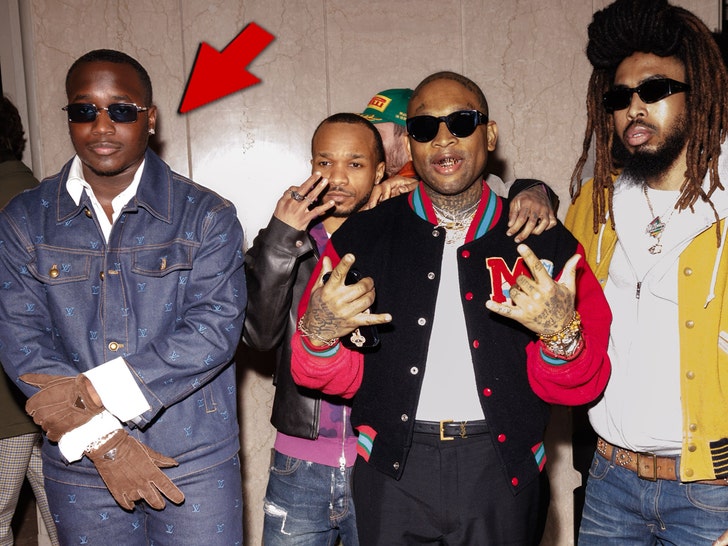
The individual accused of orchestrating a sophisticated e-commerce fraud scheme targeting numerous National Football League (NFL) players has been found deceased in a swimming pool at a residence in Harrison Township, New Jersey. Officials confirmed the discovery of 24-year-old Mohamed Coulibaly’s body on Friday, August 1, 2026, following a welfare check initiated by concerned family members. The unexpected death of Coulibaly introduces a perplexing twist into the ongoing investigation of a high-stakes financial deception that reportedly swindled professional athletes out of significant portions of their earnings and savings.
Discovery and Initial Investigation
The alarm was first raised when family members, unable to establish contact with Coulibaly, contacted local authorities to request a welfare check. Officers from the Harrison Township Police Department responded to the specified residence on Friday afternoon. Upon arrival, they discovered Coulibaly unresponsive in the property’s swimming pool. Emergency medical services were immediately dispatched to the scene, but Coulibaly was pronounced dead shortly after.
Law enforcement officials have stated that the circumstances surrounding Coulibaly’s death are currently under active investigation. While details remain sparse, standard protocols for an unexplained death have been initiated, including a thorough examination of the scene by forensic teams and an impending autopsy by the Gloucester County Medical Examiner’s Office. The purpose of the autopsy is to determine the precise cause and manner of death, which could range from accidental drowning to other more complex scenarios. Authorities have not yet released any preliminary findings or indicated whether foul play is suspected, emphasizing the preliminary stage of the inquiry. The sudden nature of his death, especially amidst serious fraud allegations, has undoubtedly intensified public interest and scrutiny.
The Alleged E-commerce Fraud Scheme
Mohamed Coulibaly had recently gained notoriety for his alleged role in a wide-ranging e-commerce scam that specifically targeted NFL players. Reports, notably from Barron’s in July 2026, detailed how Coulibaly allegedly enticed athletes to invest substantial sums into what appeared to be highly profitable online retail ventures. These ventures, often presented as successful Shopify stores, showcased impressive sales logs and revenue figures designed to create an illusion of rapid growth and lucrative returns.

According to the allegations, Coulibaly would approach players, often through mutual acquaintances or sports industry networks, presenting himself as a savvy entrepreneur with a proven track record in the booming e-commerce sector. He offered them opportunities to become silent partners or investors, promising a stake in the profits from these seemingly thriving online businesses. The allure for athletes, many of whom are looking for avenues to diversify their income and secure their financial future beyond their playing careers, was immense. The scheme capitalized on the trust inherent within these close-knit professional circles and the desire for passive income.
However, the "impressive sales logs" and "successful online stores" were reportedly entirely fabricated. Investors, after committing their funds, would allegedly find themselves without any payouts, their initial investments seemingly vanishing into a complex web of transactions. The sophisticated nature of the alleged fraud suggests a meticulous effort to create a convincing façade, using legitimate-looking platforms like Shopify to lend credibility to the illicit operations. Such schemes often exploit the trust and limited financial expertise of victims, particularly those with sudden access to significant wealth but perhaps less experience in complex investment landscapes.
Victim Accounts and Financial Losses
Among the alleged victims who have publicly come forward is former NFL linebacker Tae Crowder. Crowder’s account painted a stark picture of the devastating impact of the alleged scam. He claimed to have invested his entire life savings, a staggering $500,000, into one of Coulibaly’s purported e-commerce stores. Crowder reportedly met Coulibaly through a mutual friend, a common tactic used by fraudsters to establish an initial layer of trust. The half-million-dollar investment represented years of his hard-earned NFL salary, intended for his long-term financial security.
Crowder stated that despite the initial promises and the impressive projections presented by Coulibaly, he never received any returns on his investment, nor was his principal capital ever repaid. His experience is believed to be representative of other players who may have fallen prey to the same scheme, though the full extent of the alleged fraud and the total number of impacted athletes remains unclear. The revelation of such a significant loss for a single player underscores the potentially devastating financial consequences for those ensnared in Coulibaly’s alleged operations. For many athletes, their playing careers, while lucrative, are finite, making responsible financial planning and protection against fraud paramount.
Coulibaly’s Defense and Prior Statements
Prior to his death, Mohamed Coulibaly had publicly denied the scam allegations. In an interview with Barron’s published last month, he offered an alternative explanation for the lack of payments to investors. Coulibaly asserted that the delay in investor payouts was due to his anticipation of funds from "a planned acquisition of his venture." He claimed that once this acquisition was finalized, all outstanding payments to investors would be disbursed.

This explanation, while plausible in a legitimate business context, raised significant questions given the nature of the allegations. Critics and alleged victims viewed it as a stalling tactic, designed to buy more time while their invested capital remained inaccessible. Such defenses are not uncommon in fraud cases, where perpetrators often attempt to rationalize delays or losses with complex business explanations rather than admit to illicit activity. Coulibaly’s death now leaves his side of the story incomplete and further complicates the verification of his claims. The veracity of his "planned acquisition" explanation may now be impossible to fully ascertain.
Broader Context: Athlete Vulnerability to Scams
The case of Mohamed Coulibaly and the alleged e-commerce scam highlights a persistent and unfortunate vulnerability among professional athletes to financial fraud. Athletes, particularly those in high-profile leagues like the NFL, often experience a sudden influx of wealth at a relatively young age, sometimes with limited prior experience in managing large sums of money or navigating complex investment opportunities. This demographic can become attractive targets for unscrupulous individuals looking to exploit their newfound wealth and, at times, their trust.
Statistics consistently show that professional athletes are disproportionately affected by financial scams. A study by the National Bureau of Economic Research, for example, found that 16% of NFL players declare bankruptcy within 12 years of retirement, with poor financial management and fraud being significant contributing factors. Financial advisors and player associations frequently warn athletes about the risks of get-rich-quick schemes, unregulated investments, and entrusting their money to unverified individuals. Organizations like the NFL Players Association (NFLPA) actively provide financial education and resources to their members, emphasizing the importance of due diligence, consulting accredited professionals, and avoiding investments that seem "too good to be true." Despite these efforts, sophisticated fraudsters continue to find ways to penetrate these protective layers, often leveraging personal connections and convincing narratives to build rapport before executing their schemes.
Law Enforcement Response and Ongoing Investigation
Coulibaly’s death adds a layer of complexity to the ongoing investigations into the alleged e-commerce fraud. While the death investigation is focused on determining how and why he died, the fraud inquiry will now need to assess its implications. Law enforcement agencies, including potentially federal authorities given the multi-state nature of such a scheme and the involvement of significant financial losses, will have to determine if Coulibaly acted alone or if there were other accomplices or co-conspirators.
If he was the sole architect of the scheme, his death could effectively halt further direct prosecution related to the alleged fraud, though civil avenues for victims might still exist against his estate, if any. However, if evidence emerges suggesting a broader network, the investigation would continue to pursue other individuals involved. Police departments rarely comment extensively on ongoing death investigations, particularly when they involve potential links to other criminal activities. Therefore, official statements regarding the specific direction of the fraud inquiry post-Coulibaly’s death are likely to remain guarded. The Gloucester County Prosecutor’s Office, which would typically oversee major criminal investigations in Harrison Township, is expected to play a central role in coordinating both the death inquiry and any continuing fraud investigations.
Expert Commentary on Financial Fraud
Financial fraud experts emphasize that schemes like the one Coulibaly allegedly ran often employ several common tactics. These include creating a sense of urgency, promising exceptionally high and unrealistic returns, leveraging social proof (like fake testimonials or inflated sales figures), and pressuring victims to invest quickly without thorough independent verification. The use of legitimate-sounding platforms, such as popular e-commerce sites like Shopify, can also lend an air of authenticity to fraudulent operations, making them harder for an untrained eye to distinguish from genuine opportunities.
"The digital age has opened up new avenues for fraudsters," commented Dr. Eleanor Vance, a professor of forensic accounting at Rutgers University. "They can quickly set up convincing digital storefronts and generate fake metrics that appear legitimate. The key for investors, especially high-net-worth individuals, is always independent verification. Never rely solely on the information provided by the person soliciting the investment. Always consult a trusted, independent financial advisor and perform thorough due diligence on both the individual and the venture itself." Dr. Vance also highlighted that a common red flag is when an investment opportunity bypasses traditional financial institutions or licensed brokers, opting instead for direct, personal solicitations.
Unanswered Questions and Future Outlook
The sudden death of Mohamed Coulibaly leaves a myriad of unanswered questions that may now never be fully resolved. The exact nature of his alleged e-commerce fraud, the full scope of its victims, and the precise amount of money lost remain subjects of ongoing investigation. More critically, the circumstances surrounding his own death are shrouded in mystery. Was it an accident, a suicide, or something more sinister? The results of the medical examiner’s report will be crucial in providing some clarity, but even then, questions about motive and broader context may persist.
For the alleged victims, including Tae Crowder, Coulibaly’s death introduces a complex emotional and legal landscape. While it removes the individual accused of perpetrating the fraud, it also potentially complicates their path to financial restitution. The legal battle for recovery of lost funds could become significantly more challenging without a living defendant to pursue directly. The incident serves as a grim reminder of the pervasive threat of financial fraud and the often-unpredictable twists that can accompany such high-stakes criminal investigations.
The Harrison Township Police Department, in conjunction with the Gloucester County Prosecutor’s Office, will continue their investigations into both Coulibaly’s death and the alleged fraud scheme. Updates are expected as more forensic and investigative details emerge. The tragic end to Mohamed Coulibaly’s life marks a significant development in a case that had already drawn considerable attention for its allegations of deceit and the financial ruin it reportedly brought upon professional athletes. The full story of the e-commerce scam and the circumstances of its alleged architect’s demise may take considerable time to unravel, if ever fully.

0 Comments