
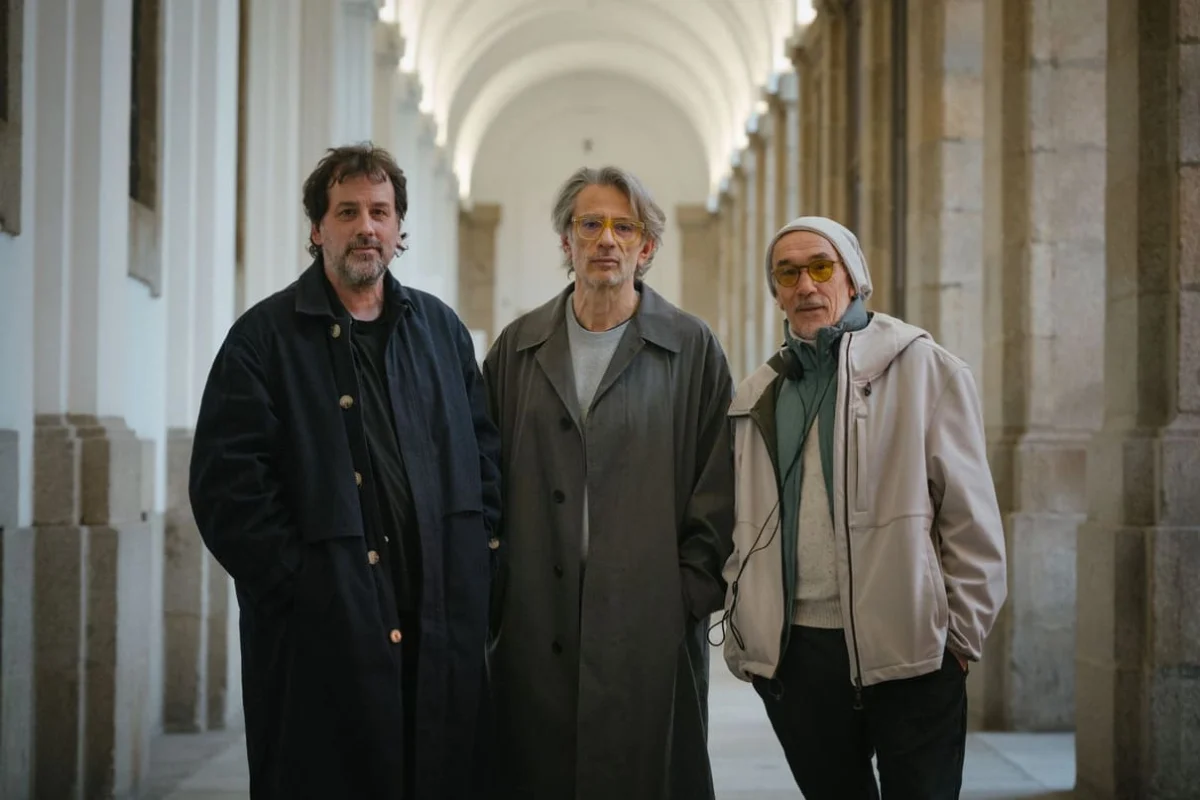
Movistar Plus+ has commenced principal photography for "Obra Maestra," a documentary film poised to ignite significant discussion, centered on the baffling disappearance of a 38-ton artwork that vanished without a trace. This ambitious new production, inspired by the novel of the same name by acclaimed author Juan Tallón, adopts a hybrid narrative approach, seamlessly blending suspense with non-fiction to meticulously reconstruct one of contemporary art’s most perplexing enigmas. The project delves into the unknown fate of Richard Serra’s "Equal-Parallel/Guernica-Bengasi," a monumental sculpture composed of four colossal steel blocks, which inexplicably disappeared from museum storage facilities.
The Enigmatic Case of "Equal-Parallel/Guernica-Bengasi"
The core of "Obra Maestra" revolves around the extraordinary vanishing act of "Equal-Parallel/Guernica-Bengasi," a powerful work by American artist Richard Serra. The sculpture, renowned for its imposing scale and substantial weight—estimated at approximately 38 tons—was housed in museum archives. Its disappearance from these secure facilities, without any apparent signs of forced entry or a clear trail, has fueled speculation and bewilderment within the art world and beyond. The sheer impossibility of moving such a massive object undetected raises fundamental questions about security, logistics, and the very nature of how art is managed and safeguarded in the 21st century.
The sculpture’s dimensions alone underscore the magnitude of the mystery. Each of the four steel blocks is substantial, contributing to the overall immense weight and volume. The notion that such an object could simply evaporate from a supposedly secure storage area challenges conventional understanding of art handling and preservation. This inherent paradox forms the bedrock of the documentary’s narrative, promising to explore the logistical challenges and potential loopholes that could have facilitated such an audacious act.
A Global Production Journey
The filming for "Obra Maestra" has initiated in Madrid, with subsequent weeks scheduled to capture key locations integral to the narrative. These include the hallowed halls of the Museo Reina Sofía, a globally recognized institution for modern and contemporary art, and the historic Teatro Circo Price, suggesting that the cultural and architectural backdrop will play a significant role in the film’s visual storytelling. The production’s geographical scope is impressively broad, extending beyond Spain to include Bilbao, Gernika-Lumo, and even venturing across the Atlantic to the Canadian island of Cape Breton. This international itinerary signals the project’s expansive ambition, aiming to contextualize the event within a wider cultural and geographical framework, moving beyond the immediate confines of the initial incident.
The inclusion of Cape Breton, for instance, might hint at unexplored connections, potential export routes, or even theories that extend the sculpture’s journey far from its point of origin. Such a global reach suggests that the documentary will not only focus on the immediate aftermath of the disappearance but will also investigate potential international networks, black markets for art, or even clandestine operations that could be involved in the movement of such significant pieces. The logistical complexities of transporting a 38-ton sculpture across continents are staggering, and "Obra Maestra" is expected to meticulously dissect these challenges.
Hybrid Narrative: Bridging Fact and Fiction
Director Isaki Lacuesta, a filmmaker known for his innovative exploration of the porous boundaries between reality and fiction, helms this project. He co-authors the screenplay with Adrià P. Xancó. Their collaborative approach promises a narrative that transcends the conventions of traditional documentary filmmaking. "Obra Maestra" is set to weave together a compelling tapestry of eyewitness testimonies, carefully constructed reenactments, and Lacuesta’s distinctive personal perspective on the events. This hybrid format is designed to immerse the audience in the investigation, creating a sense of urgency and suspense akin to a thriller, where each discovered clue or piece of information serves to deepen the mystery rather than resolve it.
Lacuesta’s previous works, such as "The Double Steps" and "Between Two Worlds," have demonstrated his mastery in blurring the lines between documentary and fiction, often using real-life events as springboards for deeply personal and philosophical inquiries. His involvement suggests that "Obra Maestra" will not merely be a factual account but an artistic interpretation that probes the psychological and societal implications of the disappearance. The film aims to move beyond a simple recounting of facts, venturing into the realm of subjective experience and the impact of such an extraordinary event on those involved and the broader art community.
A Deeper Dive into the Narrative Threads
The documentary will meticulously dissect the investigation into the sculpture’s disappearance, delving into the multitude of theories that have emerged over time. From potential insider dealings and elaborate heists to more esoteric explanations, the film will present these hypotheses with a critical yet engaging eye. The narrative’s strength lies in its commitment to exploring the uncertainty and sheer strangeness of the event, allowing the audience to grapple with the unanswered questions alongside the filmmakers. This approach aims to foster a sense of active participation in the mystery, making the viewing experience more dynamic and thought-provoking.
The genesis of the project as a documentary based on Juan Tallón’s novel is particularly noteworthy. Novels often provide a framework for imaginative exploration, and adapting "Obra Maestra" allows for a richer, more layered narrative than a purely factual account might offer. Tallón’s active involvement in the creative process suggests an adaptation that is not merely a literal translation of his book but an expansion of its universe, infusing it with new dimensions and perspectives that may have been beyond the scope of the original literary work. This collaboration between author and filmmaker can lead to a more nuanced and profound exploration of the themes at play, including themes of absence, memory, and the value of art.
Production Team and Artistic Vision
The production is spearheaded by DLO Producciones, with José Manuel Lorenzo at the helm, and executive produced by Bruna Hernando for Movistar Plus+. The technical team comprises seasoned professionals, including Takuro Takeuchi as Director of Photography and Curru Garabal as Art Director. Their contributions are crucial in shaping the visual language and atmosphere of the film, ensuring that the documentary possesses both the precision required for investigative journalism and the evocative power needed to convey the mystery and intrigue of the subject matter. The cinematography will likely play a key role in contrasting the stark, industrial nature of Serra’s sculpture with the often-grand or intimate settings of its disappearance and investigation.
The artistic direction will be paramount in recreating the environments and potentially the moments leading up to the sculpture’s vanishing. This includes meticulously detailing the museum storage facilities, the bustling streets of Madrid, and the specific atmospheres of locations like the Museo Reina Sofía and the Teatro Circo Price. The visual design will aim to immerse the audience in the world of the art market, the clandestine operations that might surround it, and the personal journeys of those involved in the search for answers.
Movistar Plus+’s Commitment to Non-Fiction Innovation
With "Obra Maestra," Movistar Plus+ continues to solidify its commitment to innovative non-fiction storytelling. The platform has consistently sought out projects that push the boundaries of conventional documentary formats, offering audiences compelling narratives presented with artistic flair and intellectual rigor. This latest production aligns with that strategy, promising a unique blend of real-world mystery, artistic exploration, and cinematic suspense. The platform’s investment in such a project underscores its belief in the power of non-fiction to captivate and inform, particularly when tackling subjects that resonate with universal themes of loss, intrigue, and the pursuit of truth.
The documentary’s potential impact extends beyond its immediate audience. By bringing the story of "Equal-Parallel/Guernica-Bengasi" to a wider public, "Obra Maestra" may shed light on broader issues within the art world, such as art security protocols, the economics of the art market, and the ethical considerations surrounding the acquisition and display of monumental works. The film could also serve as a catalyst for renewed interest in Richard Serra’s work and the ongoing, unresolved mystery of his missing sculpture. The narrative’s ability to engage with complex themes while maintaining a gripping pace is a testament to the evolving landscape of documentary filmmaking, where factual accounts are increasingly infused with artistic vision and narrative sophistication.
Broader Implications and Future Outlook
The disappearance of a piece as significant as Richard Serra’s "Equal-Parallel/Guernica-Bengasi" is not merely a story of a missing object; it is a commentary on the vulnerability of cultural heritage and the opaque nature of certain aspects of the art market. The documentary’s investigation into the various theories surrounding the event will undoubtedly touch upon the global flow of art, the potential for illicit activities, and the challenges faced by institutions in protecting their valuable assets. The film’s international scope suggests a comprehensive examination of these multifaceted issues, potentially revealing connections and insights that have remained hidden from public view.
Furthermore, the project’s exploration of the psychological impact of such an unexplained event—the frustration of investigators, the anxiety of art professionals, and the public’s fascination with the inexplicable—will likely add a compelling human dimension to the narrative. By delving into these aspects, "Obra Maestra" aims to offer a holistic portrait of a mystery that continues to intrigue, proving that sometimes, the most profound stories lie not in the discovery of answers, but in the enduring power of the questions themselves. The film’s success will likely hinge on its ability to balance the meticulous reconstruction of facts with a captivating narrative arc, leaving audiences with a profound appreciation for the complexities of art, mystery, and the human endeavor to uncover the truth.

0 Comments