
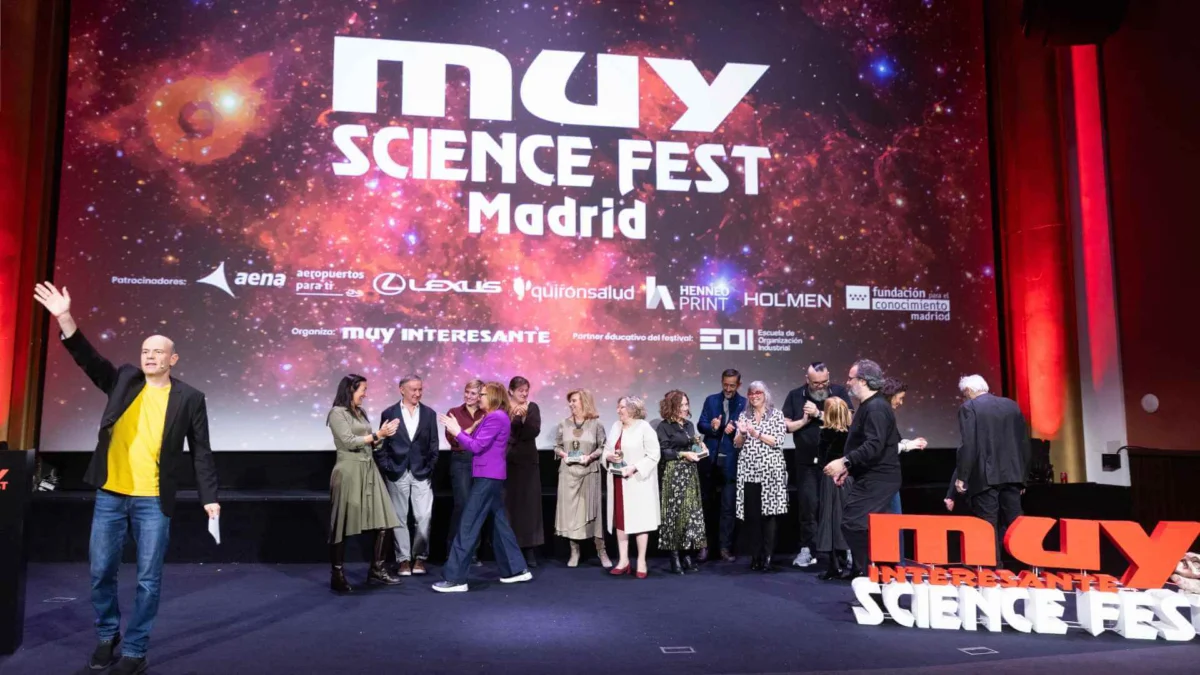
The landscape of scientific communication in Spain is set for a significant milestone as the Muy Science Fest prepares to host its 2026 edition in Madrid. On November 26, the historic Teatro Capitol, located in the heart of the capital’s Gran Vía, will transform into a hub of intellectual exchange, bringing together some of the most prominent figures in Spanish and international research. This event, organized by the iconic publication Muy Interesante under the Zinet Media Group umbrella, seeks to dismantle the traditional barriers between the laboratory and the general public, presenting complex scientific concepts through a lens that is accessible, inspiring, and culturally relevant.
The 2026 edition arrives at a time when public interest in science is at an all-time high, driven by rapid advancements in artificial intelligence, biotechnology, and space exploration. By moving science from academic journals to the stage of one of Madrid’s most famous theaters, the festival aims to treat scientific inquiry not merely as a technical pursuit but as a fundamental pillar of modern culture.
A Convergence of Scientific Disciplines
The curated lineup for the Madrid event reflects a multi-disciplinary approach, covering the vast spectrum of human knowledge from the origins of the species to the theoretical limits of space-time travel. The diversity of the speakers ensures that the festival appeals to a broad demographic, ranging from students and young professionals to retirees with a lifelong passion for learning.

Leading the physics segment is the world-renowned theoretical physicist Miguel Alcubierre. Known globally for his "Alcubierre Drive"—a mathematical model that suggests the possibility of faster-than-light travel by warping space-time—his presence at the festival provides a rare opportunity for the public to engage with the frontiers of cosmology. Alcubierre is expected to discuss the latest developments in gravitational wave research and the mysterious nature of black holes, translating the complex mathematics of general relativity into a narrative that explores humanity’s place in the universe.
In the realm of neurobiology, José Ramón Alonso will provide insights into the most complex structure known to man: the human brain. As a prolific author and researcher, Alonso has dedicated much of his career to neuro-education and the study of brain plasticity. His session will likely delve into how recent discoveries in neuroscience are reshaping our understanding of emotions, memory, and behavior, offering a scientific perspective on the daily human experience.
Evolutionary History and the Human Narrative
The festival also looks backward to understand the present, featuring Juan Luis Arsuaga, the co-director of the Atapuerca archaeological sites. Arsuaga is a towering figure in paleoanthropology, having been instrumental in the discovery of Homo antecessor and the enrichment of the human evolutionary tree. His ability to weave archaeological data into a compelling story about human survival and adaptation has made him one of Spain’s most beloved science communicators. At the Teatro Capitol, Arsuaga will bridge the gap between the prehistoric past and the modern biological reality of our species.
Complementing this historical perspective is Santiago Castellanos, a specialist in Late Antiquity. His inclusion highlights the festival’s commitment to the "humanities as science" approach. Castellanos will examine how historical shifts, societal collapses, and cultural transformations in the past mirror the challenges faced by contemporary society, providing a necessary historical context to the rapid technological changes of the 21st century.

The Future of Medicine and Personal Well-being
Health and biotechnology occupy a central role in the 2026 program, reflecting the public’s growing demand for evidence-based information regarding medical progress. Dr. Javier Cortés, a leading international authority on breast cancer and precision oncology, will present the latest breakthroughs in personalized medicine. In an era where cancer treatment is moving away from "one-size-fits-all" chemotherapy toward targeted genetic therapies, Dr. Cortés’s insights will highlight how scientific rigor is directly translating into improved survival rates and quality of life for patients.
The intricate relationship between the gut and the brain will be explored by Dr. María Dolores de la Puerta. An expert in the intestinal microbiota, she will address what many scientists now call the "second brain." As research continues to link gut health to everything from immune function to mental health disorders, Dr. De la Puerta’s session is expected to provide practical, science-backed knowledge on nutrition and the prevention of chronic diseases.
The genetic revolution will be represented by Lluís Montoliu, a researcher at the National Center for Biotechnology (CNB-CSIC). Montoliu is a leading voice in the ethics and application of CRISPR-Cas9 gene-editing technology. His talk will navigate the delicate balance between the immense potential of curing genetic diseases and the ethical dilemmas posed by "designer" biology.
Recognizing Excellence: The Women in Science Awards
A cornerstone of the Muy Science Fest is its commitment to gender parity and the visibility of female researchers. The 2026 event will once again host the "Premios Mujeres Científicas" (Women in Science Awards). Despite progress in recent decades, women remain underrepresented in many STEM (Science, Technology, Engineering, and Mathematics) fields, particularly in leadership roles and high-level research positions.

By honoring women who have made significant contributions to their respective fields, the festival serves a dual purpose: it acknowledges professional excellence and provides much-needed role models for the next generation of female scientists. These awards highlight the diverse contributions of women in areas ranging from astrophysics to molecular biology, reinforcing the message that scientific progress is at its strongest when it is inclusive.
Chronology and Regional Impact
The Madrid event on November 26 is the culmination of a broader initiative to promote scientific literacy across Spain. The 2026 tour includes a significant stop in Málaga on October 1, hosted at the Auditorio Edgar Neville. The Málaga edition, which offers free access to the public upon registration, serves as a precursor to the Madrid gala, focusing on themes such as artificial intelligence, mathematics, and astronomy.
The timeline for the Madrid event is designed to maximize accessibility for working professionals and students:
- 19:00: Doors open at the Teatro Capitol for ticket holders.
- 19:30: Commencement of the keynote presentations and award ceremonies.
- 22:00: Projected conclusion of the event, including brief Q&A sessions.
The pricing strategy for the event also reflects a desire for inclusivity. While premium seating in the stalls is priced at 27 euros, the organizers have implemented a 15% early-bird discount to encourage early registration. This approach aligns with the festival’s mission to ensure that financial barriers do not prevent the public from accessing high-quality scientific discourse.

Data-Driven Analysis of Science Communication in Spain
The success of events like Muy Science Fest is supported by data indicating a shift in Spanish societal values. According to recent reports from the Spanish Foundation for Science and Technology (FECYT), public interest in science and technology has grown by over 20% in the last decade. Furthermore, Spaniards increasingly view science as the primary solution to global challenges such as climate change and pandemics.
However, the same reports highlight a persistent gap between "interest" and "information." Many citizens feel that scientific news is often too technical or far removed from their daily lives. The Muy Science Fest addresses this specific gap. By utilizing a theatrical setting—traditionally reserved for cinema, musicals, and plays—the event rebrands science as a form of "intellectual entertainment" that does not sacrifice rigor for popularity.
Broader Implications for the Future
The implications of the Muy Science Fest extend beyond a single evening of lectures. In an age characterized by the rapid spread of misinformation and "fake news," live events featuring verified experts act as a vital antidote. The festival fosters a culture of critical thinking, encouraging the audience to ask questions and seek evidence-based answers.
Moreover, the event serves as a networking hub for the scientific community. It allows researchers from different disciplines to interact with one another and with the public, potentially sparking new collaborations and public-private partnerships. The involvement of Zinet Media Group also ensures that the discussions held on stage reach a much wider audience through digital platforms, social media, and print supplements, extending the "shelf life" of the scientific insights shared.

As Madrid prepares to welcome this gathering of minds on November 26, the Muy Science Fest stands as a testament to the enduring power of curiosity. It reinforces the idea that understanding the world—from the microscopic bacteria in our gut to the vast ripples in space-time—is not just the work of specialists, but a shared human journey. The Teatro Capitol, once a symbol of 20th-century cinematic glamour, now finds a new purpose as a 21st-century temple of reason and discovery.

0 Comments