

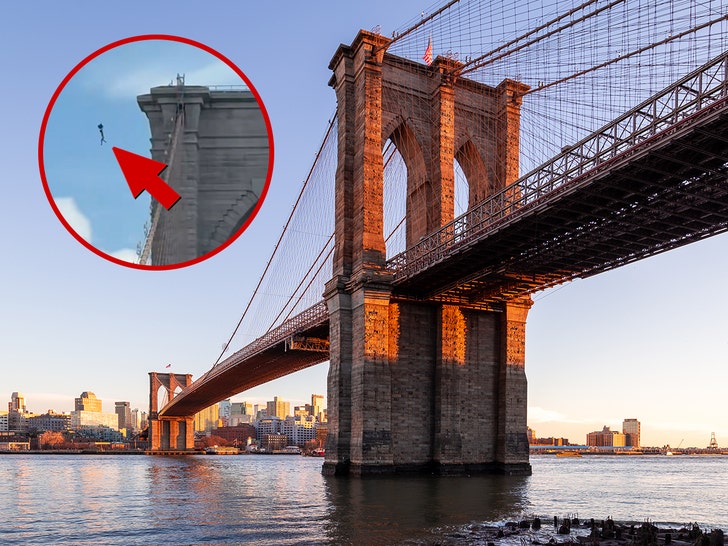
On Sunday, August 3, 2026, New York City witnessed a dramatic and highly unusual incident as a 44-year-old man, entirely unclad, scaled the iconic Brooklyn Bridge’s north tower before leaping into the turbulent East River below. The audacious act, which unfolded in broad daylight and was captured on video by stunned onlookers, concluded with a swift rescue by the NYPD Harbor Unit and the man’s miraculous survival, despite the immense dangers inherent in such a plunge. He was subsequently transported to a local hospital for a comprehensive psychiatric evaluation, as police sources confirm the investigation into potential criminal charges is ongoing.
A Perilous Ascent and Unforeseen Plunge
The sequence of events began on a seemingly ordinary Sunday morning when the individual, whose identity has not yet been publicly released, initiated his unauthorized ascent of the Brooklyn Bridge. Witnesses reported seeing the man meticulously climb the intricate latticework of the bridge’s north tower, a feat that itself presented significant danger given the structure’s height and complex design. The Brooklyn Bridge, a marvel of 19th-century engineering, stands approximately 277 feet at its highest point from the water, with the roadways themselves sitting about 133 feet above the East River. While the exact height from which the man jumped has not been specified, NYPD sources indicated he reached the "top of the north tower," suggesting a fall from a considerable elevation.
Upon reaching a high vantage point, the man reportedly removed all his clothing. In a peculiar turn, he was observed affixing a Kazakhstan flag to the bridge structure, an act that has led to considerable speculation regarding his motives, ranging from a form of protest to a personal statement or a manifestation of a mental health crisis. This detail adds another layer of intrigue to an already bizarre incident, prompting investigators to consider all possible angles as they review the circumstances leading up to the jump.
Emergency Services Mobilized: A Race Against Time
As reports of the climber reached authorities, the New York City Police Department swiftly mobilized its specialized units. Officers from the NYPD’s Emergency Service Unit (ESU), renowned for their expertise in high-angle rescues and crisis negotiation, were dispatched to the scene. Trained for perilous situations, ESU officers ascended the north tower, navigating its complex architecture with precision and urgency. Their primary objective was to establish communication with the man and attempt to de-escalate the situation, talking him down from the dangerous perch to safety.
These negotiations are a critical, often delicate, component of such incidents. ESU officers employ specialized communication techniques designed to build rapport, assess an individual’s mental state, and persuade them to abandon self-harm or risky behavior. They are equipped with an array of tools, including specialized harnesses, ropes, and medical equipment, ready to intervene physically if necessary. However, in this instance, despite the ESU’s efforts, the discussions proved unsuccessful. As officers continued their attempts to engage him, the man abruptly launched himself from the tower, plunging into the East River below.

The sudden leap immediately triggered the next phase of the emergency response. Already positioned and on high alert, the NYPD Harbor Unit, responsible for patrolling the city’s waterways and conducting marine rescues, moved into action. The Harbor Unit, with its fleet of specialized vessels and highly trained divers and rescue swimmers, is an indispensable asset in New York City’s emergency response network. Their rapid deployment in this scenario was critical to the man’s survival. Within moments of hitting the water, the Harbor Unit successfully fished the man out of the river.
Miraculous Survival Amidst Extreme Hazards
The man’s survival of such a fall is nothing short of miraculous. A jump from the height of the Brooklyn Bridge into water presents an array of potentially fatal challenges. The impact alone can be akin to hitting concrete due to the immense force generated by the velocity of the fall. Injuries such as broken bones, internal organ damage, and severe concussions are common in such incidents. Furthermore, the East River itself poses significant threats. It is characterized by powerful tidal currents, often reaching speeds of up to four knots, which can quickly drag a person away from the point of impact and make rescue incredibly difficult.
The water temperature, even in August, can be surprisingly cold, leading to cold shock and hypothermia, which can incapacitate even strong swimmers. The river also contains various debris, both visible and submerged, posing additional hazards to anyone entering its waters. Historically, jumps from the Brooklyn Bridge have often resulted in fatalities or severe, life-altering injuries. The fact that the man reportedly escaped "physical injury" is an extraordinary outcome, prompting experts to consider factors such as his body position upon impact, the specific point of entry into the water, and the immediate availability of rescue services. His immediate retrieval by the Harbor Unit undoubtedly played a pivotal role in preventing drowning or succumbing to hypothermia.
Following his rescue, the man was promptly transported to a nearby hospital. While initial reports indicated no major physical injuries, the standard protocol for individuals involved in such incidents mandates a thorough psychiatric evaluation. This is a critical step, as such extreme acts are often indicative of a severe mental health crisis. Healthcare professionals will assess his mental state, determine if he poses a danger to himself or others, and recommend appropriate treatment and support.
The Brooklyn Bridge: An Icon and a Security Challenge
The Brooklyn Bridge, an architectural masterpiece connecting Manhattan and Brooklyn, is not only a vital transportation artery but also a global landmark and a symbol of New York City’s enduring spirit. Opened in 1883, it was the longest suspension bridge in the world at the time and remains an active and heavily trafficked structure, carrying vehicular traffic, pedestrians, and cyclists daily. Its accessibility and iconic status, however, also make it a target for various unauthorized activities, including BASE jumping, protests, and, tragically, suicide attempts.
Securing such a vast and open structure presents immense challenges for law enforcement. While surveillance cameras, increased police patrols, and public awareness campaigns are in place, preventing every unauthorized climb or jump is practically impossible. The sheer scale of the bridge, with its multiple access points and public walkways, makes it difficult to implement foolproof security measures without compromising public access and the bridge’s historical aesthetic. Previous incidents have led to discussions about enhanced fencing or barriers, but any such modifications must be carefully balanced against the bridge’s historical preservation and public use. This latest incident is likely to reignite debates concerning the security vulnerabilities of major urban landmarks and the resources allocated to patrol and respond to such events.
Legal Ramifications and Mental Health Considerations
As the man recovers, authorities are faced with the task of reviewing the incident to determine if criminal charges will be filed. Potential charges could include reckless endangerment, a serious offense that can range from a misdemeanor to a felony depending on the level of risk posed to others and the individual’s intent. Other possible charges include trespassing, for his unauthorized climb onto the bridge structure, and public lewdness, given his naked state during the incident. Disorderly conduct is also a common charge in situations that cause public alarm or inconvenience.
The decision to prosecute will likely consider the man’s mental health evaluation. In cases where an individual is found to be experiencing a severe mental health crisis, legal proceedings may be influenced by these findings, potentially leading to alternatives such as court-ordered treatment rather than punitive incarceration. New York State law allows for involuntary commitment for psychiatric evaluation if an individual is deemed a danger to themselves or others. This incident underscores the ongoing challenge faced by urban emergency services, which often find themselves responding to situations that are fundamentally mental health crises rather than purely criminal acts. The blend of law enforcement and mental health support is crucial in managing such complex scenarios.
The Viral Spectacle and Broader Implications
The incident quickly garnered widespread attention, largely due to the dramatic videos captured by onlookers and subsequently shared across social media platforms. The immediate viral spread of such footage highlights the double-edged sword of citizen journalism in the digital age. While it provides immediate dissemination of information and can aid investigations, it also raises ethical questions about the public sharing of potentially distressing content, the risk of glorifying dangerous acts, and the potential for copycat incidents. News organizations and social media platforms often grapple with policies regarding the responsible dissemination of such sensitive material.
This event also serves as a poignant reminder of the critical importance of mental health awareness and the availability of support services. Individuals experiencing severe emotional distress or mental health crises often feel isolated and without options. Public health advocates consistently emphasize the need for accessible and robust mental health resources, including crisis hotlines, counseling services, and emergency psychiatric care. Organizations like the National Suicide Prevention Lifeline and local mental health associations offer vital support to those in need, aiming to prevent such desperate acts.
The costs associated with responding to incidents like this are substantial, encompassing the deployment of multiple police units, medical personnel, and hospital resources. These events place a significant strain on public services, diverting resources that could be used elsewhere. Beyond the immediate financial cost, there is the emotional toll on first responders who are routinely exposed to high-stress, dangerous situations.
In conclusion, the daring and dramatic leap from the Brooklyn Bridge on August 3, 2026, was a testament to the unpredictable nature of urban life and the complex interplay of human behavior, mental health, and emergency response. The man’s miraculous survival, coupled with the unusual details of his ascent and the Kazakhstan flag, has captivated public attention and prompted a multi-faceted investigation. As authorities continue to piece together the full story and determine the appropriate course of action, the incident serves as a stark reminder of the challenges in securing iconic landmarks, the inherent dangers of the city’s waterways, and the critical need for comprehensive mental health support systems to address the underlying issues that often precipitate such desperate acts. The investigation remains active, with further details expected to emerge as the man’s condition and the motives behind his extraordinary actions are more fully understood.

0 Comments