
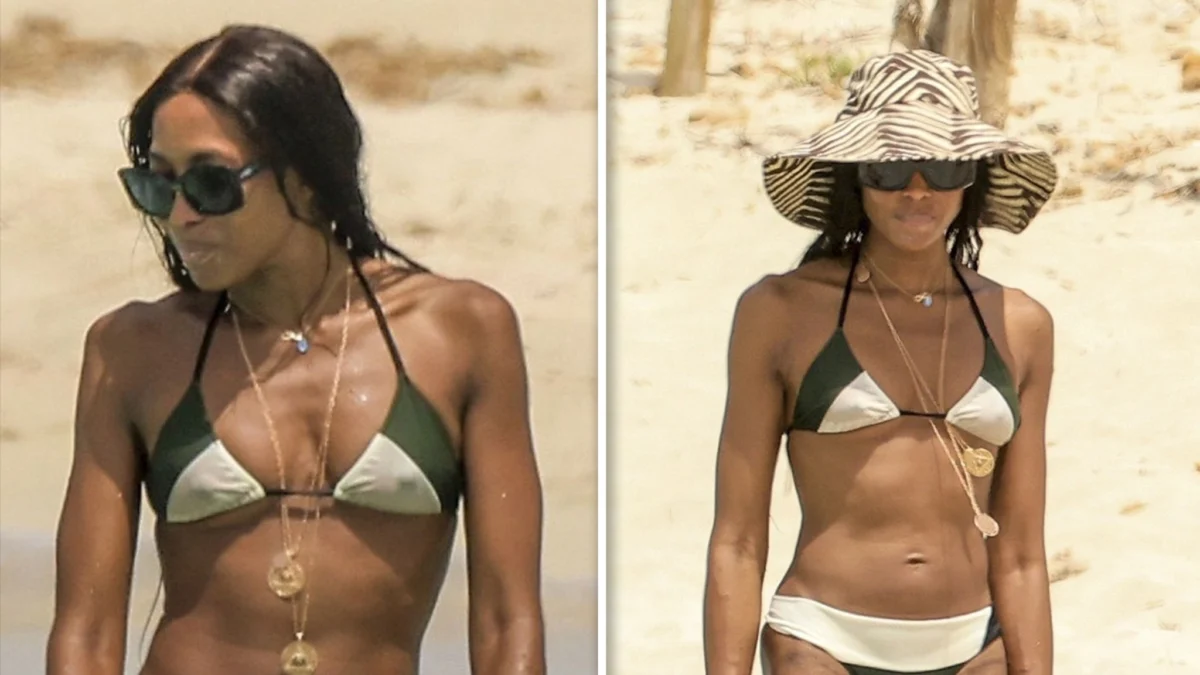
The iconic supermodel, Naomi Campbell, once again captivated global attention on July 19, 2026, when she was photographed during a sun-drenched getaway in Ibiza, showcasing an undeniably remarkable physique in a striking bikini. At 56 years old, Campbell’s appearance not only underscored her enduring status as a fashion powerhouse but also ignited widespread discussion about age, beauty standards, and the sustained influence of a true cultural icon. The images, quickly circulating across international media platforms, depict Campbell effortlessly transforming the sandy shores of Ibiza into her personal runway, a testament to a career that has spanned more than four decades.
The Ibiza Sighting: A Masterclass in Effortless Glamour
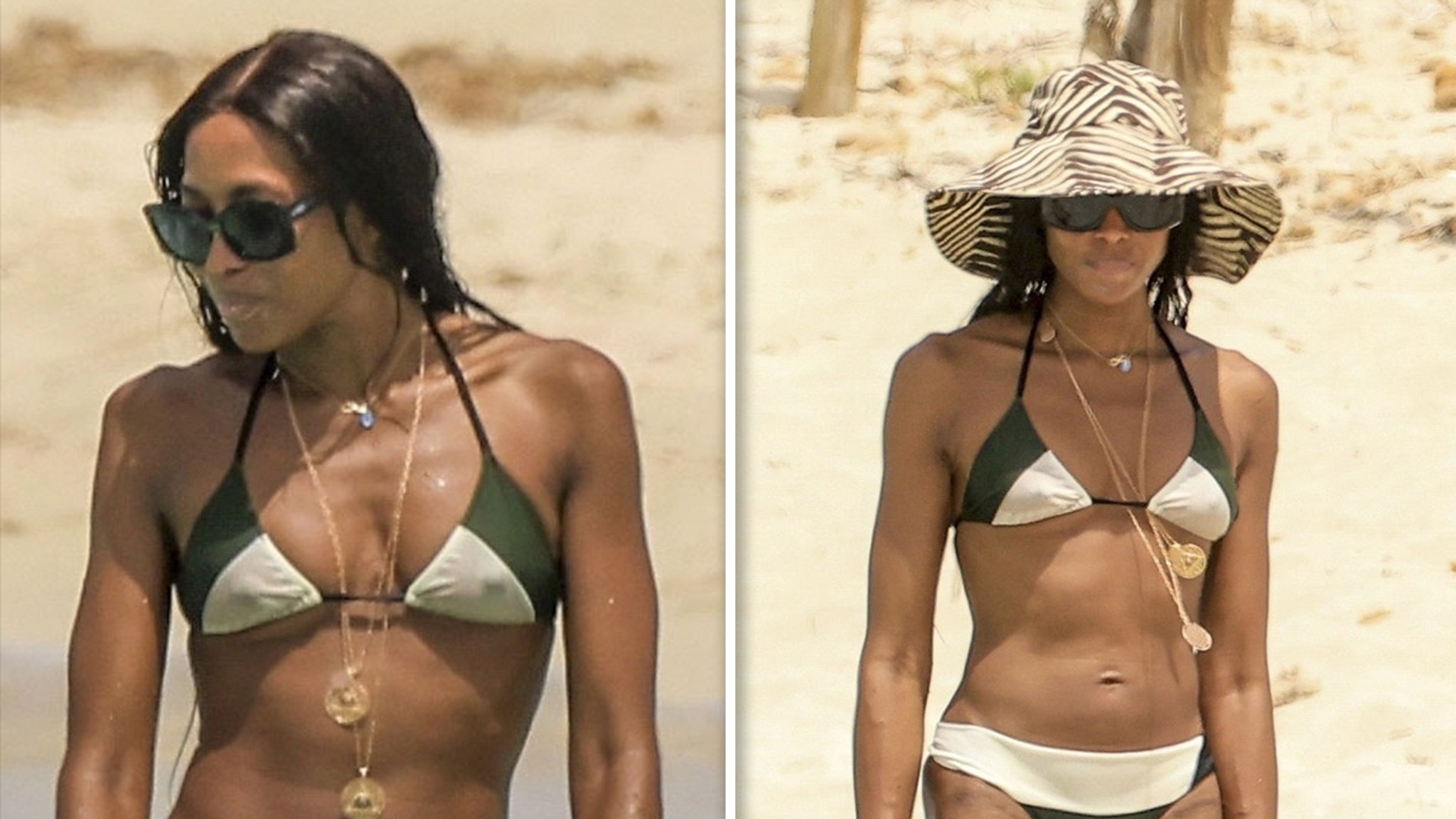
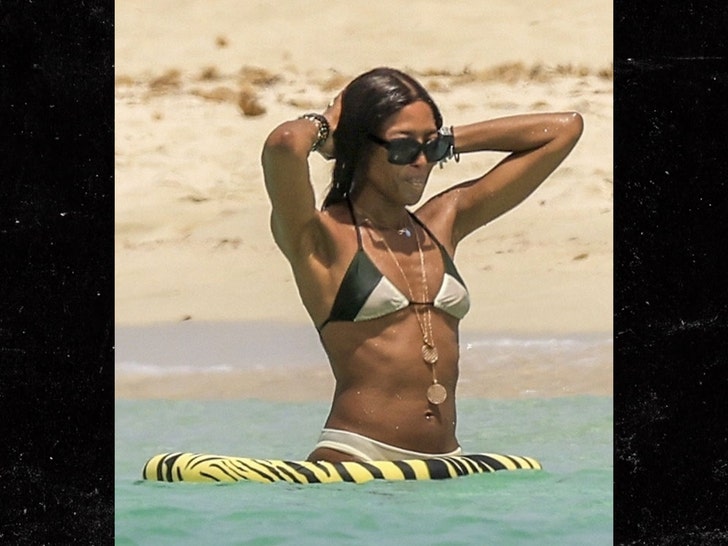
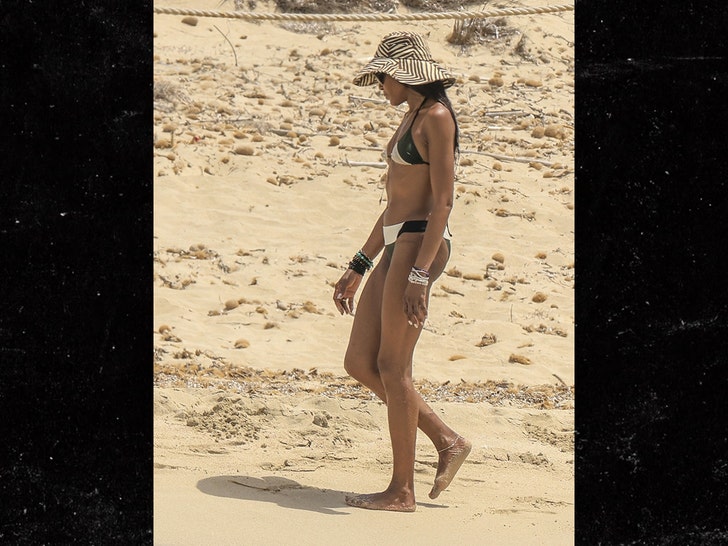
The series of photographs captured on a Saturday afternoon in the renowned Spanish island paradise revealed Campbell in a chic, multi-toned bikini, featuring a sophisticated palette of black, cream, and olive. Her ensemble was meticulously accessorized, a hallmark of her refined style. Oversized, dark-tinted sunglasses framed her face, adding an air of mystique and classic celebrity allure. Cascading layered necklaces adorned her décolletage, complemented by a collection of bracelets that suggested a curated selection rather than mere ornamentation, embodying a bohemian yet luxurious aesthetic. The overall presentation was one of deliberate elegance, defying the casual nature often associated with beachwear.
During the outing, Campbell was observed cooling off in the famously crystal-clear waters of the Mediterranean, moving with the same grace and poise that defined her legendary runway walks. Later, she was seen making her way back to shore, playfully interacting with a tiger-print inflatable, an accessory that, perhaps ironically, symbolized her own ferocious and enduring presence in the industry. The visual narrative conveyed a sense of relaxed confidence and undeniable vitality. Adding a practical yet stylish touch, she donned a wide-brimmed, floppy striped sun hat, offering respite from the intense Spanish sun while maintaining her impeccable sartorial composure. Each frame reinforced the perception that for Campbell, every public appearance, even a leisurely beach day, serves as an extension of her unparalleled professional persona.
A Legacy Forged in Fashion: Campbell’s Genesis
Naomi Campbell’s journey to global superstardom began in Streatham, South London, where she was discovered at the age of 15 while window shopping in Covent Garden. Her striking features—a statuesque height, commanding gaze, and distinctive walk—quickly set her apart. By the late 1980s, she had already graced the covers of British Elle and British Vogue, a remarkable feat for a young Black model at the time. Her rapid ascent challenged the prevailing racial norms of the fashion industry, which, despite its purported embrace of diversity, often relegated models of color to secondary roles.
Campbell’s early career was marked by groundbreaking achievements. She was the first Black model to appear on the cover of French Vogue in 1988, a move reportedly secured with the support of her close friend and mentor, designer Yves Saint Laurent, who threatened to pull his advertising if the magazine refused. A year later, she achieved another milestone as the first Black model on the cover of American Vogue’s coveted September issue. These were not merely personal triumphs but significant cultural moments that began to chip away at the systemic barriers within high fashion, paving the way for future generations of diverse models. Her unwavering determination and the fierce advocacy of her allies were crucial in breaking these long-standing color lines.
The Supermodel Era: Global Dominance and Cultural Impact
The late 1980s and early 1990s witnessed the dawn of the "supermodel" era, a phenomenon that elevated a select group of models to celebrity status comparable to Hollywood stars. Naomi Campbell was undeniably at the forefront of this movement, often referred to as one of the "Trinity" alongside Linda Evangelista and Christy Turlington, and later part of the "Big Five" or "Big Six" that included Cindy Crawford, Claudia Schiffer, and Kate Moss. These women transcended the traditional role of models, becoming household names, cultural touchstones, and powerful figures who commanded unprecedented fees and influence.
Campbell’s distinctive walk—often described as a powerful, almost predatory strut—became her signature, instantly recognizable on any runway. She worked with virtually every major fashion house and designer, from Versace and Chanel to Azzedine Alaïa and Dolce & Gabbana, defining the aesthetic of an entire generation. Her presence in iconic music videos, such as George Michael’s "Freedom! ’90," further cemented her status in popular culture, demonstrating a crossover appeal that few models before her had achieved. Beyond her commercial success, Campbell became a symbol of strength and glamour, embodying a powerful femininity that resonated globally. Her image was synonymous with aspiration and high fashion, making her one of the most photographed and recognizable faces in the world.
Four Decades of Enduring Influence: A Timeline of Relevance
Maintaining relevance in the notoriously fickle fashion industry for four decades is an extraordinary feat, a testament to Campbell’s adaptability, business acumen, and unwavering dedication.
- 1980s: Discovered, rapid rise to prominence, breaking racial barriers on major Vogue covers.
- 1990s: Peak of the supermodel era, global campaigns, iconic runway moments, crossover into music videos and acting. Co-authored the novel "Swan" and released an album "Babywoman."
- 2000s: Continued high-fashion work, expanded into philanthropy and activism, particularly for causes related to Africa and children’s welfare. Launched various business ventures, including fragrances.
- 2010s: Mentor on reality television shows ("The Face"), continued editorial work, advocate for diversity in fashion, active participant in global fashion weeks. Became a mother in 2021, showcasing her personal journey while maintaining her professional commitments.
- 2020s (leading up to 2026): Consistent presence on international runways for major brands, high-profile editorial shoots, continued advocacy, and strategic brand partnerships. Her appearance in Ibiza in 2026 firmly positions her as an active and vital force, not merely a nostalgic figure.
Throughout these decades, Campbell has consistently reinvented herself while retaining the core essence of her appeal. She has transitioned from being solely a muse to becoming a mentor, an activist, a businesswoman, and a mother, demonstrating a multifaceted approach to her public persona that has kept her at the forefront of cultural conversation. Her ability to remain current, embrace new media, and engage with contemporary issues has solidified her position as more than just a model, but a true global brand.
Defying Conventions: Age, Body Image, and the Public Eye
Naomi Campbell’s Ibiza photographs sparked considerable discussion about the evolving narratives surrounding age and body image, particularly for women in the public eye. In a society that often places immense pressure on women to adhere to youthful beauty standards, Campbell’s confident display at 56 challenges these conventions head-on. Her physical condition is not merely a testament to good genetics but also, implicitly, to a disciplined lifestyle encompassing rigorous fitness regimes, mindful nutrition, and consistent self-care—practices common among high-profile individuals seeking to maintain peak physical condition. While specific details of her personal regimen are private, the results speak to a commitment often required to defy the visible signs of aging.
The fashion industry itself has begun, albeit slowly, to embrace a broader definition of beauty that includes age diversity. Campaigns featuring older models, once a rarity, are becoming more common, reflecting a wider societal shift towards appreciating beauty at all life stages. Campbell’s continued prominence plays a crucial role in this movement, demonstrating that style, allure, and professional relevance do not diminish with age. She serves as a powerful counter-narrative to ageist stereotypes, inspiring countless individuals to embrace their own aging process with confidence and vitality. Her visible comfort in her own skin, unburdened by conventional expectations, sends a potent message of empowerment and self-acceptance.
The Global Reaction and Digital Footprint
In the contemporary media landscape, images of high-profile celebrities like Naomi Campbell instantly go viral, becoming fodder for extensive public commentary and discussion across digital platforms. The Ibiza photos were no exception. Social media platforms, from Instagram to X (formerly Twitter), buzzed with reactions, largely overwhelmingly positive. Fans and fashion commentators alike lauded Campbell’s "ageless" beauty and commended her for continuing to set trends and inspire. Phrases such as "eternal queen," "still got it," and "body goals" dominated online discourse, highlighting the aspirational quality of her image.
Beyond mere admiration, the images generated deeper conversations about the double standards faced by women in the public eye regarding aging, and how figures like Campbell actively dismantle them simply by existing and thriving. The speed and breadth of the digital dissemination underscored the enduring power of celebrity imagery and its capacity to shape public perception and spark cultural dialogue. The global nature of the reaction reaffirmed Campbell’s worldwide appeal and her status as a figure whose actions resonate far beyond the fashion runways.
Beyond the Bikini: Campbell’s Multifaceted Persona
While her beach appearance highlighted her physical prowess, it is crucial to remember that Naomi Campbell’s influence extends far beyond her modeling career. She has consistently leveraged her platform for significant philanthropic and humanitarian endeavors. Her involvement in various charities, particularly those focused on Africa, health, and education, has been a consistent thread throughout her later career. She founded Fashion for Relief in 2005, an initiative that has raised millions of dollars for victims of natural disasters and other humanitarian causes through high-profile fashion shows and events.
Campbell has also ventured into the business world, launching successful fragrance lines and engaging in strategic partnerships. She has been an outspoken advocate for greater diversity and inclusion within the fashion industry, using her voice to challenge systemic biases and promote equitable representation. Her transition from solely a model to a multifaceted entrepreneur, activist, and public figure demonstrates a strategic vision for her legacy, one that seeks to make a tangible impact beyond the ephemeral world of fashion trends. Her decision to become a mother in her 50s further added another dimension to her public narrative, showcasing a deeply personal journey that resonated with many, proving that life’s milestones can be achieved on one’s own terms.
Conclusion: An Icon Redefining Longevity
The images of Naomi Campbell in Ibiza at 56 are more than just celebrity snapshots; they represent a powerful cultural statement. They encapsulate her extraordinary journey from a young model breaking barriers to a global icon who continues to challenge norms and inspire. Her sustained presence in the public eye, marked by elegance, confidence, and an unwavering commitment to her craft and causes, serves as a testament to her unique blend of enduring beauty, professional discipline, and personal resilience. As she continues to grace headlines, whether on a runway or a sun-drenched beach, Naomi Campbell consistently redefines what it means to be a supermodel, proving that true star power, like her, only grows more radiant with time. Her ability to effortlessly command attention and spark dialogue ensures that her impact on fashion and culture will resonate for generations to come.

0 Comments