
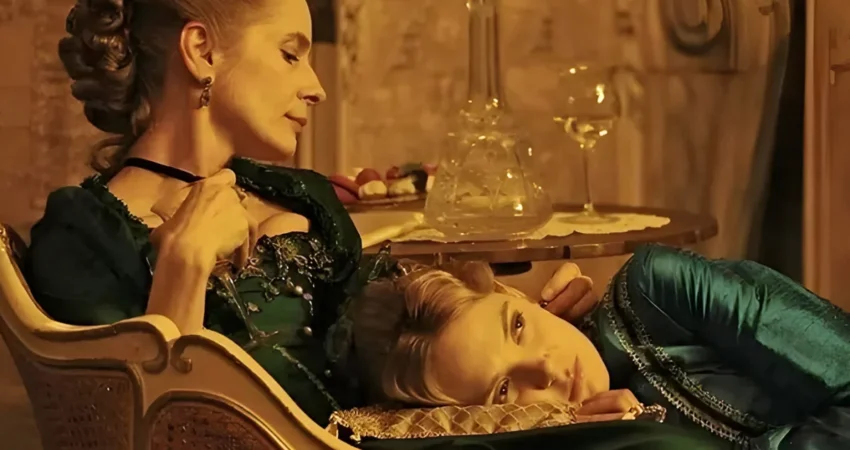
The streaming giant Netflix has recently expanded its portfolio of international period dramas with the release of The Doll (La Muñeca), a six-episode miniseries that has rapidly ascended the global viewing charts. Based on the 1890 novel Lalka by Bolesław Prus, the production represents an ambitious attempt to translate a cornerstone of Polish literature into a format accessible to a 21st-century global audience. While the series has achieved significant commercial success, reaching the top ten lists in 62 countries since its debut on September 16, it has simultaneously ignited a fierce cultural debate in its home country. Polish literary purists and historians have expressed dissatisfaction with the production’s departure from the source material, arguing that the modernization of character motivations and social dynamics has compromised the essence of what is considered Poland’s greatest realist novel.
The Literary Foundation: A National Monument in Prose
To understand the intensity of the controversy surrounding the Netflix adaptation, one must first recognize the status of Lalka in Polish culture. Written by Bolesław Prus (the pen name of Aleksander Głowacki) and serialized between 1887 and 1889 before its book publication in 1890, the novel is more than a mere romantic tragedy. It is a panoramic study of 19th-century Warsaw, capturing the transition from a feudal society to a capitalist one under the shadow of the Russian Empire’s partition of Poland.
The novel is a mandatory component of the Polish national educational curriculum. For generations, students have analyzed its complex themes of "Positivism"—a philosophical movement emphasizing logic, science, and organic work—versus the fading echoes of "Romanticism." The protagonist, Stanisław Wokulski, is traditionally viewed as a tragic hybrid of these two eras: a veteran of the January Uprising (Romantic) who becomes a wealthy merchant through intellect and industry (Positivist), only to be undone by his obsessive love for an indifferent aristocrat, Izabela Łęcka.
The Netflix Narrative: A Shift in Perspective
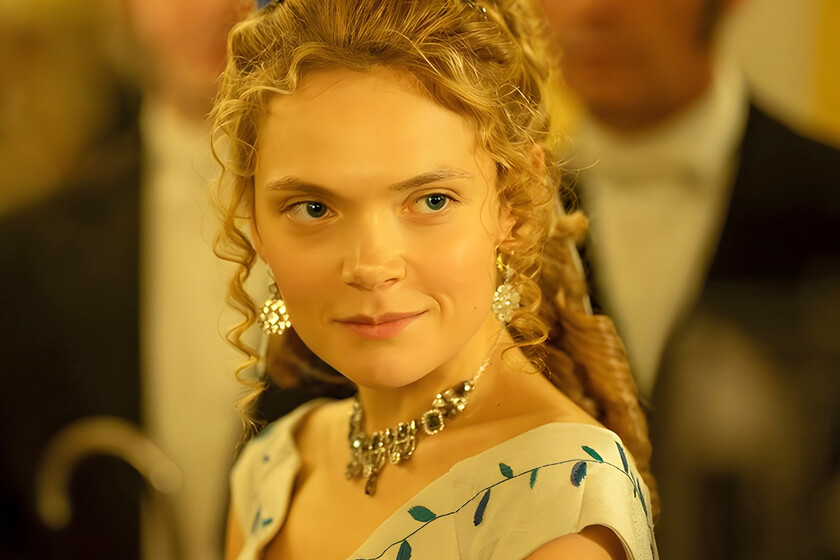
The 2026 Netflix adaptation, titled The Doll, compresses the 700-page masterpiece into six hour-long episodes. While the core plot remains—the self-made millionaire Wokulski attempting to win the hand of the impoverished but haughty aristocrat Izabela—the execution shifts the focus toward contemporary sensibilities. In this version, the production team has opted to highlight themes of female agency and the "toxicity" of male obsession, reflecting modern social discourse rather than 19th-century realism.
In the original text, Izabela Łęcka is often interpreted as a "doll"—a beautiful, hollow figure shaped by her social class, incapable of reciprocating Wokulski’s depth of feeling. However, the Netflix series reimagines Izabela as a woman actively seeking her own identity and freedom. This version of the character harbors ambitions of becoming a writer, a narrative choice that grants her a modern interiority absent from the 1890 text. Conversely, Wokulski’s character has been reframed. Where the book portrays him as a tragic visionary whose passion leads to his downfall, the series leans into a critique of his wealth and his desire to "purchase" social standing and affection, presenting his pursuit as a manifestation of a controlling, status-driven ego.
Chronology of the Production and Release
The journey of The Doll from a literary classic to a streaming phenomenon follows a calculated strategy by Netflix to invest in high-quality local language content with global appeal.
- September 2024: Netflix announces the development of a new adaptation of Lalka, promising a "fresh and bold" take on the classic.
- Early 2025: Principal photography takes place in Warsaw and various historical sites across Poland, utilizing high-budget production design to recreate the 19th-century setting.
- September 16, 2026: The Doll premieres globally on Netflix. Within 48 hours, it enters the Top 10 in Poland, Brazil, Mexico, France, and dozens of other territories.
- Late September 2026: Domestic backlash begins in Poland. Academic circles and literary critics publish editorials criticizing the "Bridgerton-style" treatment of the national epic.
- October 2026: Data from TVP World and Netflix internal metrics confirm the show as one of the most successful Polish-language exports in the platform’s history, despite the local polarizing reviews.
Supporting Data: Global Reach vs. Local Discontent
The commercial performance of The Doll highlights a growing trend in the streaming industry: the "localization" of content that resonates globally through universal themes of love, class struggle, and ambition. According to industry reports, the series maintained a position in the global Top 10 for three consecutive weeks. Its success in Latin America and Western Europe suggests that the aesthetic of the period drama—characterized by lavish costumes and high-stakes social maneuvering—transcends the specific historical context of 19th-century Poland.

However, the data within Poland tells a different story. While viewership was high, audience sentiment was sharply divided. A survey of literary enthusiasts and educators suggested that nearly 70% of respondents felt the series "simplified" the complex political and philosophical subtexts of the novel. The primary grievance cited was the reduction of Wokulski’s scientific and patriotic motivations in favor of a more standardized romantic drama.
Critical Analysis: The "Bridgerton" Influence
The stylistic choices in The Doll have drawn frequent comparisons to the Shondaland hit Bridgerton. This comparison is not merely aesthetic; it refers to a specific subgenre of period drama that prioritizes modern social values and stylized visual palettes over strict historical or literary accuracy.
By framing Izabela’s struggle through the lens of modern feminist aspirations and portraying the aristocracy as a collection of "mean girl" archetypes, Netflix has made the story "digestible" for an international audience unfamiliar with Polish history. Analysts argue that this is a necessary compromise for a platform that operates on a global scale. To a viewer in Mexico City or London, the specific nuances of the Polish Positivist movement are less compelling than a story about a woman fighting for independence in a restrictive society.
Nevertheless, critics in Poland argue that this approach "hollows out" the national identity of the work. They contend that by removing the specificities of the Polish struggle for sovereignty and the unique social pressures of 1880s Warsaw, the series becomes a generic costume drama that could be set anywhere.
Official Responses and Cultural Impact
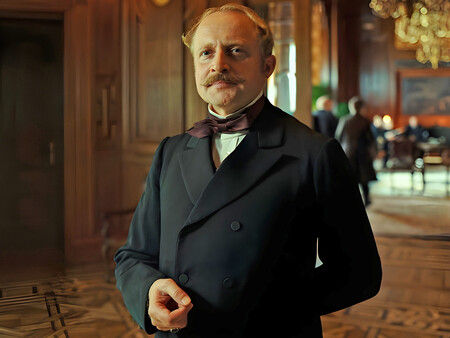
While Netflix has not issued a direct rebuttal to the domestic criticism, representatives for the production have emphasized that the series was always intended as a "reimagining" rather than a faithful line-by-line adaptation. Showrunners have stated that their goal was to find the "eternal pulse" of the story—the elements of the human condition that remain relevant regardless of the century.
In Poland, the controversy has had an unexpected side effect: a renewed interest in the original text. Booksellers in Warsaw have reported a spike in sales of Lalka since the series premiered, as younger viewers seek to compare the Netflix version with the source material. Libraries have also noted an increase in checkouts, suggesting that even a controversial adaptation can serve as a gateway to classical literature.
Broader Implications for Future Adaptations
The case of The Doll serves as a significant case study for the future of literary adaptations on streaming platforms. It illustrates the tension between "cultural heritage" and "global entertainment." As Netflix and its competitors continue to mine national literatures for content—such as the recent adaptations of One Hundred Years of Solitude or The Leopard—the conflict between local fidelity and global marketability is likely to intensify.
The success of The Doll suggests that for a global audience, the "vibe" of a period drama—the costumes, the tension, and the relatable modern character arcs—often outweighs the importance of historical or literary accuracy. However, for the country of origin, these works remain sacred texts that define national identity.

Conclusion: A Divisive Success
The Doll stands as a testament to the power of high-budget streaming to bring obscure national classics to the world stage. Whether it is viewed as a "toxic" betrayal of a masterpiece or a "fresh" modernization depends entirely on the viewer’s proximity to the source material. For the 62 countries where the series has trended, it is a captivating tale of class, desire, and the search for freedom. For Poland, it remains a provocative reimagining of a beloved icon, proving that even after 130 years, the story of Wokulski and Izabela still has the power to provoke, entertain, and divide.
As the industry moves forward, The Doll will likely be remembered as a pivotal moment where the "streaming aesthetic" collided with the "literary canon," forcing a conversation about who owns a story: the culture that produced it, or the global audience that consumes it. For those who enjoy the heightened drama of Bridgerton or the social critiques of The Gilded Age, The Doll offers a compelling new entry into the genre, provided they are willing to accept the 21st-century reflection staring back from the 19th-century mirror.

0 Comments