
 Julia Prastini
Netflix continues its robust content expansion in early 2026 with a significant wave of new programming scheduled for release on Wednesday, March 11. This latest content drop underscores the streaming giant’s multifaceted strategy to cater to a broad global audience, encompassing unscripted social experiments, incisive investigative documentaries, and highly anticipated adaptations of beloved franchises. Among the highlights are "The Age of Love," a new reality dating series exploring generational romantic dynamics; "Louis Theroux: Inside the Machosphere," an in-depth look into controversial online communities; and the much-awaited second season of the live-action phenomenon "One Piece." These releases are strategically positioned to engage diverse demographics and reinforce Netflix’s position in the highly competitive streaming landscape.
The Genesis of ‘The Age of Love’: Navigating Generational Romance
One of the flagship unscripted offerings debuting on March 11 is "The Age of Love," a social experiment dating series designed to delve into the complexities and societal perceptions surrounding age-gap relationships. The premise of the series posits a fundamental question: while initial attraction may transcend age differences, do these disparities ultimately become insurmountable obstacles over time? This exploration is particularly timely, given evolving societal norms and increased discourse around non-traditional relationship structures.
The series is helmed by established personalities within the reality television sphere: Nick Viall and Natalie Joy. Viall, a veteran of ABC’s highly successful "The Bachelor" franchise, brings a wealth of experience in navigating romantic entanglements on screen, having been a contestant and subsequently the lead Bachelor. His transition to hosting a show that scrutinizes a specific facet of dating reflects a natural progression in his media career, leveraging his public persona and familiarity with relationship dynamics. Natalie Joy, his fiancée, complements Viall, offering a contemporary perspective on modern romance. Their combined presence lends authenticity and relatability to the series, appealing to audiences familiar with their personal journey and public commentary on relationships.
Netflix’s investment in "The Age of Love" is indicative of a broader trend within the streaming industry towards unscripted content. Reality dating shows, in particular, have proven to be exceptionally cost-effective to produce compared to high-budget scripted dramas, while simultaneously generating significant audience engagement and social media buzz. Titles like "Love Is Blind," "Too Hot to Handle," and "The Ultimatum" have consistently ranked among Netflix’s most-watched programs, demonstrating the genre’s enduring appeal. "The Age of Love" aims to carve its niche by focusing on the specific societal and personal challenges inherent in age-gap pairings, potentially sparking broader conversations about love, maturity, and societal expectations. Industry analysts suggest that by exploring this often-judged aspect of relationships, the series could tap into a demographic eager for nuanced discussions beyond conventional dating narratives. The show offers an opportunity for viewers to reflect on their own biases and assumptions, transforming entertainment into a potential catalyst for social introspection.
‘Louis Theroux: Inside the Machosphere’: An Unflinching Look at Online Subcultures
Complementing the unscripted romance is a significant documentary release: "Louis Theroux: Inside the Machosphere." This 90-minute feature-length documentary marks Theroux’s first dedicated film for Netflix, solidifying the platform’s commitment to high-quality investigative journalism. The film sees Theroux, renowned for his distinctive interviewing style and immersive approach to exploring subcultures, venturing into the burgeoning and often controversial world of the "machosfera."
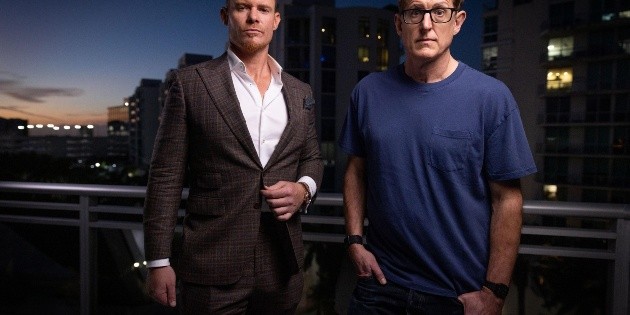
The "machosfera" refers to a loosely connected network of online influencers, content creators, and communities that promote specific, often extreme, ideologies concerning masculinity, gender roles, and men’s rights. These communities frequently intersect with concepts such as incel culture, MGTOW (Men Going Their Own Way), and various forms of anti-feminist sentiment, attracting a significant following, particularly among young men navigating identity and societal pressures in the digital age. Theroux’s journey takes him to key geographical hubs associated with this movement, including Miami, New York, and Marbella. These locations represent diverse facets of the "machosfera’s" influence, from the entrepreneurial influencer culture prevalent in parts of Florida to the more established media ecosystems of New York, and the aspirational, luxury lifestyle often promoted by some figures in places like Marbella, Spain.
The documentary aims to explore how these central figures are actively reshaping contemporary notions of masculinity and fueling a global resurgence of men’s rights movements. Theroux’s unique methodology, characterized by a blend of empathy, skepticism, and probing inquiry, is particularly suited to navigating the complexities and sensitivities of this subject matter. His previous work, which includes critically acclaimed documentaries on diverse topics such as Scientology, white supremacists, and various fringe groups, has consistently demonstrated his ability to gain access and elicit candid responses from subjects who might otherwise be elusive or hostile to mainstream media.
"Louis Theroux: Inside the Machosphere" is a production of Mindhouse Productions, Theroux’s own company, with Theroux himself serving as an executive producer alongside Aloke Devichand and Arron Fellows. Adrian Choa directed the film. The involvement of Mindhouse Productions ensures a level of creative control and journalistic integrity that has become synonymous with Theroux’s brand. The timing of this documentary is particularly pertinent, as discussions around online radicalization, gender identity, and the impact of digital echo chambers continue to dominate global headlines. The film is expected to generate significant discussion, shedding light on a subculture that, while often operating on the fringes, exerts a growing influence on mainstream discourse and the perspectives of a new generation. It serves as a critical piece of social commentary, prompting viewers to consider the implications of these online movements on broader societal structures and individual well-being.
‘One Piece’ Season 2: The Return of a Live-Action Phenomenon
Beyond new original productions, March 11 also marks a highly anticipated return for fans of adapted content with the premiere of the second season of "One Piece." The live-action adaptation of Eiichiro Oda’s globally beloved manga and anime series made a significant splash with its first season, defying historical trends of often-disappointing anime-to-live-action transitions. Season 1, released in August 2023, was met with widespread critical acclaim and, crucially, approval from the notoriously passionate and discerning fanbase. Its success was pivotal for Netflix, which has actively invested in adapting popular anime properties into live-action formats, albeit with mixed results in the past (e.g., "Cowboy Bebop").
The second season’s arrival is therefore under immense scrutiny, with expectations riding high on its ability to maintain the quality, spirit, and narrative integrity established by its predecessor. The production scale of "One Piece" is immense, reflecting Netflix’s commitment to delivering a faithful yet cinematic rendition of the source material. This includes elaborate set designs, complex visual effects to bring the fantastical world of the Grand Line to life, and a diverse international cast portraying the iconic Straw Hat Pirates and their adversaries. The show’s success hinges not only on its ability to please existing fans who have followed the adventures of Monkey D. Luffy and his crew for decades but also on its capacity to attract new viewers unfamiliar with the vast "One Piece" universe.
The original "One Piece" manga, which began serialization in 1997, is one of the best-selling manga series in history, boasting over 500 million copies in circulation worldwide as of 2024. Its anime adaptation, which started in 1999, has aired over 1,000 episodes. The live-action series represents a monumental undertaking to translate this sprawling narrative into a new medium. Season 2 is expected to delve deeper into the established arcs, introducing new characters and expanding the world-building that captivated audiences in the first season. The continued success of "One Piece" is vital for Netflix’s broader strategy of leveraging established intellectual properties with massive global fanbases, demonstrating its capability to produce high-quality, large-scale international content that transcends language and cultural barriers. It solidifies Netflix’s reputation as a destination for premium adaptations, a crucial differentiator in a crowded streaming market.
Broader Netflix Content Strategy: Diversification and Global Appeal

The March 11 releases exemplify Netflix’s overarching content strategy for 2026 and beyond: a calculated blend of diverse genres and formats aimed at maximizing subscriber engagement and attracting new users. As of the fourth quarter of 2025, Netflix reported subscriber figures exceeding 260 million globally, a testament to its extensive content library and aggressive international expansion. However, maintaining this growth requires continuous innovation and a steady stream of fresh, compelling programming.
The concurrent release of a social experiment, an investigative documentary, and a high-budget fantasy adaptation underscores this strategic diversification. Unscripted content like "The Age of Love" provides high entertainment value and generates significant social media discussion at a relatively lower cost per episode. Documentaries such as "Louis Theroux: Inside the Machosphere" cater to a segment of the audience seeking informative, thought-provoking, and often socially relevant narratives, enhancing the platform’s intellectual credibility. Meanwhile, tentpole scripted productions like "One Piece" Season 2 are essential for attracting and retaining a broad base of viewers, particularly those drawn to large-scale, cinematic experiences and established franchises.
Netflix’s global production footprint also plays a critical role. While "The Age of Love" likely targets a primarily English-speaking audience, the themes of age-gap relationships are universally understood. "Louis Theroux: Inside the Machosphere" tackles a global phenomenon of online influence. "One Piece," originating from Japan, has a colossal international following, making its live-action adaptation a truly global product. This emphasis on producing and acquiring content that resonates across different cultures and languages is a cornerstone of Netflix’s continued dominance in the global streaming market. The company continues to invest billions annually in content, with a significant portion dedicated to original programming, signaling a commitment to differentiating its library from competitors reliant on licensed content.
Looking Ahead: The Future of Streaming Content
The releases on March 11, 2026, offer a microcosm of the current trends and future trajectory of the streaming industry. The emphasis on social relevance, as seen in Theroux’s documentary, reflects a growing demand for content that engages with contemporary issues and sparks public discourse. The continued evolution of unscripted formats, like "The Age of Love," demonstrates the industry’s agility in finding new angles within popular genres to maintain audience interest. And the successful execution of high-stakes adaptations like "One Piece" Season 2 illustrates the immense value of intellectual property and the potential for streaming platforms to redefine how beloved stories are told across different mediums.
As competition intensifies with established players and emerging services, Netflix’s strategy of offering a comprehensive and diverse content portfolio remains critical. The ability to seamlessly transition from lighthearted reality entertainment to serious investigative journalism and then to epic fantasy adventures ensures that the platform appeals to a wide array of tastes and moods. These new offerings are not merely additions to a content library; they are strategic investments designed to solidify subscriber loyalty, attract new audiences, and reinforce Netflix’s position as a dominant force in the ever-evolving landscape of global entertainment. The ongoing success of these diverse programs will undoubtedly shape the future content decisions of Netflix and the wider streaming industry in the years to come.


 Eva Lovia
 Julia Chirkova
 Nila Kartika Wati
 Jia Lissa
 admin
admin