
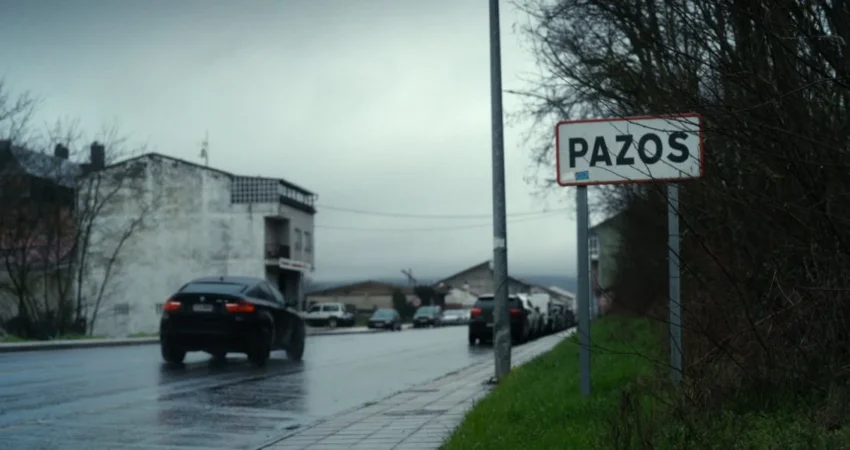
Netflix has strategically timed the release of two distinct productions delving into the harrowing murder of Isabel Fuentes in Verín, Ourense, a case that shocked Spain and ignited a national conversation about institutional failings in protecting victims of domestic violence. The streaming giant will première the documentary "Desprotexida: El crimen de Pazos" on November 6th, followed a week later, on November 13th, by the fictionalized miniseries "El crimen de Pazos," produced by Bambú Producciones and featuring Tristán Ulloa. This dual release strategy aims to offer viewers a comprehensive and multifaceted understanding of the events, from factual reconstruction to dramatic interpretation.
The Unfolding Tragedy of Isabel Fuentes
The brutal events that led to Isabel Fuentes’ death began in April 2015. Fuentes, then 66 years old, was brutally attacked with a hammer while she slept in her home in Pazos, a small village within the municipality of Verín. Her husband, Aniceto Rodríguez, who was 79 at the time, initially reported the incident as a robbery. However, the ensuing investigation by the Guardia Civil quickly shifted focus towards him, identifying him as the primary suspect. During this period, Isabel remained hospitalized at the Complexo Hospitalario Universitario de Ourense (CHUO), where she was recovering from the severe injuries sustained in the initial assault.
The situation took a far more sinister turn on May 8th, 2015, precisely thirty-seven days after the first attack. Aniceto Rodríguez murdered Isabel Fuentes in her hospital room. This second, fatal assault brought the tragic sequence of events to a grim conclusion, leaving a profound scar on the community and highlighting systemic failures in victim protection.
Legal Ramifications and Defense Arguments
Following the investigation and trial, the Audiencia Provincial of Ourense sentenced Aniceto Rodríguez to a total of 31 years in prison. This sentence was divided into 12 years for the attempted murder at the family home and 19 years for the final murder in the hospital. The prosecution had sought significantly harsher penalties, ranging between 39 and 49 years.
During the trial, Rodríguez maintained his innocence, famously stating, "I don’t remember anything." His defense team attempted to leverage a plea of mental disorder, seeking a maximum sentence of only 7 years. However, Aniceto Rodríguez died in A Lama prison while serving his sentence, leaving many unanswered questions and a sense of unresolved justice for the victim’s advocates.
A Case that Sparked National Debate
The Pazos murder case transcended its tragic individual circumstances to become a focal point for a wider societal debate. It brought into sharp relief the critical issues surrounding the protection of victims of gender-based violence and exposed potential institutional oversights and shortcomings that may have contributed to the catastrophic outcome. The case served as a stark reminder of the complexities involved in identifying and intervening in situations of domestic abuse, particularly when perpetrators attempt to mask their actions or exploit vulnerabilities within the system.
"Desprotexida: El crimen de Pazos" – The Documentary Unveiling

The documentary, "Desprotexida: El crimen de Pazos," is a production by True Crime Factory, the acclaimed company behind Carles Porta’s "Crims" series. Porta himself serves as executive producer alongside Pablo Fernández Masó. The film is written and directed by Jorge Laplace, whose previous work includes a documentary on tennis star Carlos Alcaraz.
Laplace articulated his motivation for tackling this story, stating, "When I learned about Isabel Fuentes’ story, what impacted me most was not just the crime, but an uncomfortable question that I couldn’t answer: How was it possible that she was murdered in a hospital when it was known she was in danger?"
This central question forms the backbone of the documentary. It meticulously reconstructs the events and surrounding circumstances, drawing on a wealth of testimonies from investigators, medical professionals, family members, neighbors, and journalists. The documentary’s primary objective is to dissect how the system, which was ostensibly in place to protect Isabel, ultimately failed her. The title itself, "Desprotexida" (Unprotected in Galician), directly reflects this core theme, emphasizing that Isabel Fuentes was left vulnerable in the very place where she should have been most secure.
"El crimen de Pazos" – The Miniseries Adaptation
The miniseries "El crimen de Pazos," produced by Bambú Producciones, offers a fictionalized dramatization of the case, which necessitates certain alterations, including the modification of some character names. In the series, the victim is known as Irene, while her husband retains the name Aniceto, portrayed by Miguel Borines.
The narrative, as presented in the synopsis, begins by depicting Aniceto and Irene as an apparently perfect couple. This idyllic facade shatters when Irene suffers a brutal attack during a supposed robbery. Tristán Ulloa takes on the role of Elías, a Guardia Civil sergeant who becomes convinced of the husband’s guilt.
The series chronicles Sergeant Elías’s determined efforts to have his suspicions taken seriously by the authorities, all while Irene battles for her life in the hospital and Aniceto remains free. Elías finds himself in direct conflict with a system he perceives as unwilling to heed his warnings or adequately protect the victim.
The ensemble cast includes notable actors such as Carlos Blanco, Fer Fraga, Tito Asorey, Nacho Fresneda, Fernando Guillén Cuervo, and Marta Nieto. Verónica Sánchez and Edu Soto also make special guest appearances.
Bambú Producciones: A History of Iberian Narratives
Bambú Producciones, the production company behind "El crimen de Pazos," has a strong track record of producing compelling Spanish-language dramas and series, many of which are set in or deeply connected to Galicia. Their previous successes include the widely popular "Fariña," "El caso Asunta," and "Alta mar." The company positions "El crimen de Pazos" as their third major project rooted in Galician narratives, following "Fariña" and "El caso Asunta."
The series was filmed across various locations in Galicia, including Santiago, Verín, Allariz, Ourense, A Coruña, Betanzos, and Ferrol. Principal photography commenced in September 2025 and concluded in November of the same year. The decision to film in Verín, the very municipality where the crimes occurred, imbues the production with an added layer of authenticity and resonance, bringing the story back to its geographical and emotional epicenter over a decade after the events.

Divergent Perspectives: Documentary vs. Fictionalization
While both Netflix productions are inspired by the same tragic events, they approach the narrative from distinct vantage points, offering complementary yet unique viewing experiences.
The documentary, "Desprotexida: El crimen de Pazos," adopts a vérité style, relying heavily on the firsthand accounts of those who were directly involved or witnessed the events unfold. By incorporating the perspectives of investigators, medical personnel, family members, neighbors, and journalists, it aims to provide a factual and comprehensive overview of the case. The documentary’s narrative arc is fundamentally shaped by Laplace’s central question regarding the institutional failure to protect Isabel Fuentes within the hospital setting.
In contrast, the miniseries "El crimen de Pazos" opts for a singular, focused perspective. It centers on Sergeant Elías and frames the narrative as a gripping investigative thriller. The core conflict of the series lies in Elías’s struggle against a seemingly indifferent or recalcitrant system, his growing suspicions about the husband, and his inability to gain traction with his warnings.
Strategic Release: Enhancing Viewer Comprehension
The decision by Netflix to release the documentary first, followed by the miniseries a week later, is a deliberate strategic choice designed to enhance viewer understanding and engagement.
By presenting the factual documentary first, viewers are provided with the established facts, the real names of the individuals involved, and the judicial context of the case. This groundwork allows them to approach the subsequent fictionalized miniseries with a solid understanding of the underlying events.
The placement of the documentary before the drama also addresses a common challenge with fact-based fiction: the ambiguity between dramatization and historical accuracy. With the documentary’s factual account fresh in their minds, viewers are better equipped to discern where the miniseries adheres to reality and where it takes dramatic license.
Furthermore, the shared thematic concern – the question of why Isabel was not protected – is presented in distinct ways. The documentary poses this question through its investigative framework, while the miniseries dramatizes the agonizing wait and the systemic inertia that allowed the tragedy to unfold. This chronological approach allows audiences to first grasp the "what" and "why" from a factual standpoint and then experience the emotional weight and suspense of the narrative through a dramatic lens.
This sequential release strategy is not intended for the two productions to compete but rather to complement each other. The documentary lays the foundation of information, and the miniseries, a week later, transforms that information into a compelling dramatic narrative. This approach allows viewers to engage with the story on multiple levels, fostering a deeper and more nuanced appreciation of the complexities surrounding the Pazos murder case and the critical issues of victim protection that it brought to the forefront.

0 Comments