
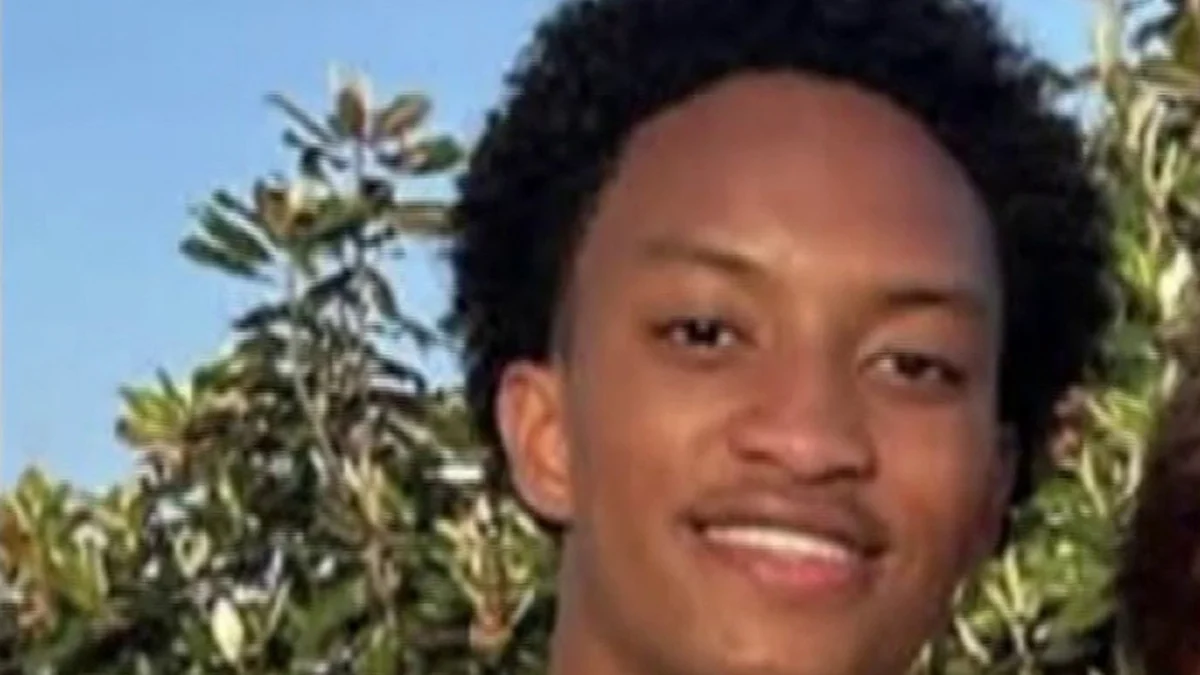
A critical new perspective has emerged in the mysterious death of Nolan Wells, the young man whose body was discovered in the waters off Horn Island weeks after he went missing during the Fourth of July weekend. Warren Hudson, identified as Wells’ best friend, has publicly stated that Wells repeatedly refused to board his group’s boat before their departure from the island, leading to a frantic, expletive-laden plea from another friend to "get the f*** on the boat." This testimony, delivered during an interview on "The Officer Tatum Show" with Brandon Tatum, introduces a significant new dimension to the ongoing investigation, further complicating the narrative surrounding Wells’ final hours and raising questions about accountability and the sequence of events.
Unraveling the Discrepancies: A Friend’s Account
Warren Hudson’s recent statements represent the most detailed public account yet from a member of Wells’ immediate circle regarding the moments leading up to his disappearance. According to Hudson, the group’s departure from Horn Island was marked by efforts to persuade Wells to join them. Hudson recounted on "The Officer Tatum Show" that Wells was "repeatedly asked" to board their vessel. He further elaborated that a mutual friend, experiencing considerable distress, allegedly yelled, "Nolan, get the f*** on the boat," indicating a desperate attempt to ensure Wells’ presence on their return trip to the mainland. This vivid depiction suggests a scenario far different from the passive "staying behind" initially suggested by some accounts.
Hudson also offered context for the fluid nature of travel from Horn Island, a detail that could be crucial in understanding the initial confusion surrounding Wells’ absence. He explained that it was "not uncommon to go to Horn Island on one boat and come back to the mainland on a completely different one," a practice he claimed was observed by other members of their group on that very day. While this detail might explain why Wells’ absence from their specific boat wasn’t immediately alarming to all, it also highlights potential laxity in accountability during group outings, particularly on a bustling holiday weekend.
The Tragic Timeline of Nolan Wells’ Disappearance
The saga of Nolan Wells began on the Fourth of July weekend in 2026, a time of national celebration that turned into a period of agonizing uncertainty for his family and friends. Wells, a vibrant young man, had embarked on a recreational trip to Horn Island, a popular barrier island off the coast of Mississippi, known for its pristine beaches and natural beauty. These islands often draw large crowds, especially during holiday weekends, creating a lively yet sometimes chaotic environment.
- Early July 2026 (Fourth of July Weekend): Nolan Wells attends a gathering on Horn Island with friends. He is last seen by his group.
- Days Following Disappearance: Wells is reported missing. Extensive search efforts are launched by local authorities, including the Coast Guard, marine patrol units, and volunteers, focusing on the waters and shores surrounding Horn Island. The initial reports from his friends suggested that Wells had opted to remain on the island to "hang out with a girl."
- Mid-July 2026: The search tragically concludes with the discovery of Nolan Wells’ body in the waters near Horn Island. The news sends shockwaves through the community and brings immense grief to his family.
- Post-Discovery Investigations: Law enforcement initiates a formal investigation into the circumstances of Wells’ death. Interviews are conducted with all individuals known to have been with Wells on the island, including the "girl" he was reportedly with. Her account, according to initial reports, contradicted the friends’ narrative, stating that Wells had planned to return with his group. This early discrepancy immediately highlighted the complexities of the case.
- July 22, 2026: Faced with unanswered questions and conflicting statements, Wells’ family, represented by prominent civil rights attorney Ben Crump, announces their decision to pursue an independent investigation and autopsy. This move underscores their desire for a thorough and unbiased examination of all evidence, signaling potential concerns regarding the official inquiry.
- July 23, 2026: Warren Hudson’s interview on "The Officer Tatum Show" provides the latest, and arguably most contentious, public statement, adding another layer of complexity to the unfolding mystery.
Horn Island: A Backdrop of Recreation and Risk
Horn Island, part of the Gulf Islands National Seashore, is a cherished natural preserve accessible only by boat. Its remote nature, while offering an escape, also presents unique challenges and potential risks, particularly during peak visitation periods like holiday weekends. The island lacks permanent infrastructure, meaning visitors must be self-sufficient and rely on their vessels for transport, safety, and communication. The strong currents, unpredictable weather patterns, and vast expanse of water surrounding such barrier islands make maritime incidents inherently difficult to investigate.
During the Fourth of July, these islands become hubs of activity, with numerous boats, often carrying groups of friends, converging for celebrations. The festive atmosphere, often accompanied by alcohol consumption, can sometimes lead to impaired judgment or a relaxed adherence to safety protocols. The "common practice" of individuals leaving on different boats, as described by Hudson, while potentially a matter of convenience, can also create a fragmented sense of responsibility within a group, making it harder to ensure everyone’s safe return. This practice, combined with the island’s isolation, sets a challenging stage for any incident, let alone a fatality.
The Nexus of Conflicting Accounts and Investigative Challenges
The statements from Warren Hudson underscore the deeply fragmented understanding of Wells’ final moments. His account directly challenges the initial narrative that Wells chose to stay behind with a girl, instead painting a picture of Wells refusing to leave despite insistent pleas. This distinction is not merely semantic; it shifts the focus from Wells’ personal decision to potential factors that might have influenced his refusal, and the degree of responsibility or negligence on the part of those who ultimately departed without him.
The "girl" mentioned in initial reports, whose identity has not been publicly disclosed, reportedly told police that Wells intended to return with his friends. This direct contradiction with the friends’ initial claims and now Hudson’s detailed account is a central point of contention in the investigation. What transpired between Wells, his friends, and this girl after the "get on the boat" plea? Did the girl witness the departure? Did she see Wells after his friends left? These are critical questions that investigators, both official and independent, are undoubtedly attempting to answer.
Law enforcement agencies involved in the case face a daunting task. Marine investigations are notoriously complex due to the dynamic nature of the environment. Evidence can be lost to currents, weather, or simply the vastness of the ocean. Witnesses’ memories can be unreliable, especially under stressful or celebratory circumstances. The multiple, often conflicting, eyewitness accounts further complicate efforts to construct a definitive timeline and sequence of events. Authorities are likely employing advanced forensic techniques, reviewing communication records, and conducting extensive follow-up interviews to piece together the truth. However, official statements have remained guarded, characteristic of ongoing investigations, with authorities typically refraining from commenting on specific details until a comprehensive picture emerges.
The Independent Investigation: Seeking Clarity and Justice
The decision by Nolan Wells’ family to enlist the expertise of Ben Crump and pursue an independent investigation highlights their deep concern for transparency and a complete understanding of what happened. Crump, a high-profile attorney known for his work on civil rights cases and wrongful deaths, brings significant legal and public relations weight to the family’s quest for answers.
An independent investigation typically involves a separate team of forensic experts, private investigators, and legal professionals who review all available evidence, conduct their own interviews, and may even perform an independent autopsy. The purpose is to scrutinize the official findings, identify any potential oversights, and ensure that all possible avenues are explored. For the Wells family, this step is crucial for establishing trust and ensuring that no stone is left unturned in determining the cause and circumstances of Nolan’s death. Their focus is likely on several key areas:
- Forensic Review: A detailed independent autopsy can either corroborate or challenge the findings of official medical examiners, potentially revealing overlooked injuries or alternative causes of death.
- Witness Credibility: Private investigators may re-interview witnesses, probing for consistency and new details, and analyzing potential biases or motivations behind conflicting statements.
- Timeline Reconstruction: An independent team can meticulously reconstruct the timeline, using all available data points, including phone records, social media activity, and GPS data from boats, to identify discrepancies.
- Environmental Factors: Expert analysis of tides, currents, and weather conditions at the time of Wells’ disappearance can help model potential scenarios of how he might have entered the water and where his body might have traveled.
- Accountability: Should the independent investigation uncover evidence of negligence or misconduct, it could pave the way for civil litigation against individuals or parties deemed responsible.
Broader Implications and the Quest for Accountability
Nolan Wells’ tragic death, now shrouded in further mystery by Warren Hudson’s account, resonates beyond the immediate grief of his family and friends. It serves as a stark reminder of the inherent risks associated with recreational activities in remote or marine environments, particularly when group dynamics, differing expectations, and potentially impaired judgment come into play.
The case raises critical questions about group responsibility. When individuals embark on a trip together, what is the collective duty of care they owe to one another? How does the "common practice" of independent departures affect this duty? These are not merely legal questions but also ethical and moral considerations that often arise in such tragic circumstances. The potential for a "diffusion of responsibility," where each individual assumes someone else is taking care of a situation, can have dire consequences.
Furthermore, the discrepancies in the narratives – from friends’ initial reports, to the girl’s statement to police, and now Hudson’s detailed recollection – highlight the challenges of memory, perception, and potentially, the desire to protect oneself or others in the aftermath of a tragedy. It underscores the importance of objective evidence and thorough investigative work to cut through conflicting subjective accounts.
As the independent investigation proceeds in parallel with official inquiries, the public awaits answers that can bring closure to the Wells family and perhaps inform future safety protocols for similar outings. The outcome of this case could have significant implications for how group outings are managed, how missing persons cases are investigated in marine environments, and how the legal system assigns responsibility when conflicting accounts obscure the truth. The memory of Nolan Wells, and the fervent plea of his friend to "get on the boat," will likely remain a poignant symbol in this complex and heart-wrenching pursuit of justice.

0 Comments