
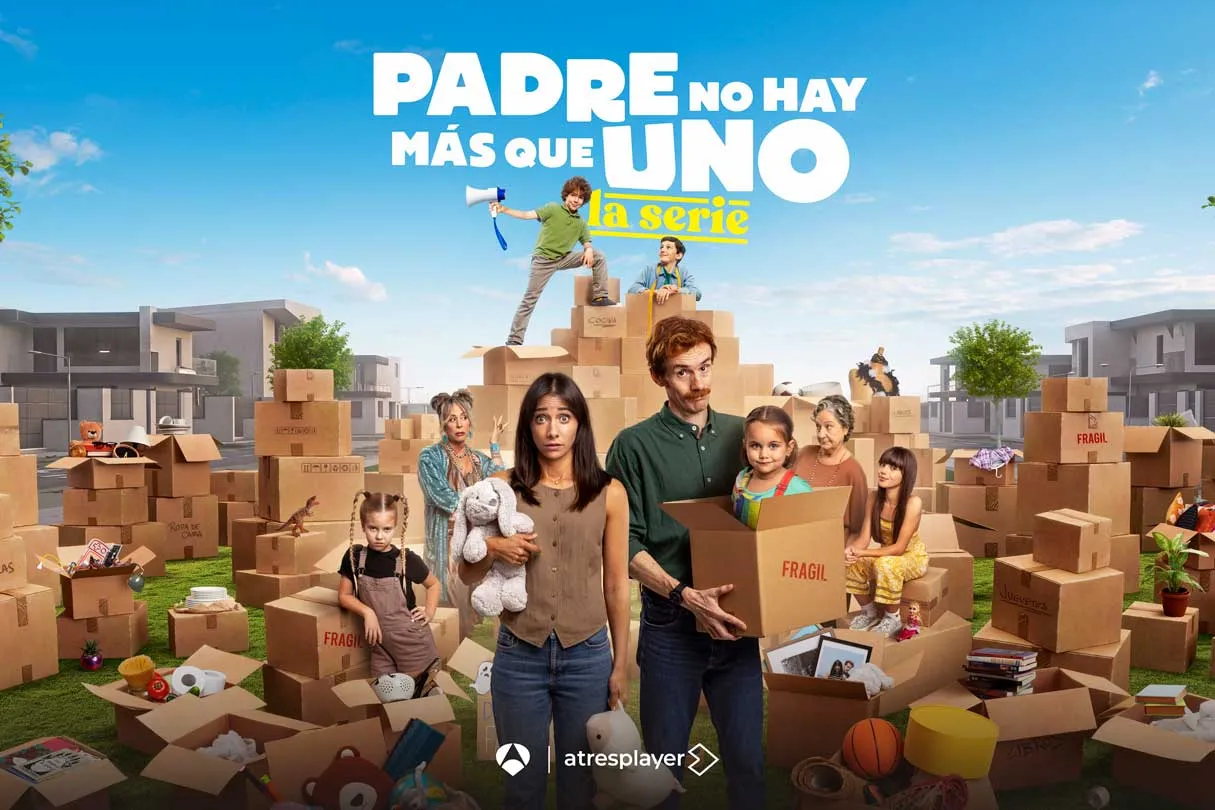
Antena 3 is set to captivate prime-time audiences with the highly anticipated television adaptation of Santiago Segura’s beloved film franchise, "Padre no hay más que uno: la serie." Following its initial exclusive release on the streaming platform atresplayer, the family comedy makes its free-to-air debut with a double-episode premiere. The series promises to immerse viewers in the chaotic yet heartwarming world of the Vicho family, chronicling their daily lives as they navigate the unpredictable currents of a large household.
A New Chapter for the Vicho Family
The television series, developed from the immensely popular cinematic universe, introduces the Vicho family and the unique brand of pandemonium that defines their existence. Created by Inés de León, the show leans into the universal appeal of family humor, amplifying everyday situations to comedic extremes. At the heart of the Vicho household are Mateo, portrayed by Dani Pérez Prada, and Helena, brought to life by Mariam Hernández. As parents to five lively children and co-inhabitants with two grandmothers, Mateo and Helena are perpetually engaged in the demanding yet rewarding task of maintaining order and harmony. The series promises to explore their ongoing efforts to manage their boisterous brood while confronting new challenges and the inevitable curveballs that life throws their way.
The Catalyst for Unexpected Unity: A Potential Move
The inaugural episode immediately plunges viewers into a scenario that dramatically disrupts the family’s established equilibrium. The Vicho siblings, typically a whirlwind of individual wills and constant disagreements, find themselves facing a united front born out of necessity. The catalyst for this newfound solidarity is the bombshell announcement from Mateo and Helena: the family might be relocating to a different city.
This revelation ignites an immediate and passionate response from the children. Forgetting their usual squabbles, they quickly forge an alliance with the singular goal of preventing the move. Convinced of their ability to sway their parents’ decision, the siblings orchestrate an elaborate "children’s strike," a meticulously planned operation designed to sabotage any attempts at relocation. Their collective efforts are aimed at demonstrating the depth of their attachment to their current home and way of life, hoping to make their parents reconsider the drastic change.
Parental Strategy: A Counter-Offensive of Wit and Wisdom
However, the children’s well-intentioned but undoubtedly chaotic plan overlooks a crucial detail: their parents are not easily outmaneuvered. Mateo and Helena, seasoned veterans of large-family dynamics, are intimately familiar with their children’s tactics and strategies. Unbeknownst to the younger Vicho contingent, their parents are prepared to counter every move.
The series depicts Mateo and Helena skillfully dismantling the children’s carefully constructed opposition. This leads to a rapid succession of hilariously absurd and utterly chaotic situations, establishing the signature tone of the series from its very first chapter. The playful yet determined battle of wills between parents and children sets the stage for the comedic core of "Padre no hay más que uno: la serie."
Expanding the Vicho Universe: New Characters and Enduring Spirit

With this dynamic opening, "Padre no hay más que uno: la serie" effectively introduces each member of the Vicho family, laying the groundwork for a comedy that will center on everyday conflicts, the irrepressible mischief of children, and the profound affection that binds the family together. The series is co-written by Raúl Navarro, alongside Juan Manuel de Vega, and directed by Inés de León and Raúl Navarro. It is produced by Bowfinger International Pictures in association with Sony Pictures International Productions, with the participation of Atresmedia and Prime Video.
This television adaptation represents an expansion of the successful "Padre no hay más que uno" cinematic universe. It introduces new characters and weaves fresh narratives while diligently preserving the familial spirit and the brand of humor that propelled the film saga to become one of Spain’s most significant box office successes. The original film, released in 2019, grossed over €12.9 million and attracted more than 2 million viewers in Spain, cementing its status as a cultural phenomenon. Its sequels, "Padre no hay más que uno 2: La llegada del fin" (2020) and "Padre no hay más que uno 3" (2022), further solidified the franchise’s appeal, with the latter earning over €14.5 million and drawing over 2.4 million admissions. The television series aims to capture this same magic, translating the on-screen chemistry and comedic timing that resonated so strongly with audiences into a serialized format.
Production Details and Creative Vision
The creative team behind the series has emphasized their commitment to maintaining the authenticity and charm that audiences have come to expect from the "Padre no hay más que uno" brand. Inés de León, a director known for her work on popular Spanish television shows such as "La casa de las flores" and "Valeria," brings a fresh perspective to the Vicho family’s adventures. Her directorial style, often characterized by its visual dynamism and nuanced character portrayals, is expected to imbue the series with a distinct energy.
Raúl Navarro, who also co-writes the series, has been a key figure in the development of the "Padre no hay más que uno" universe, having collaborated on the screenplays for the film sequels. His deep understanding of the characters and their comedic potential is crucial in translating the successful film formula to the television medium. Juan Manuel de Vega, another co-writer, brings his own unique comedic sensibilities to the project, contributing to the witty dialogue and relatable scenarios that are central to the show’s appeal.
The collaboration with Sony Pictures International Productions and the involvement of Atresmedia and Prime Video highlight the significant investment and strategic vision behind "Padre no hay más que uno: la serie." This partnership ensures a high-quality production that can reach a broad audience, both within Spain and potentially internationally, further extending the global reach of this beloved Spanish franchise. The series is expected to feature a blend of established characters from the films and potentially introduce new personalities that will enrich the Vicho family’s dynamic, offering viewers a familiar yet novel viewing experience.
Analysis of Implications: A Strategic Television Move
The decision by Antena 3 to premiere "Padre no hay más que uno: la serie" in prime time with a double episode signifies a strategic move to capitalize on the established popularity of the franchise. By leveraging the existing fanbase, the network aims to secure strong viewership figures and set a positive trajectory for the series. The prior exclusive release on atresplayer served as a valuable testing ground, allowing the platform to gauge audience reception and gather data on viewing habits, which can then inform the broader broadcast strategy.
The adaptation of a successful film franchise into a television series is a common and often effective strategy in the current media landscape. It allows for deeper exploration of characters and storylines, providing opportunities for narrative arcs that may not be feasible within the confines of a feature film. For "Padre no hay más que uno," this means delving further into the daily lives of the Vicho family, exploring their individual personalities, and developing more intricate comedic situations. The serialized format also offers the potential for longer-term audience engagement, fostering a dedicated viewership over multiple seasons.
Furthermore, the series’ focus on relatable family dynamics and universal themes of love, humor, and resilience positions it as a strong contender in the competitive television market. In an era where content is abundant, a show that offers genuine warmth and laughter, grounded in the everyday experiences of a large, loving family, is likely to resonate with a wide demographic. The success of the film franchise indicates a strong appetite for this type of content, and the television series is poised to meet that demand. The inclusion of both Atresmedia and Prime Video in the production further solidifies its potential for success, providing a robust distribution network and promotional support. The series also benefits from the inherent appeal of Spanish comedy, which has gained international recognition for its unique blend of wit, heart, and relatable characters. The expansion of this universe onto television signals a growing trend of successful Spanish productions finding new life and extended audiences through diverse media platforms.

0 Comments