
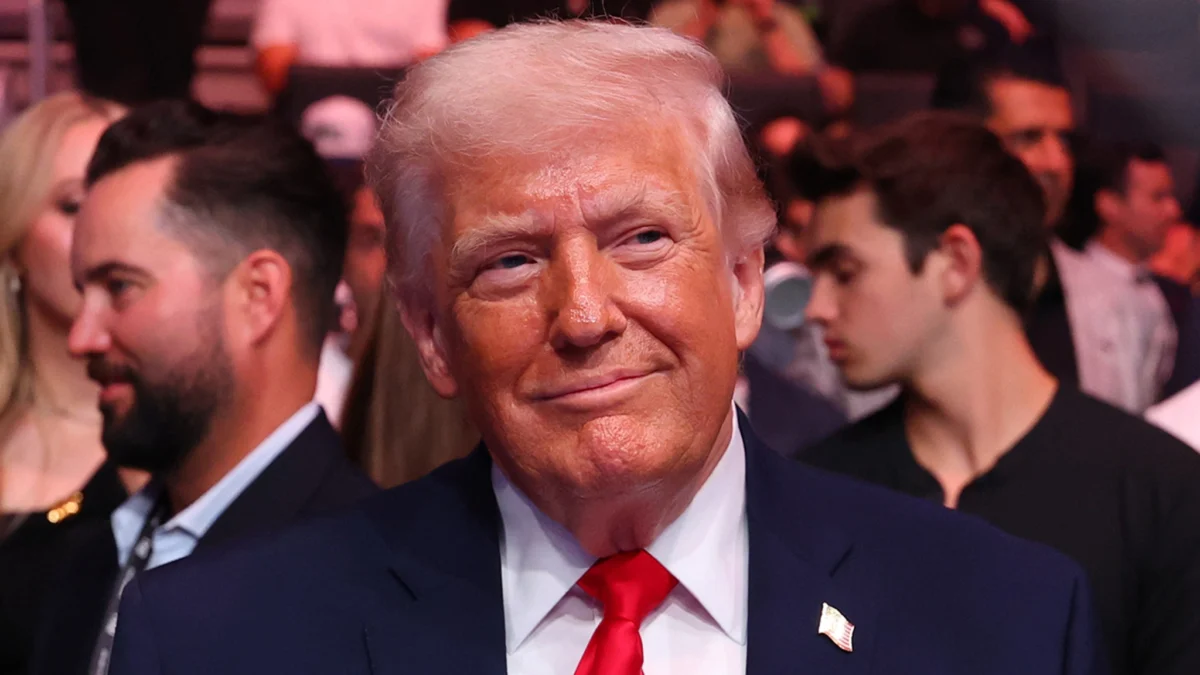
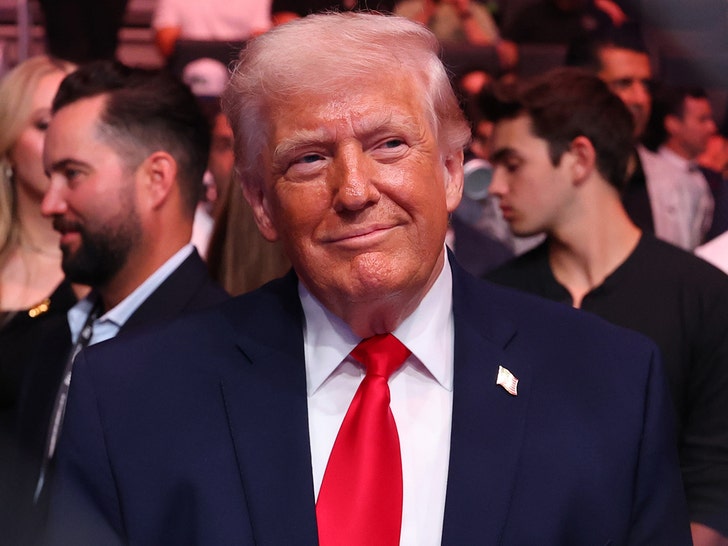
In a stark display of contrasting priorities against a backdrop of escalating international tensions, President Donald Trump made a high-profile appearance at UFC 327 in Miami’s Kaseya Center on Saturday, April 12, 2026. The Commander-in-Chief’s presence at the Ultimate Fighting Championship event, characterized by a grand entrance and enthusiastic crowd reception, occurred just hours after a contentious exchange with White House reporters concerning the ongoing conflict in Iran and as diplomatic efforts to de-escalate the crisis stalled in Islamabad.
A Grand Entrance Amid Geopolitical Storms
The Kaseya Center in Miami buzzed with anticipation as President Trump, accompanied by UFC President Dana White, made his dramatic entrance into the arena. Emerging from a tunnel, the pair was greeted by a thunderous ovation from the capacity crowd. Videos circulated widely across social media platforms showed President Trump waving to cheering fans, many of whom clamored to capture the moment on their cell phones. His walk-out, a familiar spectacle at major UFC events, underscored his enduring affinity for the sport and its fervent fanbase.
The optics of the President enjoying a premier combat sports event while the nation grappled with a significant geopolitical crisis immediately sparked discussion. Flanked by Secret Service agents and surrounded by the electrifying atmosphere of a packed arena, Trump proceeded to shake hands with several supporters before making his way to ringside seats directly in front of the Octagon. Awaiting his arrival was Secretary of State Marco Rubio, a prominent Florida politician, whose presence further solidified the political weight of the President’s attendance. This calculated public appearance in a crucial swing state like Florida, particularly during a period of national and international concern, served as a potent symbol of the President’s approach to leadership and public engagement.

The Unfolding Crisis in Iran: A Troubling Backdrop
The President’s foray into the world of mixed martial arts occurred amidst a critical juncture in U.S. foreign policy. The conflict in Iran, which commenced in late February 2026, had significantly escalated, primarily centering on the strategic Strait of Hormuz. This vital maritime choke point, through which approximately one-fifth of the world’s total oil consumption passes, had reportedly been disrupted, leading to widespread concerns about global energy markets and international shipping.
Initial reports from the Pentagon indicated that the conflict began following a series of naval incidents in the Persian Gulf, culminating in a blockade or significant impediment to commercial shipping through the Strait. While the exact triggers remain subject to ongoing diplomatic and intelligence analysis, the immediate impact was a sharp spike in global oil prices and a disruption of crucial supply chains. International bodies, including the United Nations Security Council, had convened emergency sessions, urging all parties to exercise restraint and de-escalate tensions. The United States, along with its allies, had condemned the actions impeding free navigation, emphasizing the critical importance of maintaining open waterways for global commerce.
Diplomatic Deadlock in Islamabad
Simultaneously with President Trump’s appearance in Miami, Vice President J.D. Vance was leading the American delegation in high-stakes ceasefire talks in Islamabad, Pakistan. These discussions, aimed at resolving the burgeoning conflict, involved representatives from the American, Pakistani, and Iranian delegations. The international community had placed significant hope on these negotiations, viewing them as the most promising avenue to prevent further escalation and mitigate the economic repercussions of the Strait of Hormuz situation.
Over 21 grueling hours, negotiators reportedly grappled with complex demands and intractable positions. Key sticking points included the immediate and verifiable reopening of the Strait of Hormuz, the establishment of buffer zones in disputed maritime territories, and guarantees for the safety of international shipping. The Iranian delegation reportedly insisted on preconditions related to sanctions relief and security assurances, while the U.S. and its allies maintained that the immediate priority was the restoration of freedom of navigation. Despite the extensive duration and intense pressure, Vice President Vance ultimately announced that no agreement had been reached. This diplomatic failure signaled a worrying impasse, leaving the international community to ponder the next steps in a rapidly deteriorating situation. The lack of a breakthrough in Islamabad underscored the deep-seated mistrust and complex geopolitical dynamics at play, raising fears of prolonged instability and potential military confrontation.
White House Confrontation: "Fake News" and Deflection
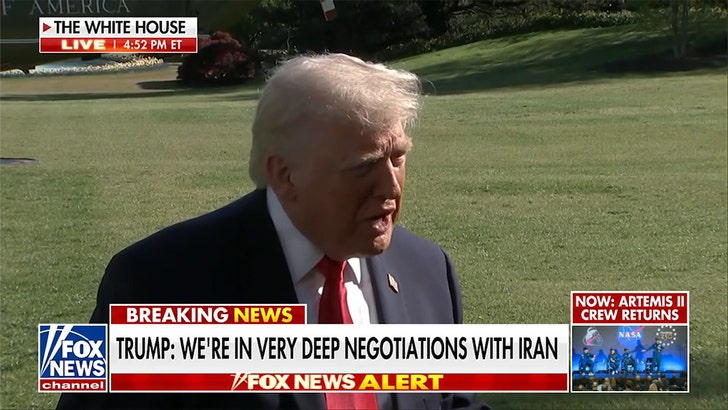
Hours before his flight to Miami, President Trump engaged in a heated exchange with reporters outside the White House, providing a stark contrast to his later relaxed demeanor at the UFC event. The confrontation erupted when an NBC journalist pressed the President on the stalled efforts to reopen the Strait of Hormuz. The reporter’s direct question, "Mr. President, why isn’t the Strait of Hormuz open yet?", touched a nerve, eliciting a characteristic fiery response from the President.
In a scene familiar to White House correspondents, President Trump vehemently rebuked the journalist. He accused her of lacking fundamental understanding of the intricacies of the Iran situation, stating, "You don’t know the first damn thing about Iran." He then proceeded to label NBC as "fake news," a common epithet used by the President to dismiss critical reporting or questions he perceives as hostile. This public dressing-down, widely broadcast and analyzed, highlighted the President’s consistent strategy of attacking the credibility of media outlets that challenge his administration’s narratives, particularly on sensitive national security matters. The incident served as a stark reminder of the administration’s often confrontational relationship with the press, particularly when faced with questions regarding ongoing crises and perceived policy shortcomings. It also drew a sharp contrast between the President’s willingness to openly challenge the media on a serious geopolitical issue and his later public embrace of a popular entertainment spectacle.
The Broader Implications: Optics and Leadership in Crisis
The President’s decision to attend UFC 327 amid a significant international crisis and a diplomatic failure has sparked considerable debate among political analysts and the public alike. On one hand, supporters argue that the President’s ability to maintain a public schedule, including attending cultural and sporting events, demonstrates a sense of calm and control, projecting an image of resilience and strength in the face of adversity. This perspective suggests that a leader must not appear to be paralyzed by crises but rather capable of managing multiple responsibilities, including engaging with the public and demonstrating a semblance of normalcy. Furthermore, his long-standing connection with the UFC and Dana White, dating back to the sport’s nascent stages, is often cited as a testament to his loyalty and support for American enterprise.
However, critics contend that the optics of attending a high-profile entertainment event while a crucial diplomatic mission fails and a geopolitical hotspot remains volatile could be perceived as a disconnect from the gravity of the situation. Some analysts suggest that it risks sending a message of indifference to both domestic and international audiences, potentially undermining the seriousness of the U.S. commitment to resolving the Iran conflict. The juxtaposition of Vice President Vance’s arduous, ultimately unsuccessful, negotiations in Islamabad with the President’s celebratory appearance in Miami raises questions about the administration’s unified messaging and focus during a critical period.
Economic Fallout and International Reactions
The failure of the Islamabad talks to secure a ceasefire or an agreement to reopen the Strait of Hormuz carries significant economic implications. The continued disruption of shipping in the Strait could lead to sustained higher oil prices, impacting industries globally and potentially fueling inflation. International trade routes reliant on the Strait will be forced to seek alternative, often longer and more expensive, paths, further straining global supply chains. Financial markets, which had reacted with cautious optimism to the prospect of negotiations, are likely to respond negatively to the news of the diplomatic deadlock.
Internationally, reactions to the situation are varied. Allied nations, particularly those heavily reliant on oil imports through the Strait, are likely to express increased concern and urge renewed diplomatic efforts. Countries in the region may perceive the U.S. approach as either decisive or disengaged, depending on their political alignment. Iran’s posture following the failed talks remains a critical unknown; without a diplomatic pathway, the potential for further escalation, whether intentional or accidental, increases significantly.
Historical Context of Presidential Engagement
Presidents attending public events during times of national or international crisis is not without precedent. Leaders throughout history have often sought to balance the demands of governance with maintaining public morale and demonstrating a sense of continuity. However, the specific nature of President Trump’s engagement with the UFC, his history of direct interaction with the crowd, and his unique communication style during press conferences add layers of complexity to the current situation. His frequent appearances at UFC events have been a hallmark of his public life, both before and during his presidency, often serving as a platform to connect directly with a segment of his base.
In conclusion, President Trump’s high-profile presence at UFC 327 in Miami on April 12, 2026, serves as a compelling narrative of leadership in the modern era. His grand entrance into the Octagon, met with fervent cheers, stood in stark contrast to the grim reality of stalled diplomatic efforts to resolve the escalating Iran conflict and his combative exchanges with the press regarding the crisis. The dual narratives — of a President engaged in popular culture and a nation grappling with serious geopolitical challenges — underscore the complex interplay of domestic politics, international relations, and public perception in a rapidly evolving global landscape. As the situation in the Strait of Hormuz remains unresolved and diplomatic avenues appear closed, the world watches closely for the next moves from Washington, Tehran, and the international community.

0 Comments