
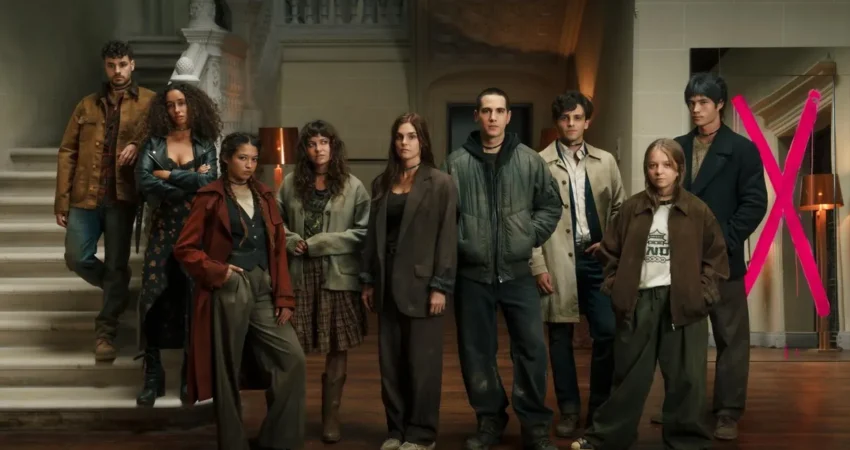
Prime Video has officially commenced production on "Cuando solo quedemos nosotros" (When Only We Remain), a new original Spanish series that promises to plunge viewers into a high-stakes survival thriller. The series is an adaptation of the acclaimed novel of the same name by Spanish author Inés Garber, known for her ability to weave intricate psychological narratives. This ambitious project marks a significant foray into the Spanish thriller genre for the streaming giant, aiming to captivate audiences with a potent blend of suspense, psychological drama, and unexpected romance.
A High-Stakes Premise Unfolds in Isolation
The core of "Cuando solo quedemos nosotros" revolves around a chilling premise: nine young individuals find themselves inexplicably confined within the walls of a secluded mansion. Their confinement is not passive; they are thrust into a macabre game with a single, brutal rule: "kill or be killed." This stark ultimatum sets the stage for a relentless fight for survival, where trust erodes rapidly, and the lines between ally and adversary blur with deadly consequences. The narrative promises to explore the extreme psychological pressures that arise when individuals are stripped of their societal norms and forced to confront their most primal instincts. The isolated setting of the mansion, far removed from any external help or connection to the outside world, amplifies the sense of claustrophobia and desperation, creating a fertile ground for escalating tension and paranoia.
Visionary Direction and a Bold Genre Shift
At the helm of this dark narrative is director Samantha López Speranza, a familiar name to Prime Video subscribers for her previous work on the romantic comedy "Todos los lados de la cama" (All Sides of the Bed). This directorial appointment signifies a deliberate and considerable shift in genre for Speranza, moving from the lighthearted ensemble dynamics of romantic comedy to the intense, survival-driven stakes of a psychological thriller. This transition underscores Prime Video’s strategic objective for "Cuando solo quedemos nosotros," indicating a desire to explore darker, more complex thematic territories within its Spanish original content slate. The platform’s willingness to entrust such a project to a director known for a different genre suggests a belief in Speranza’s versatility and her capacity to deliver a compelling and nuanced performance in a more somber setting. This genre leap also speaks to the broader trend in streaming services to experiment with established talent in new and unexpected ways, seeking to broaden their appeal and showcase diverse storytelling capabilities.
A Promising Ensemble Cast Takes Center Stage
The series’ narrative weight rests on the shoulders of its lead actors, Judith Fernández and Pau Simón, who are set to portray Violeta and Ander, respectively. Fernández, previously recognized for her role in "Rondallas," brings her dramatic experience to the character of Violeta. Simón, who garnered attention in "El refugio atómico" (The Atomic Shelter), steps into the role of Ander. Based on the series’ synopsis, both characters are positioned at the heart of the central conflict, facing the agonizing dilemma of whether their burgeoning feelings for one another can supersede the desperate need to survive in a world where every other person is a potential threat. Their dynamic is expected to be a crucial element in exploring the human capacity for connection amidst extreme adversity.
The supporting cast further bolsters the series’ appeal with a mix of established and emerging talents in Spanish fiction. Eva Ruiz, who made a notable impression in the popular "Culpa mía" (My Fault), joins the ensemble as Melissa. Adding international recognition to the cast is Sofía Reyes, known globally for her role in "The Bold Type," who will portray Cloe. These casting choices suggest a deliberate effort by Prime Video to assemble a cast that not only reflects the current landscape of Spanish talent but also reaches beyond the conventional circuit, potentially attracting a wider international audience.
Rounding out the group of nine are Julia Mascort as Sonia, La Imén as Najwa, Julio Batalla as Elías, Sergi Shan as Hin, and Tomy Aguilera as Oliver. The introduction of these nine characters as strangers, all trapped in the same perilous situation with the same life-or-death objective, promises a rich tapestry of interactions, alliances, and betrayals that will drive the narrative forward. The ensemble’s diversity in experience and background is likely to contribute to a dynamic and unpredictable series of character arcs as they navigate their shared nightmare.
The Genesis of the Production: A Chronology of Development
While specific dates for the novel’s publication and the initial announcement of the adaptation are not detailed in the provided text, the commencement of filming marks a significant milestone in the project’s timeline. The current phase of production, where filming is actively underway, suggests that the development process, including script finalization, casting, and pre-production, has been ongoing for a considerable period. Typically, a series of this scope and ambition requires extensive planning, often spanning several years from the initial acquisition of rights to the commencement of principal photography.

The decision by Prime Video to invest in this adaptation points to a strategic evaluation of Inés Garber’s novel as having strong cinematic potential, likely due to its compelling narrative structure, relatable yet complex characters, and inherent suspense. The streaming platform’s commitment to producing original Spanish-language content has been a growing trend, with a focus on diverse genres that resonate with both domestic and international audiences. "Cuando solo quedemos nosotros" appears to be a key component of this strategy, aiming to leverage the popularity of young adult thrillers while injecting a unique romantic subplot.
Scriptwriting Prowess: Crafting a Layered Narrative
The screenplay for "Cuando solo quedemos nosotros" is penned by Jan Matheu, known for his work on "Olympo," and Víctor Alonso-Berbel, who previously contributed to "Ciudad sin sueño" (City Without Sleep). Both writers have demonstrated experience within genres that lean towards the dramatic and suspenseful. Their collaboration on this project suggests a focused approach to building a narrative with multiple layers. The script is expected to utilize the game of survival as its structural framework, while the evolving relationships and dynamics between the characters will serve as the emotional engine. The constant undercurrent of mistrust and paranoia, inherent to the survival genre, is anticipated to be meticulously crafted to create a palpable atmosphere of unease and tension throughout the series. The challenge for the writers will be to balance the external pressures of the deadly game with the internal emotional journeys of the characters, ensuring that the romantic elements feel organic rather than forced within the high-stakes environment.
Production Expertise: Bringing the Vision to Life
The production of "Cuando solo quedemos nosotros" is in the capable hands of Globomedia, a prominent Spanish production company with a strong track record in television. María José Rodríguez and Juan Miguel Hernández are serving as executive producers. Rodríguez’s previous work on "Barrio Esperanza" and Hernández’s experience on the second season of "Celeste" indicate a team well-versed in both dramatic storytelling and the intricacies of producing contemporary fiction for a broad audience. Their collective expertise in navigating the Spanish television landscape, particularly within the realms of drama and thriller, positions them to effectively translate Garber’s novel and Speranza’s vision into a compelling visual experience. Globomedia’s involvement suggests a commitment to high production values, aiming to create a visually immersive and impactful series.
Global Reach and Projected Release Window
Prime Video has confirmed that "Cuando solo quedemos nosotros" will be available exclusively on its platform in over 240 countries and territories worldwide. This global distribution strategy highlights the platform’s ambition to make its original Spanish productions accessible to a vast international audience. While an official release date has not yet been announced, the current stage of filming indicates that the series is unlikely to premiere before 2027. Production timelines for series of this scale typically range from several months to over a year for filming, followed by extensive post-production work including editing, visual effects, sound design, and color grading. Therefore, a 2027 release window appears realistic, allowing ample time for the series to be meticulously crafted and polished.
Market Context and The Genre’s Evolving Landscape
The adaptation of Inés Garber’s novel arrives at a juncture where streaming platforms are increasingly investing in youth-oriented thrillers with intricate plot twists. This genre has demonstrated significant commercial appeal, attracting substantial viewership for titles that successfully capture the attention of younger demographics. However, it also presents a considerable risk. Audiences have become increasingly discerning, having been exposed to a multitude of similar narratives involving isolated settings, deadly games, and predictable plot turns. The success of "Cuando solo quedemos nosotros" will hinge on its ability to transcend the conventions of the genre. The crucial factor will be how effectively the series integrates its romantic subplot within the terror-filled framework. This element has the potential to either elevate the series beyond the typical survival thriller or, if mishandled, contribute to its dilution. The series’ ability to forge a unique identity by authentically exploring the complexities of human connection under duress, rather than relying on predictable tropes, will be key to its differentiation and ultimate success in a crowded market. The challenge lies in making the audience feel as invested and captivated as the characters themselves, even when anticipating potentially dire outcomes.
Analysis and Broader Implications
The production of "Cuando solo quedemos nosotros" by Prime Video signifies a continued investment in Spanish original content, aiming to tap into both local talent and global audience demand for high-quality genre programming. The choice of a thriller adaptation from a respected Spanish author suggests a strategy to leverage existing literary success and cultural relevance. The series’ global distribution strategy underscores the growing importance of non-English language content in the international streaming landscape, with platforms actively seeking to diversify their offerings and appeal to a wider range of cultural tastes.
The potential success of "Cuando solo quedemos nosotros" could further solidify Prime Video’s position as a significant player in the Spanish production market and inspire further adaptations of Spanish literature for international audiences. Conversely, if the series struggles to distinguish itself within a popular but often formulaic genre, it could highlight the challenges of creating truly innovative content that resonates beyond familiar narrative structures. The integration of a romantic element within a survival thriller is a delicate balance, and its execution will be a critical determinant of the series’ critical and commercial reception. The project’s success will be closely watched as an indicator of evolving audience preferences and the future direction of genre television.

0 Comments