
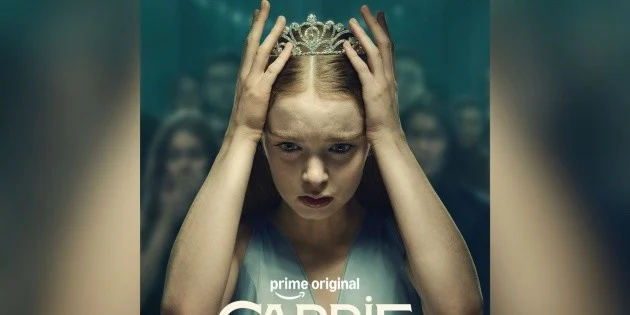
Prime Video is set to bring a new adaptation of Stephen King’s seminal debut novel, Carrie, to screens with an ambitious eight-episode miniseries. The highly anticipated production, directed by the acclaimed horror maestro Mike Flanagan, is scheduled to premiere on October 7. This latest iteration promises a deep dive into the harrowing story of Carrie White, a young woman who, ostracized by her peers and tormented by her fanatically religious mother, discovers and unleashes terrifying telekinetic powers fueled by her immense rage and incomprehension. The project marks a significant moment in the enduring legacy of King’s chilling narrative, offering the first multi-episode television series format to explore its intricate themes and characters.
A New Vision for an Enduring Horror Classic
The miniseries sees Summer H. Howell cast in the pivotal role of 16-year-old Carrie White, a character whose vulnerability and explosive power have captivated audiences for decades. Alongside her, Samantha Sloyan, a frequent collaborator with Flanagan, will portray the terrifyingly oppressive mother, Margaret White. This casting choice, particularly Sloyan’s involvement, hints at the psychological depth and nuanced performances that have become hallmarks of Flanagan’s work. The decision to expand the narrative into an eight-episode format is a critical departure from previous film adaptations, allowing for a more comprehensive exploration of King’s original text, its character development, and the escalating tension that defines Carrie’s tragic journey.
The Genesis of a Nightmare: Stephen King’s "Carrie" Novel
Stephen King’s Carrie, published in 1974, was not only his first published novel but also a foundational text that established him as a master of modern horror. The story emerged from King’s own experiences as a high school teacher and his observations of social dynamics, bullying, and religious fervor in small-town America. Initially discarded and later retrieved from a wastebasket by his wife, Tabitha King, the manuscript went on to become an instant sensation. Upon its release, Carrie spent several weeks on The New York Times’ bestseller list and was subsequently translated into 35 languages, cementing its global reach and critical acclaim.
The novel delves into profound themes that resonate far beyond typical horror tropes. It explores the destructive power of bullying, the suffocating grip of religious fundamentalism, the painful rites of passage in adolescence, and the terrifying potential of suppressed anger. Carrie White’s journey from a sheltered, abused girl to a vengeful force of nature is a poignant commentary on social alienation and the consequences of systemic cruelty. King’s narrative brilliance lies in his ability to craft a deeply sympathetic protagonist while simultaneously unleashing a horrifying crescendo of destruction, leaving readers to grapple with complex moral questions about blame and retribution.
A Legacy of Adaptation: "Carrie" on Screen
The story of Carrie White has proven irresistibly compelling to filmmakers, leading to a varied and extensive history of adaptations across different mediums. Each version has sought to capture the essence of King’s novel, with varying degrees of success and interpretive approaches.
-
1976 Film: Brian De Palma’s Iconic Masterpiece
The first and arguably most famous adaptation arrived just two years after the novel’s publication. Directed by Brian De Palma, the 1976 film Carrie starred Sissy Spacek in an Oscar-nominated performance as Carrie White, with Piper Laurie also receiving an Academy Award nomination for her chilling portrayal of Margaret White. De Palma’s film is widely regarded as a classic of the horror genre, praised for its stylish direction, innovative use of split-screen, and unflinching depiction of psychological and supernatural terror. Spacek’s performance captured Carrie’s fragility, terror, and ultimate catharsis with remarkable intensity, establishing a benchmark for all subsequent interpretations. The film’s iconic prom scene, culminating in a blood-soaked rampage, remains one of the most memorable and influential sequences in cinematic history, deeply embedding Carrie into popular culture. Its critical and commercial success cemented Stephen King’s reputation in Hollywood and paved the way for numerous future adaptations of his work. -
1999: "The Rage: Carrie 2"
More than two decades later, the narrative was revisited with The Rage: Carrie 2 (1999), directed by Katt Shea. This sequel introduced a new protagonist, Rachel Lang, who discovers she is Carrie White’s half-sister and possesses similar telekinetic abilities. While attempting to expand the Carrie universe, the film received mixed reviews and struggled to replicate the psychological depth and critical acclaim of its predecessor. It served as an interesting, albeit less impactful, attempt to explore the continuing lineage of telekinetic power and the cyclical nature of high school bullying. -
2002: A Television Movie for a New Millennium
In 2002, a television film adaptation of Carrie, directed by David Carson and starring Angela Bettis in the titular role, premiered. This version was notable for its attempt to be more faithful to King’s novel, particularly in its structure and character development, and was intended as a backdoor pilot for a potential television series. While it offered a solid performance from Bettis and delved deeper into Carrie’s backstory and motivations than the 1976 film could in its runtime, the series was ultimately not picked up. This iteration highlighted the inherent challenge of condensing King’s rich narrative into a single feature-length format, even for television. -
2013: A Modern Reimagining
The most recent film adaptation arrived in 2013, directed by Kimberly Peirce and starring Chloë Grace Moretz as Carrie and Julianne Moore as Margaret White. This version aimed to reintroduce the story to a contemporary audience, leveraging modern special effects and a fresh cast. While it paid homage to the original film and offered a darker, more visceral portrayal of Carrie’s powers, it garnered a mixed reception from critics and audiences, many of whom found it difficult to surpass the indelible impact of De Palma’s original. Despite a strong cast, the film struggled to find a unique voice, often falling into comparisons with its iconic predecessor.
Mike Flanagan: The Perfect Architect for "Carrie"
The announcement of Mike Flanagan at the helm of Prime Video’s Carrie miniseries has generated considerable excitement, particularly among fans of Stephen King and the horror genre. Flanagan has carved out a unique niche in contemporary horror, known for his masterful storytelling, character-driven narratives, and ability to blend psychological dread with supernatural elements. His impressive filmography includes acclaimed adaptations of King’s work, most notably 2019’s Doctor Sleep, the sequel to The Shining, which was lauded for its respectful yet innovative approach to King’s universe.
Beyond King adaptations, Flanagan has demonstrated his prowess in the limited series format with critically acclaimed shows like The Haunting of Hill House, The Haunting of Bly Manor, Midnight Mass, and The Fall of the House of Usher. These series are characterized by their deep emotional resonance, complex characters, nuanced exploration of grief and trauma, and atmospheric horror that relies more on dread and character arcs than cheap jump scares. This track record makes Flanagan an ideal choice to tackle the multi-layered narrative of Carrie, promising an adaptation that will honor the source material while bringing his distinctive artistic vision to the fore.
The Advantage of the Miniseries Format
The decision to adapt Carrie into an eight-episode miniseries is a crucial element that distinguishes this production from all previous versions. Film adaptations, by their nature, must condense narratives, often sacrificing subplots, character nuances, and the gradual build-up of tension that King masterfully employs in his novels. An eight-episode format provides Flanagan with an unprecedented canvas to explore the full scope of Carrie White’s story.
This extended runtime will allow for:
- Deeper Character Development: The audience can spend more time with Carrie, understanding her isolation, her struggles with her mother, and the complexities of her burgeoning powers. Margaret White’s fanatical devotion can be explored with greater nuance, moving beyond a two-dimensional villain to a tragic figure consumed by her own beliefs.
- Expanded Exploration of Themes: The themes of bullying, religious extremism, female rage, and the pressures of adolescence can be unpacked with greater detail and contemporary relevance. The social dynamics of Ewen High School, the motivations of Carrie’s tormentors, and the complicity of adults can all be given proper attention.
- Faithful Adaptation of the Novel: Flanagan is known for his reverence for source material. The miniseries format enables him to incorporate elements from King’s novel that previous films may have omitted, such as the epistolary structure (newspaper clippings, scientific reports) that King used to frame the story as a post-event investigation. This could add a unique layer of narrative intrigue and realism.
- Pacing and Escalation: The gradual escalation of Carrie’s powers and the building tension towards the catastrophic prom night can be paced effectively over eight episodes, allowing the horror to simmer and intensify organically, rather than rushing to the climax.
Casting and Expectations
The casting of Summer H. Howell as Carrie White brings a fresh face to the iconic role. Howell, a young actress, will have the opportunity to define Carrie for a new generation, bringing her own interpretation to the character’s internal struggle and external vulnerability. Samantha Sloyan’s casting as Margaret White is particularly exciting for fans of Flanagan’s work. Sloyan has delivered memorable performances in several of his previous projects, including Midnight Mass and The Fall of the House of Usher, showcasing her ability to portray complex, often unsettling, characters with chilling conviction. Her established working relationship with Flanagan suggests a deep understanding of his directorial style and an ability to embody the oppressive, terrifying presence of Margaret White.
Broader Impact and Future Implications
Prime Video’s Carrie miniseries represents a significant investment in prestige horror and a commitment to re-imagining classic narratives for the streaming era. This trend reflects a broader shift in Hollywood, where streaming platforms are increasingly becoming the home for ambitious, long-form adaptations that allow for greater narrative depth than traditional feature films.
The success of Flanagan’s Carrie could further solidify his reputation as the premier adapter of Stephen King’s work, potentially opening doors for more extensive King adaptations in the future. It also underscores the enduring power and relevance of Carrie White’s story, nearly fifty years after its initial publication. The narrative’s themes of social injustice, the psychological toll of abuse, and the explosion of suppressed rage continue to resonate deeply, ensuring that this new adaptation will find a receptive audience eager to revisit a timeless tale of terror and tragedy. The anticipation for October 7 is palpable, as audiences prepare to witness Mike Flanagan’s comprehensive vision for one of horror’s most enduring and heartbreaking protagonists.

0 Comments