
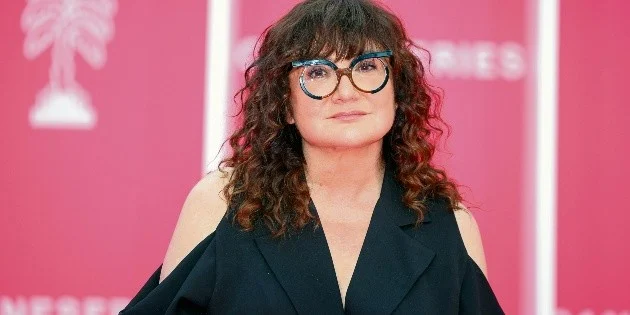
A coalition of internationally renowned film directors, actors, and intellectuals has issued a powerful call for the Venice International Film Festival to terminate all agreements with institutions connected to the Israeli government. This boycott initiative, spearheaded by the "Venice4Palestina" movement, asserts that such a measure is a necessary response to the "barbarity" being committed in Palestine. The demand, presented through a comprehensive manifesto, highlights the escalating conflict and its profound impact, urging one of the world’s most prestigious cultural events to take a definitive stance.
The core of the "Venice4Palestina" argument, articulated in their manifesto, posits that "the exceptional nature of the historical moment we are living forces us to isolate Israel diplomatically, culturally, and economically." This statement underscores a perceived moral imperative for cultural institutions to actively participate in political pressure, moving beyond traditional neutrality. Among the prominent signatories lending their weight to this significant appeal are Nobel laureate in Literature Annie Ernaux, legendary musician Roger Waters, acclaimed Italian filmmaker Matteo Garrone, and renowned Spanish director Isabel Coixet. Their involvement signals the depth of concern within the global artistic community regarding the ongoing situation.
Beyond these luminaries, the extensive list of signatories further includes former Greek Finance Minister Yanis Varoufakis, and a constellation of actors and directors such as Guy Pearce, Laura Morante, Sergio Rubini, Greta Scarano, Anna Foglietta, Sonia Bergamasco, and Jasmine Trinca. This broad representation across various facets of the film industry—from critically acclaimed directors to celebrated performers and influential political thinkers—demonstrates a unified and influential front advocating for the boycott. The collective influence of these individuals amplifies the call, making it difficult for the Venice Film Festival to disregard.
Historical Context and the Rise of Cultural Boycotts
The call by "Venice4Palestina" is not an isolated incident but rather part of a broader, decades-long movement advocating for boycott, divestment, and sanctions (BDS) against Israel. The BDS movement, initiated in 2005 by Palestinian civil society organizations, seeks to pressure Israel to comply with international law and human rights principles. Its objectives are threefold: ending the occupation and colonization of all Arab lands and dismantling the wall; recognizing the fundamental rights of Arab-Palestinian citizens of Israel to full equality; and respecting, protecting, and promoting the rights of Palestinian refugees to return to their homes and properties as stipulated in UN Resolution 194.
Cultural boycotts, specifically, have become a potent tool within the BDS framework. Proponents argue that cultural exchanges, when conducted with state-sponsored entities, can inadvertently lend legitimacy to government policies, even those deemed controversial or in violation of international law. Critics, however, often contend that such boycotts stifle dialogue, punish artists for the actions of their governments, and can be seen as discriminatory. Despite these debates, cultural figures worldwide have increasingly faced pressure to align with or oppose such boycotts, transforming major artistic events into contested spaces for political expression. The Venice Film Festival, as one of the "Big Three" alongside Cannes and Berlin, holds immense cultural and political sway, making it a prime target for such advocacy. Its historical role as a platform for challenging narratives and artistic freedom only intensifies the spotlight on its current ties.
Escalating Demands and Justifications
The "Venice4Palestina" initiative recalls that during the previous edition of the Mostra, thousands responded to their call to center Palestine in the festival’s discourse and bring the Palestinian people’s resistance into public awareness. They reflected on this past engagement, stating, "a wave of participation gave us hope that together we could help stop the genocide." However, a year later, their sentiment has shifted to profound disappointment and renewed urgency. "A new normality has taken root, aided by a simulated ceasefire. Israel has not only not stopped but has continued its atrocities, expanding its firepower towards the West Bank, Syria, Lebanon, and Iran. Nothing has changed for the Palestinian people," the group laments in its manifesto. This statement underscores their conviction that diplomatic and conventional pressures have proven insufficient, necessitating more drastic measures like cultural isolation.
Consequently, the coalition demands the immediate "suspension of all agreements with entities and institutions linked to the Israeli government." This sweeping demand aims to sever financial, collaborative, and promotional ties across the entire film industry’s production and distribution chain. This includes, but is not limited to, funding arrangements, co-productions, distribution deals, sales agreements, and festival participations. The activists argue that "each of these links can contribute to normalizing the barbarity currently unfolding, or it can oppose it and stop it." This perspective reframes every industry connection as a potential political act, challenging the notion of cultural neutrality in times of conflict.
Specific Conditions for Ending the Boycott
The "Venice4Palestina" manifesto explicitly outlines the conditions under which this proposed boycott should be maintained. It is intended to persist until Israel meets three fundamental demands:
- Ending its occupation and colonization of Palestine: This refers to the territories occupied by Israel since 1967, including the West Bank, East Jerusalem, and the Gaza Strip.
- Recognizing the fundamental rights of Arab-Palestinian citizens: This calls for full equality for Palestinian citizens within Israel, addressing concerns about discrimination and systemic disparities.
- Respecting the right of Palestinian refugees to return to their properties: This refers to the right of return for Palestinian refugees displaced during the 1948 Arab-Israeli War and subsequent conflicts, as enshrined in United Nations Resolution 194.
These conditions align directly with the broader objectives of the BDS movement, demonstrating a consistent and internationally recognized framework for their demands. The invocation of UN Resolution 194, which affirms the right of refugees to return or receive compensation, grounds their call in established international law.
Additional Demands and Symbolic Gestures
Beyond the core boycott, the collective has put forward several additional demands that highlight both practical and symbolic concerns. One significant demand is the introduction of robust safeguards for film professionals who choose to disassociate themselves from the film industry’s ties with Israel. This reflects an awareness of potential professional repercussions, such as blacklisting, loss of funding, or career setbacks, for those who take a public political stance. Such safeguards would aim to protect artistic freedom and ethical decision-making without fear of reprisal.
Another powerfully symbolic demand is for the Palestinian flag to fly prominently on the Lido throughout the entire duration of the Venice International Film Festival. The Lido, the strip of land where the festival is held, is a globally recognized symbol of cinematic prestige. Displaying the Palestinian flag would be a visible and unequivocal gesture of solidarity, ensuring that the plight of the Palestinian people remains at the forefront of public and industry consciousness during the festival.
Adding a layer of complexity to this year’s festival is the participation of the documentary "Naza." This film, directed by Israelis Yuval Abraham and Rachel Szor, focuses on the mass killing of Palestinian civilians in Gaza. Its inclusion in the Official Competition of the Venice Film Festival for 2026, where it will contend for the prestigious Golden Lion award, presents a unique dynamic. While the film itself addresses the very issues raised by "Venice4Palestina," its inclusion within the festival’s official programming, especially with Israeli directors, could be viewed in different lights. Some might see it as a platform for critical discourse from within, while others might argue it doesn’t go far enough in challenging the festival’s institutional ties.
The Upcoming Festival and Potential Implications
The 81st Venice International Film Festival is slated to commence on September 2nd, and the timing of this boycott call places immense pressure on the festival organizers, La Biennale di Venezia. Historically, major film festivals have often sought to navigate geopolitical tensions by emphasizing artistic freedom and cultural exchange as tools for understanding, rather than outright political statements. However, the intensifying nature of the conflict and the sustained advocacy from influential cultural figures are making such neutrality increasingly difficult to maintain.
The festival’s response, or lack thereof, will carry significant weight. Should Venice accede to the demands, even partially, it could set a precedent for other major international film festivals, such as Cannes, Berlin, Toronto, and Sundance, to re-evaluate their own partnerships and policies. This could lead to a broader realignment within the global film industry, forcing a reckoning with ethical sourcing, funding, and collaboration. Conversely, a decision to maintain existing ties could draw further criticism and potentially lead to protests and disruptions during the festival itself, overshadowing the cinematic achievements it aims to celebrate.
For the Israeli film industry and cultural institutions, such a boycott would represent a significant challenge. Cultural diplomacy is often employed as a means of fostering international understanding and counteracting negative perceptions. The severing of ties by a festival of Venice’s stature would undermine these efforts and potentially isolate Israeli artists and filmmakers from crucial international platforms, regardless of their personal political views.
The situation also highlights the growing divide within the international arts community regarding the Israel-Palestine conflict. While many artists believe in the power of cultural exchange to bridge divides, an increasing number feel compelled to use their platforms for political advocacy, particularly when they perceive gross human rights violations. This tension between "art for art’s sake" and "art as activism" is likely to continue defining cultural discourse in the years to come, with major events like the Venice Film Festival becoming crucial battlegrounds in this ongoing debate. The decision facing the festival organizers is not merely administrative; it is a profound ethical and political one with far-reaching implications for the future of international cultural exchange.

0 Comments