
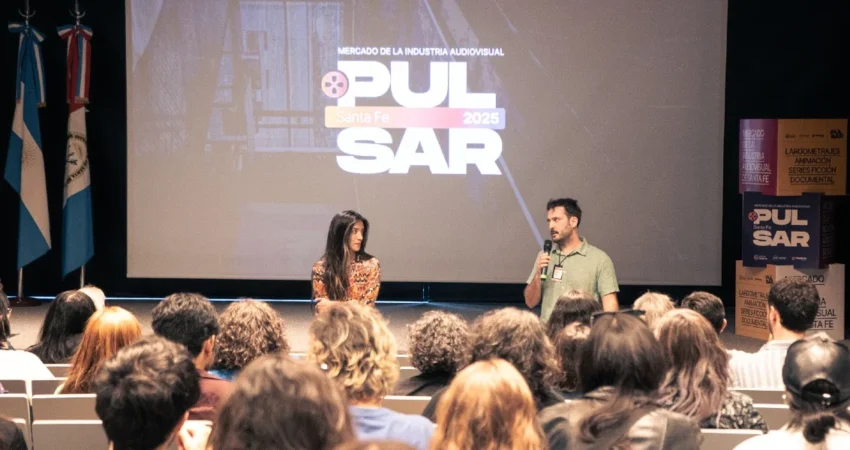
The sixth edition of the Mercado Pulsar Santa Fe is set to take place from September 2 to 5 in the city of Rosario, Argentina, marking a significant milestone in the consolidation of regional audiovisual hubs within the Southern Cone. Organized by the Ministry of Culture of the Province of Santa Fe, the event is being developed in close collaboration with the Institute of Audiovisual Arts of Misiones (IAAVIM) and the Cinema and Audiovisual Agency of Uruguay (ACAU). This year’s iteration underscores a growing trend toward decentralization in the Argentine film industry, positioning Rosario as a strategic nexus for producers, creators, and institutional stakeholders from various provinces and neighboring Uruguay.
As the Argentine film industry faces a period of structural transition and fiscal recalibration at the national level, regional markets like Pulsar have transitioned from local showcases to essential survival and growth mechanisms for independent cinema. The 2024 edition arrives at a time when the National Institute of Cinema and Audiovisual Arts (INCAA) has undergone significant budget cuts and organizational restructuring, leaving many filmmakers to seek alternative support systems. In this landscape, Pulsar Santa Fe serves as a vital platform for fostering alliances that might otherwise remain dormant, facilitating the exchange of resources, talent, and capital across regional borders.
Strategic Objectives and the Role of Regional Hubs
Ariadna Solis, the general producer of Pulsar Santa Fe, emphasized the market’s role in creating a sustainable ecosystem for creators. Speaking on the importance of the event, Solis noted that Pulsar and similar regional audiovisual markets in Argentina are establishing themselves as critical points of encounter. These spaces allow for the formation of partnerships between projects, production companies, funds, and institutions that would rarely intersect in the centralized model of the past. Solis highlighted that these platforms are instrumental in decentralizing audiovisual production and strengthening regional value chains, which is particularly crucial given the current atmosphere of uncertainty surrounding national public policies.
The market’s structure is designed to address the entire lifecycle of a film or series, from initial development and pitching to post-production and distribution. By involving IAAVIM and ACAU, the event facilitates a trans-provincial and international dialogue, allowing Santa Fe’s local industry to benchmark its progress against the burgeoning sectors in Misiones and the established institutional framework of Uruguay. This collaborative spirit is intended to pool regional strengths, creating a "Southern Cone" alliance that can better withstand economic fluctuations and shifting political priorities.
Official Selection: Fiction and Documentary Projects in Development
The 2024 selection reflects a diverse range of genres and narrative voices, showcasing the creative vitality of the interior provinces. In the fiction category, the market features a strong presence of Santa Fe-based talent, including "Ramona" by Lisa Caligaris, "Cómo se nombra una tormenta" by Carla Scolari, "Apartado del Camino" by Miler Blasco, and "De lo que antes era" by Gisela Maioli. These projects represent a cross-section of contemporary storytelling, ranging from intimate character studies to broader social narratives.
Joining the Santa Fe contingent is the project from Misiones titled "Érase una vez en las misiones rebeldes," directed by Leonel Benítez. The inclusion of Misiones highlights the success of IAAVIM in nurturing a distinct regional identity and professionalizing the local workforce in the northeastern part of the country. Furthermore, the documentary sector is represented by the Córdoba-based project "Para saber cómo es la soledad, la historia de Alcira Luengas," directed by Rodrigo Francisco Alabart. This project illustrates the cross-provincial nature of the market, drawing in high-quality non-fiction work from the heart of Argentina.
Innovation in format and medium is also a key feature of the selection. Virginia Tassone’s "Underground" stands out as a Santa Fe-produced animated feature film, a genre that requires specialized technical infrastructure and longer development cycles. Additionally, the series format—which has seen explosive growth due to the rise of streaming platforms—is represented by two Santa Fe projects: "Gol Gana" by Damián Andreoli and "La ira de las mariposas" by Erica Rozek.
Post-Production and Work in Progress: The Road to Completion
The post-production segment of Pulsar Santa Fe is critical for projects that have completed principal photography but require the technical and financial support to reach the final cut. This year, five projects were selected for this category, highlighting the market’s role in ensuring that regional stories actually reach the screen.
The selection includes two prominent Santa Fe fiction features: "Chejov en Rosario" by veteran filmmaker Gustavo Postiglione and "Al amanecer, el mal entró por el oeste" by Arturo Castro Godoy. These directors represent different generations of Santa Fe cinema, showcasing the depth of the local industry. From Uruguay, the fiction project "Maltrato animal" by José Dell’Acqua Postiglione further cements the international cooperation aspect of the market.
Documentary post-production is also well-represented with "La Liberación de Kshamenk" by Ana Paula Rosillo (Santa Fe) and "La amiga de Zulema" by Juana Mauri (Uruguay). The inclusion of Uruguayan projects is a direct result of the partnership with ACAU, reflecting a shared linguistic and cultural market that seeks to maximize the impact of co-productions within the Mercosur region.
The Audience Laboratory and Mixed Financing Models
A distinctive feature of the sixth edition is the implementation of an "Audience Laboratory" (Laboratorio de Audiencias). This initiative includes practical tools, training sessions, and an open masterclass on audience design. This shift in focus reflects a global trend in the film industry where understanding the target demographic is no longer an afterthought but a central part of the development process.
Agustín del Carpio, the Industry Area Coordinator for the event, explained that the goal is to open up possibilities for thinking about new tools for production and circulation. He noted that the industry is moving toward mixed financing schemes that combine public and private funds, international co-productions, and other alternative sources. Del Carpio argued that in the current climate, filmmakers can no longer depend on a single source of funding.
"This also implies strengthening the development of projects from early stages so that they reach markets with greater solidity," Del Carpio stated. He identified three central pillars for the 2024 market: innovative financing, solid project development, and a re-evaluation of the relationship with audiences. This third axis is particularly relevant as it addresses new consumption patterns and formats that define how and where a film is viewed in the digital age. According to Del Carpio, these elements are mutually reinforcing and make such spaces essential in the current socioeconomic context.
Chronology of Integration: Building a Regional Network
The growth of Pulsar Santa Fe is not an isolated phenomenon but part of a broader chronology of regional integration. Over the past several years, Pulsar has actively cultivated links with other major industry spaces and festivals. This network includes:
- Ventana Sur: The largest audiovisual market in Latin America, held in Buenos Aires and organized by INCAA and the Marché du Film (Cannes).
- FIDBA LINK: The industry wing of the Buenos Aires International Documentary Film Festival.
- Bolivia Lab: A key development space for Ibero-American cinema.
- SANFIC (Santiago International Film Festival): A major Chilean festival with a strong industry component.
- FICER (Entre Ríos International Film Festival): A neighboring regional festival that shares similar goals of decentralization.
- FOCUS Córdoba: The industry market of the province of Córdoba.
By integrating into this network, Pulsar Santa Fe ensures that the projects selected in Rosario have a clear pathway to other markets, increasing their chances of securing international sales agents, distributors, and festival placements. This "circuit" model is designed to sustain the momentum of a project from its first pitch in Santa Fe to its eventual international premiere.
Economic and Cultural Implications
The expansion of Pulsar Santa Fe has significant implications for the local economy. The audiovisual sector is a high-value industry that generates direct and indirect employment in areas such as catering, transport, hospitality, and specialized technical services. By fostering a professional market in Rosario, the provincial government is investing in a creative economy that can serve as a buffer against the volatility of more traditional sectors.
Furthermore, the emphasis on "mixed financing" marks a pragmatic shift in the Argentine film industry. As public subsidies become more competitive and limited, the ability of producers to attract private investment and engage in international co-production becomes a survival skill. Pulsar’s focus on training filmmakers in these areas suggests a long-term strategy to build a more resilient and self-sufficient regional film industry.
As the sixth edition of Mercado Pulsar Santa Fe commences this September, it stands as a testament to the resilience of the regional film community. In a period defined by institutional uncertainty at the national level, the collaboration between Santa Fe, Misiones, and Uruguay offers a blueprint for how regional entities can take the lead in cultural and economic development. By focusing on audience design, diverse financing, and strategic networking, Pulsar Santa Fe is not only showcasing the stories of the interior but is also actively constructing the infrastructure necessary for those stories to thrive on the global stage.

0 Comments