
 Nila Kartika Wati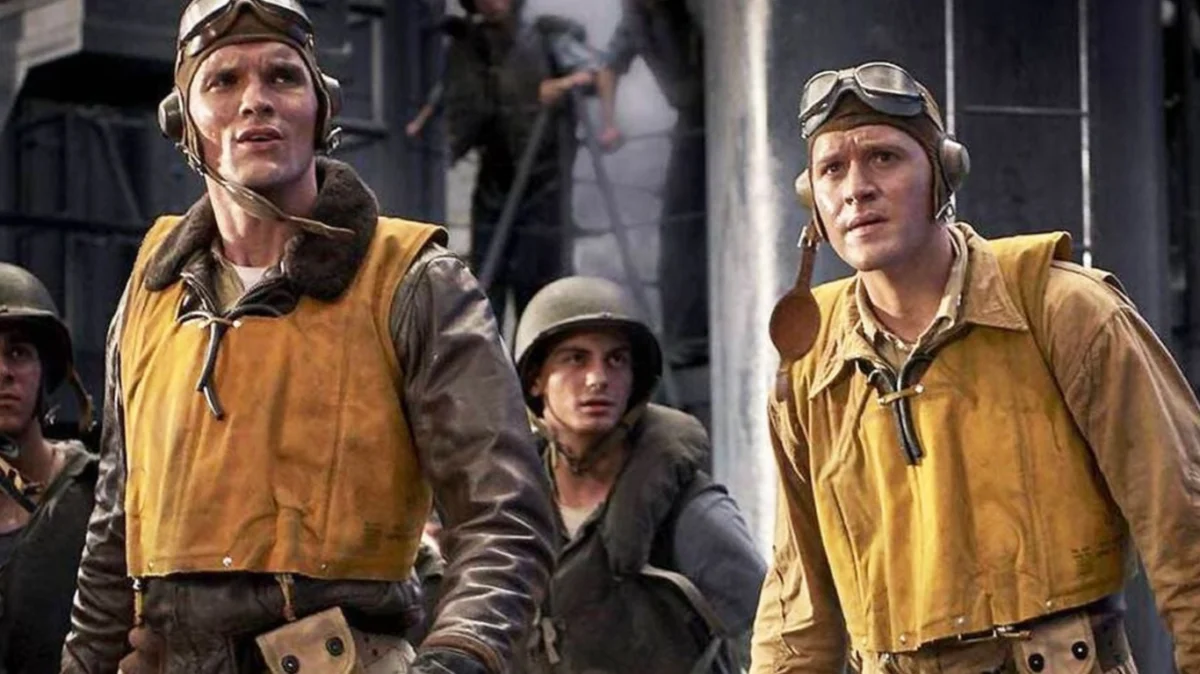
The cinematic landscape of the Second World War has long been defined by the visceral, ground-level realism of Steven Spielberg’s Saving Private Ryan. However, the 2019 release of Midway, directed by Roland Emmerich, has increasingly been cited by historians and naval enthusiasts as a pivotal companion piece that captures the scale of the Pacific Theater with a level of technical and historical fidelity rarely seen in modern blockbusters. While Spielberg’s masterpiece focused on the grit of the infantryman in the European Theater, Midway shifts the perspective to the strategic and aerial combat that defined the conflict between the United States and the Imperial Japanese Navy. By blending high-octane visual effects with a commitment to chronological accuracy, the film provides a comprehensive look at the six months following the attack on Pearl Harbor, culminating in the decisive Battle of Midway in June 1942.
The Strategic Importance of the Battle of Midway
To understand the narrative weight of Emmerich’s film, one must first look at the historical context of the events depicted. The Battle of Midway was not merely a singular engagement but the climax of a series of naval maneuvers that determined the fate of the Pacific. Following the devastating surprise attack on Pearl Harbor on December 7, 1941, the United States Navy was left in a state of defensive desperation. The Imperial Japanese Navy, led by Admiral Isoroku Yamamoto, sought to lure the remaining American carriers into a final, crushing battle that would force the United States to sue for peace.
The film meticulously traces the intelligence-gathering efforts that preceded the combat. It highlights the work of Commander Joseph Rochefort and his team at Station HYPO, who successfully broke the Japanese naval code (JN-25). This intelligence allowed Admiral Chester Nimitz to realize that the Japanese target designated as "AF" was indeed Midway Atoll. By positioning his carriers—the Enterprise, the Hornet, and the hastily repaired Yorktown—to the northeast of Midway, Nimitz was able to execute a counter-ambush that would change the course of the war. The film’s focus on this "war of information" provides a grounded counterpoint to the explosive action sequences, illustrating that the victory was as much a triumph of mathematics and cryptology as it was of bravery.
The Chronology of the Pacific Campaign (1941–1942)
Midway serves as a chronological bridge for audiences, covering several key milestones that led to the June 1942 confrontation. The film begins with the 1937 meeting between Yamamoto and American intelligence officer Edwin T. Layton, establishing the long-standing tensions before jumping to the Pearl Harbor attack. From there, it follows a strict historical timeline:
- The Attack on Pearl Harbor (December 1941): The film depicts the immediate aftermath and the psychological blow dealt to the U.S. Pacific Fleet.
- The Marshall-Gilberts Raids (February 1942): These early American counter-strikes are shown as the first steps in rebuilding American morale and testing carrier tactics.
- The Doolittle Raid (April 1942): Led by Lieutenant Colonel Jimmy Doolittle, this daring B-25 bomber raid on Tokyo is portrayed as a pivotal moment that forced Japan to expand its defensive perimeter, leading directly to the Midway plan.
- The Battle of the Coral Sea (May 1942): While largely off-screen, the film notes the damage to the USS Yorktown, setting the stage for its miraculous 72-hour repair in Pearl Harbor.
- The Battle of Midway (June 4–7, 1942): The final act of the film focuses on the three-day engagement that saw the sinking of four Japanese aircraft carriers—the Akagi, Kaga, Soryu, and Hiryu—effectively ending Japan’s offensive capabilities in the Pacific.
An Unprecedented Feat of Independent Financing
One of the most remarkable aspects of Midway is its status as one of the most expensive independent films ever produced. Roland Emmerich, a director synonymous with big-budget studio spectacles like Independence Day and The Day After Tomorrow, found himself unable to secure traditional backing from major Hollywood studios for a historical war epic. Industry analysts suggest that the studios’ hesitation stemmed from the high cost of production—estimated at $100 million—and the perceived lack of "franchise potential" in a factual historical narrative.
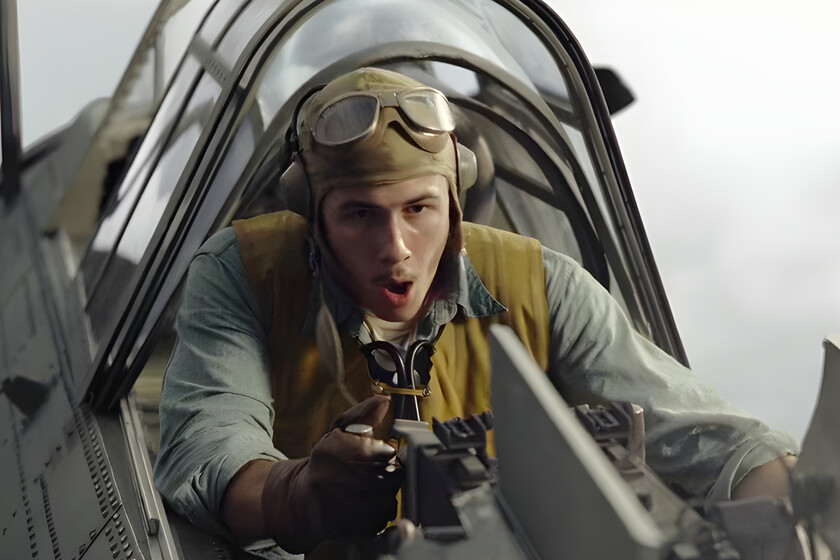
Refusing to compromise on the scale of the project, Emmerich secured funding through independent means, largely from Chinese investors such as the Bona Film Group, alongside equity from various international distributors. This independent status granted Emmerich greater creative control, allowing him to prioritize historical accuracy over the romanticized subplots often demanded by studio executives. The $100 million budget was funneled into high-end digital recreations of the USS Enterprise and the Japanese carriers, as well as the Douglas SBD Dauntless dive bombers, which were reconstructed with meticulous attention to cockpit detail and flight physics.
Historical Accuracy and Veteran Recognition
While Michael Bay’s 2001 film Pearl Harbor was criticized for its historical liberties and focus on a fictional love triangle, Midway has been lauded by the military community for its adherence to the facts. The film depicts real-life figures such as Admiral Chester Nimitz (Woody Harrelson), Lieutenant Commander Edwin Layton (Patrick Wilson), Lieutenant Commander Wade McClusky (Luke Evans), and the legendary dive-bomber pilot Richard "Dick" Best (Ed Skrein).
Military historians have noted that the film’s depiction of the dive-bombing techniques used by American pilots is among the most accurate ever filmed. The SBD Dauntless pilots had to execute nearly vertical dives from 18,000 feet, braving intense anti-aircraft fire to drop their ordnance on the flight decks of enemy carriers. The film captures the terrifying physical toll of these maneuvers, known as "target fixation" and the "G-force blackout."
In a statement following a screening for veterans, several former naval officers commended the film for its respectful portrayal of both the American and Japanese perspectives. Emmerich made a conscious effort to humanize the Japanese leadership, portraying Admiral Yamamoto and Rear Admiral Tamon Yamaguchi not as caricatures, but as professional sailors caught in the machinery of a global conflict. This dual-perspective approach has been cited as a key factor in the film’s high audience approval ratings.
Technical Execution and Visual Effects
The technical demands of Midway were immense. Because none of the original Japanese carriers survived the war and the American carriers were eventually scrapped or lost, the production had to rely heavily on Digital Domain and other VFX houses to recreate the 1942 Pacific environment.
The production team utilized historical blueprints and photographs to build digital models of the ships. For the flight sequences, the crew built full-scale replicas of the SBD Dauntless and TBD Devastator aircraft, which were placed on hydraulic gimbals in front of massive LED screens. This "virtual production" technique allowed the actors to experience the physical motion of flight, which translated into more realistic performances during the high-stress combat scenes. The sound design also played a critical role, using authentic recordings of radial engines and period-accurate anti-aircraft battery fire to immerse the audience in the chaos of the battle.
Reception and Legacy in the War Genre
Upon its release in November 2019, Midway received mixed reviews from critics, many of whom felt the dialogue was occasionally stilted or that the film felt "old-fashioned" in its storytelling. However, the film found a massive and appreciative audience. On the review aggregator Rotten Tomatoes, the film maintains a 92% audience score, a testament to its resonance with viewers who value historical detail and straightforward heroism over modernized cinematic tropes.
Financially, the film faced an uphill battle. While it opened at number one at the U.S. box office, it ultimately grossed approximately $127 million worldwide. Against a $100 million production budget and significant marketing costs, the film struggled to achieve traditional profitability during its theatrical run. However, its performance on streaming platforms, particularly Amazon Prime Video, has given the film a second life. It has become a staple for fans of the genre, often ranked alongside classics like Tora! Tora! Tora! for its educational value.
Conclusion and Broader Implications
The legacy of Midway lies in its proof of concept: that a high-budget, historically accurate war epic can be produced outside the traditional Hollywood studio system. It serves as a reminder of the sheer scale of the Pacific War and the thin margin between victory and defeat. By focusing on the "Midway miracle"—the combination of intelligence, luck, and extraordinary bravery—Emmerich provided a definitive cinematic account of a battle that saved the American West Coast from the threat of invasion and began the long road to the end of the war.
For viewers seeking a film that balances the spectacle of modern cinema with the gravity of historical record, Midway stands as a significant achievement. It may not possess the poetic cinematography of The Thin Red Line or the relentless tension of Dunkirk, but its dedication to the men who fought at Midway ensures that their story remains accessible to a new generation of audiences. As the film continues to find viewers through digital distribution, its reputation as a "realistic" and "authentic" portrayal of naval warfare only continues to grow, securing its place in the pantheon of great war cinema.

 Eva Lovia
 Julia Chirkova
 Julia Prastini
 Jia Lissa
 admin
admin