
The aftermath of the 2026 FIFA World Cup final has extended far beyond the confines of the football pitch, spiraling into a significant international social media controversy involving acclaimed Hollywood actor Samuel L. Jackson. In an unexpected turn of events that has captivated and divided audiences worldwide, Jackson ignited a firestorm of criticism after sharing a post on his Instagram stories targeting Argentina’s national football team, the Albiceleste, with serious allegations of racism. This incident has rapidly evolved from a celebrity’s social media post into a broader discussion about national identity, historical narratives, and the complexities of race relations across different cultural contexts, amplifying the perennial debate surrounding the intersection of sports, celebrity influence, and social justice.
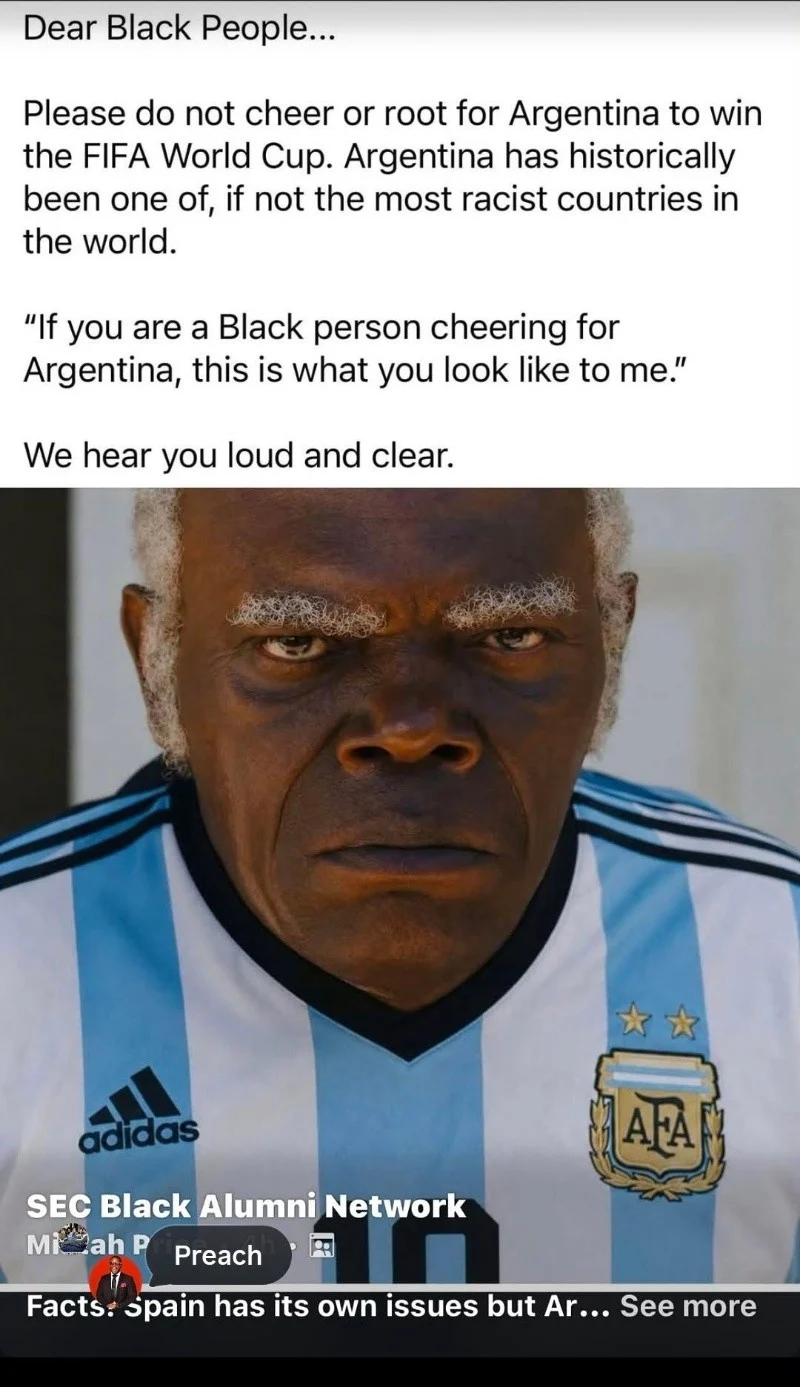
The genesis of the controversy was a screenshot shared by Jackson, a prominent figure known for his activism and outspoken views, on his Instagram story. The image originated from the "SEC Black Alumni Network" and featured text that directly challenged support for Argentina in the World Cup, which saw them finish as runners-up. The provocative message read: "To the Black community. Please do not support or cheer for Argentina to win the FIFA World Cup. Historically, Argentina has been one of the most racist countries in the world, if not the most racist." This bold assertion, presented without immediate accompanying context or specific examples within the post itself, immediately struck a nerve with millions of followers and observers globally.
Adding a layer of pointed visual commentary, Jackson’s post also included a manipulated image of Stephen, the notorious character he portrayed in Quentin Tarantino’s 2012 film "Django Unchained," wearing an Argentina national team jersey. The accompanying caption intensified the message: "If you are a Black person supporting Argentina, this is what you look like to me." For those familiar with "Django Unchained," Stephen is depicted as a loyal, brutal, and deeply complicit house slave who actively upholds and enforces the brutal system of slavery, often at the expense of other enslaved people. His character is widely understood as a symbol of internalized oppression and betrayal within the Black community. By associating this character with Black supporters of Argentina, Jackson’s post drew a stark and inflammatory parallel, implying that such support was a form of self-betrayal or complicity with a perceived racist system. The symbolic weight of Stephen’s character, combined with the explicit accusation against Argentina, ensured the post’s immediate and widespread dissemination across various social media platforms, transforming Jackson into the epicenter of a furious digital debate.
The reaction to Jackson’s post was swift, intense, and overwhelmingly critical, particularly from users of Argentine origin and those who found the accusations to be unfounded or xenophobic. Within hours, "Samuel L. Jackson" and "Argentina" were trending topics globally, with millions weighing in. The comments section across platforms became a battleground of opinions, many expressing outrage and disbelief at the actor’s statements. Critics quickly questioned the veracity of the claim that Argentina is "the most racist country in the world," pointing to the nation’s historical identity as a melting pot of European immigration and its perceived open-door policies throughout the 19th and 20th centuries.
Numerous users from Argentina and beyond defended the nation’s multicultural fabric, arguing that such broad generalizations were not only inaccurate but also harmful. "Argentina has received immigrants from all over the world. To call us the most ‘racist’ country is simply false," read one widely echoed sentiment. Another user lamented, "What a shame that you fight against racism by promoting xenophobia!" The sentiment of fighting prejudice with prejudice resonated deeply, with many accusing Jackson of employing the very tactics he seemingly sought to condemn. "It is concerning that someone with such visibility chooses to spread messages that can generate hatred," commented another, highlighting the responsibility that comes with a celebrity’s massive platform. The criticism frequently escalated to direct accusations of misinformation, with one user stating, "I can’t believe someone so intelligent and talented decided to share disinformation."
To fully appreciate the intensity of the reaction, it is crucial to understand Argentina’s historical and demographic context. Unlike some other Latin American nations with large indigenous or Afro-descendant populations, Argentina’s national identity has historically been heavily shaped by European immigration, primarily from Italy and Spain, but also from Germany, France, and Eastern Europe. This demographic composition led to a national narrative that often emphasized its European heritage, sometimes downplaying or even erasing the presence of its indigenous populations and its historical role in the transatlantic slave trade. While slavery was abolished in Argentina in 1813, and African descendants played a significant role in the country’s early history, their numbers visibly declined over time due to various factors including wars, disease, and intermarriage, leading to a prevalent (though historically contested) perception that Argentina is a predominantly "white" nation.
However, this narrative has been increasingly challenged by contemporary sociological research and Afro-Argentine activist movements, which highlight the continued presence and contributions of Afro-descendants and indigenous communities, and critique the historical processes that led to their diminished visibility in the national consciousness. While acknowledging historical instances of racial discrimination and the lingering effects of Eurocentric societal structures, many Argentines vehemently reject the characterization of their country as "the most racist," arguing that it oversimplifies a complex socio-historical reality and ignores genuine efforts towards inclusion and diversity. They contend that while issues of prejudice exist, as they do in many nations, the blanket accusation is disproportionate and unfairly paints an entire nation with a single, damning brushstroke.
The controversy also brought to the forefront the nuanced and often divergent ways in which race and racism are understood and discussed in different cultural contexts. The predominantly Black-white racial dichotomy often prevalent in the United States, shaped by its unique history of slavery and civil rights struggles, does not always directly translate to the more complex, fluid, and often color-blind (or color-evasive) racial categories found in many Latin American countries. What might be considered overtly racist in one context could be interpreted differently in another, leading to misunderstandings and heightened tensions when these perspectives collide on a global stage. Jackson’s post, framed from an American perspective, likely failed to account for these cultural specificities, contributing to the strong pushback.
Samuel L. Jackson himself is no stranger to controversy or using his platform for social commentary. A vocal advocate for civil rights and social justice, he has frequently lent his voice and considerable influence to various causes, often challenging racial injustices and inequalities. His powerful portrayal of characters like Stephen in "Django Unchained" and Jules Winnfield in "Pulp Fiction" has solidified his image as a formidable figure both on and off screen. His history of activism, however, made the specific nature of this accusation all the more perplexing and, for many, disappointing. Critics argued that while his intentions might have been rooted in a desire to combat racism, the method employed—a sweeping generalization against an entire nation—was counterproductive and risked exacerbating division rather than fostering understanding.
Beyond the immediate backlash from Argentines, the controversy also triggered a wave of "whataboutism," where users, particularly from outside Argentina, turned the spotlight back on the United States. Many comments reminded Jackson and the wider audience of the United States’ own deeply troubled history with race, including slavery, Jim Crow laws, and ongoing systemic racism. "Why don’t you look a little more at your own country?" one user retorted, while another pointed out the historical segregation: "70 years ago, in your country, you would have to use a separate bathroom for African Americans. What are you talking about?" These comments underscored the hypocrisy perceived by some in an American celebrity leveling such a severe accusation against another country, given the enduring racial challenges within his own nation. This line of argument highlighted the sensitive nature of international critique, especially when historical grievances and contemporary issues are perceived to be unaddressed domestically.
As of the latest reports, Samuel L. Jackson has remained silent on the controversy. He has not issued any follow-up statements, clarifications, or apologies regarding the Instagram post. His silence, while perhaps intended to allow the discussion to unfold, has only fueled further speculation and intensified the debate. In the absence of an official response from the actor, the initial post continues to circulate and generate discussion, leaving the accusations against Argentina largely unaddressed by their source.
Inferred reactions from official Argentine stakeholders would likely involve a robust defense of the nation’s diversity and a rejection of the "most racist" label. The Argentine Football Association (AFA), while typically focused on sports, might issue a statement emphasizing the inclusivity of football and the diverse origins of its players and fans. The Argentine government, through its Ministry of Culture or Foreign Affairs, could potentially release a diplomatic statement highlighting the country’s constitutional commitment to equality and its history of welcoming immigrants from all backgrounds, perhaps even inviting Jackson to visit and experience Argentina’s multicultural reality firsthand. Such official responses would aim to counter the negative international perception generated by a high-profile accusation.
From a broader sociological perspective, this incident serves as a potent illustration of the complexities of globalized communication in the digital age. Celebrity platforms, while powerful tools for advocacy, also carry the risk of disseminating oversimplified or culturally insensitive messages that can quickly escalate into international incidents. Experts in race relations and cultural studies might interpret this event as a missed opportunity for a nuanced discussion on global racism, instead becoming a flashpoint for national defensiveness and cross-cultural misunderstanding. It underscores the critical need for cultural competence and historical awareness when addressing sensitive issues across national borders, particularly when leveraging the immense reach of social media.
The implications of this controversy are manifold. It has, inadvertently, spurred a global conversation about racism, national identity, and historical narratives, forcing many to critically examine how these concepts are understood in different parts of the world. It highlights the enduring power of celebrity influence to shape public opinion and perception, for better or worse. Furthermore, it adds another layer to the ongoing dialogue about "cancel culture" versus accountability, questioning where the line lies between legitimate criticism of a nation’s social issues and unfounded, xenophobic attacks.
In conclusion, Samuel L. Jackson’s Instagram post regarding Argentina and racism, following the 2026 World Cup final, has evolved into a significant international incident. What began as a celebrity’s social media commentary quickly spiraled into a complex debate, exposing deep-seated tensions around national identity, historical interpretations of race, and the challenges of cross-cultural communication in the digital age. While Jackson’s intentions may have been to highlight perceived racial injustices, the execution of his message led to widespread accusations of xenophobia and misinformation, prompting a robust defense from Argentina and a critical examination of the United States’ own racial history. As Jackson remains silent, the incident serves as a stark reminder of the immense power and responsibility that comes with a global platform, and the intricate, often contentious, nature of discussing race and identity on the world stage. The echoes of this digital confrontation are likely to resonate for some time, contributing to the ever-evolving global discourse on social justice and national character.

0 Comments