
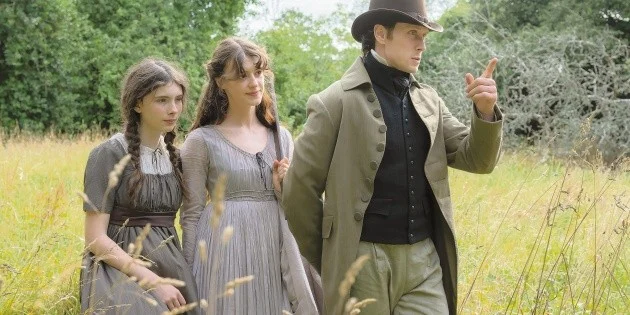
A beloved cornerstone of English literature, Jane Austen’s "Sense and Sensibility," is set to grace the silver screen once more, offering audiences a poignant re-exploration of love, loss, and societal constraints through a contemporary lens. Directed by the critically acclaimed Georgia Oakley, this new adaptation promises a nuanced portrayal of the Dashwood sisters’ journey, emphasizing their symbiotic relationship and the harsh realities faced by women in Regency England. Scheduled for a theatrical release in Mexico on October 29, 2026, with an exclusive premiere event on September 28, 2026, the film stars Daisy Edgar-Jones as the reserved Elinor and Esme Creed-Miles as the impetuous Marianne, bringing a fresh dynamic to these iconic literary figures.
A Timeless Narrative: Austen’s Enduring Legacy in the 21st Century
Jane Austen’s inaugural published novel, "Sense and Sensibility," first captivated readers in 1811 under the anonymous byline "By a Lady." Over two centuries later, its narrative continues to resonate, exploring themes of economic precarity, social standing, and the intricate dance between reason and emotion that defined women’s lives in a patriarchal society. The story centers on Elinor and Marianne Dashwood, whose lives are irrevocably altered following the sudden death of their father. Stripped of their inherited home and much of their financial security, the women of the family—Mrs. Dashwood and her three daughters—are forced to relocate to a more modest cottage, precipitating their entry into a world where marriage, wealth, and reputation dictate a woman’s future.
Austen’s genius lies in her meticulous observation of human nature within the confines of her society. Her novels, often set amidst the rural gentry, delve into the psychological complexities of her characters as they navigate social conventions, often with a keen sense of irony. "Sense and Sensibility" is particularly significant as it introduced many of the concerns that would permeate her later works, including the economic dependence of women, class distinctions, marriage as a social institution rather than merely a romantic union, and the chasm between outward appearance and inner truth. The enduring appeal of Austen’s work is evidenced by the continuous stream of adaptations across film, television, and theatre, each attempting to capture the essence of her narratives while often reflecting the cultural sensibilities of their own time. Notable previous adaptations of "Sense and Sensibility" include the acclaimed 1995 film directed by Ang Lee, starring Emma Thompson (who also won an Academy Award for her screenplay), Kate Winslet, Hugh Grant, and Alan Rickman, which garnered significant critical and commercial success. Earlier television mini-series, such as the 1971 and 1981 BBC productions, also left their mark, proving the story’s adaptability and enduring power.
Georgia Oakley’s Vision: A Symbiotic Relationship Beyond Dichotomy
Director Georgia Oakley, fresh from her critically lauded debut feature "Blue Jean" – a poignant drama set in 1980s England focusing on a lesbian teacher amidst the Thatcher era – brings a distinct directorial sensibility to Austen’s world. Oakley’s approach to "Sense and Sensibility" deviates from a rigid interpretation of the titular opposition between Elinor’s "sense" (prudence, rationality) and Marianne’s "sensibility" (passion, emotion). Instead, she posits the sisters’ relationship as fundamentally "symbiotic." This perspective suggests that neither sister embodies a singular, static trait, but rather that each possesses qualities the other needs, fostering a reciprocal learning experience.
This nuanced interpretation is reinforced by Oakley’s decision to cast Daisy Edgar-Jones and Esme Creed-Miles, who are closer in age than in many previous adaptations. This choice intentionally shifts the dynamic, moving away from Elinor’s sometimes almost maternal role towards Marianne, fostering a more equitable and mutually transformative bond. Oakley articulates that while Marianne must confront the ramifications of her impulsive nature, Elinor, too, cannot forever shield herself behind the fortress of prudence. Both characters are on a journey of growth, discovering the value in integrating aspects of the other’s temperament. This vision aligns with Oakley’s previous work, which often explores complex female relationships and societal pressures, hinting at a "Sense and Sensibility" that is deeply personal and psychologically rich, moving beyond surface-level romance to uncover the core of sisterly connection and individual self-discovery.
The Ensemble Cast: Bringing New Life to Beloved Characters
The success of any Austen adaptation hinges significantly on its cast, and Oakley has assembled a compelling ensemble to bring the Dashwood family and their intricate social circle to life. Daisy Edgar-Jones, widely recognized for her breakout role in the acclaimed series "Normal People" and her performance in "Where the Crawdads Sing," embodies Elinor Dashwood. Edgar-Jones has spoken about Elinor’s journey as one of allowing herself to feel deeply, even when it leads to pain. She referenced a reflection attributed to Ethan Hawke, suggesting that the suffering born of love still holds value, as it signifies a full experience of that profound emotion – a sentiment she sees as central to Elinor’s personal evolution.
Esme Creed-Miles, known for her powerful portrayal in the series "Hanna," steps into the role of Marianne Dashwood, capturing her passionate and often unrestrained spirit. The dynamic between Edgar-Jones and Creed-Miles is expected to be a cornerstone of the film, showcasing the emotional push and pull between their characters.
Rounding out the principal cast are George MacKay ("1917," "Captain Fantastic") as the earnest Edward Ferrars and Frank Dillane ("Harry Potter and the Half-Blood Prince," "Fear the Walking Dead") as the charming but unreliable Willoughby. Herbert Nordrum ("The Worst Person in the World") takes on the role of the steadfast Colonel Brandon, while Caitríona Balfe ("Outlander") portrays the matriarch, Mrs. Dashwood. The supporting cast further strengthens the ensemble, featuring Bodhi Rae Breathnach as Margaret, Fiona Shaw ("Killing Eve," "Harry Potter" series) as Mrs. Jennings, Stacy Martin as Fanny Dashwood, Tom Brooke as John Dashwood, Chloe Pirrie as Lady Middleton, and Ceara Coveney as Lucy Steele.
A particularly noteworthy aspect highlighted during production is the genuine camaraderie that developed among the cast members. Bodhi Rae Breathnach reportedly described Edgar-Jones and Creed-Miles as feeling like true sisters during filming, underscoring the authenticity of their on-screen bond. Herbert Nordrum also attested to the strong sense of companionship among the entire cast. This palpable intimacy is crucial for a film whose dramatic weight rests heavily on family relationships. While the romantic entanglements remain central, the profound connection between Elinor and Marianne takes on heightened significance as they navigate shared losses, disappointments, and the complexities of their new circumstances.
A Gritty Regency: Aesthetics of Authenticity
Oakley’s approach extends beyond character dynamics to the visual and atmospheric elements of the film. Moving away from the often pristine and idealized depictions of Regency England, she opts for a more grounded, "lived-in" aesthetic. Early promotional materials and directorial statements reveal a vision that embraces the rawness of the natural world and the realities of 19th-century life. Viewers can anticipate scenes of windswept dresses, characters traversing tall grasses, and environments marked by rain, earth, and mud.
This deliberate choice to avoid transforming historical homes and period costumes into museum pieces ensures that the characters truly inhabit their surroundings, leaving an imprint on them rather than merely posing within them. It reflects a commitment to historical authenticity that acknowledges the practicalities of life in that era, where everyday existence was intimately connected with the elements. Fiona Shaw, who portrays Mrs. Jennings, concurs with the director’s perspective on Austen’s enduring relevance, attributing the writer’s timelessness to her profound understanding of human nature. Shaw emphasizes that beneath the elaborate manners and social codes of the 19th century, human behaviors and motivations persist that remain entirely recognizable today. This aesthetic choice, therefore, serves to underscore the timelessness of Austen’s human observations, making the characters’ struggles and emotions feel more immediate and relatable to a contemporary audience.
The Socioeconomic Tapestry of Regency England: The Price of Passion and Prudence
"Sense and Sensibility" serves as a powerful commentary on the socioeconomic realities of Regency England, particularly for women. The narrative vividly illustrates how marriage, far from being solely a matter of romantic love, was often an economic imperative. For women like the Dashwoods, whose social standing was inextricably linked to their financial security, the loss of their inheritance after Mr. Dashwood’s death plunges them into a precarious world where their prospects for survival and respectability are severely diminished.
In this society, a woman’s future was largely determined by her ability to secure a financially advantageous marriage. Dowries, inheritances, and property ownership were not merely background details but critical factors that shaped courtship rituals and dictated social interactions. The Dashwood sisters quickly learn this harsh truth as they navigate their romantic pursuits. Elinor’s potential love with Edward Ferrars is complicated by his prior engagements and financial disparities, while Marianne’s infatuation with Willoughby is tragically dashed by his own economic motivations and lack of genuine commitment. The novel meticulously portrays how secrets, family expectations, and pre-existing obligations could derail even the most sincere affections. Austen, through her sharp observations, consistently exposed the vulnerability of women who lacked independent means, highlighting the profound limitations placed upon their freedom, choices, and even their ability to love freely. This aspect of the novel, the interweaving of money with matters of the heart, remains strikingly relevant, as economic considerations continue to influence relationships and life choices in countless ways across cultures.
A Chronology of "Sense and Sensibility" On and Off the Page
The journey of "Sense and Sensibility" from Austen’s pen to the global cinematic stage is a testament to its lasting impact:
- Late 1790s: Jane Austen begins drafting the novel, initially titled "Elinor and Marianne," showcasing her early foray into literary creation.
- 1811: The novel is published anonymously under the title "Sense and Sensibility," signed simply "By a Lady," marking Austen’s formal debut as a published author at the age of 35.
- 1817: Jane Austen passes away at the age of 41, leaving behind a relatively brief but extraordinarily influential body of work, including six complete novels.
- 1971: The first major television adaptation, a BBC miniseries starring Joanna David as Elinor and Ciaran Madden as Marianne, brings the story to a new generation of viewers.
- 1981: Another BBC miniseries adaptation features Irene Richard as Elinor and Tracey Childs as Marianne, further cementing the story’s place in popular culture.
- 1995: Ang Lee directs the critically acclaimed film adaptation, with a screenplay by Emma Thompson, starring Thompson as Elinor, Kate Winslet as Marianne, Hugh Grant as Edward Ferrars, and Alan Rickman as Colonel Brandon. This version becomes a global phenomenon, winning an Academy Award for Best Adapted Screenplay.
- 2008: A three-part BBC miniseries, starring Hattie Morahan as Elinor and Charity Wakefield as Marianne, offers a fresh television interpretation.
- 2023-2024 (Inferred): Production for Georgia Oakley’s adaptation commences, with casting announcements generating excitement among Austen enthusiasts.
- September 28, 2026: A special premiere event for "Sense and Sensibility" is scheduled at Cinépolis VIP La Perla in Mexico, offering early access to local audiences through promotional contests.
- October 29, 2026: Georgia Oakley’s "Sense and Sensibility" officially premieres in cinemas across Mexico, introducing this classic tale to a new generation of filmgoers.
Broader Implications and Anticipation for a Modern Classic
The arrival of a new adaptation of "Sense and Sensibility" is more than just a cinematic event; it is a reaffirmation of Jane Austen’s enduring power and the continued relevance of her societal critiques. Oakley’s fresh perspective, with its emphasis on the symbiotic relationship between the sisters and a more grounded aesthetic, promises to delve deeper into the psychological nuances of the story. By presenting a less idealized version of Regency England, the film may invite audiences to confront the harsh realities faced by women during that era with greater immediacy, drawing parallels to contemporary issues of financial independence, societal pressures, and the pursuit of emotional fulfillment.
This adaptation has the potential to reignite discussions about female agency, the complexities of emotional intelligence, and the timeless tension between societal expectations and individual desires. For those familiar with Austen’s work, it offers a new lens through which to appreciate her genius. For newcomers, it serves as an accessible and engaging introduction to a literary world that, despite its historical setting, continues to pose questions that resonate deeply with the human experience. The film’s robust cast, led by Edgar-Jones and Creed-Miles, coupled with Oakley’s acclaimed directorial vision, positions this "Sense and Sensibility" as a highly anticipated release that will undoubtedly contribute to Austen’s ever-expanding legacy, ensuring that the questions posed by Elinor and Marianne—about love, prudence, and freedom in a world dictated by circumstance—remain as vital today as they were over two centuries ago.

0 Comments