
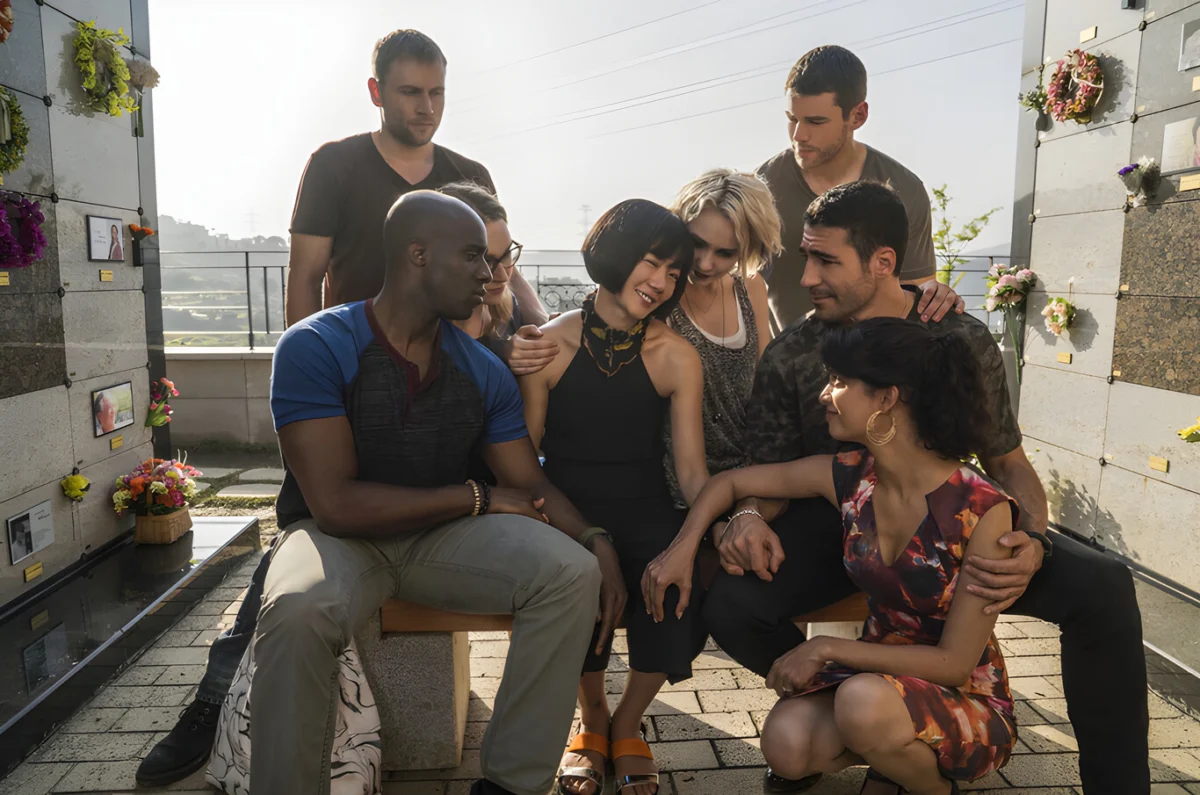
The landscape of digital entertainment underwent a seismic shift in the mid-2010s as Netflix transitioned from a content aggregator to a powerhouse of original production. Among its most ambitious early ventures was Sense8, a science fiction drama that pushed the boundaries of narrative structure, global production, and thematic depth. Created, written, and executive produced by Lana and Lilly Wachowski alongside J. Michael Straczynski, the series debuted in 2015 to critical acclaim and a fervent global following. However, its abrupt cancellation in 2017 after only two seasons became a watershed moment for the streaming industry, highlighting the cold reality of data-driven decision-making and the immense power of organized fan activism.
The Visionary Scope of Sense8
Sense8 introduced a complex premise centered on eight strangers from diverse corners of the globe: San Francisco, Chicago, London, Berlin, Seoul, Reykjavik, Mexico City, Nairobi, and Mumbai. Following a shared violent vision, these individuals—referred to as "sensates"—discover they are mentally and emotionally linked. They can communicate, feel what others feel, and access each other’s specialized skills, ranging from martial arts and hacking to chemistry and getaway driving.
The production was unprecedented in its logistical ambition. Unlike traditional series that utilize soundstages and green screens to simulate international locales, the Wachowskis insisted on filming on location in every city featured in the script. This commitment to authenticity meant the cast and crew traveled tens of thousands of miles across four continents, capturing the unique light, atmosphere, and culture of each setting. The result was a visual tapestry that felt truly global, reinforcing the show’s core message of human connectivity transcending borders, religions, and sexual orientations.
The Financial Burden of Global Ambition
While Sense8 was a critical darling and a pioneer in LGBTQ+ representation, its production model carried an astronomical price tag. By the second season, reports indicated that the budget had swelled to approximately $9 million per episode. To put this in perspective, this put Sense8 in the same financial tier as HBO’s Game of Thrones during its peak years.
The high costs were attributed to several factors:
- Global Travel: Transporting a full production crew and a large ensemble cast to nine different countries was a logistical nightmare that incurred massive expenses in visas, local labor, and transportation.
- Extended Shooting Schedules: Filming across the globe required significantly more time than a standard studio-based production, leading to higher salaries for cast and crew.
- Complexity of Direction: The "sharing" scenes, where characters from different parts of the world appear in the same physical space, required intricate choreography and identical setups in multiple countries, doubling or tripling the work required for a single sequence.
Despite the show’s high quality, Netflix’s internal metrics—which prioritize "cost-per-subscriber" and "completion rates"—began to signal trouble. While the show had a dedicated and vocal fanbase, it failed to achieve the massive, broad-market viewership numbers seen by contemporaries like Stranger Things.
A Chronology of the Cancellation and Resurrection
The timeline of Sense8’s demise and partial revival remains one of the most documented sagas in streaming history:

- June 5, 2015: Sense8 Season 1 premieres on Netflix, quickly gaining a cult following.
- December 23, 2016: A two-hour Christmas special is released to bridge the gap between seasons.
- May 5, 2017: Season 2 premieres, ending on a massive cliffhanger involving the capture of one of the main sensates by the villainous Biological Preservation Organization (BPO).
- June 1, 2017: Netflix officially announces the cancellation of Sense8. Cindy Holland, then-Vice President of Original Content, stated, "After 23 episodes, 16 cities and 13 countries, the story of the Sense8 cluster is coming to an end."
- June 2017: The #RenewSense8 campaign explodes on social media. Fans launch petitions garnering over 500,000 signatures and organize unconventional protests, such as sending flip-flops (a reference to a specific scene in the show) to Netflix headquarters.
- June 29, 2017: In a rare reversal, Netflix announces that a two-and-a-half-hour series finale special would be produced to provide closure for the fans.
- June 8, 2018: The finale special, "Amor Vincit Omnia," premieres, concluding the major plot threads.
Official Responses and the "Netflix Curse"
The cancellation of Sense8 was not an isolated incident but rather a signal of a broader shift in Netflix’s corporate strategy. Shortly after the announcement, Netflix CEO Reed Hastings spoke at a technology conference, noting that the company’s "hit ratio" was too high. He argued that to be truly innovative, the platform needed to take more risks, which inevitably meant a higher rate of cancellations for shows that did not meet specific growth targets.
Industry analysts pointed out that Netflix was moving away from being a "safe haven" for niche, high-budget auteur projects. The "Netflix Curse"—the tendency for the platform to cancel critically acclaimed shows after their second or third season—became a common talking point. This phenomenon is largely attributed to the escalating costs of talent contracts in later seasons and the platform’s focus on acquiring new subscribers through "fresh" content rather than retaining old ones through long-running series.
The cancellation was particularly stinging for the LGBTQ+ community. Sense8 featured a trans character (Nomi Marks) played by a trans actress (Jamie Clayton) and written by trans creators (the Wachowskis), a rarity in 2015. The show’s frank and celebratory depiction of queer joy and diverse identities made its termination feel like a loss of vital representation.
Comparative Analysis: Why Sense8 Was Unique
To understand why the Sense8 cancellation was deemed "the worst" by many fans, one must compare it to other high-profile Netflix casualties. Series like The OA and 1899 also faced abrupt endings despite having passionate fanbases. However, Sense8 was unique for two reasons: its unprecedented production scale and its successful fan-led resurrection.

While The OA fans also campaigned heavily—even buying a billboard in Times Square—the show never received a concluding special. Sense8 remains one of the few instances where a streaming giant admitted that the emotional investment of the audience outweighed the immediate financial data, if only for a single special episode.
Furthermore, Sense8’s legacy is found in its influence on subsequent "prestige" sci-fi. Its success in blending high-concept philosophy with intimate human drama paved the way for shows like Dark and Severance. It proved that global audiences were hungry for stories that didn’t just center on North American or European perspectives.
Broader Impact on the Streaming Industry
The legacy of Sense8 continues to resonate in how streaming services greenlight projects today. The "Sense8 model" of filming on location across the globe is now viewed as a high-risk strategy, often replaced by advanced "Volume" technology (LED screen stages) like those used in The Mandalorian or 1899.
The event also forced a conversation about transparency. In 2017, Netflix was notoriously secretive about its viewership numbers. The lack of data left fans and creators in the dark, unable to understand why a show that dominated social media trends was deemed a failure. In the years since, Netflix has begun releasing more comprehensive data, such as its "Top 10" lists and biannual engagement reports, partly to justify its programming decisions to the public.

The Lasting Resonance of the "Sensate" Philosophy
Ten years after its debut, Sense8 is remembered not just for its cancellation, but for its audacity. It was a show that dared to ask what would happen if the barriers between individuals were removed entirely. It explored the idea that empathy is not just a moral choice, but a biological imperative.
The series remains available on Netflix in its entirety, including the hard-won finale. For fans of science fiction, it serves as a reminder of a brief period when streaming platforms were willing to spend "blockbuster movie" money on experimental, diverse, and philosophically dense television. While the story of the sensates ended earlier than planned, the fact that it received a conclusion at all remains a testament to the power of the audience in the digital age. Sense8 stands as a monument to a specific era of "Peak TV"—one defined by limitless ambition, global solidarity, and the harsh economic realities of the streaming wars.

0 Comments