
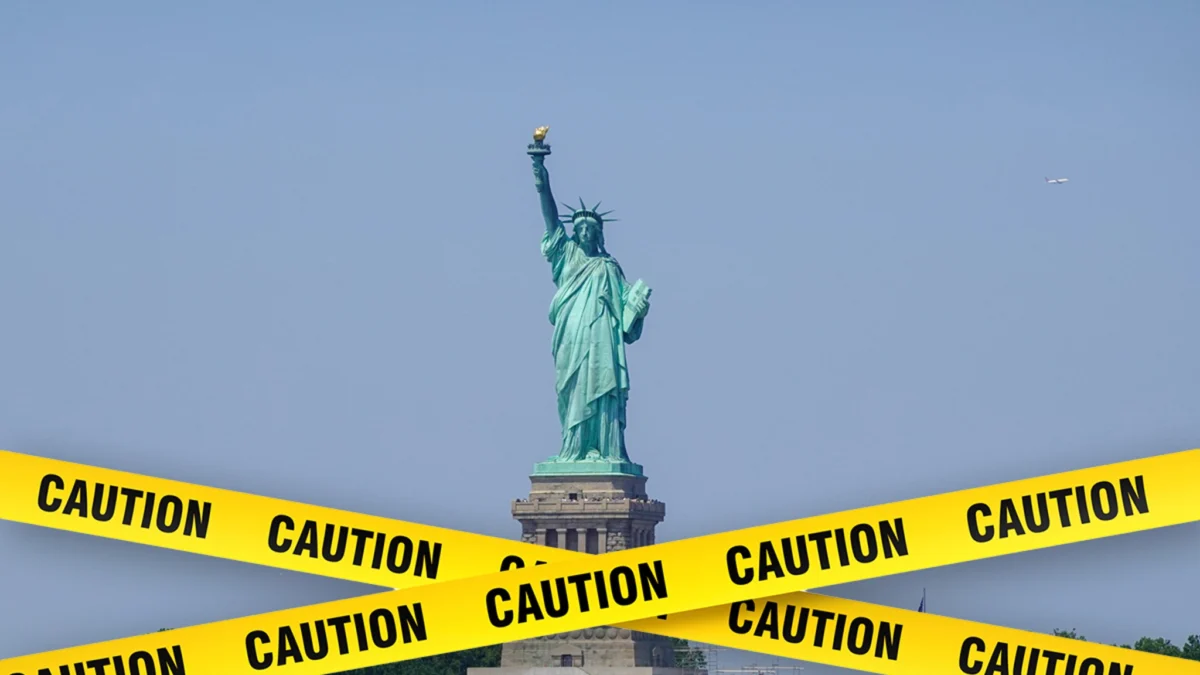
A recreational boat capsized tragically in the waters near New York City’s iconic Statue of Liberty on Saturday night, August 8, 2026, resulting in the deaths of a 27-year-old woman and a 5-month-old infant, and plunging twelve other individuals into the harbor. The devastating incident prompted an immediate and extensive rescue operation by New York City Police Department (NYPD) units, who successfully pulled the survivors from the challenging conditions of New York Harbor. The two victims, initially recovered in critical condition, were later pronounced dead at a Brooklyn hospital, casting a pall over the normally bustling waterway.
Tragic Incident Unfolds in New York Harbor
The terrifying event unfolded just off the coast of Liberty Island, a globally recognized symbol of freedom and democracy, late Saturday evening. According to NYPD sources, a vessel carrying a total of fourteen people suddenly overturned, ejecting all occupants into the dark, choppy waters of New York Harbor. The exact time of the capsizing has not been publicly released, but emergency services were alerted shortly after the incident, triggering a rapid and comprehensive response. The location, while picturesque by day, presents significant challenges for rescue operations at night, including strong currents, limited visibility, and the vastness of the bay.
The area surrounding Liberty Island is one of the busiest maritime zones in the world, frequented by ferries, private boats, commercial vessels, and tour boats carrying millions of tourists annually. The sudden nature of the capsizing has raised immediate questions about the circumstances leading to the tragedy. While the investigation is in its nascent stages, authorities will undoubtedly be scrutinizing factors such as the boat’s capacity, its mechanical condition, the operator’s qualifications, and the prevailing weather and water conditions at the time of the incident. The stark contrast between the joyful symbolism of the Statue of Liberty and the somber reality of the accident has resonated deeply with the public.
Swift and Coordinated Emergency Response
Upon receiving the distress call, the New York City Police Department’s specialized units were mobilized with remarkable speed and efficiency. NYPD Aviation, responsible for aerial surveillance and support, deployed helicopters equipped with powerful searchlights to illuminate the water and aid in locating individuals. Simultaneously, the NYPD Harbor Unit, which patrols New York City’s waterways, dispatched multiple vessels to the scene. These units are highly trained in water rescue and equipped with advanced sonar and navigation systems, crucial for operations in challenging marine environments.
Adding to the robust response, a specialized NYPD scuba diving team was deployed, prepared to conduct underwater searches if necessary. The coordinated effort highlights the extensive training and resources dedicated to maritime safety and emergency response in a major port city like New York. Rescuers faced not only the darkness and potential for strong currents but also the chilling reality of recovering individuals, including an infant, from the cold bay waters. The immediate priority was to locate and extract all individuals from the water to prevent hypothermia and further injury, especially given the vulnerability of those who may have been injured during the capsizing or were non-swimmers.
The twelve survivors were pulled from the bay by the NYPD rescue teams and promptly transferred to awaiting emergency medical services (EMS) personnel on shore. They were subsequently transported to a local hospital, where they were treated for non-life-threatening injuries. These injuries could range from minor cuts and bruises to mild hypothermia and shock. The resilience and swift action of the emergency responders undoubtedly prevented a higher casualty count in what could have been an even more catastrophic event.
The Victims and Community Grief
The tragic loss of a 27-year-old woman and her 5-month-old daughter has sent shockwaves through the community. While their identities have not yet been publicly released, the profound sorrow associated with such a loss, particularly that of an infant, is palpable. Both were retrieved from the water in critical condition and rushed to a hospital in Brooklyn, where despite intensive medical efforts, they could not be revived. The incident serves as a heartbreaking reminder of the fragility of life and the unforeseen dangers that can lurk even in seemingly benign recreational activities.
For the twelve survivors, the ordeal extends beyond their physical injuries. The trauma of being thrown into the water, witnessing the capsizing, and experiencing the loss of fellow passengers, especially a mother and child, will undoubtedly have lasting psychological effects. Mental health professionals and support services will likely be crucial in helping them process the harrowing experience. The event also underscores the deep emotional toll on the emergency responders, who are often the first to confront such tragic scenes and perform under immense pressure.
New York City, a vibrant and diverse metropolis, often rallies in the face of tragedy. Expressions of sympathy and condolences have begun to emerge, reflecting the collective grief and concern for the victims’ families and the survivors. This incident will likely foster a period of introspection and renewed focus on public safety, particularly regarding recreational activities on its famous waterways.
Ongoing Investigation into the Cause
The New York Police Department, in conjunction with other relevant maritime authorities, has launched a comprehensive investigation to determine the exact cause of the boat’s capsizing. As of now, the reasons remain unclear, and investigators will meticulously examine several potential factors. This includes a thorough inspection of the vessel itself, focusing on its structural integrity, maintenance history, and any potential mechanical failures that could have led to its instability. The make and model of the boat, its intended use, and its capacity relative to the number of passengers on board will be critical points of inquiry. Overloading is a common cause of capsizing and will be a significant area of focus.
Furthermore, investigators will scrutinize the actions and qualifications of the boat’s operator. This includes checking for proper licensing, any history of violations, and whether the operator was under the influence of alcohol or drugs at the time of the incident. Witness statements from the survivors and any other vessels in the vicinity will be crucial in piecing together a timeline of events and understanding the moments leading up to the capsizing.
Environmental factors will also be a key component of the investigation. While Saturday night was not marked by severe storms, the waters of New York Harbor can be unpredictable. Currents, wake from larger vessels, and wind conditions can all contribute to challenging conditions for smaller boats. The U.S. Coast Guard, which has broad authority over maritime safety and navigation in federal waters, is also expected to be heavily involved in the inquiry, providing expertise in marine accident reconstruction and regulatory compliance. The findings of this investigation will be vital not only for providing answers to the grieving families but also for informing future safety measures and regulations.
Broader Context: Boating Safety Regulations and Incidents
This tragic incident serves as a stark reminder of the inherent risks associated with recreational boating, even in familiar waters. Boating safety regulations are stringent for a reason, designed to mitigate hazards and protect lives. Key safety measures include mandatory life jacket usage, especially for children; ensuring the vessel is seaworthy and properly maintained; never exceeding the boat’s stated capacity; and maintaining sobriety while operating a vessel. Many jurisdictions also require boat operators to complete safety courses.
According to statistics from the U.S. Coast Guard, recreational boating accidents account for hundreds of fatalities and thousands of injuries annually across the nation. Common contributing factors often include operator inattention, improper lookout, inexperience, excessive speed, and alcohol use. Capsizing is a frequent type of accident, often exacerbated by sudden shifts in weight, rough waters, or impact with another object or wake. While New York Harbor is under constant surveillance and subject to various maritime rules, the sheer volume of traffic and diverse range of vessels operating within it means that vigilance and adherence to safety protocols are paramount. This incident will undoubtedly reignite discussions about how to enhance public awareness and enforcement of these critical safety guidelines.
Statements and Official Responses
In the immediate aftermath, official statements from the NYPD emphasized the ongoing nature of the investigation and expressed condolences to the victims’ families. Law enforcement officials have indicated their commitment to a thorough and transparent inquiry, aiming to uncover all factors that contributed to the tragedy. "Our thoughts are with the families of those lost and injured in this horrific incident," an unnamed NYPD spokesperson was quoted as saying, "and we are dedicating all necessary resources to determine precisely what occurred and prevent such tragedies in the future."
The Mayor’s office and other city officials are expected to issue formal statements acknowledging the profound loss and commending the swift actions of the emergency services. Such incidents often prompt public reassurances from leadership about the safety of public spaces and recreational activities, coupled with promises of robust investigations. The public will be looking for answers regarding how such an event could transpire in one of the most closely monitored waterways in the country. Community leaders and local organizations are also likely to offer support to affected families and individuals, embodying the spirit of solidarity often seen in New York during times of crisis.
Implications for Maritime Safety in Busy Waterways
The capsizing near the Statue of Liberty has significant implications for maritime safety protocols, particularly in congested urban waterways like New York Harbor. While existing regulations are comprehensive, every accident offers lessons that can lead to improvements. This incident may prompt a review of current safety enforcement, public education campaigns regarding boating risks, and potentially, specific regulations for recreational vessels operating in high-traffic zones. The interplay between large commercial ships, ferries, and smaller recreational boats in a shared, busy space presents unique challenges that constantly require reassessment.
The tragedy serves as a poignant reminder that even in familiar and seemingly safe environments, unexpected dangers can arise. For boat operators, it underscores the critical importance of preparedness, including having proper safety equipment, knowing emergency procedures, and constantly monitoring environmental conditions. For the general public, it highlights the necessity of choosing reputable operators for water excursions and being aware of personal safety measures when engaging in water-based activities. The ultimate goal following such an event is not only to understand what went wrong but also to implement changes that enhance safety for all who venture onto the water, ensuring that the vibrancy of New York Harbor can be enjoyed without such devastating consequences. The investigation’s findings will be crucial in shaping these future discussions and policy considerations, striving to prevent any recurrence of such a heartbreaking loss.

0 Comments