
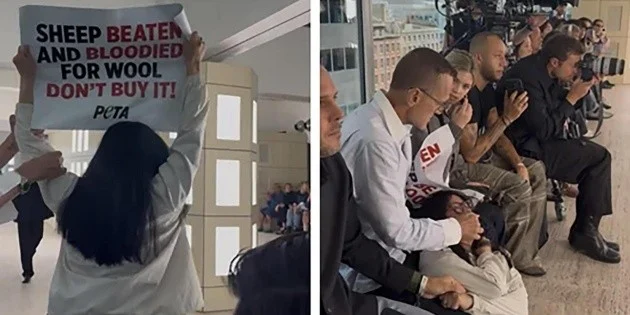
Steven Kolb has resigned from his position as Chief Executive Officer of the Council of Fashion Designers of America (CFDA) after a distinguished 20-year tenure, a decision that followed a physical altercation with animal rights activists during the recently concluded New York Fashion Week. Kolb, who had led the influential organization for two decades, announced his departure on Friday evening, stating, "After 20 years leading the CFDA, I have made the difficult decision to resign. What happened was completely out of character for me, both personally and as a leader." The incident, which quickly garnered significant media attention and widespread condemnation, involved Kolb physically confronting protestors from People for the Ethical Treatment of Animals (PETA) at a fashion show.
The altercation prompted the CFDA’s board of directors to place Kolb on immediate leave while they conducted a thorough review of the incident. The board, composed of some of the most prominent figures in American fashion including Tommy Hilfiger, Ralph Lauren, Michael Kors, Diane von Furstenberg, and Vera Wang, ultimately accepted Kolb’s resignation. In a statement, they expressed, "We respect Steven’s decision to resign and are grateful for his many years of leadership and service to the CFDA and our industry." A successor to Kolb has not yet been named, leaving a significant leadership vacuum at the helm of an organization crucial to the American fashion landscape.
The Incident: A Detailed Chronology of the Altercation
The confrontation unfolded on Sunday, September 15, during the COS fashion show, a prominent event on the New York Fashion Week calendar. Steven Kolb was seated in the front row, a customary position for a figure of his stature, observing the collection. According to eyewitness accounts and widely circulated video footage, the show was briefly disrupted by two activists from PETA, the world’s largest animal rights organization. The activists, identified as holding banners protesting the use of animal products in fashion, reportedly attempted to make their presence felt within the venue.
The video evidence captures Kolb’s abrupt response. He rose from his seat and moved directly towards one of the female activists. In a series of aggressive actions, Kolb reportedly ripped a banner from her hands, then forcibly pulled her down to the floor between his legs. He proceeded to physically restrain her, placing a leg over her to immobilize her and covering her mouth with his hand, effectively silencing her. This lasted for several seconds while other attendees reacted with visible shock and murmurs. Eventually, Kolb released the activist, who was subsequently escorted out of the venue by security personnel. The footage also indicates that Kolb engaged in a similar struggle with a second protestor, also involving physical contact and covering their mouth.
The swift dissemination of the video across social media platforms led to immediate and widespread condemnation from both within and outside the fashion industry. Critics argued that Kolb’s actions were disproportionate, unprofessional, and entirely unbecoming of a leader representing an organization dedicated to fostering creativity and professionalism within the fashion community. The incident immediately cast a shadow over New York Fashion Week and raised questions about the CFDA’s stance on ethical practices and public conduct.
Steven Kolb’s Two Decades at the Helm of the CFDA
Steven Kolb’s departure marks the end of a significant era for the CFDA. Having joined the organization in 2006 as Executive Director and later ascending to CEO, Kolb presided over two decades of profound transformation within the American fashion industry. The CFDA, founded in 1962 by publicist Eleanor Lambert, has historically played a pivotal role in promoting American design talent globally. Its mission includes strengthening the influence and success of American fashion designers in the global economy.
Under Kolb’s leadership, the CFDA expanded its reach and impact considerably. He was instrumental in enhancing the global stature of New York Fashion Week, working to solidify its position alongside Paris, Milan, and London as a premier fashion capital. Kolb championed numerous initiatives aimed at nurturing emerging talent, most notably the CFDA/Vogue Fashion Fund, which has provided crucial financial support and mentorship to a generation of designers, helping to launch and sustain many successful brands.
Beyond talent development, Kolb focused on modernizing the CFDA’s operations and expanding its educational programs. He navigated the organization through significant industry shifts, including the rise of digital media, the increasing demand for sustainable practices, and the challenges posed by fast fashion. In recent years, Kolb also spearheaded efforts to promote diversity, equity, and inclusion within the American fashion industry, recognizing the need for broader representation and opportunity. During the unprecedented challenges of the COVID-19 pandemic, Kolb led the CFDA in establishing relief funds and support systems for designers struggling with economic downturns and supply chain disruptions, demonstrating his commitment to the welfare of the industry’s stakeholders. His tenure saw the CFDA evolve from primarily a trade association into a more robust advocacy and support system for American fashion.
The CFDA Board’s Deliberation and Future Leadership
Following the widely publicized incident, the CFDA’s board of directors faced a critical decision. The board, an assembly of some of the most powerful and respected names in global fashion, held an emergency meeting to address the situation. Their initial response was to place Kolb on leave, signaling the seriousness with which they viewed the matter and the need for a thorough evaluation. The board’s composition, featuring iconic designers who have shaped the very fabric of American fashion, underscored the weight of their responsibility in upholding the organization’s integrity and public image.
The decision to accept Kolb’s resignation, while acknowledging his extensive contributions, sends a clear message about the standards of conduct expected from leaders within the fashion industry. The board’s statement was concise, expressing gratitude for his service but refraining from extensive commentary on the incident itself. The immediate challenge for the CFDA is now to find a suitable successor who possesses the vision, experience, and leadership qualities necessary to guide the organization in an increasingly complex and scrutinized global fashion landscape. The absence of an immediate designation for a new CEO suggests that the search will be comprehensive and deliberate, reflecting the critical nature of the role.
Animal Rights Activism and the Evolving Fashion Landscape
The incident involving Kolb and PETA activists highlights the escalating tensions between the traditional fashion industry and the growing movement for animal rights. PETA, established in 1980, has a long and often confrontational history of protesting the use of animal products such in fashion, including fur, leather, wool, and exotic skins. Over the decades, PETA’s tactics have ranged from highly theatrical disruptions at fashion shows—like throwing red paint on fur coats or holding provocative signs—to sophisticated public awareness campaigns and direct engagement with designers and brands.
Historically, fur and other animal-derived materials were mainstays of luxury fashion. However, spurred by sustained activism and a growing ethical consumer base, there has been a significant shift within the industry. Numerous prominent luxury brands, including Gucci, Prada, Versace, Chanel, Burberry, and Stella McCartney, have announced fur-free policies in recent years. This trend reflects not only a response to activist pressure but also a recognition of evolving consumer values, particularly among younger demographics who increasingly prioritize ethical sourcing and sustainability. The demand for cruelty-free and vegan alternatives continues to grow, pushing designers to innovate with new materials and production methods.
The altercation at the COS show serves as a stark reminder that despite progress, the debate surrounding animal product use in fashion remains a flashpoint. For PETA, such high-profile incidents, even those involving aggressive responses, often serve to amplify their message and draw further attention to their cause. Moira Colley, a spokesperson for PETA, confirmed that Kolb had accepted an offer to meet and "discuss their concerns," indicating PETA’s strategic approach of seeking dialogue and policy change beyond mere protest. The fact that a meeting was rescheduled suggests an ongoing willingness for engagement, even after the resignation.
Implications for the CFDA and the Future of American Fashion
Steven Kolb’s abrupt departure has significant implications for the CFDA and the broader American fashion industry. The immediate challenge is filling the leadership void left by a CEO who shaped the organization for two decades. The next leader will need to navigate a landscape fraught with challenges, including the ongoing digitalization of fashion, the urgent demand for sustainability, the push for greater diversity and inclusion, and the increasing scrutiny of ethical practices across the supply chain.
The incident itself has placed the CFDA under an intensified spotlight regarding its ethical stance and the conduct of its leadership. This could accelerate the organization’s push towards more explicit commitments to ethical and sustainable practices, potentially influencing the criteria for membership, awards, and participation in New York Fashion Week. The CFDA may need to reinforce its guidelines on professional conduct and crisis management, particularly in public-facing events like fashion weeks, to prevent similar incidents from undermining its reputation.
Moreover, the event highlights the evolving expectations placed upon leaders in high-profile industries. In an age of instant information and viral content, personal conduct, especially in public, can have immediate and far-reaching consequences for both individuals and the organizations they represent. The incident serves as a case study in the intersection of personal actions and corporate responsibility, underscoring the importance of aligning individual behavior with organizational values.
The search for Kolb’s successor will undoubtedly be a pivotal moment for the CFDA. The new CEO will be tasked not only with maintaining the organization’s legacy of supporting American design but also with steering it towards a future where ethical considerations, environmental responsibility, and inclusive representation are paramount. This leadership transition occurs at a time when the fashion industry is undergoing one of its most transformative periods, demanding a visionary and ethically conscious leader to guide American fashion forward.
In conclusion, Steven Kolb’s resignation marks a watershed moment for the CFDA, signaling the end of an influential era and the beginning of a new chapter for American fashion leadership. While his two decades at the helm were characterized by significant growth and modernization, his departure underscores the increasing sensitivity around ethical issues and public conduct within the global fashion industry. The CFDA now faces the critical task of appointing a new leader who can not only champion American design but also adeptly navigate the complex social, environmental, and ethical demands of the 21st-century fashion landscape, ensuring that the organization remains a relevant and respected voice in the global conversation.

0 Comments