
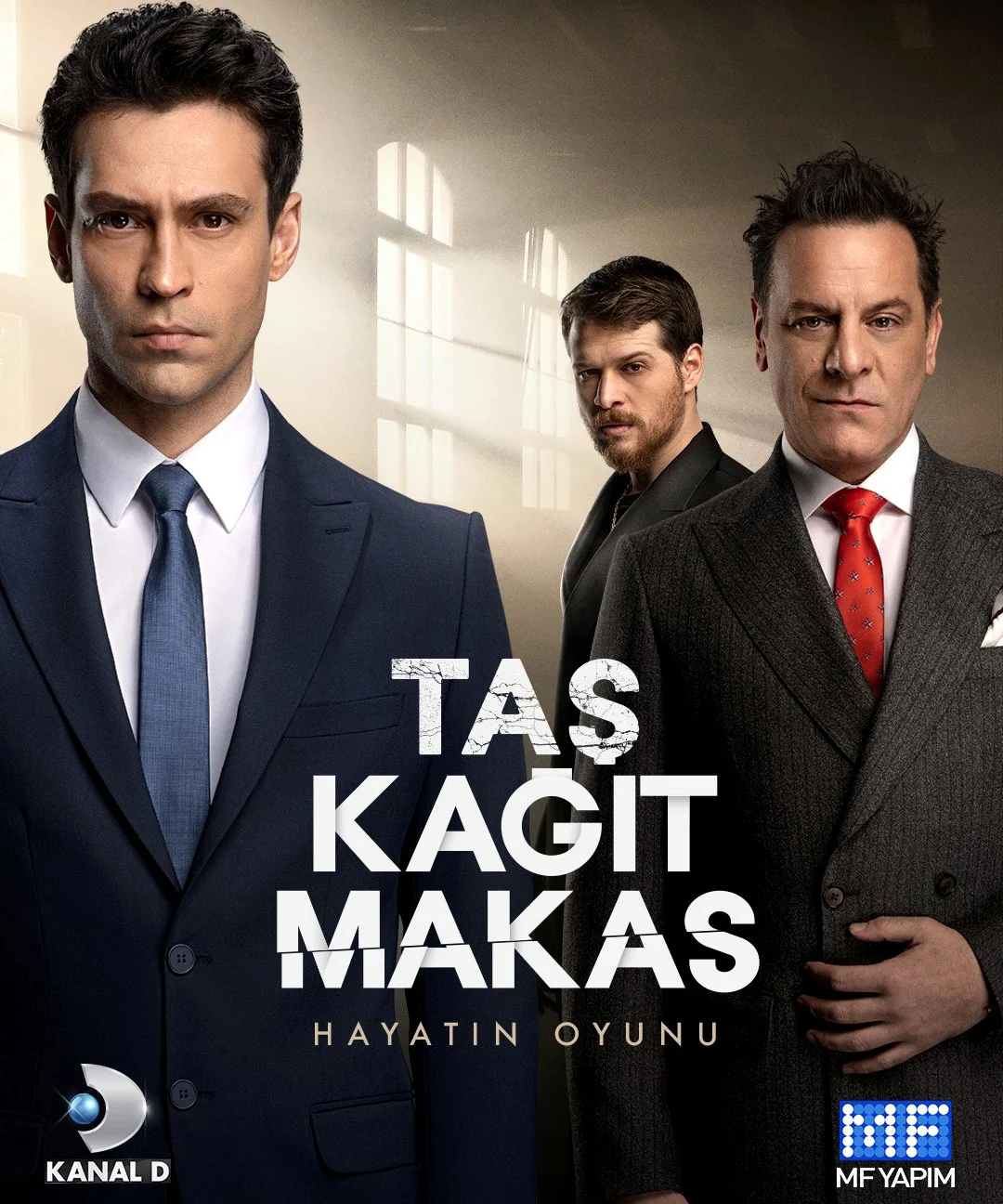
Kanal D’s latest crime and drama series, Tas Kagit Makas, also known internationally as Remember or Rock, Paper, Scissors, has captivated audiences since its premiere on February 28, 2024. Produced by MF Yapim and helmed by directors Volkan Keskin and Yusuf Pirhasan with a screenplay by Ugras Gunes, the 19-episode series, each spanning a considerable 120-140 minutes, delves into a complex narrative of familial loyalty, the extraordinary burden of memory, and the relentless pursuit of truth within a seemingly impenetrable system of power and privilege. Filmed against the vibrant and often stark backdrop of Istanbul, the production promises a high-stakes emotional and legal battle that is set to conclude on October 16, 2024.
Unraveling ‘Remember’: A Deep Dive into Turkey’s Latest Crime Drama
At its core, Remember is a narrative driven by the unique cognitive condition of its protagonist, Umut Tanrikulu, portrayed by the acclaimed Ekin Koc. Umut possesses Hyperthymesia, a rare neurological condition that grants him an exceptionally detailed autobiographical memory, allowing him to recall virtually every event of his life with vivid precision. This extraordinary ability, while seemingly a gift, becomes both his greatest asset and his heaviest burden when his unassuming father, Riza Tanrikulu (Bulent Seyran), is falsely accused of a heinous crime. The series meticulously explores how such a perfect memory navigates a world where truth is malleable, and justice can be bought.
The drama unfolds within the intricate social strata of Istanbul, contrasting the quiet, modest life of Umut and Riza with the opulent yet morally corrupt world of the city’s elite. The clash between these two worlds forms the central conflict, highlighting issues of social inequality, systemic corruption, and the often-desperate struggle of ordinary citizens against powerful adversaries. The long-form episode structure, characteristic of many successful Turkish dramas, allows for deep character development and the slow-burning revelation of plot twists, keeping viewers engaged in the unfolding mystery.
The Intricate Web of ‘Remember’: A Chronological Unfolding of Betrayal and Pursuit of Truth
A Quiet Life Shattered
The story introduces us to Umut and his father, Riza, living a humble life in Istanbul. Riza, a dedicated cleaning worker in a high-rise office building, has devoted his life to his son. Unbeknownst to them, Riza is silently grappling with the early stages of Alzheimer’s disease, a condition that will tragically intersect with Umut’s perfect memory. Umut’s Hyperthymesia means he remembers every word, sound, and image, rendering the act of forgetting an impossibility, a stark contrast to his father’s impending memory loss. This juxtaposition of perfect recall and encroaching oblivion sets a profound thematic undercurrent for the series.
The Fateful Night and a City’s Elite
The catalyst for their world’s upheaval arrives with the return of Fecir Emirkiran (Burak Yoruk) from London. Fecir, scion of a powerful and wealthy Istanbul family, is a charismatic but dangerously manipulative figure. His lavish welcoming party, attended by the city’s elite, becomes the backdrop for a tragedy. Obsessed with a young woman’s singing, Fecir insists she perform privately for him. This young woman, Busra (Ebrar Karabakan), who coincidentally lives in Umut and Riza’s neighborhood, attempts to escape Fecir’s unwanted advances, leading to her untimely death in the forest near the plaza.
Simultaneously, Riza, after leaving work, purchases a cellphone as a birthday gift for Umut. However, disoriented by the nascent stages of his Alzheimer’s, he wanders into the forest, oblivious to the unfolding horror. His confusion and lack of recall become central to the subsequent events.
False Accusation and a Son’s Unwavering Resolve
The next morning, Umut’s concern for his missing father leads him to the forest, where he not only finds a bewildered Riza but also discovers Busra’s lifeless body. The ensuing police investigation quickly spirals into a miscarriage of justice. Under immense public and media pressure to swiftly close the case, the authorities arrest Riza, accusing him of Busra’s murder. Riza, unable to recall the events of that night due to his condition, is powerless to defend himself. The police, employing manipulative tactics including threats against Umut, coerce a false confession from Riza, sealing his fate in the eyes of the law.
This narrative point offers a sharp critique of procedural failings and the vulnerability of individuals within a system driven by external pressures. The ease with which an innocent man can be framed and forced to confess highlights a societal concern regarding judicial integrity and the protection of individual rights.
Allies in the Quest for Justice
Despite the overwhelming odds, Umut refuses to accept his father’s guilt. His unwavering belief in Riza’s innocence, coupled with his hyperthymestic memory, transforms him into a formidable seeker of truth. His journey leads him to two pivotal allies: Alev Parlak (Serra Ariturk), a passionate and empathetic law student with a strong moral compass, and Harun Yakar (Ozan Guven), a brilliant and highly successful defense attorney known for representing Istanbul’s elite.
Alev, moved by Umut’s plight, becomes his closest confidante and legal guide, using her burgeoning legal knowledge to support his fight. Harun, initially reluctant, is drawn into Umut’s case after learning about Umut’s own tragic past—the loss of his entire family in a car accident. Harun, a man of strategic mind and a cynical view of ethics, sees an opportunity in Umut’s unique ability and unwavering determination, viewing him as a means to achieve success, though his motivations are complex and potentially self-serving.
Confronting the Powerful
Together, this unlikely trio embarks on a dangerous quest to expose the dark secrets behind Fecir Emirkiran’s actions and dismantle the corrupt network protecting him. Umut’s journey is fraught with obstacles, but his hope remains steadfast. Armed with his extraordinary memory, newfound courage, and the support of his allies, he confronts a system where power and wealth often dictate outcomes, striving to clear his father’s name and unveil the deadly truths hidden by a powerful family. The series becomes a game of "Rock, Paper, Scissors," where Umut, the underdog, must outwit and outmaneuver the forces aligned against him.
Portraying Complexities: The Characters Driving ‘Remember’
Umut Tanrikulu (Ekin Koc): The Memory Keeper
Ekin Koc delivers a compelling performance as Umut, portraying the nuanced experience of living with Hyperthymesia. Umut is not merely a human database; he is a quiet sufferer, burdened by an inability to forget emotional wounds and past traumas. His character arc involves transforming from a reserved teenager into a determined advocate for justice, using his unique gift not just for recall but as a weapon against injustice. Koc’s portrayal skillfully balances Umut’s intellectual brilliance with his emotional vulnerability, making him a deeply relatable protagonist.
Harun Yakar (Ozan Guven): The Morally Ambiguous Strategist
Ozan Guven brings depth to Harun Yakar, a character shaped by past losses despite his outwardly cynical and polished demeanor. Harun represents the morally grey area of the legal profession, where success often trumps ethics. His initial reluctance to help Umut, followed by his strategic engagement, speaks to a complex internal struggle. Guven’s portrayal hints at a man who once believed in justice but became jaded, finding a flicker of his former ideals rekindled through Umut’s unwavering faith.
Alev Parlak (Serra Ariturk): The Conscience of Justice
Serra Ariturk’s Alev Parlak is the moral compass of the series. A dedicated law student, her idealism and strong sense of justice drive her to actively assist Umut. Her empathy and legal acumen provide a crucial counterbalance to Harun’s pragmatism, anchoring the fight for Riza’s freedom in ethical principles. Alev represents the hope for a just legal system, embodying the pursuit of truth with integrity.
Fecir Emirkiran (Burak Yoruk): The Enigmatic Antagonist
Burak Yoruk’s Fecir Emirkiran is a nuanced villain, a wealthy and powerful businessman whose charm masks dark tendencies. The series delves into Fecir’s psychological landscape, revealing a deeply conflicted soul scarred by a cold, domineering father. His insatiable need for validation and the haunting weight of his father’s expectations fuel his dangerous and manipulative behavior. Yoruk’s portrayal suggests that Fecir’s actions are not merely born of malice but from a profound emotional wound, blurring the lines between power, pain, control, and chaos, making him a complex and intriguing antagonist.
Riza Tanrikulu (Bulent Seyran): The Vulnerable Victim
Bulent Seyran portrays Riza, Umut’s father, as the innocent victim whose deteriorating memory renders him utterly helpless against the accusations. His struggle with early-stage Alzheimer’s is depicted with sensitivity, highlighting the devastating impact of the disease not only on the individual but on their loved ones. Riza’s vulnerability serves as the primary motivation for Umut’s relentless quest for justice, emphasizing the profound bond between father and son.
Beyond the Screen: ‘Remember’ as a Reflection of Societal Issues
The Power and Peril of Memory
Remember masterfully explores the dual nature of memory. Umut’s Hyperthymesia is presented as both a blessing and a curse, allowing him to recall crucial details but also forcing him to perpetually relive painful experiences. This is starkly contrasted with Riza’s Alzheimer’s, illustrating the tragic loss of self and connection that comes with fading memory. The series uses these two conditions to provoke contemplation on the essence of identity, the reliability of testimony, and the very fabric of human experience.
Justice in a Flawed System
A significant thematic element is the series’ critique of the legal system. The rapid arrest of Riza, the manipulation by the police, and the prosecutor’s pressure to close the case underscore a system where expediency often overrides thoroughness and truth. Remember bravely confronts issues of police misconduct, judicial corruption, and the influence of powerful figures on legal outcomes, resonating with broader societal discussions about accountability and transparency.
Class Divide and Elite Impunity
The stark contrast between the lives of Umut and Riza and the Emirkiran family highlights Istanbul’s pronounced class divide. Fecir’s ability to initially evade justice due to his family’s wealth and influence speaks to a pervasive concern about elite impunity. The series suggests that for some, wealth acts as a shield, allowing them to operate above the law, while for others, poverty and lack of connections make them easy targets for a compromised system.
Behind the Scenes: Production Quality and Industry Impact
MF Yapim’s Track Record
MF Yapim, the production company behind Remember, is a well-regarded name in the Turkish television industry, known for delivering high-quality dramas that often adapt successful international formats or develop compelling original narratives. Their involvement signals a commitment to strong storytelling and production values, which are hallmarks of globally popular Turkish series.
Kanal D’s Broadcast Prowess
Kanal D is one of Turkey’s leading national television networks, with a significant viewership both domestically and internationally. Its decision to broadcast Remember on its prime-time schedule reflects confidence in the series’ potential to attract a large audience and maintain high ratings. Kanal D has a history of airing successful crime and drama series, cementing its reputation as a home for engaging and often thought-provoking content.
Filming Locations: Istanbul’s Cinematic Appeal
Istanbul itself serves as a crucial character in Remember. The city’s diverse landscapes—from the modern high-rises symbolizing power and corporate intrigue to the more traditional neighborhoods representing the lives of ordinary citizens, and the mysterious forests bordering the urban sprawl—provide a rich visual tapestry that enhances the narrative. The city’s unique blend of historical charm and contemporary dynamism makes it an ideal backdrop for a story exploring complex social and legal themes.
Turkish Drama in Global Context
Turkish dramas have experienced a meteoric rise in global popularity over the past decade, gaining massive followings across the Middle East, Latin America, Eastern Europe, and beyond. This success is attributed to their compelling storytelling, high production quality, strong emotional depth, and often universal themes of love, family, and justice. Remember, with its intricate plot, strong character development, and exploration of profound societal issues, fits squarely within this successful tradition, poised to contribute to the ongoing global appeal of Turkish television. The long episode runtimes are also a signature element that international audiences have grown accustomed to, allowing for extensive plot and character exploration.
Anticipated Impact and Audience Engagement
The Appeal of Crime Drama
The crime and drama genre holds a perennial appeal for audiences worldwide, offering suspense, moral dilemmas, and the satisfaction of unraveling complex mysteries. Remember leverages these elements effectively, combining a compelling central mystery with deep emotional stakes and a strong social commentary, ensuring broad appeal. The added layer of a protagonist with Hyperthymesia provides a unique hook that distinguishes it from other dramas in the genre.
Social Media Buzz
The series has actively engaged with its audience through robust social media presence across platforms like Instagram (@taskagitmakas.dizi), Twitter (@taskagitmakastv), Facebook (@taskagitmakasdizisi), YouTube (@TasKagitMakasKanalD), and TikTok (@dizitaskagitmakas). This multi-platform strategy allows for real-time interaction, behind-the-scenes content, and fan discussions, contributing significantly to the show’s visibility and popularity in the digital age. The active engagement on these platforms is a testament to the show’s ability to resonate with its target demographic.
Critical Reception and Legacy
While specific critical reviews are still emerging, the series’ premise, strong cast, and thematic depth suggest it will likely be met with positive reception, particularly for its intricate plot and the performances of its lead actors. Remember is set to join the ranks of other successful Turkish legal and crime dramas such as Judgement (Yargi) and Karadayi, which are renowned for their intense narratives and powerful examinations of justice. The questions posed by the series—Can Umut use his extraordinary memory to uncover the truth? Will Riza regain his lost memories and clear his name? Can justice be found in a system driven by power and fear? Can Umut trust Harun? Will Umut and Harun uncover dark secrets involving Fecir Emirkiran?—are designed to keep viewers enthralled, questioning who will ultimately win this high-stakes game.
Tas Kagit Makas (Remember) stands as a testament to the enduring power of Turkish drama, blending a gripping crime narrative with profound human drama. Its exploration of memory, justice, and the fight against corruption offers a compelling and thought-provoking viewing experience, cementing its place as a significant contribution to contemporary television.

0 Comments