
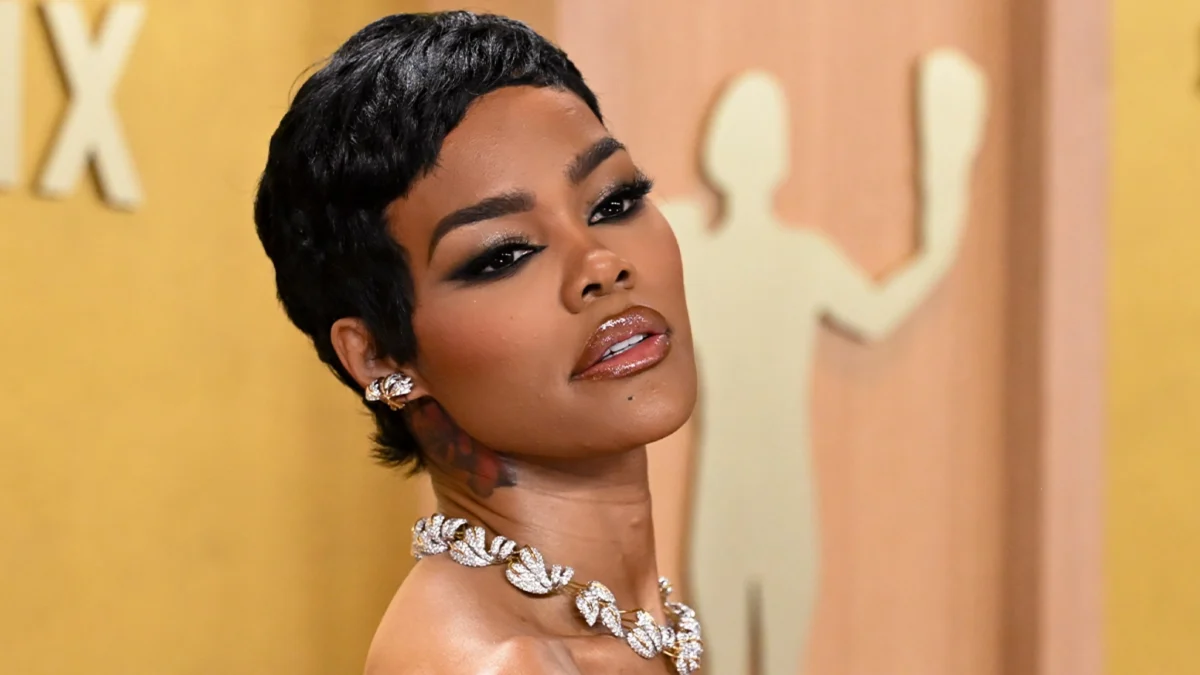
A significant altercation involving acclaimed artist and actress Teyana Taylor unfolded moments after the 98th Academy Awards ceremony concluded on Sunday, March 15, 2026, when a security guard reportedly physically impeded her access to the stage for the traditional Best Picture cast photograph. The incident, which quickly escalated into a heated confrontation, has drawn sharp criticism and prompted an immediate internal review by the Academy of Motion Picture Arts and Sciences (AMPAS).
Incident Unfolds in Post-Ceremony Chaos
The dramatic scene occurred shortly after the highly anticipated announcement of "One Battle After Another" as the recipient of the coveted Best Picture Oscar. Taylor, a prominent member of the film’s ensemble cast, was attempting to rejoin her co-stars and the film’s producers on the Dolby Theatre stage to participate in the celebratory group photo, a long-standing tradition marking the pinnacle of cinematic achievement. Sources with direct knowledge of the event indicate that Taylor, accompanied by Pam Abdi, co-head of Warner Bros. Pictures, was navigating the crowded backstage area toward the stage entrance when a uniformed security guard intervened.
According to eyewitness accounts and partial video footage circulating online, the guard utilized his body to obstruct Taylor’s path up the stairs leading to the main stage. Witnesses further allege that the guard then placed his hands on Taylor, attempting to physically restrain her and push her away from the access point. This physical contact immediately triggered a strong reaction from Taylor.
In video clips obtained from inside the Dolby Theatre, Taylor can be distinctly heard confronting the security personnel, emphatically stating, "Do not put your hands on a woman," and labeling the action as "very rude." At another point in the exchange, she is heard telling nearby individuals, "He literally shoved me." The interaction rapidly intensified as the guard reportedly continued to assert control over stage access, even, according to sources, demanding an apology from Taylor during the heated exchange. The incident, occurring amidst the high-energy and often chaotic immediate aftermath of the live broadcast, momentarily overshadowed the celebratory atmosphere.
Background and Context: The Significance of "One Battle After Another"
Teyana Taylor’s presence at the Academy Awards stemmed from her pivotal role in "One Battle After Another," a critically acclaimed film that had been a frontrunner throughout the awards season. The film, lauded for its compelling narrative, powerful performances, and innovative direction, represented a significant achievement for its cast and crew. Taylor, known for her versatile career spanning music, fashion, and acting, had garnered considerable praise for her performance, adding to her already esteemed public profile. Winning Best Picture is the highest honor in the film industry, and the opportunity for cast members to join the production team on stage for the iconic photo is a moment many artists dream of.
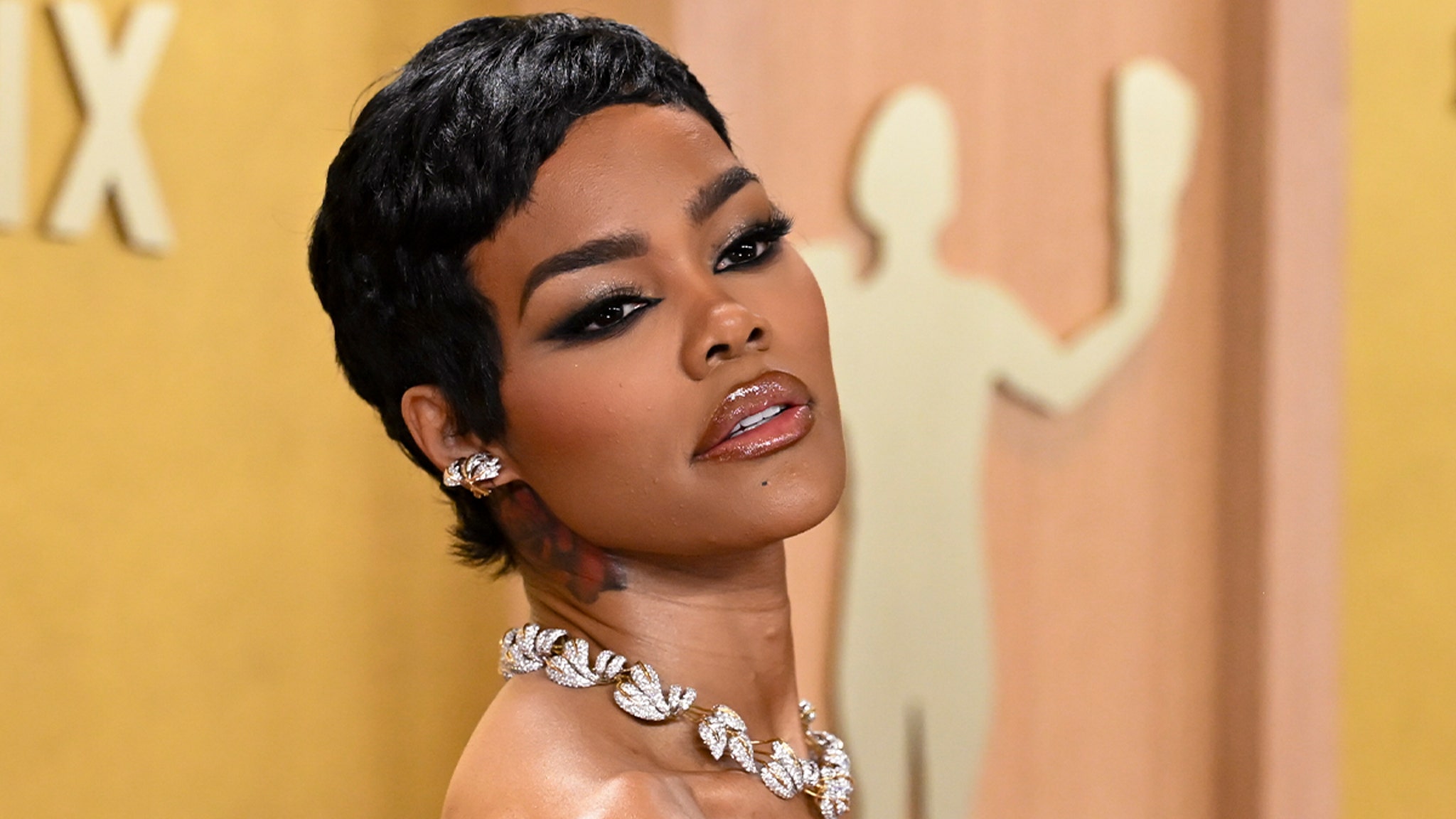
The Oscars ceremony itself is a meticulously choreographed event, yet the moments immediately following the final award presentation are often characterized by a surge of activity. Producers, winners, presenters, and their entourages converge on the stage, creating a dynamic and sometimes unpredictable environment. Security protocols are typically stringent, designed to manage the flow of high-profile individuals, prevent unauthorized access, and ensure the safety of all participants. However, the precise execution of these protocols, especially in high-pressure situations, can sometimes lead to miscommunication or overzealous enforcement.
Security Protocols Under Scrutiny
The incident has inevitably cast a spotlight on the security measures and personnel training employed at high-profile events like the Academy Awards. Major events of this scale, hosting hundreds of celebrities, industry executives, and media personnel, rely on multi-layered security frameworks. These typically include credential verification, controlled access points, and a significant presence of both private security contractors and law enforcement. The average Academy Awards ceremony can see upwards of 700 security personnel deployed across the venue, managing an estimated 3,000 attendees within the Dolby Theatre and thousands more across ancillary events.
While the necessity of maintaining order and preventing unauthorized intrusions is universally acknowledged, the manner in which security personnel interact with accredited guests, particularly those directly involved in the ceremony, is paramount. Industry standards for event security emphasize de-escalation techniques, clear communication, and a hierarchical understanding of attendee access levels. For a Best Picture cast member, access to the stage post-win is usually considered a given, making the guard’s actions particularly puzzling to observers. The distinction between an uninvited guest and an award-winning participant attempting to fulfill a customary role is critical for security personnel to discern in real-time.
Immediate Fallout and Inferred Reactions
Following the incident, representatives for Teyana Taylor were reportedly contacted by AMPAS officials seeking a detailed account of the events. While no official statement has yet been released by Taylor’s team, sources close to the artist indicate a deep sense of frustration and indignation over the unwarranted physical contact.
The Academy of Motion Picture Arts and Sciences, responsible for organizing the Oscars, has confirmed it is investigating the matter thoroughly. A preliminary statement from an AMPAS spokesperson, released hours after the ceremony, read: "The Academy takes all incidents involving attendee safety, comfort, and decorum at our events with utmost seriousness. We are actively reviewing the details surrounding an interaction between a security guard and a guest immediately following the Best Picture presentation and will take appropriate action based on our findings."
Warner Bros. Pictures, whose co-head Pam Abdi was present during the altercation, has also been approached for comment. While declining to provide specific details during the ongoing investigation, an internal source at the studio expressed concern over the incident, emphasizing the importance of respectful treatment for all talent and executives involved in their productions.
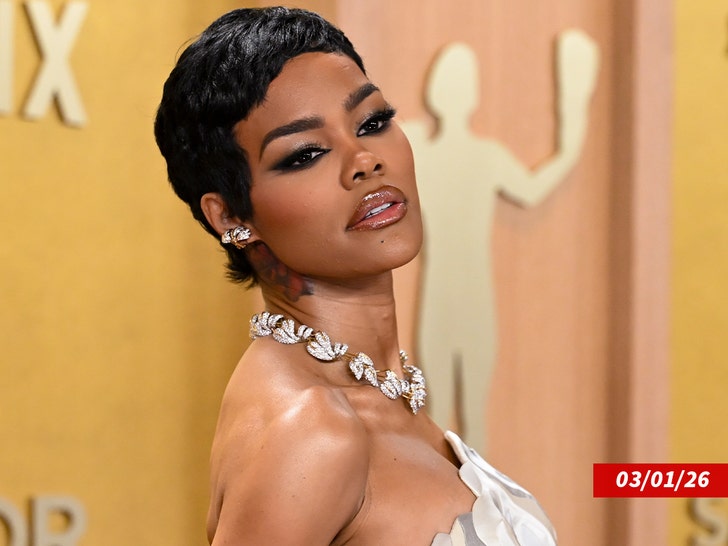
The security firm contracted for the Oscars, typically a major national or international entity specializing in event management, is expected to conduct its own internal review. Such reviews usually involve interviewing the involved guard, reviewing standard operating procedures, and analyzing any available security camera footage or radio communications. Any deviation from established protocols or evidence of excessive force could lead to disciplinary action against the individual officer or a reassessment of the firm’s future contracts.
Broader Implications and Industry Discussion
The Teyana Taylor incident has sparked a broader conversation within the entertainment industry and among the public regarding the treatment of celebrities, the authority of security personnel, and the need for clear communication in high-stakes environments. It highlights the fine line between maintaining security and ensuring the dignified experience of honorees and participants.
This event is not isolated, as there have been past instances at major awards shows where security measures have either been criticized for being too lax or overly aggressive. The rapid pace and high emotional stakes of live events can sometimes lead to misjudgments, making comprehensive training for security personnel—especially concerning VIP recognition and protocols—absolutely crucial.
One of the key implications of this incident could be a re-evaluation of post-ceremony stage access procedures. AMPAS may consider implementing more robust identification systems for cast members or dedicated escorts to prevent such misunderstandings in the future. Furthermore, it reinforces the ongoing dialogue about physical boundaries and professional conduct, particularly in interactions involving public figures. The idea that a highly decorated artist could be physically impeded and "shoved" by security while attempting to participate in a customary post-win photo opportunity raises questions about respect and appropriate force.
Beyond the immediate review, the incident could prompt a wider industry discussion on best practices for celebrity event security, potentially leading to updated guidelines or enhanced training modules for personnel working these high-profile events. The reputation of the Academy, already under immense public scrutiny for various reasons in recent years, hinges on its ability to ensure a safe, respectful, and smoothly run event for all its attendees, especially its honorees.
As the investigation continues, the focus remains on accountability and the implementation of measures to prevent similar incidents from marring future celebrations of cinematic excellence. The outcome of AMPAS’s review will be closely watched by industry insiders and the public alike, serving as a critical indicator of how seriously major organizations address issues of conduct and safety at their flagship events.

0 Comments