
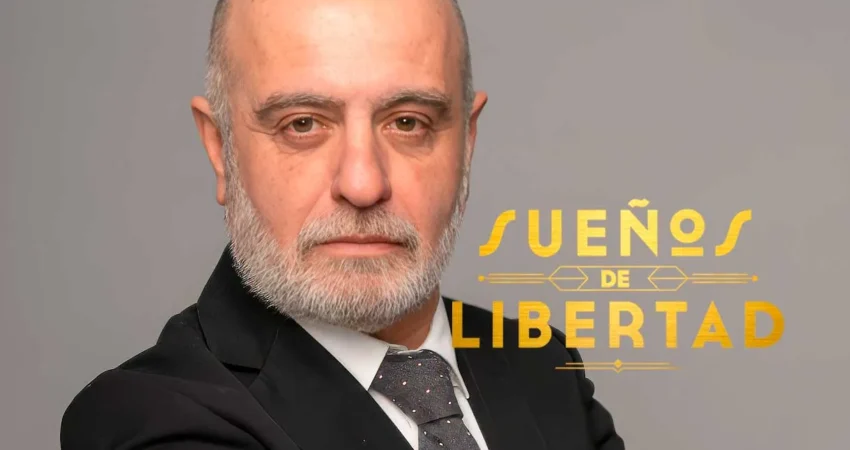
Javier Garcimartín steps into the fictional world of Antena 3’s "Sueños de Libertad" as Gabriel Miranda, a businessman with long-standing ties to the influential De la Reina family’s enterprises. His introduction marks a pivotal moment in the unfolding drama, as Miranda, the proprietor of Galerías Miranda, finds himself entangled in the escalating business and personal conflicts within the De la Reina dynasty. Previously only a name mentioned in hushed tones, Miranda’s on-screen presence is set to significantly impact the trajectory of the series, particularly the perfumery business, Brossard de la Reina.
Gabriel Miranda, as the owner of Galerías Miranda, represents a significant and long-standing commercial client for Brossard de la Reina. The established relationship involves the De la Reina company supplying Galerías Miranda with a substantial portfolio of perfumes and cosmetic products, a partnership that has historically served as a cornerstone of the perfumery’s financial stability. This commercial alliance was reportedly solidified through the efforts of María, the former wife of Andrés De la Reina, fostering a rapport between Miranda and the family that has endured. The name "Miranda" is not unfamiliar to the series’ viewers; Galerías Miranda previously featured prominently in a storyline concerning the exclusive development of a bespoke perfume, though the entrepreneur himself remained off-screen until this point. His arrival coincides with a critical juncture: the negotiation for the renewal of this lucrative contract.
The narrative momentum accelerates with Gabriel Miranda’s introduction as he is drawn into the internal power struggle that has erupted within the De la Reina family. The recent dismissals of key personnel – Marta, Andrés, and Tasio – by Gabriel, the new director of the perfumery, have ignited a fierce business and familial conflict. This internal strife has spilled over into the corporate arena, creating a volatile environment where personal grievances directly affect commercial interests. Miranda, initially conceived as a secondary character, is strategically positioned at the epicenter of this escalating feud, his decisions and allegiances holding considerable weight in the outcome of the De la Reina family’s internal war.
The timing of Miranda’s entry into "Sueños de Libertad" is particularly strategic, occurring at a moment of heightened tension. His character is designed to serve as a catalyst, exacerbating the existing divisions and forcing the De la Reina family to confront the ramifications of their actions on their most crucial business relationships. The series is known for its intricate plotlines that often intertwine personal drama with the complexities of business and societal shifts in the mid-20th century. Miranda’s role promises to further explore these themes, highlighting how personal vendettas can destabilize even the most established commercial empires.
Chronology of Conflict and Negotiation
The conflict between Gabriel and his cousins, Marta, Andrés, and Tasio, marks a turning point that directly impacts the business dealings with Galerías Miranda. Following the dismissals, the remaining De la Reina family members are actively seeking leverage to force Gabriel’s hand and reinstate the terminated employees. Their attention soon focuses on the impending contract renewal with Galerías Miranda, recognizing it as a potentially potent tool in their arsenal.
Begoña, a key figure within the family, overhears conversations involving Gabriel that reveal the contract renewal is not a foregone conclusion. This crucial intelligence is immediately relayed to Andrés, alerting him to the precariousness of the situation. Miranda, it is revealed, harbors reservations about the recent internal turmoil within the De la Reina family. His established good relationship with the family is being tested by Gabriel’s decision to dismiss his own cousins, a move that does not sit well with him. Gabriel attempts to assuage these concerns by offering highly favorable commercial terms for the contract renewal.
In an attempt to leverage their existing rapport, the De la Reina family extends an invitation to Gabriel for a private dinner. Miranda anticipates a discussion focused on the business aspects of the contract renewal. However, the family presents him with a far more significant and ethically complex proposition: he is asked to condition the renewal of his contract on the rehiring of Marta, Andrés, and Tasio. This request is met with considerable discomfort by Miranda, who feels he is being unnecessarily drawn into a personal family dispute that could potentially jeopardize his own business interests. He perceives this as an attempt to manipulate his position for familial gain, a maneuver that deviates from purely professional considerations.
The Strategic Maneuvering for Business Advantage
Following this pivotal dinner meeting, the narrative takes a turn as Gabriel proposes an improved offer, initially suggesting that the contract renewal is back on track. However, the De la Reina family recognizes that appealing solely to their existing friendship with Miranda is insufficient. They opt for a more direct and professionally framed approach, preparing a new offer that is strictly business-oriented. This revised proposal is crafted with the intention of being irresistible, designed to secure Miranda’s cooperation.
The terms presented in this new offer prove to be sufficiently attractive for Miranda to agree to collaborate with the family. The core of his commitment, however, remains unchanged: he is still expected to exert pressure on Gabriel to reinstate his cousins if he wishes to guarantee the successful finalization of the operation. This places Miranda in a precarious position, serving as a critical pawn in the ongoing corporate battle between Gabriel and the rest of the De la Reina family. The owner of Galerías Miranda stands to gain substantial advantages from both sides of the conflict. However, Gabriel appears resolute in his stance, unwilling to concede on a decision he considers to be solely his prerogative. The unfolding dispute over one of the perfumery’s most significant clients is poised to have far-reaching consequences.

Broader Implications: A Catalyst for Higher Stakes
The significance of Gabriel Miranda’s role extends beyond the immediate contractual negotiations. His involvement elevates the conflict between the warring De la Reina factions to a new level, directly impacting the stability and operational integrity of Brossard de la Reina. This escalating tension is identified as a key factor that will ultimately precipitate the arrival of Hugo Brossard in Toledo. Hugo Brossard, portrayed by Almagro Sanmiguel, is the paramount authority figure within the company and one of the few individuals possessing the requisite influence to challenge the position Gabriel has so assertively established within the factory.
Consequently, despite being initially conceived as a role with a limited arc spanning several episodes, Miranda occupies a strategically vital position within the overarching narrative. He represents the influential client whose intervention has the potential to transform a familial dispute into a substantial corporate crisis. This narrative thread serves to underscore the interconnectedness of personal relationships and business success, a recurring theme in the series that explores the complexities of power dynamics in post-war Spain.
Javier Garcimartín: A Seasoned Performer Joins the Ensemble
The casting of Javier Garcimartín to portray Gabriel Miranda brings a seasoned performer with an extensive resume in television, film, and theater to "Sueños de Libertad." Garcimartín’s television credits are extensive, including notable roles in popular Spanish productions such as "La casa de papel" (Money Heist), "Amar es para siempre" (To Love is Forever), "El secreto de Puente Viejo" (The Secret of Old Bridge), "Los nuestros" (The Ours), "Centro médico" (Medical Center), "Hospital Central" (Central Hospital), "Yo soy Bea" (I am Bea), and "Al salir de clase" (When Leaving Class).
In more recent years, his television work has encompassed a diverse range of projects, including "La Agencia" (The Agency), "La encrucijada" (The Crossroads), "Ena. La reina Victoria Eugenia" (Ena. Queen Victoria Eugenia), "Perdiendo el juicio" (Losing My Mind), "Su majestad" (His Majesty), "Beguinas," and "Machos Alfa" (Alpha Males). His cinematic contributions include a role in Alejandro Amenábar’s acclaimed film "Mientras dure la guerra" (While the War Lasts), in addition to a substantial body of work in theatrical productions.
Garcimartín’s transition to "Sueños de Libertad" marks a new chapter in his career, where he embodies a businessman whose initial appearance focused on contractual discussions evolves into a pivotal character. He becomes one of the key instruments through which the De la Reina family attempts to strategically counter Gabriel’s assertive control over the perfumery, adding another layer of intrigue to the unfolding family saga. The introduction of such a well-respected actor into a role with significant plot implications underscores the series’ commitment to delivering compelling character-driven narratives and maintaining high production values. The character of Gabriel Miranda, therefore, is not merely a plot device but a testament to the casting choices that enrich the series’ dramatic tapestry.
Supporting Data and Background Context
"Sueños de Libertad" is set in the late 1950s, a period of significant economic growth and societal transformation in Spain. The perfumery industry, like many other sectors, was experiencing modernization and increased competition. Brossard de la Reina, as a family-owned business, likely faced the challenges of adapting to new market demands, technological advancements, and evolving consumer preferences. The De la Reina family’s internal conflicts, therefore, occur against a backdrop of a dynamic and increasingly complex business environment.
The narrative of corporate power struggles within family-run businesses is a recurring theme in historical dramas, reflecting the realities of succession planning, differing visions for the company’s future, and the inevitable tensions that arise when personal relationships are intertwined with professional responsibilities. The character of Gabriel, the new director, represents a force of change, possibly driven by a desire to modernize the company or assert his authority. His decisions, such as the dismissals, are likely intended to streamline operations or consolidate power, but they have demonstrably triggered a counter-response from other family members who may have different priorities or a vested interest in maintaining the status quo.
Galerías Miranda’s role as a major client highlights the critical importance of external business relationships in sustaining a company’s operations. The dependence on such clients can create leverage points for both parties, as seen in the De la Reina family’s attempt to use the contract renewal to influence Gabriel’s decisions. This dynamic underscores the precarious balance of power in business negotiations, where loyalty and long-standing relationships can be tested by shifting strategic interests. The series effectively uses these elements to build suspense and explore the multifaceted nature of success, both personal and professional, in a rapidly changing era. The introduction of Hugo Brossard further signals an impending escalation, suggesting that the internal struggles within Brossard de la Reina may attract the attention of higher corporate echelons, indicating that the ramifications of this conflict could extend to the very top of the company’s hierarchy.

0 Comments