
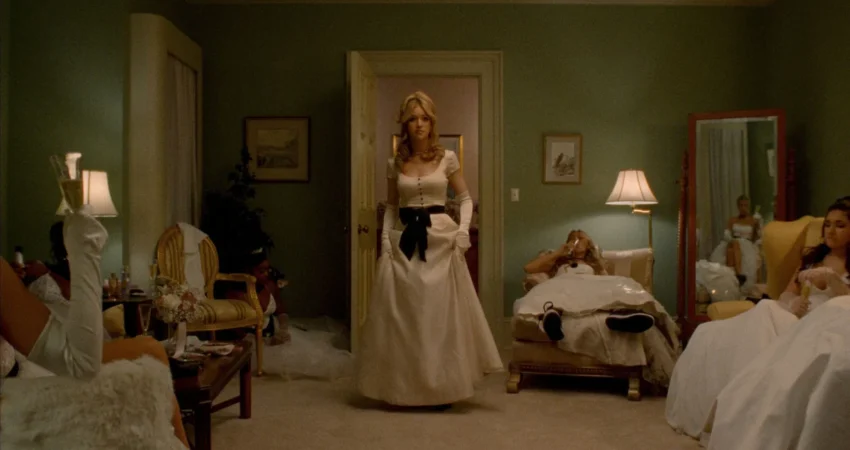
The global streaming landscape experienced a significant shift on November 11 with the premiere of The Body, an eight-episode limited series that has rapidly ascended to the top of viewership charts while simultaneously igniting a fierce debate over its thematic content. Created by acclaimed filmmaker Quinn Shephard, the series is being recognized as a standout entry in the 2026 television season, blending the visceral elements of psychological horror with a searing examination of mass hysteria. By weaving together a narrative that pays homage to cinematic staples such as Carrie, Jennifer’s Body, and Heavenly Creatures, Shephard has crafted a project that transcends traditional genre boundaries to explore the volatile intersection of adolescence, religious fanaticism, and social repression.

Since its release, The Body has moved beyond mere entertainment, becoming a focal point for cultural commentary and activism. The series delves into the fragile psyche of high school students in a tightly knit community, utilizing a supernatural lens to dissect real-world issues of identity and collective delusion. However, its unflinching portrayal of religious themes and adolescent rebellion has drawn the ire of conservative advocacy groups, most notably CitizenGO. The organization has launched a high-profile campaign demanding the series’ removal from the Netflix library, citing concerns over its depiction of faith and morality. This friction has only served to heighten the show’s visibility, placing it at the center of a broader conversation regarding artistic freedom and the responsibilities of digital platforms in the modern age.
The Narrative Foundation: A Study in Collective Delusion
The central conceit of The Body revolves around the aftermath of a traumatic incident at a high school Halloween party. When Grace Franklin, a student aspiring to join the school’s elite dance team, falls into a mysterious coma following the event, the vacuum of information is quickly filled by rumors, superstitions, and eventually, a full-scale outbreak of mass hysteria. The series utilizes this medical and psychological phenomenon to draw direct parallels to Arthur Miller’s The Crucible, exploring how fear can be weaponized within a closed social ecosystem.

Quinn Shephard’s direction emphasizes the "nostalgic horror" aesthetic, drawing on the visual and thematic language of the late 20th-century teen thrillers. By framing the story through the lens of a competitive dance team—the Lions—the series highlights the performative nature of teenage life. The pressure to maintain a facade of perfection becomes the catalyst for the psychological breakdowns that define the later episodes. As the students begin to report shared visions and inexplicable physical symptoms, the line between genuine supernatural occurrence and psychogenic illness becomes increasingly blurred, forcing the audience to question the reliability of the protagonists’ perspectives.
Chronology of Production and Release
The journey of The Body from concept to screen reflects a shifting strategy within Netflix’s content acquisition, focusing on "prestige genre" programming that appeals to both young adult demographics and critical circles. Development on the series began in late 2024, with Shephard seeking to expand on the themes of female friendship and social isolation explored in her previous works.

- November 2024: Quinn Shephard is attached as creator and showrunner; casting calls begin for a diverse ensemble of rising stars.
- February 2025: Principal photography commences, utilizing locations that evoke a sense of timeless, insular Americana to ground the story’s religious themes.
- August 2025: First teaser trailers are released, leaning heavily into the "mass hysteria" angle and generating significant social media engagement.
- November 11, 2025: The series premieres globally on Netflix. Within 48 hours, it enters the Top 10 list in over 50 countries.
- November 15, 2025: CitizenGO launches its formal protest, resulting in a surge of "defense" viewership and a spike in online discourse.
Comprehensive Cast and Character Analysis
The success of The Body is largely attributed to its ensemble cast, which features a mix of established young talent and newcomers who bring a grounded intensity to the increasingly surreal plot.
The Inner Circle: Anya, Elise, and Grace
Kristina Bogic leads the cast as Anya Butler, the captain of the Lions dance team. Bogic, known for her roles in Playing Gracie Darling and Howl, portrays Anya as a young woman trapped between her status as a school icon and a burgeoning identity crisis. Her character’s journey is defined by a secret "error" committed on the night of the Halloween party, a mistake that fuels her descent into guilt-induced paranoia.

Sara Boustany portrays Elise Zakaria, Anya’s closest confidante. Boustany, who previously appeared in the comedy-drama PEN15, provides the moral anchor for the series. Elise finds herself in a precarious position, torn between her loyalty to Anya and a growing realization that the "visions" sweeping the school may have a more earthly—and potentially more dangerous—source.
Sofia Wylie takes on the role of Grace Franklin. Although her character spends much of the series in a comatose state, Wylie’s performance in flashbacks and dream sequences is the engine that drives the plot. Transitioning from family-friendly fare like High School Musical: The Musical: The Series, Wylie embraces a darker, more complex role that challenges her previous public image.

The Anderson Family and the Supernatural Element
Geena Meszaros stars as Lisbeth Anderson, a newcomer whose arrival coincides with the onset of the hysteria. Meszaros brings an air of mystery to the role, as Lisbeth’s family history is gradually revealed to contain "dark secrets" that provide a potential supernatural explanation for the school’s events. Her brother, Leo Anderson, played by Jackson Kelly, represents the intersection of social isolation and religious yearning. Kelly, a veteran of horror projects like Chucky and Carved, portrays Leo as a vulnerable youth who misinterprets the collective madness as a divine signal.
Louisa Krause provides a chilling performance as Catherine Anderson, the siblings’ mother. Her character embodies the "religious fanaticism" that Shephard identifies as a core theme of the show. Krause’s background in intense emotional dramas like The Girlfriend Experience allows her to portray Catherine not as a caricature, but as a woman driven by profound loss and a desperate need for spiritual certainty.

The Supporting Student Body
The atmosphere of the school is further fleshed out by Shirley Chen as Maddie Delaney, a friend of Grace who claims to communicate with her through visions. Chen’s performance captures the "contagious" nature of hysteria, showing how a desire for attention and a need for meaning can lead to genuine psychological distress. The cast is rounded out by Bella Neuspiel (Katie), Sarah Abbott (Olivia), and the twins Kyra and Phallon Pierce (Bailey and Britt Bradley), all of whom represent different facets of the student body’s reaction to the crisis—ranging from genuine terror to opportunistic social climbing.
Orlando Norman and Marcel Ruiz provide the male perspective within this predominantly female-driven narrative. Norman plays Steven Maxwell, Anya’s boyfriend, whose struggle with addiction and crumbling trust in his partner adds a layer of domestic drama to the overarching horror. Ruiz, known for One Day at a Time, plays Tyler Flores, a character whose sociability acts as a foil to the growing gloom of the school.

Official Responses and Public Controversy
The Body has not existed in a vacuum. Its release triggered an immediate reaction from CitizenGO, an international conservative advocacy group. In a statement released shortly after the premiere, the group characterized the series as an "attack on traditional values" and a "distorted portrayal of faith communities." Their petition to have the series removed has reportedly garnered thousands of signatures, though Netflix has historically resisted such pressures when a show performs well and adheres to internal content guidelines.
In contrast, television critics have largely praised the series for its bravery. Industry analysts suggest that the controversy may actually benefit Netflix by keeping the show in the news cycle. "We are seeing a trend where ‘polarizing’ content drives higher retention rates," says media consultant Elena Vance. "The Body isn’t just a show people watch; it’s a show people argue about, which is the most valuable currency in the streaming age."

Broader Impact and Implications
The success of The Body signals a continued appetite for "elevated horror" that uses genre tropes to address sociological concerns. By focusing on mass hysteria, Quinn Shephard has tapped into a contemporary anxiety regarding the spread of misinformation and the fragility of shared reality in the digital age. The series suggests that while the setting is a high school, the mechanics of the hysteria—the echo chambers, the demonization of outsiders, and the rejection of empirical evidence—are reflective of the broader geopolitical climate.
Furthermore, the series serves as a significant milestone for its young cast, many of whom are successfully transitioning from "teen stars" to serious dramatic actors. For Netflix, the show reinforces its position as a platform willing to take risks on auteur-driven projects that challenge audiences. As the conversation around The Body continues to evolve, it remains a potent reminder of the power of storytelling to reflect, and sometimes provoke, the societies from which they emerge. Whether viewed as a cautionary tale about the dangers of repression or a supernatural thriller about the bonds of sisterhood, The Body has secured its place as a defining cultural artifact of the 2026 television season.

0 Comments