
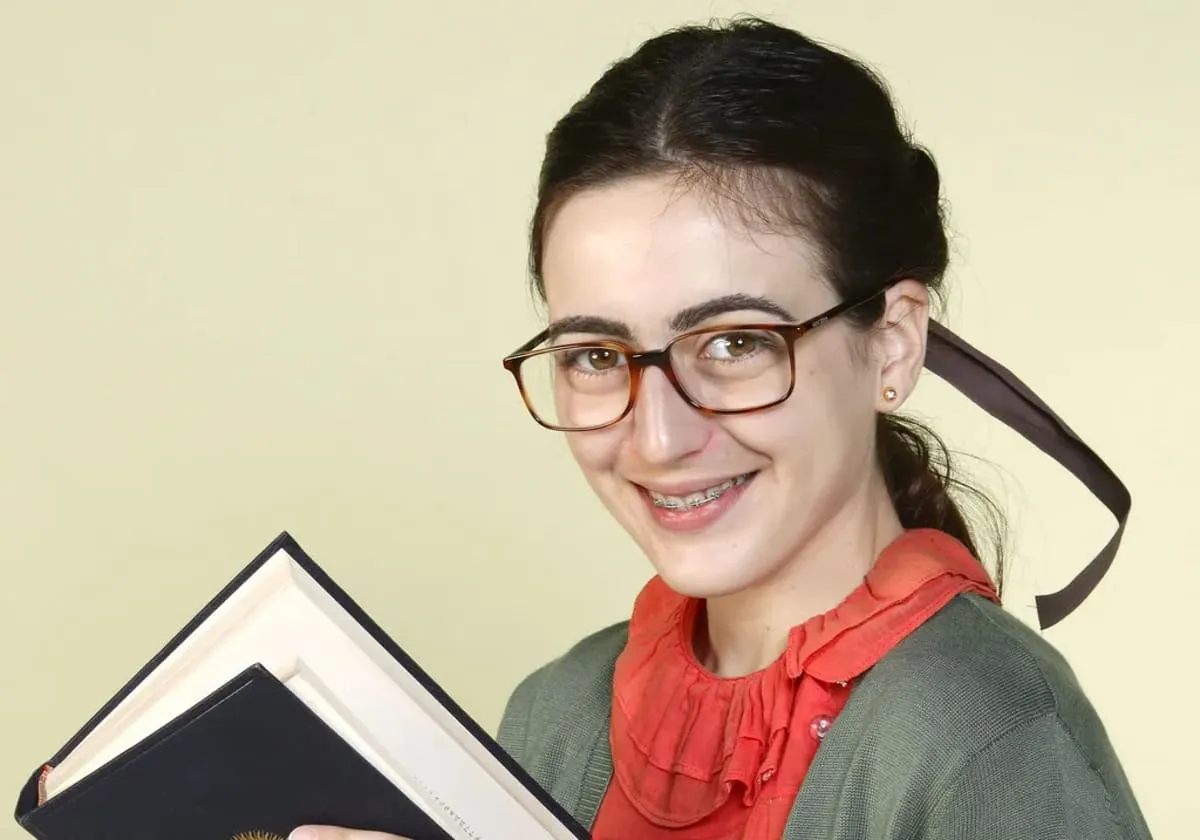
On July 10, 2006, at precisely 4:30 PM, Telecinco launched a character who would irrevocably alter the landscape of Spanish afternoon television. Beatriz Pérez Pinzón, a young woman defined by her glasses, braces, and an undeniably striking fringe, debuted as the unassuming secretary at the fashion magazine Bulevar 21. Little did anyone anticipate that this seemingly ordinary protagonist would, over the subsequent two decades, redefine audience expectations and establish a potent formula for daily fiction, leaving an indelible mark on the broadcasting industry.
The Phenomenal Rise of "Yo soy Bea"
The Spanish adaptation of the Colombian mega-hit "Yo soy Betty, la fea," titled "Yo soy Bea," premiered to an unsuspecting audience and quickly ascended to unprecedented heights. Within its initial years, the series consistently achieved ratings that bordered on astonishing, frequently capturing nearly 40% of the viewership share. In its most successful afternoons, it captivated over eight million viewers, solidifying an impressive cumulative average of 26.2% for the entire run. This was a remarkable feat, particularly considering the afternoon slot had historically been perceived as less fertile ground for original scripted content. "Yo soy Bea" not only entered this space but dominated it with an overwhelming leadership that persisted for multiple seasons, effectively transforming a demographic often overlooked by fiction programming into a powerhouse for commercial television.
The success of "Yo soy Bea" was not solely attributable to its titular character, portrayed by Ruth Núñez. The narrative was intricately woven around the dynamics of Bulevar 21, a fictional fashion magazine where Bea, initially an outsider, navigated a complex professional environment. The antagonistic yet ultimately compelling dynamic between Bea and her impossible boss, played by Alejandro Tous, formed the emotional core of the series. However, the show’s true genius lay in its richly developed ensemble cast and the intricate, interconnected storylines that created a vibrant and believable universe. Telecinco’s astute production team managed to sustain and expand this universe, stretching its narrative potential to its absolute limits.
From Adaptation to Daily Fiction Powerhouse
The original Colombian telenovela, created by Fernando Gaitán, laid the groundwork for "Yo soy Bea." However, the Spanish adaptation significantly expanded upon its source material. The series ultimately produced an extraordinary 773 episodes, a staggering 438 more than the original "Yo soy Betty, la fea." This extended run signifies a pivotal shift: "Yo soy Bea" transcended its status as a mere adaptation and evolved into a sophisticated daily fiction machine, capable of generating continuous, engaging narratives week after week, year after year.
The true legacy of "Yo soy Bea" lies in its demonstration that the afternoon television slot could sustain ambitious, self-contained fictional series with relatable characters. Even viewers who only caught glimpses of the show while engaged in household chores, such as ironing, could connect with its inhabitants. This ability to resonate with a broad, often multitasking audience was a key factor in its enduring popularity. Furthermore, the series proved that a change in lead actors did not have to signal the downfall of a successful show. After 477 episodes, Ruth Núñez and Alejandro Tous passed the baton to Patricia Montero and Álex Adrover, a transition that maintained the show’s momentum and audience engagement. This resilience underscored the strength of the show’s underlying structure and the professionalism of its creative team. The simple yet effective combination of a distinctive appearance – glasses, braces, and that iconic fringe – proved to be a compelling visual hook that could sustain a narrative for years when supported by solid storytelling and skilled execution.

The "Yo soy Bea" Blueprint: A Foundation for Modern Daily Fiction
The structural and narrative blueprint established by "Yo soy Bea" continues to be replicated in contemporary Spanish television. Series like "La Promesa" and "Sueños de libertad" owe a significant debt to the groundwork laid by Bea and her colleagues. These modern dramas also feature self-contained universes, extensive cast ensembles, a consistent daily appointment for viewers, and a remarkable capacity for reinvention, typically every six months, without alienating their core audience.
The success of these contemporary series is a testament to the enduring viability of the "Yo soy Bea" model. The recent international recognition of "La Promesa," which secured an International Emmy Award for Best Telenovela, is particularly noteworthy. This achievement would have been almost unimaginable during the nascent stages of "Yo soy Bea," when its protagonist was still grappling with the challenges of a photocopier. While the settings and historical periods differ – contemporary Madrid for "Yo soy Bea" versus the post-war era or the 1950s for "La Promesa" and "Sueños de libertad" – the underlying industrial and narrative structure remains remarkably consistent. This continuity highlights a sophisticated understanding of audience engagement and the production efficiencies that daily fiction can offer.
More Than Just Ratings: Cultural Impact and Enduring Memories
Beyond its impressive statistical performance, "Yo soy Bea" left an indelible mark on Spanish popular culture. The iconic opening theme song, "Te falta veneno" (You lack poison), sung by Edurne, served as an inadvertent manifesto for the show. It signaled that this unassuming, seemingly unsophisticated character was destined for television dominance. And dominate she did. The series catapulted Ruth Núñez and Alejandro Tous into the stratosphere of celebrity, making them one of the most popular on-screen and off-screen couples of their era. It also provided a significant platform for actors like Norma Ruiz and Ana Milán, launching their careers and cementing their presence in the public consciousness.
Furthermore, "Yo soy Bea" generated a treasure trove of memorable, often surreal, scenes that continue to circulate on social media platforms. These clips are now viewed as archaeological artifacts of a bygone era of television, evoking nostalgia and amusement among long-time fans. They serve as tangible reminders of the show’s unique blend of humor, drama, and relatability.
The Enduring Relevance of the Afternoon Slot
Twenty years after its debut, when industry professionals, critics, and audiences alike ponder the resurgence of interest in the afternoon television slot – evident in increased network investment, critical accolades, and the attention of streaming platforms – the answer often points back to the foundational success of "Yo soy Bea." The character’s distinctive look, her journey of transformation, and the show’s innovative approach to daily fiction provided a compelling template. The formula proved that consistent, character-driven storytelling, adapted for daily consumption, could capture and retain a massive audience. All subsequent successes in this challenging but rewarding time slot can be seen as variations on a theme, built upon the pioneering spirit and undeniable impact of a secretary with glasses, braces, and an unforgettable fringe. The enduring power of "Yo soy Bea" lies not just in its ratings or its longevity, but in its fundamental reshaping of what was possible in Spanish television.

0 Comments