
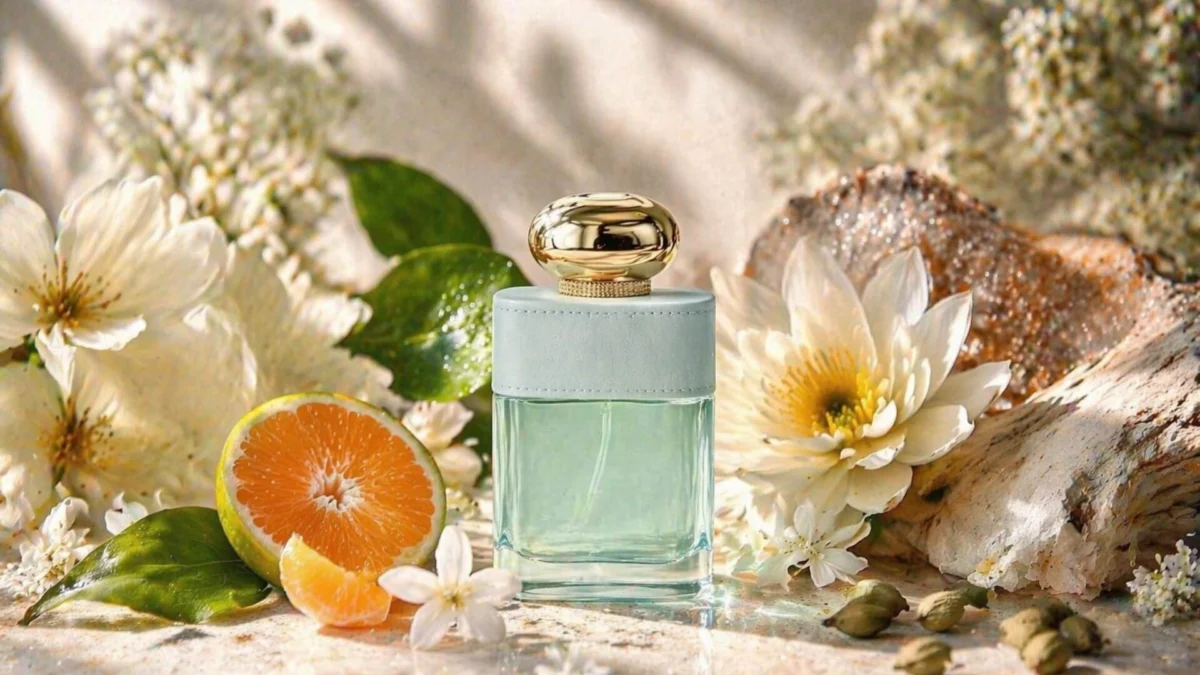
The global fragrance industry is currently witnessing a significant resurgence of aquatic and marine-inspired scents, a trend that has solidified its position as a cornerstone of spring and summer retail cycles. As temperatures rise across the Northern Hemisphere, consumers are increasingly gravitating toward olfactory compositions that offer a sense of weightlessness and transparency. These fragrances, often characterized by their ability to evoke the saline atmosphere of a coastal breeze, have evolved from the heavy, ozonic profiles of the 1990s into sophisticated, mineral-rich formulations. This shift reflects a broader consumer desire for "olfactory escapism," where scents serve as a functional medium to transport the wearer to open, luminous landscapes. The recent market performance of flagship products, such as Guess’s Iconic Sublime and Issey Miyake’s A Drop d’Issey Essentielle, underscores the commercial viability of this category, which balances technical chemical innovation with a high degree of wearability.
The Chemistry of the Coast: Synthetic Innovation in Marine Scents
To understand the current dominance of aquatic perfumes, one must first examine the technical evolution of their composition. Unlike floral or citrus fragrances, which can often rely on natural essential oils extracted from petals or rinds, the "smell of the sea" does not exist as a natural extract. There is no botanical process to harvest the scent of crashing waves or salt-crusted driftwood. Consequently, the marine category is perhaps the most prominent showcase for the ingenuity of synthetic chemistry in perfumery.
The foundation of most aquatic scents lies in the use of specific molecules designed in laboratory settings to mimic the saline, airy quality of the ocean. Historically, the discovery of Calone (methylbenzodioxepinone) in the 1960s—originally a byproduct of pharmaceutical research—revolutionized the industry by providing a distinct "watermelon" or "sea breeze" facet. In the contemporary era, perfumers have moved beyond the singular profile of Calone, utilizing a more complex palette of molecules that reproduce the mineral nuances of salt on skin and the crispness of maritime air. These synthetic accords allow brands to create perfumes that are not only evocative but also highly stable, ensuring that the fresh, clean profile remains consistent throughout a full day of wear.

Market Analysis: The Rise of Accessible Luxury and Iconic Sublime
In the current economic landscape, the fragrance market is bifurcated between high-end niche offerings and accessible luxury brands that provide prestige-level quality at a more competitive price point. Guess, a brand synonymous with Californian lifestyle aesthetics, has strategically positioned its Iconic Sublime fragrance to capture this mid-market demand. The fragrance serves as a quintessential example of the modern aquatic-floral hybrid, designed to resonate with a demographic that prioritizes longevity and freshness.
The olfactory architecture of Iconic Sublime is a study in balance. The initial "opening" or top notes feature a sharp contrast between aquatic accords and bright citrus. The inclusion of mandarin provides a subtle sweetness, while cardamom introduces a dry, spicy element that prevents the fragrance from becoming overly saccharine. This is further supported by the juiciness of orange, creating a "shimmering" effect upon application. As the fragrance settles into the skin, the "heart" notes reveal a sophisticated floral core of blue lotus, jasmine, and magnolia. The use of blue lotus is particularly significant, as it reinforces the watery theme with a tranquil, aquatic-floral texture.
The "dry down" or base notes of the fragrance—comprising amber, vanilla, and sandalwood—provide the necessary warmth to ground the lighter top notes. This transition from saline freshness to resinous warmth allows the perfume to remain versatile, transitioning easily from daytime casual wear to evening settings. From a retail perspective, the strategic discounting of such products—evidenced by the price reduction from 51 euros to approximately 37.98 euros at major retailers like Druni—indicates a push to capture a larger volume of the summer market through competitive entry points.
The Legacy of Issey Miyake and the Evolution of the "Drop" Concept
While Guess represents the lifestyle-driven segment of the market, Issey Miyake remains a pioneer in the conceptualization of water-based perfumery. Since the 1992 launch of L’Eau d’Issey, the brand has been at the forefront of the "minimalist water" movement. The more recent addition to the portfolio, A Drop d’Issey Essentielle, continues this legacy by focusing on the purity of the elements.

The composition of A Drop d’Issey Essentielle moves away from the traditional saline-citrus model and instead explores the concept of "wet nature." The fragrance opens with green notes that evoke the scent of damp, crushed stems, immediately followed by an aquatic accord that suggests transparency and rain. The inclusion of lilac provides a powdery, floral nuance that mimics the scent of flowers after a spring shower. This specific approach to aquatic perfumery—focusing on the "freshwater" rather than "seawater" aspect—appeals to a consumer looking for a "clean girl" or "quiet luxury" aesthetic. The base of musk and magnolia ensures that the fragrance maintains a "skin-like" quality, a major trend in 2024-2026 perfumery where the goal is for the scent to feel like a natural extension of the wearer’s body.
A Chronology of Aquatic Fragrance Development
The trajectory of aquatic scents can be categorized into four distinct waves:
- The Discovery Phase (1960s-1980s): The synthesis of Calone and its early, sparse use in fragrances like New West (1988), which introduced the "ozonic" category to the public.
- The Aquatic Revolution (1990s): The decade of "Blue" fragrances. Iconic launches like L’Eau d’Issey (1992) and Acqua di Giò (1996) defined a generation, moving away from the heavy power-house scents of the 1980s toward transparency and neutrality.
- The Mineral Shift (2010s): Perfumers began to experiment with "salty" notes and "mineral" textures, moving away from the melon-like sweetness of early aquatics toward something more rugged and earth-bound.
- The Modern Synthesis (2020s-Present): Current fragrances, like those from Guess and Issey Miyake, blend high-tech synthetics with creamy florals and warm resins to create "multi-dimensional" aquatics that offer better performance and complexity.
Industry Implications and the Psychology of Scent
The enduring popularity of marine notes is not merely a matter of fashion but is deeply rooted in the psychology of the modern consumer. Industry analysts suggest that in a post-pandemic world characterized by high levels of digital saturation and urban density, the olfactory profile of the ocean represents freedom and a return to nature. This "blue mind" effect—the meditative state associated with being near water—is something that fragrance brands are actively marketing.
Furthermore, the shift toward synthetic marine notes aligns with the industry’s growing focus on sustainability. While there is a common misconception that "natural" is always better for the environment, the reality is that many natural ingredients require massive amounts of land and water to produce. Synthetic molecules, when produced through green chemistry, can offer a more sustainable alternative that does not deplete natural resources. This allows brands to maintain the "freshness" of their portfolios while adhering to modern ESG (Environmental, Social, and Governance) standards.

Retail Trends and Consumer Behavior
Retail data from platforms such as Parfum Dreams and Druni indicate that the "fresh and clean" category is the most resilient during economic fluctuations. Unlike "statement" fragrances or heavy gourmands, which are often reserved for special occasions, aquatic scents are viewed as daily essentials. This high frequency of use leads to a faster replenishment cycle, making the category a vital revenue driver for fragrance houses.
The current trend of "vacation in a bottle" has also influenced packaging design. We see a move toward translucent glass, soft blues, and ergonomic shapes that mimic the fluidity of water. The marketing campaigns for these fragrances almost exclusively feature open horizons, sunlight, and natural textures, reinforcing the emotional connection between the product and the sensation of a summer holiday.
Conclusion: The Future of the Aquatic Family
As the fragrance industry continues to innovate, the aquatic family is expected to further diversify. We are likely to see more "solar-aquatic" hybrids, which combine the smell of salt and water with "sun-warmed skin" notes like salicylates and coconut water. Additionally, the integration of biotechnology may lead to the creation of new "marine" molecules that are even more biodegradable and olfactorily complex.
For brands like Guess and Issey Miyake, the success of their current aquatic offerings provides a blueprint for seasonal strategy: combine a clear, evocative concept with high-performance synthetic ingredients and a pricing structure that encourages trial. In a crowded market, the ability to encapsulate the "sea breeze in a placid summer afternoon" remains one of the most powerful tools in a perfumer’s arsenal, ensuring that the allure of the ocean will remain a dominant force in the world of scent for years to come.

0 Comments