
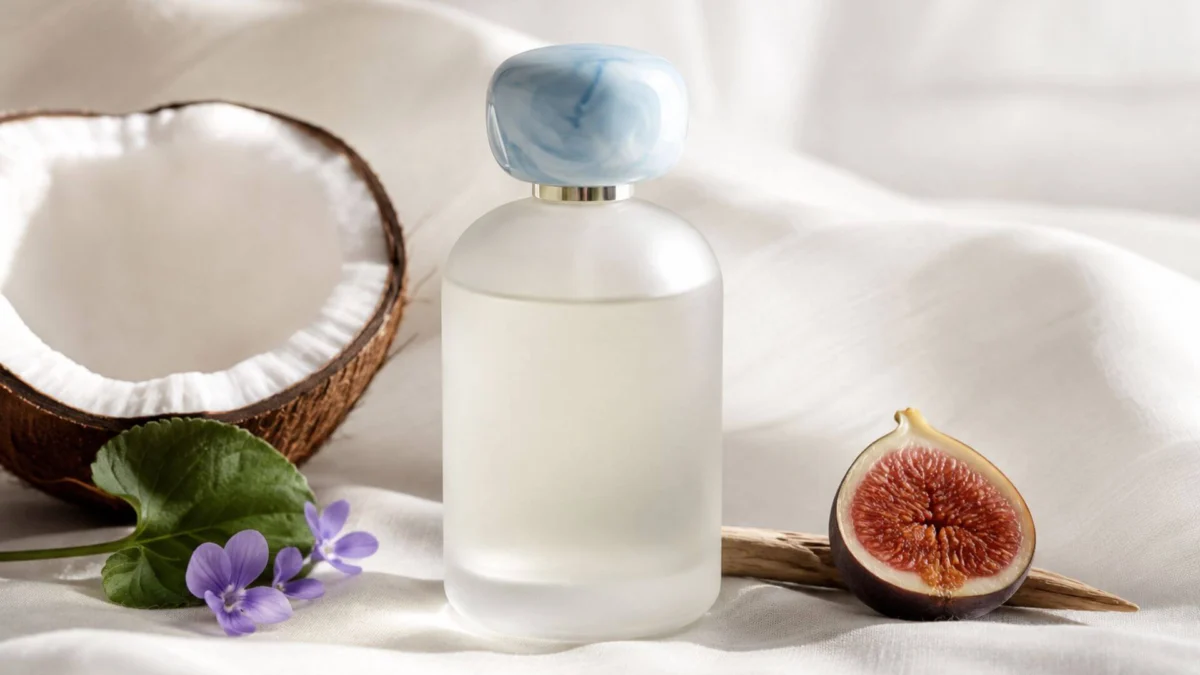
The global fragrance industry is currently witnessing a significant paradigm shift in the formulation of summer scents, specifically regarding the utilization of coconut. Long relegated to the category of "gourmand" or "suntan lotion" scents, the coconut note is undergoing a sophisticated transformation. Modern perfumery is increasingly distancing itself from the cloying, sugary profiles of the 1990s and early 2000s, opting instead for "solar," "green," and "mineral" interpretations. This evolution is exemplified by the rise of compositions like Coco Figue by Comptoir Sud Pacifique, which blends the tropical essence of the South Pacific with the botanical crispness of the Mediterranean coast. By integrating notes of violet leaf, buchu, and black fig, contemporary perfumers are creating olfactory narratives that prioritize complexity and realism over synthetic sweetness.
The Botanical History and Global Migration of the Coconut
The coconut (Cocos nucifera) has a history that is as much about human migration as it is about botany. Research published in the journal PLOS One indicates that the coconut was domesticated in two distinct locations: the island nations of Southeast Asia and the southern regions of the Indian subcontinent. These two distinct genetic lineages reflect the ancient maritime trade routes that connected the Pacific and Indian Oceans. As Austronesian sailors and later Arab traders moved across the globe, they carried coconuts as a vital source of hydration and nutrition.

In the context of perfumery, the coconut did not enter the Western olfactory palette as a raw essential oil. Unlike citrus fruits, where oils are easily expressed from the rind, or flowers, which can undergo steam distillation or enfleurage, the scent of coconut is notoriously difficult to extract directly from the fruit’s pulp in a shelf-stable way for fine fragrance. For decades, this led to a reliance on synthetic reconstructions that emphasized the "creamy" and "sweet" aspects of the fruit, often resulting in a one-dimensional scent profile that many consumers associated exclusively with inexpensive sunscreens.
The Chemistry of Scent: Lactones and Olfactory Reconstruction
The recognizable "coconut" smell in modern perfumery is primarily achieved through the use of lactones—organic compounds that occur naturally in various fruits and dairy products. Specifically, gamma-octalactone and gamma-nonalactone are the molecules most frequently used to mimic the creamy, apricot-like, and milky facets of coconut.
A study conducted by researchers at the Ateneo de Manila University analyzed the volatile organic compounds in virgin coconut oil, confirming that these lactones are the key chemical signatures that humans perceive as "coconutty." However, the modern perfumer’s challenge lies in balancing these lactones to prevent them from becoming overwhelming. By pairing lactones with "green" molecules like Stemone (which mimics the scent of fig leaves) or "mineral" accords (which mimic salt and sand), perfumers can strip away the "dessert-like" qualities of the fruit. This technical approach allows for a scent that feels more like the actual experience of being near a coconut tree on a coastline rather than consuming a coconut-flavored confection.

A Case Study in Sophistication: Coco Figue by Comptoir Sud Pacifique
Comptoir Sud Pacifique, a house founded in 1974 with a specific focus on "voyage" and "exoticism," has been at the forefront of this olfactory evolution. Their composition, Coco Figue, serves as a benchmark for the "adult" coconut trend. The fragrance avoids the typical linear progression of tropical scents by opening with top notes of violet leaf and buchu. Violet leaf provides a metallic, watery, and slightly earthy greenness, while buchu—a plant native to South Africa—offers a zesty, herbal, and almost blackcurrant-like sharpness.
The heart of the fragrance introduces the dialogue between coconut pulp and black fig. The fig note is crucial here; it provides a "juicy" yet slightly bitter texture that complements the creaminess of the coconut without adding refined sugar. The base notes of sandalwood and white musk provide a "skin-scent" finish, mimicking the smell of sun-warmed skin rather than a topical lotion. Manufactured in Grasse, France—the historic capital of perfumery—the fragrance represents a bridge between traditional French craftsmanship and global botanical inspiration.
The Rise of the Mediterranean-Tropical Hybrid
The popularity of scents like Coco Figue reflects a broader consumer trend: the desire for "hybrid" fragrances. In the post-pandemic market, consumers are seeking scents that evoke specific travel memories or "escapism." The Mediterranean-Tropical hybrid combines the rugged, dry, and herbal landscape of Southern Europe (Italy, Greece, Spain) with the lush, humid, and milky atmosphere of the tropics.

This trend is also visible in mainstream offerings such as Elizabeth Arden’s Green Tea Coconut Breeze. This fragrance takes the brand’s iconic "Green Tea" DNA—originally created by master perfumer Francis Kurkdjian in 1999—and updates it with salted coconut pulp and bergamota. The addition of salt is a key innovation in the current market. Saline notes provide a "mineral" edge that cuts through the density of coconut, creating a "breezy" effect that feels lighter and more suitable for high-humidity environments.
Market Analysis: The Economic Impact of "Niche" Summer Scents
The global fragrance market is projected to reach a valuation of approximately $70 billion by 2028, with the "niche" and "premium" segments growing at a faster rate than mass-market celebrity fragrances. Within this growth, "seasonal" scents are no longer just temporary launches; they are becoming year-round staples for consumers who practice "scent-scaping"—using fragrance to alter their mood or environment.
Industry data suggests that consumers are increasingly willing to pay a premium for fragrances that use sustainable or "clean" ingredients. Comptoir Sud Pacifique and Elizabeth Arden have both tapped into this by emphasizing the origin of their concentrates and the "refreshing" nature of their formulations. The price point for these fragrances—ranging from €49 for a 30ml niche bottle to roughly €27 for a 100ml mainstream bottle—demonstrates a tiered approach to capturing different demographics of the "summer scent" market.

Chronology of the Coconut Trend in Perfumery
- 1920s-1950s: Coconut is used primarily in tanning oils and early sunscreens (such as Bain de Soleil), establishing the psychological link between the scent and the beach.
- 1990s: The "Gourmand" explosion. Fragrances like Victoria’s Secret and Bath & Body Works popularize "Vanilla-Coconut" combinations, which are heavy, sweet, and synthetic.
- 2010s: The "Solar Floral" era. Brands like Tom Ford (Soleil Blanc) and Estée Lauder (Bronze Goddess) refine the coconut note by pairing it with white flowers like tuberose and jasmine.
- 2020-Present: The "Green and Mineral" shift. The focus moves to "realism." Coconut is paired with salt, fig, tea, and wood to create sophisticated, gender-neutral compositions that prioritize freshness.
Implications for the Future of Fragrance Design
The movement toward "less sweet" coconut scents has broader implications for how the industry handles other traditional notes like vanilla, mango, and pineapple. We are likely to see a "de-sugaring" of the tropical category across the board. Furthermore, as climate change alters the growing seasons of botanical ingredients, the reliance on high-quality synthetic "reconstructions" like lactones will become even more vital for maintaining consistency in scent profiles.
Perfumers are also responding to the "clean beauty" movement by ensuring that the musks and fixatives used to make these light, breezy scents last on the skin are biodegradable and non-toxic. The "adult coconut" is not just a trend in smell; it is a trend in more responsible and thoughtful product formulation.
Conclusion: The New Olfactory Standard
The modern consumer is no longer satisfied with a fragrance that simply "smells like a vacation." They demand a fragrance that tells a story, evokes a specific geography, and maintains a level of sophistication suitable for professional and social settings. By stripping the coconut of its "confectionary" associations and reintroducing it through the lens of Mediterranean botany and mineral freshness, brands like Comptoir Sud Pacifique and Elizabeth Arden are setting a new standard for the industry. The result is a collection of scents that are as complex as the landscapes they aim to represent—balancing the warmth of the sun with the coolness of the sea and the green vitality of the earth. In this new era, coconut is no longer a dessert; it is a sophisticated, versatile, and essential component of the modern olfactory wardrobe.

0 Comments