
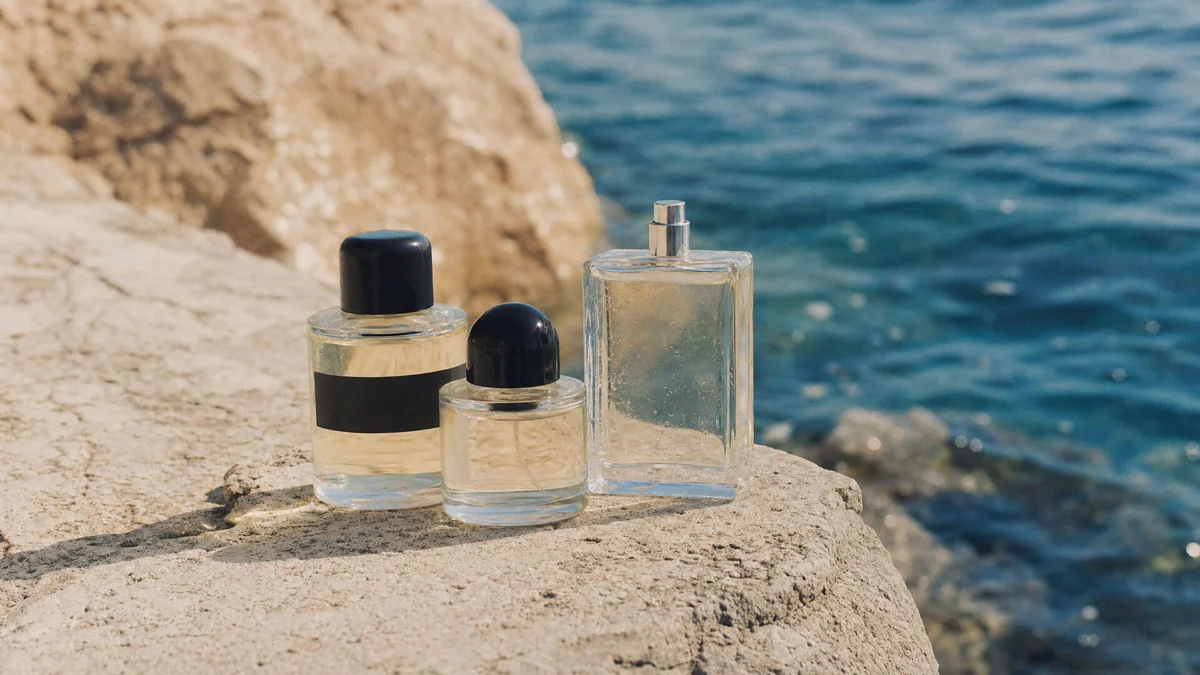
The global fragrance industry is currently witnessing a profound shift in consumer preferences, moving away from the traditional dominance of tropical and citrus-heavy profiles toward a more nuanced, atmospheric category: salty and mineral scents. For decades, the olfactory definition of summer was restricted to the brightness of Sicilian lemons, the sweetness of coconut, or the lushness of exotic florals. However, a new paradigm has emerged, driven by a desire for "olfactory realism" and the evocation of specific, lived-in memories. This transition marks a departure from fragrances that simply smell "clean" or "fresh," favoring instead those that recreate the visceral sensation of salt-crusted skin, sun-warmed linen, and the mineral tang of coastal rocks.
Industry experts from the fragrance house Devertere suggest that this evolution reflects a deeper psychological need for emotional connection and escapism. Rather than projecting an idealized image of a tropical paradise, modern consumers are seeking scents that act as a "refuge," capturing the physical memory of a day spent by the sea. This shift is characterized by the integration of saline accords, aquatic minerals, and solar notes, creating a fragrance profile that is both grounded and evocative.

The Chronology of Aquatic and Salty Fragrances
To understand the current dominance of salty notes, one must examine the timeline of aquatic perfumery. The category first gained mainstream traction in the late 1980s and early 1990s with the introduction of Calone 1951, a synthetic molecule that provided a watery, melon-like freshness. This era gave birth to iconic scents like Davidoff’s Cool Water (1988) and Issey Miyake’s L’Eau d’Issey (1992), which defined the "ozonic" trend.
By the 2010s, the market began to demand more complexity. The "clean" aquatic scent evolved into the "mineral" scent. A pivotal moment occurred with the release of Jo Malone London’s Wood Sage & Sea Salt in 2014, which proved that salt could be a central theme without relying on traditional floral or citrus supports. Following this, niche perfumery houses began experimenting with "salty gourmands" and hyper-realistic marine scents, leading to the 2024-2026 trend where salt is no longer a supporting note but the protagonist of the summer season.
The Chemistry of the Saline Accord
In technical perfumery, "salt" is a phantom note. Because salt itself has no odor, perfumers must construct a saline accord using a combination of natural and synthetic materials. This typically involves the use of seaweed absolutes, mosses, and specific synthetic molecules like Veramoss or Ambroxan, which provide a dry, mineral texture.

The goal is to replicate the "smell of the air" near the ocean—a combination of decomposing organic matter, mineral spray, and ozone. When combined with "solar notes" (often salicylates that mimic the smell of warm sand or sunblock), the result is a fragrance that feels three-dimensional and atmospheric. This complexity is what distinguishes the current generation of salty perfumes from their ancestors.
Analysis of Leading Salty Fragrances in the Contemporary Market
The current market is led by four distinct fragrances that exemplify this shift toward mineral realism. Each offers a different interpretation of the Mediterranean coast, ranging from floral-saline to deep-sea mineral.
1. Sel d’Argent by BDK Parfums: The Solar Floral
BDK Parfums, a niche house based in Paris, approached the salt trend through the lens of light and texture. Sel d’Argent (Silver Salt) opens with a sharp burst of Italian bergamot and grapefruit, immediately tempered by a potent saline accord. The heart of the fragrance utilizes Tunisian orange blossom absolute and Madagascar ylang-ylang, creating a bridge between the mineral world and the floral world. The base, composed of ambroxan and white musk, ensures a "second-skin" effect. This fragrance is positioned for consumers who desire the elegance of a traditional floral perfume but with the modern, edgy twist of sea salt.

2. Acqua di Sale by Profumum Roma: The Mineral Pioneer
Acqua di Sale is often cited by connoisseurs as the gold standard of marine fragrances. Unlike lighter options, this scent is dense and long-lasting, leaning heavily into the vegetal aspects of the ocean. By using myrtle and seaweed, Profumum Roma avoids the "beach resort" cliché, opting instead for the smell of a wild, rocky shoreline. The inclusion of cedar and myrrh provides a dry, resinous finish that evokes sun-bleached wood. It is a fragrance of high concentration, designed for those who seek a literal, unyielding interpretation of the Mediterranean sea.
3. Sel Marin by Heeley: The Minimalist Realist
James Heeley’s Sel Marin is celebrated for its transparency and precision. It is perhaps the most "moist" of the salty category, capturing the sensation of a cool sea breeze. The pyramid is deceptively simple: lemon and bergamot lead into a heart of sea salt, moss, and algae, resting on a base of vetiver and cedar. The use of vetiver is particularly strategic here, as its earthy, slightly salty roots complement the marine notes, grounding the fragrance in a way that feels organic and effortless.
4. Chillin’ à la Tropézienne by Devertere: The Hedonistic Mineral
The most recent addition to the high-end salty market is Devertere’s Chillin’ à la Tropézienne. This fragrance represents the "hedonistic" side of the trend. By combining aquatic notes with ginger, melon, and mate, it creates a narrative of luxury and relaxation. The inclusion of cypress and ylang-ylang connects the scent to the flora of the French Riviera. Devertere’s marketing emphasizes that this scent is not about projecting a "perfect image" but about the "sensation of disappearing from the real world for a few hours to stay in the sun."

Supporting Data and Market Implications
The rise of these fragrances is supported by broader economic trends in the beauty sector. According to market research data from 2024, the niche fragrance segment has grown by 12% annually, significantly outperforming mass-market "designer" scents. Consumers are increasingly willing to invest in higher price points—often ranging from €120 to €250 for 100ml—for scents that offer unique storytelling and superior longevity.
Furthermore, the "unisex" nature of salty and mineral notes has expanded their market reach. Unlike traditional "pour homme" aquatics or "pour femme" tropical florals, saline notes are gender-neutral. Data from retail analytics suggest that nearly 65% of mineral-based fragrances are marketed as genderless, appealing to a demographic that values personal expression over traditional gender norms.
Professional Perspectives and Industry Reactions
Perfumers and brand founders have reacted to this trend by emphasizing "emotional resonance." Sophie Fernández, a journalist specializing in fashion and lifestyle, notes that the industry is moving toward "atmospheric" perfumery. "The new object of desire is no longer just to smell ‘fresh.’ It is to smell of a ‘lived’ summer," she explains. This sentiment is echoed by the creators at Devertere, who argue that these fragrances act as an "emotional refuge," providing a sense of calm and connection to nature that citrus scents often lack.

From a retail perspective, boutique perfumeries like Le Secret du Marais have reported a surge in interest for "mineral" discovery sets. Sales associates note that customers are asking for scents that "smell like the outdoors" or "smell like skin after the beach," indicating a sophisticated consumer base that is increasingly educated on olfactory notes.
Broader Impact and the Future of Fragrance
The shift toward salty and mineral notes has implications beyond the perfume bottle. It reflects a larger cultural movement toward environmental appreciation and authenticity. As the global climate changes, there is a growing nostalgia for "pure" nature—the sea, the forest, the mountains. Perfumery is responding by creating hyper-realistic snapshots of these environments.
Looking forward, the industry is expected to delve deeper into "biophilic" design, using sustainable and upcycled ingredients to create these marine accords. We may see the rise of "coastal gourmands," where salt is paired with unexpected notes like pistachio, fig, or even savory herbs like rosemary and sage.

In conclusion, the transition from tropical sweetness to mineral saltiness represents a maturation of the fragrance market. By prioritizing memory and sensation over simple pleasantness, niche houses like BDK, Profumum Roma, Heeley, and Devertere have redefined the summer season. These four perfumes are not merely seasonal accessories; they are olfactory documents of the Mediterranean experience, proving that the most compelling scents are those that remind us of where we have been and how the sun felt upon our return.

0 Comments