
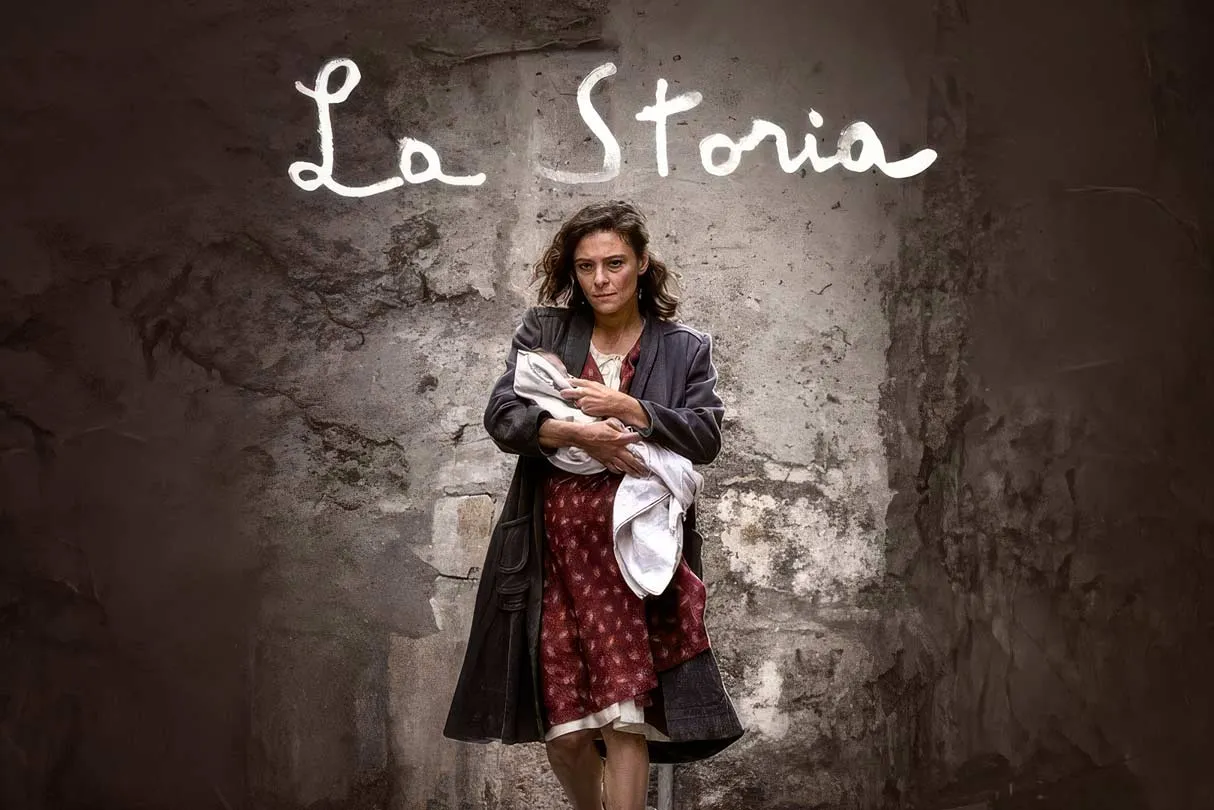
RTVE is set to captivate Spanish audiences with the forthcoming premiere of "La Historia" (The History), a critically acclaimed eight-episode Italian miniseries adapted from Elsa Morante’s seminal novel. The public broadcaster has commenced promotional activities, signaling a significant addition to its European fiction lineup, which will be available on La 1 and the streaming platform RTVE Play. This adaptation promises to bring a profound narrative of resilience, family, and survival during one of Europe’s most tumultuous periods to a wider audience.
The impending arrival of "La Historia" underscores RTVE’s continued commitment to enriching its programming with high-quality European productions. The miniseries, based on Morante’s 1974 masterpiece, is already being heralded as a significant television event, reflecting the enduring power of its literary source. The initial promotional efforts by RTVE highlight the series’ core theme: "the poignant struggle of a mother to protect her family." This tagline sets the stage for a deeply human drama set against the backdrop of historical devastation, promising an emotional journey for viewers. While an exact release date has yet to be announced, the anticipation is palpable, marking a strategic move by RTVE to diversify its content with internationally recognized narratives.
The Compelling Narrative of "La Historia"
"La Historia" transports viewers to the heart of Rome in the 1940s, a city grappling with the brutal realities of the Second World War. At the center of this harrowing narrative is Ida Ramundo, a Jewish teacher of Calabrian descent. Her story is one of relentless perseverance as she navigates the extreme challenges of raising her children amidst pervasive persecution, crippling poverty, and the omnipresent specter of war. The miniseries delves into the daily struggles for survival within a family profoundly impacted by the violence of the conflict and the devastating choices dictated by a merciless historical epoch.
The adaptation meticulously captures the essence of Morante’s novel, focusing on the intricate tapestry of human experience in a time of immense upheaval. It explores the emotional toll of war, not just on a grand scale, but within the intimate confines of a family unit. The series’ narrative arc is built upon Ida’s unwavering determination to shield her children from the horrors that surround them, a testament to the enduring strength of maternal love in the face of unimaginable adversity.
The lead role of Ida Ramundo is brought to life by the acclaimed Italian actress Jasmine Trinca, whose performance has been widely lauded for its intensity and depth. She is supported by a stellar ensemble cast, including Elio Germano, Asia Argento, Lorenzo Zurzolo, Francesco Zenga, and Valerio Mastandrea. The eight-episode miniseries is directed by Francesca Archibugi, with a screenplay penned by Giulia Calenda, Ilaria Macchia, and Francesco Piccolo, who have worked to translate Morante’s rich literary world into a compelling visual medium.
A Resounding Success in Italy
Prior to its Spanish debut, "La Historia" made a significant impact on the Italian television landscape. Premiering on Rai 1 in January 2024, the miniseries quickly became one of the most talked-about programs of the season. The initial broadcast of its first two episodes drew an impressive audience of approximately 4.5 million viewers, a figure that underscores the immense public interest in seeing one of Elsa Morante’s most iconic works brought to the screen. This strong viewership not only validated the production’s appeal but also highlighted the enduring legacy of Morante’s literary contributions.
Beyond its commercial success, "La Historia" garnered substantial critical acclaim within Italy’s audiovisual industry. It was honored with the prestigious Nastri d’Argento Grandi Serie award for Best Series of the Year, a testament to its high production values, compelling storytelling, and artistic merit. The performance of Jasmine Trinca, in particular, received unanimous praise from critics, who lauded her nuanced portrayal of Ida Ramundo’s resilience and vulnerability. The series’ ability to resonate with both audiences and industry professionals signals its quality and the success of its ambitious adaptation.

RTVE’s Strategic Reinforcement of European Fiction
The acquisition and upcoming broadcast of "La Historia" are integral to RTVE’s broader strategy to bolster its offering of prestigious European fiction. In recent months, the public broadcaster has actively sought to expand its catalog with a diverse range of high-quality international productions. This initiative includes major literary adaptations, compelling historical dramas, and series that have already achieved significant recognition in their countries of origin. By curating such a selection, RTVE aims to provide Spanish viewers with a richer and more varied viewing experience, showcasing the breadth and depth of European storytelling.
The inclusion of "La Historia" is particularly noteworthy as it aligns with RTVE’s goal of presenting narratives that are both artistically significant and culturally relevant. The series offers an intimate and emotionally charged exploration of family dynamics set against the stark realities of war and persecution. It serves as a powerful reminder of the human cost of conflict and the enduring spirit of those who strive to survive and protect their loved ones. La 1’s programming, enhanced by such acquisitions, aims to offer viewers compelling stories that stimulate thought and evoke deep emotional responses, thereby reinforcing its position as a key player in the Spanish television market.
Historical Context and Societal Impact
Elsa Morante’s novel, "La Storia," was published in 1974, a period in Italy marked by significant social and political introspection. The novel’s unflinching depiction of the impact of World War II on ordinary citizens, particularly marginalized communities, resonated deeply with readers. It was seen as a critical counterpoint to more heroic or nationalistic narratives of the war, focusing instead on the suffering and resilience of the common people. The novel’s setting in Rome during the Nazi occupation and the subsequent post-war period provides a rich and complex backdrop for exploring themes of trauma, memory, and the search for meaning in the aftermath of devastation.
The miniseries’ adaptation comes at a time when global audiences are increasingly interested in historical dramas that offer nuanced perspectives on past conflicts. The narrative of Ida Ramundo, a Jewish woman struggling to protect her family in Fascist Italy, touches upon themes of antisemitism, the horrors of war, and the ethical dilemmas faced by individuals caught in extraordinary circumstances. The series’ focus on the personal impact of historical events offers a powerful lens through which to understand the broader sweep of 20th-century European history.
The success of "La Historia" in Italy, both critically and commercially, suggests a strong audience appetite for stories that grapple with difficult historical truths while centering on relatable human experiences. RTVE’s decision to broadcast the miniseries in Spain can be seen as a strategic move to capitalize on this interest and to provide Spanish viewers with access to a highly regarded European production that offers both historical insight and profound emotional engagement. The series is expected to spark conversations about historical memory, the impact of war on families, and the universal themes of courage and resilience.
Broader Implications for European Television
The increasing prominence of European co-productions and international acquisitions by national broadcasters like RTVE signifies a growing trend towards a more interconnected global television market. As streaming platforms continue to dominate, traditional broadcasters are finding new ways to differentiate themselves by offering exclusive content and curated selections of international programming. The success of series like "La Historia" in their home countries, followed by their acquisition by other European broadcasters, demonstrates a potential for cross-border cultural exchange and shared viewing experiences.
For RTVE, securing rights to a series that has already proven its appeal and critical merit in Italy offers a low-risk, high-reward proposition. It allows the broadcaster to present a high-quality drama that is likely to attract a dedicated viewership interested in prestige European content. Furthermore, it aligns with the European Union’s cultural initiatives aimed at promoting the production and dissemination of European audiovisual works. By investing in and broadcasting such content, RTVE not only enriches its own schedule but also contributes to the broader visibility and accessibility of European cinema and television.
The decision to air "La Historia" on both La 1 and RTVE Play also reflects a dual strategy: reaching a broad linear television audience while also catering to the growing demand for on-demand viewing. This approach ensures that the series is accessible to a wide demographic, from older viewers who prefer traditional broadcast schedules to younger audiences who are accustomed to streaming services. The combination of a powerful narrative, stellar performances, and critical acclaim positions "La Historia" as a significant cultural event for Spanish television, promising to be a moving and thought-provoking addition to RTVE’s programming.

0 Comments