
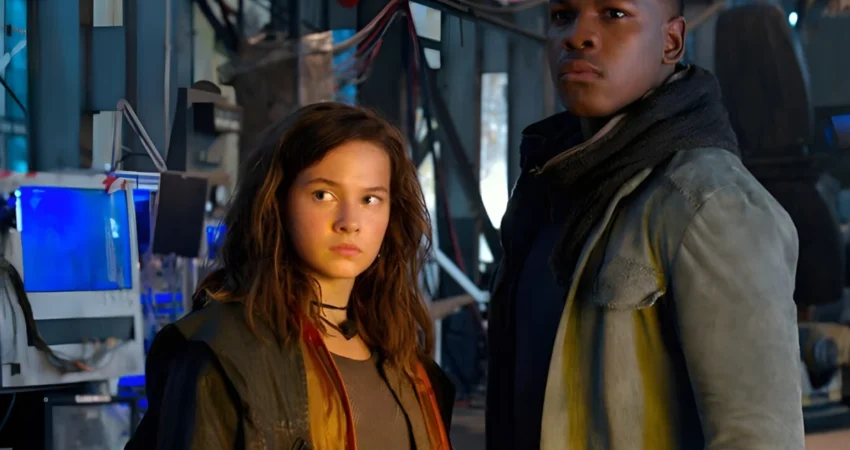
The trajectory of a major motion picture franchise often hinges on the most minute administrative details, a reality exemplified by the 2018 release of Pacific Rim Uprising. While the original 2013 film, directed by Academy Award winner Guillermo del Toro, established a vibrant new universe of "Jaegers" (colossal piloted robots) and "Kaijus" (monstrous interdimensional invaders), its sequel failed to maintain the same critical and commercial momentum. The shift in quality and tone was not merely a matter of creative differences but was precipitated by a specific production oversight regarding studio space that forced a change in leadership. This administrative error ultimately led to the departure of Del Toro as director, a decision that fundamentally altered the franchise’s DNA and contributed to its eventual stagnation.
The Genesis of the Breach: From Success to Production Paralysis
In 2013, Pacific Rim was hailed as a modern classic of the science fiction genre. Guillermo del Toro, known for his meticulous world-building and affinity for "monster movies," crafted a film that felt both gargantuan in scale and grounded in a tangible, mechanical reality. The film grossed $411 million worldwide against a $190 million budget. While it was not a record-breaking domestic hit in the United States, its massive popularity in international markets, particularly China, convinced Legendary Pictures and Universal Pictures that a sequel was a viable investment.
Development for the sequel, initially titled Pacific Rim: Maelstrom, began almost immediately. Del Toro was deeply involved, co-writing the script and planning the expansion of the lore. However, the production faced a series of external hurdles, including a shift in studio ownership when the Chinese conglomerate Wanda Group acquired Legendary Entertainment in 2016. This transition created a period of corporate restructuring that delayed several projects, including the Pacific Rim sequel.
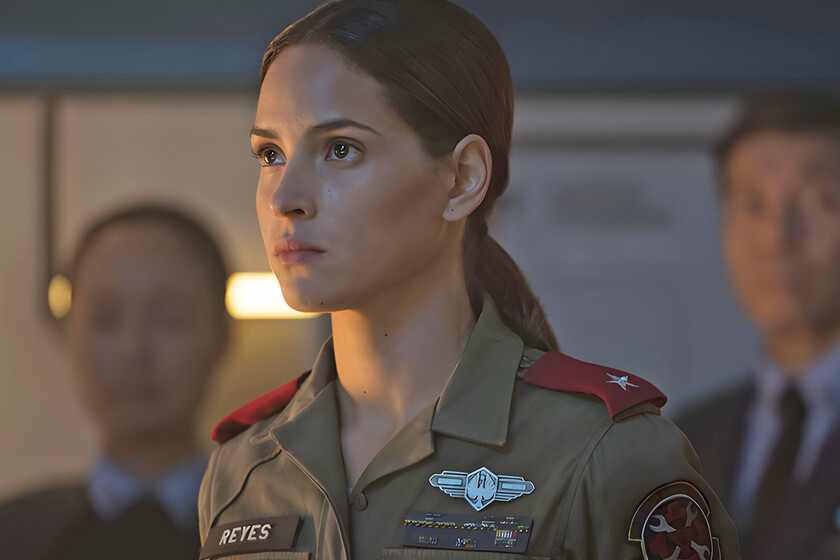
The Five O’Clock Deadline: Why Guillermo del Toro Departed
The most significant turning point in the franchise’s history occurred not in a writers’ room, but in a scheduling office. In an interview with Variety, Guillermo del Toro revealed the specific circumstances that led to his exit from the director’s chair. The production was slated to film at Pinewood Toronto Studios, a facility capable of housing the massive sets required for the Jaeger cockpits and urban destruction sequences.
According to Del Toro, the production team failed to make a necessary deposit to reserve the studio space by a strict 5:00 PM deadline. Because the deadline was missed, the studio space was immediately leased to another production. This error caused an indefinite delay in the filming schedule. Faced with a choice between waiting for the schedule to clear—which would have taken many months—or moving on to other projects, Del Toro made a pivotal decision. He opted to direct The Shape of Water, a passion project he had been developing concurrently.
The Shape of Water went on to win four Academy Awards, including Best Picture and Best Director for Del Toro. While this was a triumph for the filmmaker, it left Pacific Rim Uprising without its primary visionary. Steven S. DeKnight, known for his work on the Marvel’s Daredevil series and Spartacus, was eventually brought in to helm the project, working from a revised script that moved away from Del Toro’s original concepts.
A Comparative Analysis: The Shift in Tone and Physics
When Pacific Rim Uprising finally reached theaters in March 2018, the absence of Del Toro’s influence was immediately apparent to critics and fans alike. The original film was celebrated for its "sense of weight." The Jaegers in the 2013 film moved with a lumbering, hydraulic realism; every step felt like a tectonic event, and every punch carried the momentum of thousands of tons of steel.

In contrast, Uprising introduced a more agile, "anime-inspired" movement style. The Jaegers in the sequel were faster, more acrobatic, and significantly less grounded in the laws of physics established by the first film. While this made for more kinetic action sequences, it alienated a core segment of the audience that appreciated the "industrial" feel of the original.
Furthermore, the narrative focus shifted. The original film focused on a diverse group of seasoned pilots and scientists dealing with the trauma of a long-term war. Uprising pivoted toward a "young adult" demographic, focusing on a new generation of teenage cadets. While John Boyega’s performance as Jake Pentecost (son of Idris Elba’s character from the first film) was generally well-received, the film struggled to balance its lighter tone with the apocalyptic stakes of the setting.
Financial Performance and the Numbers Behind the Failure
The financial health of Pacific Rim Uprising serves as a cautionary tale for high-budget genre filmmaking. The film carried a production budget of approximately $150 million, a reduction from the $190 million spent on the first installment. However, marketing and distribution costs likely pushed the total investment closer to $250 million.
Global box office returns for the sequel reached $290.9 million. By industry standards, a film typically needs to earn 2.5 to 3 times its production budget to reach the break-even point after accounting for the theaters’ cut of the revenue. For Pacific Rim Uprising, that target was between $375 million and $450 million. With a total return of less than $300 million, the film was a significant commercial disappointment for Universal and Legendary.
The decline in domestic interest was particularly sharp. The 2013 film earned $101 million in the United States; the 2018 sequel earned only $59 million. Even the Chinese market, which had saved the first film from financial ruin, showed less enthusiasm, with the sequel earning roughly $100 million compared to the original’s $111 million (in a much less developed market at the time).
Chronology of the Pacific Rim Franchise
- July 2013: Pacific Rim premieres, directed by Guillermo del Toro.
- 2014-2015: Del Toro and Zak Penn develop a script for the sequel.
- January 2016: Legendary Pictures is acquired by Wanda Group; production is temporarily halted.
- February 2016: Steven S. DeKnight is announced as the new director following the studio reservation error.
- November 2016: Principal photography begins in Australia and China.
- March 2018: Pacific Rim Uprising is released worldwide.
- 2021: Pacific Rim: The Black, an anime series, premieres on Netflix, attempting to bridge the gap and expand the lore.
- Present Day: The live-action franchise remains dormant, with no active plans for a third theatrical installment.
Broader Impact on the Science Fiction Landscape
The failure of Pacific Rim Uprising had lasting implications for the "giant monster" subgenre. At the time of its release, Legendary was also developing the "MonsterVerse," featuring Godzilla and King Kong. The underperformance of Uprising suggested that there was a limit to the audience’s appetite for "city-leveling" spectacles if they lacked a strong hook or a distinct directorial voice.
The franchise’s trajectory also highlights the "Marvel-ization" of 2010s cinema. Many critics noted that Uprising felt like an attempt to turn Pacific Rim into a more conventional superhero-style franchise, complete with quips and a more sanitized aesthetic. This shift away from the "weird and wonderful" elements of Del Toro’s vision stripped the property of its unique identity, leaving it to compete—unsuccessfully—with more established cinematic universes.
Despite the commercial failure, the film has found a second life on streaming platforms. Currently available on services such as Netflix and HBO Max (Max), the film is often revisited by sci-fi enthusiasts who view it as a "guilty pleasure" or a popcorn flick. Without the weight of expectations for a "masterpiece," viewers are often more forgiving of its narrative flaws, enjoying the high-definition spectacle of robots fighting monsters.

Official Responses and Reflections
In the years following the release, those involved have been candid about the film’s shortcomings. Steven S. DeKnight has expressed pride in the work his team accomplished under tight deadlines and corporate shifts, though he has acknowledged the difficulty of stepping into a world created by a visionary like Del Toro.
For his part, Guillermo del Toro has remained supportive of the franchise but has admitted he never actually watched the sequel. He told reporters that watching someone else’s take on his "home-grown" world would be like "watching home movies from your ex-wife." His decision to prioritize The Shape of Water remains one of the most successful pivots in Hollywood history, as it cemented his status as an elite director, even if it meant the "death" of his Jaeger universe.
The legacy of Pacific Rim Uprising is a reminder that in the world of blockbuster filmmaking, the difference between a franchise-spanning success and a one-off disappointment often comes down to the details. A missed 5:00 PM deadline did more than just delay a movie; it altered the course of a cinematic world, proving that even the mightiest Jaegers are vulnerable to the mundane realities of production management. For fans of the original, the sequel remains a fascinating "what if," a glimpse into a world that lost its creator and struggled to find its footing in his absence.

0 Comments