
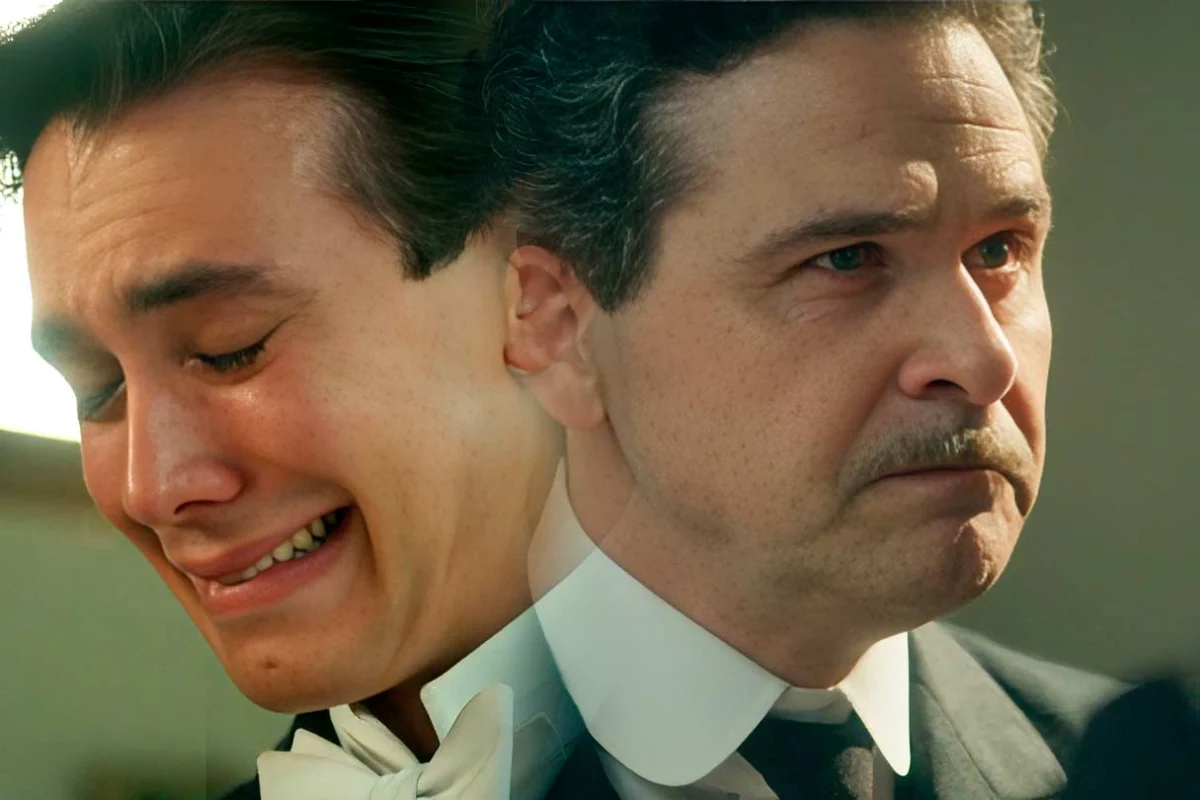
The air in the palace of La Promesa is thick with palpable distress, a silent testament to the fragility of life and the depth of human connection. In one of the most emotionally charged sequences of recent episodes, the characters Ricardo and Carlo find themselves at the epicenter of a crisis, their shared ordeal unfolding as the infant Jana fights for her life in an upstairs room. This critical juncture in the narrative of ‘La Promesa’ offers a poignant exploration of parental vulnerability, the solace of community, and the quiet strength found in unwavering presence during times of extreme hardship.
A Father’s Desperate Plea Amidst Unforeseen Tragedy
Carlo, a character whose journey has been marked by evolving responsibilities and profound emotional stakes, is visibly crumbling under the weight of his newborn daughter’s sudden and severe illness. The helplessness he feels is articulated with raw, unfiltered anguish. "I have no way to hold onto her!" he confesses, his voice strained, his desperation a tangible force. This confession is not merely an expression of fear, but a raw admission of his struggle to cope with a pain that threatens to consume him entirely. The nascent stages of parenthood, meant to be a period of joy and wonder, have been abruptly overshadowed by the stark reality of medical emergency, leaving him adrift in a sea of uncertainty.
The situation is compounded by the fact that this is a new life, a child for whom Carlo is still forging a paternal bond, making the threat of loss all the more acute. The narrative skillfully portrays the psychological toll this takes, showcasing Carlo’s internal battle against despair. His inability to find solace or a concrete action plan highlights the often-overlooked emotional burden placed on fathers during such critical moments, where traditional roles might be challenged by the sheer force of the crisis.
Ricardo’s Steadfast Presence: A Pillar of Calm in the Storm
It is in this moment of profound vulnerability that Ricardo, the esteemed butler of the palace, steps forward, embodying a quiet strength and profound wisdom. Rather than offering platitudes or empty reassurances, Ricardo’s approach is rooted in the fundamental tenets of human support: family, companionship, and the unwavering refusal to surrender. His intervention is not one of grand pronouncements, but of gentle, yet firm, guidance.
"You don’t have to hold her alone," Ricardo states with a quiet authority that cuts through Carlo’s despair. He immediately reminds Carlo that he is not facing this crisis in isolation. "Her mother is here. Her father is here. We are all here," he emphasizes, drawing a circle of solidarity around Carlo and his afflicted child. This simple yet powerful statement serves as a crucial anchor, reminding Carlo of the collective strength and love that surrounds his family.
Ricardo’s perspective is informed by his own lived experiences, particularly his complex and often strained relationship with his son, Santos. This background lends his words a profound authenticity. He understands that in the face of overwhelming circumstances, the most impactful action is often simply being present. "Sometimes, this is all that can be done," he admits with a disarming honesty, acknowledging the limitations of human agency while simultaneously validating the importance of steadfast companionship.
The Delicate Balance of Truth and Hope
Carlo desperately needs to hear that his efforts are enough, that he is doing all that he can. Ricardo, however, does not offer him false comfort. Instead, he delivers a truth that is both painful and deeply consoling: "If it is not enough, at least she has not been alone for a single moment." This statement encapsulates the essence of Ricardo’s character: a man of integrity who prioritizes genuine support over superficial reassurances. It acknowledges the potential for a tragic outcome while simultaneously highlighting the immeasurable value of love and presence in the face of adversity.
The emotional crescendo of the scene arrives as Ricardo urges Carlo to cling to hope. "As long as she is still there, don’t give anything up for lost," he implores, his gaze steady and encouraging. This is not a passive plea, but an active encouragement to remain engaged, to fight alongside his family.
A Generous Act of Sacrifice and Reassurance
Ricardo then gently prompts Carlo to return to his family’s side. "Go, go upstairs," he urges. When Carlo hesitates, perhaps still grappling with his feelings of inadequacy, Ricardo delivers a final, defining statement that perfectly encapsulates his selfless nature: "Leave it, I’ll take care of it. Your place is upstairs with them." This magnanimous gesture sees Ricardo, the dedicated butler, assuming the duties of a mere servant so that Carlo can fulfill his role as a father and husband. His professional obligations, usually paramount, are momentarily set aside in favor of what is truly important – the emotional and physical well-being of the family he serves.

These closing words serve as a profound summary of Ricardo Pellicer’s character and philosophy. Without ostentation or grand speeches, he takes on the tasks of a lacquey, enabling Carlo to rush to the side of María and their ailing daughter. This scene powerfully illustrates the prioritization of human connection over duty when faced with a true crisis.
A Masterclass in Subtle Storytelling and Performance
The performances by Carlos de Austria (playing Carlo) and José Miguel Blanco (playing Ricardo) are instrumental in the scene’s impact. The dialogue, crafted with the precision of a master storyteller, is delivered with a profound sense of gravitas. Each phrase carries significant weight, and the silences between words speak volumes, conveying the unspoken fears, hopes, and profound emotions at play. This restrained yet deeply resonant interpretation has clearly struck a chord with the devoted audience of ‘La Promesa,’ eliciting strong emotional responses and fostering a deeper connection with the characters.
This pivotal moment solidifies Ricardo’s position as one of the emotional cornerstones of the palace’s service staff, a man capable of providing essential support to those around him precisely when they need it most. Simultaneously, it underscores Carlo’s evolution into a father willing to face any challenge for the sake of his infant daughter, a child he has only recently come to know.
Broader Implications and Narrative Arcs
The episode’s focus on the infant’s health and the family’s response carries significant narrative weight for ‘La Promesa.’ The fragility of life, particularly that of a newborn, introduces a potent element of suspense and emotional investment for the audience. This storyline has the potential to reshape character dynamics, forging new bonds of empathy and understanding or, conversely, creating rifts born from stress and grief.
The portrayal of Carlo’s paternal struggle is particularly noteworthy. In a narrative often focused on romantic entanglements and aristocratic intrigue, the depiction of a father’s raw vulnerability adds a layer of relatable human drama. It speaks to the universal anxieties associated with parenthood and the profound impact of unexpected medical crises.
Ricardo’s character, meanwhile, continues to be developed as a moral compass within the palace. His selfless act not only aids Carlo but also reinforces the theme of community and mutual support that often underpins the most compelling storylines in serial dramas. His wisdom, gained through experience, serves as a vital counterpoint to the more volatile emotions of other characters.
Supporting Data and Context
While ‘La Promesa’ is a fictional narrative, the anxieties and themes it explores are deeply rooted in real-world experiences. The neonatal mortality rate, though declining in many developed nations, remains a significant concern globally. According to the World Health Organization (WHO), an estimated 2.4 million newborns died in their first month of life in 2020. Factors contributing to neonatal mortality include prematurity, birth asphyxia, and infections. The emotional and psychological toll on parents facing such circumstances is well-documented, with studies indicating increased risks of postpartum depression and anxiety.
The historical context of the series, set in the early 20th century in Spain, would have amplified these challenges. Medical care, particularly for infants, would have been less advanced than today, and societal expectations regarding male stoicism might have further isolated fathers experiencing emotional distress. This historical backdrop adds a layer of authenticity to Carlo’s struggles and Ricardo’s empathetic response.
Future Outlook and Audience Engagement
The resolution of this particular crisis, whether positive or negative for the infant Jana, will undoubtedly have lasting repercussions on the characters and the ongoing narrative of ‘La Promesa.’ The audience’s emotional investment in the well-being of the child and the resilience of her parents is now firmly established. Future episodes will likely explore the aftermath of this ordeal, examining how the characters have been changed by the experience and how their relationships have evolved.
The success of this emotionally charged storyline highlights the audience’s appreciation for nuanced character development and authentic emotional storytelling. As ‘La Promesa’ continues to unfold, these deeply human moments, underscored by stellar performances and compelling writing, will remain crucial in maintaining viewer engagement and solidifying its place as a beloved series. The series’ ability to tackle profound themes of life, loss, and love with such sensitivity ensures its continued relevance and impact on its audience.

0 Comments