
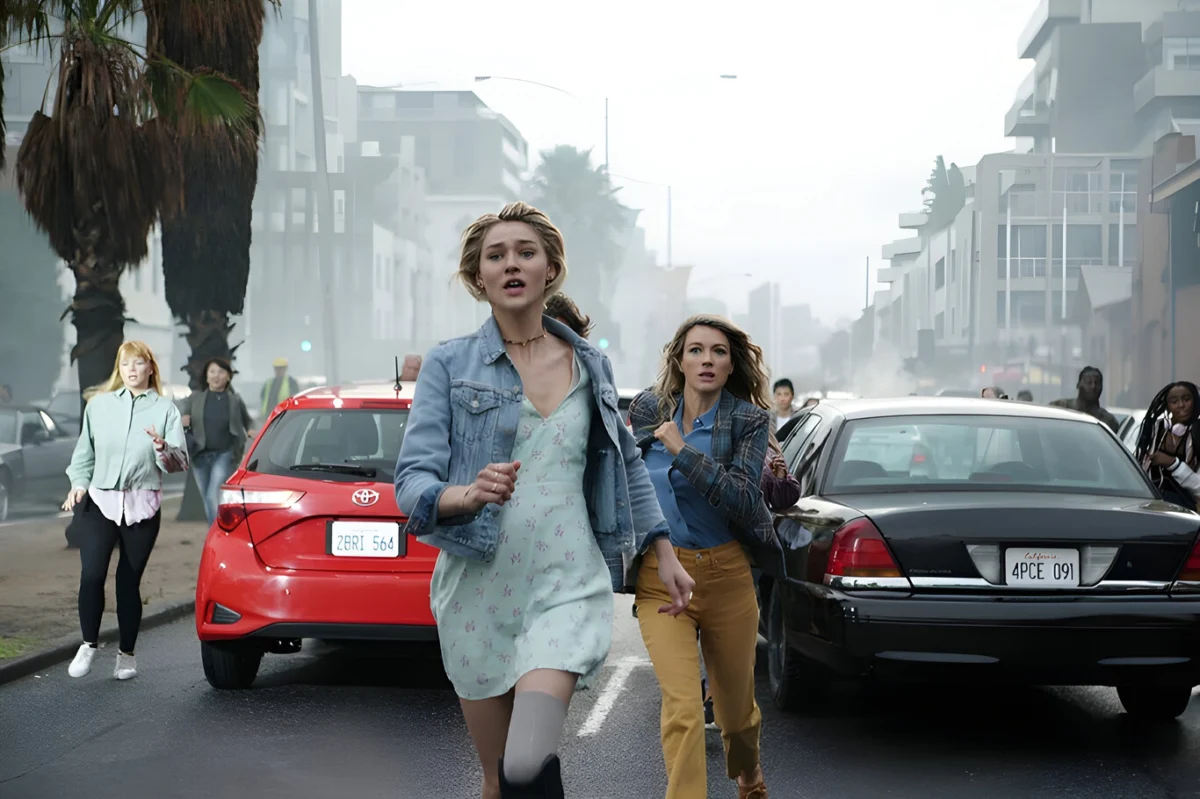
The landscape of modern television is increasingly defined by the "second life" phenomenon, where series that maintained a steady but unremarkable presence on linear broadcast networks find explosive success upon their arrival on global streaming platforms. The latest beneficiary of this digital migration is La Brea, a high-concept science fiction drama that originally premiered on NBC in 2021. Since its recent addition to the Netflix catalog in various regions, the series has not only captured the attention of a new demographic but has also shattered internal viewership records, surpassing the engagement levels it achieved during its initial three-season run on traditional television. By blending the high-stakes survival elements of Lost with the prehistoric wonder of Jurassic Park and the complex narrative weaving of time-travel procedurals, La Brea has established itself as a cornerstone of Netflix’s third-party content strategy, proving that the appetite for ambitious, mystery-driven genre fiction remains at an all-time high.
The Premise: A Convergence of Eras and Genres
La Brea begins with a cataclysmic event that serves as the catalyst for its sprawling narrative: a massive sinkhole opens in the heart of Los Angeles, specifically at the site of the famous La Brea Tar Pits. Hundreds of people, vehicles, and buildings are swallowed into the depths, presumed dead by the world above. However, those who survived the fall find themselves not in the bowels of the earth, but transported to a primeval wilderness. This world is eventually revealed to be Los Angeles in the year 10,000 BC, a dangerous landscape populated by Pleistocene megafauna, including dire wolves, saber-toothed tigers, and ground sloths, alongside mysterious human factions who seem to have arrived via similar temporal anomalies.

The narrative is anchored by the Harris family, who are split across time. Eve Harris (Natalie Zea) and her son Josh (Jack Martin) are trapped in the prehistoric past, while her husband Gavin (Eoin Macken) and daughter Izzy (Zyra Gorecki) remain in modern-day Los Angeles. The emotional core of the series revolves around Gavin’s realization that the visions he has suffered from for years are actually glimpses into the past where his family is now fighting for survival. This discovery leads to a desperate race against time—and through it—as the characters attempt to understand the nature of the sinkholes and find a way to reunite.
Chronology of Production and Broadcast
Created by David Appelbaum, who previously worked on procedurals like The Enemy Within and NCIS: New Orleans, La Brea was conceived as a blockbuster-scale television event. The pilot was ordered by NBC in early 2020, though production was significantly delayed by the global COVID-19 pandemic. Filming eventually moved to Melbourne, Australia, utilizing the region’s diverse landscapes and state-of-the-art visual effects studios to recreate both modern California and the untamed world of 10,000 BC.
The first season premiered on September 28, 2021, and was a moderate success for NBC, drawing in an average of 5 million viewers per episode in Live+7 ratings. It was quickly renewed for a second season, which expanded the lore by introducing different time periods, including 1988, and exploring the scientific conspiracy behind the portals. However, the third and final season, which premiered in early 2024, was truncated to just six episodes. This shortened final run was largely a result of the 2023 Hollywood labor strikes and the network’s desire to provide the series with a definitive conclusion despite rising production costs and fluctuating linear ratings.
The Netflix Effect: Data and Viewership Surges
While La Brea maintained a loyal following on NBC and its domestic streaming partner Peacock, its arrival on Netflix marked a turning point in its cultural footprint. According to Nielsen’s streaming ratings and internal Netflix data, the series reached a peak of 1.28 billion minutes viewed in a single week following its wider release on the platform. This metric is particularly noteworthy as it exceeds the engagement levels of many Netflix original productions released in the same window.
The "Netflix Effect" refers to the platform’s algorithmic ability to surface content to users based on niche interests, such as "prehistoric survival" or "mystery box shows." For La Brea, the platform provided a global stage that linear broadcasting could not replicate. In international markets where NBC is not a household name, the show was branded and consumed with the same fervor as a Netflix Original. The data suggests that audiences are increasingly drawn to "bingeable" mystery shows where they can consume an entire season’s worth of clues and cliffhangers in a few sittings, a consumption pattern that benefits the serialized nature of La Brea more than a weekly broadcast schedule.
Comparative Analysis: Lost, Jurassic Park, and the Mystery Box
Critics and audiences have frequently drawn parallels between La Brea and the landmark series Lost. Both shows utilize a diverse ensemble cast of survivors forced to cooperate in an inhospitable environment while grappling with supernatural or scientific mysteries. La Brea adopts the "mystery box" storytelling technique popularized by J.J. Abrams, where each answered question leads to two more complex inquiries. The presence of the "Lazarus" project and the discovery of high-tech bunkers in the middle of a prehistoric forest mirror the "Dharma Initiative" tropes that defined mid-2000s television.
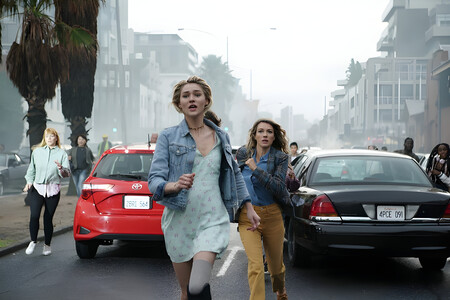
The Jurassic Park influence is equally evident in the show’s creature design and environmental tension. By placing modern humans in a world of extinct predators, the show taps into a primal sense of adventure. However, La Brea distinguishes itself by leaning more heavily into the "soft" science fiction of time travel. The plot eventually reveals that the sinkholes are not natural disasters but the result of experiments involving "auroras"—temporal rifts created by future technologies. This adds a layer of deterministic philosophy to the show, as characters realize their actions in the past are directly responsible for the state of the future they left behind.
Industry Implications and the Future of Network Sci-Fi
The success of La Brea on streaming platforms offers a vital lesson for the television industry regarding the longevity of genre content. High-concept science fiction is notoriously expensive to produce, often requiring significant investments in CGI and location scouting. When these shows fail to capture a massive immediate audience on linear TV, they are frequently canceled. However, the secondary success of La Brea suggests that network executives may need to factor in long-term streaming potential when evaluating the "success" of a series.
Furthermore, the show’s performance underscores a shift in how audiences perceive "network" vs. "streaming" content. As the lines continue to blur, high-quality productions from traditional broadcasters like NBC are finding parity with prestige streaming titles. This has led to an increase in licensing deals where platforms like Netflix or Amazon Prime Video act as a global distributor for network shows, providing them with the financial cushion and audience reach necessary to justify their high production costs.

Conclusion and Availability
As of mid-2024, the first two seasons of La Brea are available for streaming on Netflix in several major territories, providing a seamless entry point for viewers looking for a blend of family drama and speculative fiction. The third and final season, which brings the saga of the Harris family to a close, is currently distributed through Universal+ and Prime Video Channels in various regions.
The legacy of La Brea will likely be its role as a bridge between the era of broadcast "event TV" and the era of streaming dominance. It serves as a testament to the enduring appeal of the "what if" scenario: what if the ground opened up and took us back to the beginning of time? For millions of viewers on Netflix, the answer to that question has proven to be one of the most compelling television experiences of the decade. While the series has concluded its production, its presence in the digital zeitgeist remains robust, signaling that for well-crafted science fiction, the end of a broadcast run is often just the beginning of its journey.

0 Comments