
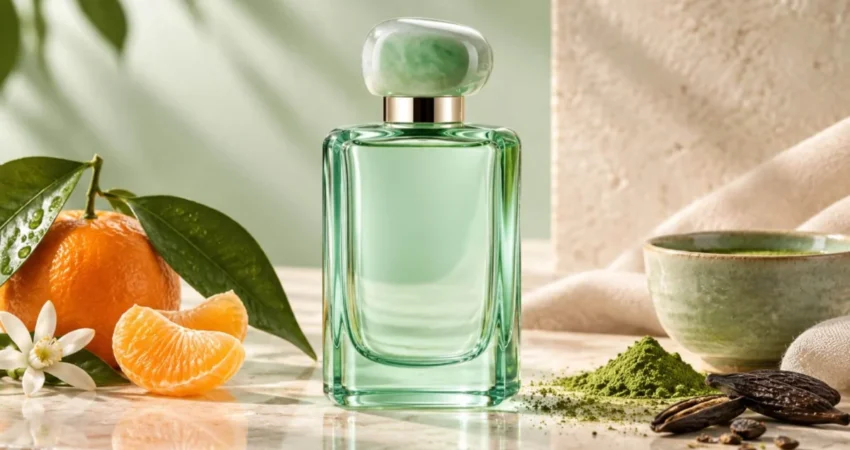
The global fragrance market is currently witnessing a significant shift toward olfactive profiles that emphasize wellness, mindfulness, and botanical authenticity, with matcha tea emerging as the definitive "it" ingredient of the 2024–2026 period. Once a niche beverage reserved for traditional Japanese ceremonies and health-conscious specialty shops, matcha has transcended the culinary world to become a dominant aesthetic and sensory force. This evolution is best exemplified by the recent launch of Angel Schlesser’s Matcha Infusion, a composition that captures the zeitgeist of the "clean girl" aesthetic and the growing demand for affordable luxury. Priced at under 50 euros for a 150ml bottle, this fragrance represents a strategic move by heritage brands to capture a younger, social-media-savvy demographic that values both the historical pedigree of tea and the modern allure of "green" scent profiles.
The Cultural and Historical Evolution of Matcha
To understand why matcha has become a staple in modern perfumery, one must look back at its origins in the Tang Dynasty of China and its subsequent perfection in Japan. It was the Buddhist monk Eisai who brought tea seeds to Japan in the 12th century, linking the consumption of the powdered green tea to Zen meditation and mental clarity. Over centuries, the production process became a highly refined art form, centered primarily in the Uji region of the Kyoto Prefecture.
The production of matcha is distinct from other green teas. The plants are shaded for several weeks before harvest to increase chlorophyll levels and L-theanine content, resulting in a vibrant green color and a unique "umami" flavor profile. The leaves, known as tencha, are steamed, air-dried, and eventually stone-ground into a fine powder. This laborious process creates a complex aroma that is simultaneously vegetal, nutty, creamy, and slightly bitter—a multifaceted profile that provides perfumers with a rich palette of inspiration.

In the last decade, matcha has moved from the tea bowl to the digital screen. On platforms like TikTok and Instagram, the "matcha aesthetic"—characterized by soothing sage greens and themes of "slow living"—has generated billions of impressions. This cultural visibility has paved the way for the fragrance industry to capitalize on the scent’s association with tranquility and sophistication.
The Science of Scent: Recreating Matcha in the Laboratory
In the world of perfumery, "matcha" is rarely a single natural extract. Unlike citrus fruits, which yield essential oils through cold pressing, or lavender, which is distilled, the scent of matcha is typically an "accord"—a blend of synthetic and natural molecules designed to mimic the experience of the tea.
Perfumers use advanced techniques like "headspace technology" to analyze the volatile compounds emitted by a freshly whisked bowl of matcha. Scientific analysis reveals that the aroma of matcha is composed of several key elements:
- Hexenal and Hexenol: These provide the "green," freshly cut grass notes.
- Linalool: Offers a soft, floral, and slightly spicy undertone.
- Dimethyl sulfide: Contributes the characteristic "oceanic" or "seaweed" nuances often associated with high-quality Japanese greens.
- Ionones: Create the powdery, iris-like texture that gives matcha fragrances a sophisticated, skin-like finish.
By balancing these components, brands like Angel Schlesser can create a fragrance that feels "natural" while maintaining the stability and longevity required for a commercial perfume.

Detailed Analysis: Angel Schlesser Matcha Infusion
Released as part of the Les Eaux d’un Instant collection, Matcha Infusion is a study in minimalist elegance. The collection, which focuses on capturing fleeting moments of serenity, uses matcha as a vehicle for "olfactive therapy."
Olfactory Pyramid and Composition
The fragrance is structured as a citrus-aromatic blend, designed to be unisex and versatile.
- Top Notes: The composition opens with clementines. Unlike the sharp, acidic bite of lemon or the bitterness of grapefruit, clementine offers a rounder, sunnier sweetness. This choice provides an immediate "luminosity" that mimics the bright morning light.
- Heart Notes: The matcha accord sits at the center. In this specific iteration, the matcha is rendered with a velvety texture. It avoids the harsh "hay" smell of some green teas, opting instead for a creamy, slightly bitter profile that feels modern and clean.
- Base Notes: The fragrance is anchored by tonka bean. Tonka is a crucial addition here, as it provides a bridge between the freshness of the tea and the warmth of the skin. With facets of vanilla, almond, and dried hay, the tonka bean ensures the fragrance has a soft, lingering trail (sillage) that prevents it from evaporating too quickly.
Market Positioning and Pricing
The commercial strategy behind Matcha Infusion is noteworthy. While niche houses like Le Labo (with The Matcha 26) or Maison Margiela (with Matcha Meditation) offer tea scents at luxury price points exceeding 200 euros, Angel Schlesser has positioned this release in the "masstige" (mass-prestige) category. Currently retailing for approximately 46.80 euros at major department stores like El Corte Inglés, it offers a high-concept scent profile at a price point accessible to a wider audience. This democratizes the "niche" tea trend, allowing it to move from boutique showrooms to the general public.
The Timeline of Tea in Perfumery
The current obsession with matcha is the latest chapter in a long history of tea-based fragrances.

- 1992: Bvlgari releases Eau Parfumée au Thé Vert, created by Jean-Claude Ellena. This was the first major fragrance to use a green tea accord (specifically using the molecule Hedione to simulate tea’s airy freshness).
- 1999: Elizabeth Arden launches Green Tea, a massive commercial success that solidified tea as a staple note in the "fresh" fragrance category.
- 2010s: The rise of niche perfumery sees a shift toward specific tea varieties, such as Lapsang Souchong (smoky), Earl Grey (bergamot-heavy), and Oolong.
- 2020–2026: The "Matcha Era" begins. Brands focus on the specific "creamy-green" texture of matcha, moving away from the watery transparency of 90s green tea scents toward something more substantial and "opaque."
Comparative Alternative: Massimo Dutti’s Matcha & Musk
Angel Schlesser is not alone in its pursuit of the perfect tea scent. Massimo Dutti, the premium arm of the Inditex Group, has also entered the arena with Matcha & Musk. While both fragrances share the central matcha note, their executions differ significantly.
Matcha & Musk leans into the "floral-powdery" side of the spectrum. It utilizes bergamot and pink pepper for a spicy, energetic opening, but its heart is defined by iris—one of the most expensive and sophisticated notes in perfumery. The addition of musk creates a "second-skin" effect, making it smell like clean laundry or expensive skincare. At 49.95 euros for 100ml, it competes directly with Matcha Infusion, though it targets a consumer looking for a more "ethereal" and "clean" vibe rather than the "sunny and aromatic" profile of the Schlesser version.
Broader Implications for the Fragrance Industry
The success of matcha-based scents indicates a broader change in consumer behavior. In a post-pandemic landscape, fragrances are increasingly being used as tools for emotional regulation. The "aromatherapeutic" qualities of tea—traditionally associated with alertness and calm—make it the perfect note for a world dealing with high levels of stress and digital burnout.
Furthermore, the rise of matcha scents reflects the industry’s move toward gender-neutrality. Tea is a universal note that does not carry the historical "feminine" baggage of heavy florals or the "masculine" baggage of aggressive woods and musks. As younger generations reject traditional gender labels in fashion and beauty, tea-based compositions provide a safe, sophisticated middle ground.

Conclusion: A Seasonal Shift
As the industry moves into the autumn and winter of 2026, Matcha Infusion and its contemporaries are expected to maintain their popularity. While typically associated with spring, the "creamy" and "tonka-heavy" base of these new matcha scents allows them to transition into cooler weather, providing a comforting, cocoon-like sensation.
The arrival of these high-quality, affordable tea fragrances suggests that the "matcha trend" is no longer just a passing fad on social media. It has matured into a respected olfactory category, blending historical tradition with modern chemical innovation. For the consumer, this means access to sophisticated, "niche-style" perfumery without the prohibitive price tag, marking a new chapter in the democratization of fine fragrance.

0 Comments