
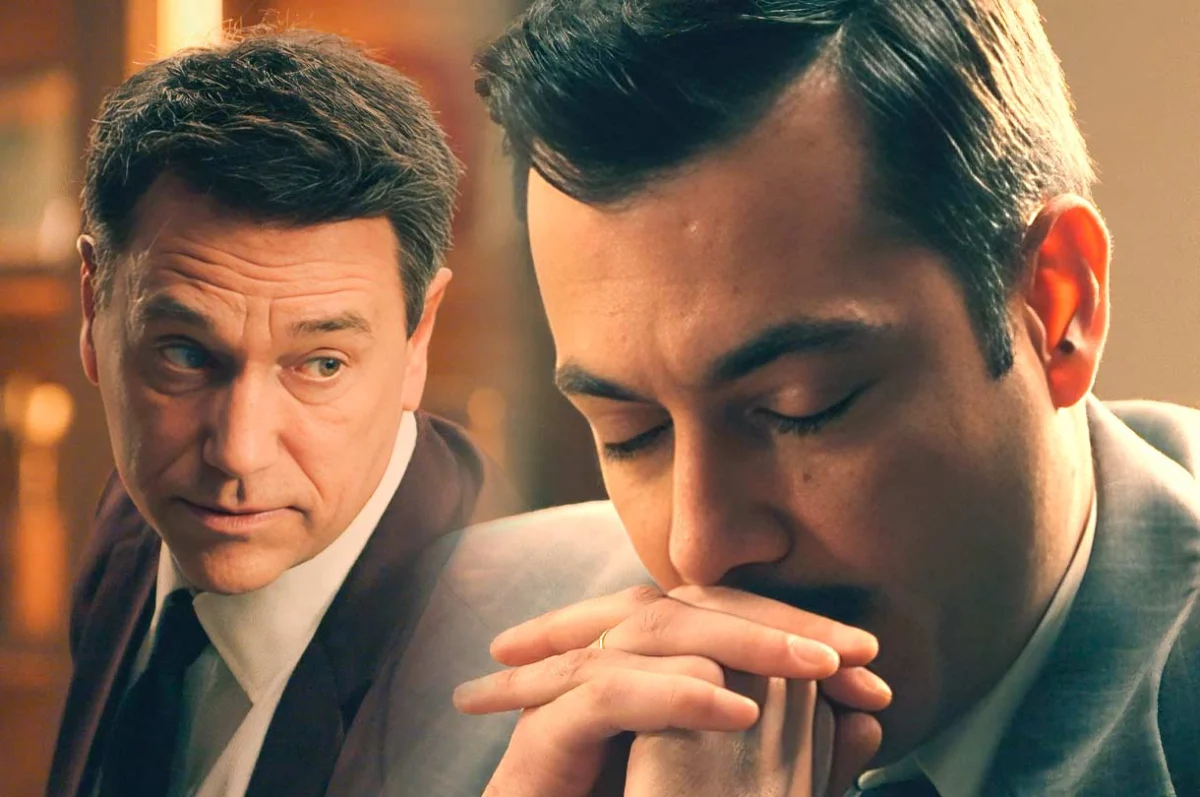
The legacy of Antoine Brossard continues to cast a long shadow over the De la Reina family, a complex and deeply unsettling presence that has become particularly burdensome for Tasio. In the unfolding narrative of "Sueños de Libertad" (Dreams of Freedom), the weight of guilt has transformed into a silent, agonizing sentence for a man trapped by his actions, unable to find an escape from the consequences of a fateful night. This intricate web of deception and unintended tragedy forms the core of the current dramatic tension within the series, impacting not only the central characters but also the broader corporate and familial structures.
A Public Tribute Conceals a Private Agony
A recent development within the series has brought the unspoken tragedy to the forefront, albeit through a carefully constructed facade of public remembrance. An order has been placed with an engraver for a commemorative plaque honoring the late businessman, Antoine Brossard. The words dictated over the phone, intended to immortalize Brossard’s contributions, carry a stark and somber resonance: "In memory of Antoine Brossard… we thank him for his vision, leadership, and unwavering dedication." This eulogy, meant to celebrate Brossard’s impact, stands in stark contrast to the hidden truth that Tasio carries.
The inscription continues with a solemnity that cruelly amplifies Tasio’s internal torment: "The mark he left on us will continue to shape the course of this company." This official tribute is attributed to Gabriel de la Reina and the company’s shareholders, signifying a united front in honoring Brossard’s memory. However, for Tasio, this public recognition serves only to deepen his private suffering. He is consumed by constant nightmares, a relentless torment stemming from the accidental appropriation of Brossard’s medication during a night of excess. This single, catastrophic oversight led directly to the businessman’s death and instantly positioned Tasio as the primary suspect in the ongoing police investigation. Every gesture the family makes to honor Brossard’s memory is a further tightening of the psychological vise on Tasio.
The Unraveling of Tasio’s Composure
The preparations for this public homage are proceeding with an almost eerie normalcy. Routes are being adjusted, and dates are being coordinated. A snippet of conversation overheard during a phone call reveals the operational details: "The date should be in the morning, as that’s when the ceremony will be held." While everyone else is engaged in the practicalities of organizing the event, Tasio remains isolated in his internal struggle.
His partner, Paula, is beginning to notice significant discrepancies in his behavior. Tasio’s altered demeanor, his sleepless nights, and his disproportionate reactions are raising serious red flags. Paula suspects that he is harboring a problem far more severe than he lets on, though she has yet to grasp the full magnitude of the burden he carries. The engraved plaque, a tangible object, represents for Tasio the permanent embodiment of his guilt – the name of a deceased man sculpted in metal, displayed for all to see, and signed by a family blissfully unaware of the true circumstances surrounding his demise.
Background and Chronology of the Tragedy
The events leading to Antoine Brossard’s death are crucial to understanding Tasio’s current predicament. The incident occurred during a period of significant personal and professional upheaval for Tasio, marked by excessive consumption of alcohol and a general state of disarray. In his compromised state, he inadvertently took Brossard’s prescribed medication, mistaking it for something else. This fatal error, a consequence of a lapse in judgment amplified by his intoxication, had immediate and irreversible repercussions.
The immediate aftermath saw Brossard discovered deceased, with Tasio as the only individual present who had any direct interaction with him in the hours preceding his death. The police investigation, while initially focused on natural causes or accidental overdose, quickly turned towards Tasio due to his proximity and his own erratic behavior in the wake of the incident. The discovery of the missing medication, confirmed to have been in Tasio’s possession, solidified his status as the prime suspect.

The timeline of events can be broadly outlined as follows:
- Preceding Weeks: Tasio experiences a period of personal distress, leading to increased reliance on alcohol and a general deterioration of his mental state.
- The Night of the Incident: Tasio is in the company of Antoine Brossard. During a period of intoxication, Tasio mistakenly takes Brossard’s medication.
- Discovery of Brossard’s Death: Antoine Brossard is found deceased. Tasio is present and becomes the immediate focus of initial inquiries.
- Police Investigation: The investigation confirms Brossard’s death was due to an adverse reaction to his medication, which is found to be missing from his residence and later traced back to Tasio’s possession. Tasio is identified as the primary suspect.
- Present Day: The De la Reina family, unaware of Tasio’s direct involvement, proceeds with plans to honor Brossard’s memory with a public tribute, intensifying Tasio’s internal conflict.
Supporting Data and Inferred Reactions
While specific data points related to the fictional "Sueños de Libertad" are not publicly available, the narrative strongly suggests a complex financial and familial dynamic within the De la Reina enterprise. Antoine Brossard, as a key figure, likely held significant shares or occupied a pivotal executive position. His death would have created a substantial vacuum, necessitating a formal acknowledgment of his contributions to ensure stability and maintain investor confidence. The public tribute serves this purpose, projecting an image of unity and continued strong leadership under Gabriel de la Reina.
Inferred reactions from other characters paint a picture of collective grief and a desire to memorialize a respected figure. Gabriel de la Reina, as the likely successor or current head of the family business, would be motivated to orchestrate such a tribute to solidify his own position and demonstrate his commitment to the company’s heritage. Other shareholders, while potentially harboring their own private concerns about the future, would likely support a gesture that honors Brossard’s legacy and reassures the market.
Paula’s growing suspicion is a critical element, representing the potential for the truth to surface. Her observations of Tasio’s deteriorating mental state are grounded in observable changes in his behavior, such as his withdrawal, his heightened anxiety, and his apparent inability to function normally. These are common indicators of severe psychological distress, often associated with guilt and the burden of a hidden secret.
Analysis of Implications
The central conflict in "Sueños de Libertad" revolves around the devastating consequences of a single, accidental act of negligence and the subsequent struggle to conceal it. The implications of Tasio’s secret are far-reaching:
- Personal Ruin: Tasio faces the constant threat of his secret being exposed, which would lead to legal repercussions, social ostracism, and the complete destruction of his personal relationships, particularly with Paula.
- Familial Disruption: The De la Reina family’s carefully constructed image of unity and respect for Brossard’s memory is built on a foundation of ignorance. The revelation of Tasio’s involvement would shatter this façade, causing immense pain and potentially fracturing the family.
- Corporate Instability: The death of a prominent figure like Brossard, coupled with a scandal involving a key family member, could destabilize the company, affecting its stock value, investor confidence, and overall operational capacity.
- The Nature of Justice: The narrative explores the tension between legal justice and moral reckoning. While Tasio may escape legal punishment if his secret remains hidden, he is undeniably trapped in a cycle of self-inflicted torment, raising questions about the true meaning of accountability.
A Confession on the Horizon
The narrative trajectory suggests that Tasio’s internal struggle will inevitably reach a breaking point. The increasing pressure of his guilt, coupled with the external pressures of the ongoing tribute preparations, is pushing him towards a confession. It is anticipated that he will seek solace and absolution from Don Agustín, a figure likely representing spiritual or moral guidance within the series. This confession would mark a pivotal turning point, initiating an unavoidable countdown towards the revelation of the truth.
Haunted by his past and increasingly incapable of sustaining the elaborate lie, Tasio finds himself confronting his worst nightmare. This is not the terror of the night, but the chilling reality of living with his secret in plain sight. The truth about Brossard’s death looms large, threatening to consume him before he can muster the courage to speak it. The coming episodes promise to delve deeper into the psychological toll of deception and the inevitable consequences of unconfessed sins, all set against the backdrop of a family grappling with loss and a business world demanding stability.
This complex interplay of personal guilt, familial obligation, and corporate maneuvering creates a rich tapestry of drama, ensuring that the shadow of Antoine Brossard, and the secret it conceals, will continue to dominate the unfolding events in "Sueños de Libertad."

0 Comments