
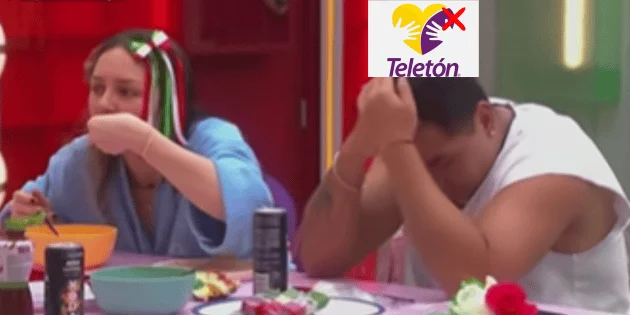
A seemingly innocuous four-word phrase has once again ignited a fervent national conversation among followers of "La Casa de los Famosos México 2026." This time, content creator Ese Pérez found himself at the epicenter of a significant controversy after abruptly interrupting singer Mariana Ochoa as she recounted a personal experience related to Teletón, a revered charitable initiative in Mexico. The incident, captured during a routine daily interaction within the reality television compound, rapidly provoked a widespread wave of condemnation and discussion across social media platforms, highlighting underlying tensions between contestants and exposing the public’s acute sensitivity to matters of social responsibility.
The Genesis of the Incident: A Conversation About Philanthropy
The contentious moment unfolded during a seemingly ordinary afternoon conversation within the confines of "La Casa de los Famosos México 2026." Mariana Ochoa, a celebrated member of the iconic pop group OV7 and a known public figure, was engaging other housemates in a discussion about her experiences as an ambassador for Teletón. With earnestness, Ochoa began to explain the mechanics of a particular fundraising method employed by the charity: the traditional "cochinitos" (piggy banks) used to collect small monetary donations from the public. She elaborated on the collective power of these seemingly modest contributions, illustrating how individual "cochinitos," filled with coins and loose change, could accumulate substantial sums, often reaching approximately a thousand pesos each. Ochoa’s intention appeared to be purely informative, sharing insights from her direct involvement with a cause deeply embedded in the Mexican social fabric.
As Ochoa continued to detail how the number and methodology of these collection efforts had evolved over the years, aiming to provide a comprehensive understanding of the Teletón’s operational nuances, Ese Pérez interjected. His response, delivered without apparent preamble, was stark and dismissive: "No me interesa, Mariana." This curt dismissal immediately fractured the flow of the conversation, creating an undeniable atmosphere of awkwardness within the group and, crucially, reverberating instantaneously with the millions of viewers observing the live feed and subsequent broadcasts. The brevity and directness of Pérez’s statement transformed a mundane house interaction into a flashpoint of public discourse, setting the stage for a prolonged debate regarding decorum, empathy, and the boundaries of reality television personalities.
Background Context: The Cultural Resonance of Teletón in Mexico
To fully grasp the magnitude of the public reaction, it is essential to contextualize the role of Teletón in Mexico. Established in 1997, Teletón is an annual, nationally televised fundraising event dedicated to supporting children and adolescents with disabilities, cancer, and autism. Over its nearly three-decade history, Teletón has grown into one of the most prominent and recognizable philanthropic initiatives in the country. It operates a network of Centros de Rehabilitación e Inclusión Infantil Teletón (CRITs), which provide comprehensive rehabilitation services, therapeutic care, and educational support to hundreds of thousands of children across Mexico.
The event transcends a mere charity drive; it has become a powerful symbol of national unity, solidarity, and hope. Millions of Mexicans, from schoolchildren to corporate giants, participate in or contribute to Teletón each year. Its campaigns are ubiquitous, and its mission is widely understood and supported across diverse socioeconomic strata. Public figures like Mariana Ochoa, who lend their image and time as ambassadors, play a vital role in galvanizing support, and their association with the cause is generally viewed with respect and admiration. Consequently, any perceived slight or indifference towards Teletón is often met with strong public disapproval, as it touches upon deeply held values of compassion and collective responsibility. Ese Pérez’s interruption, particularly given the topic’s sensitive and universally valued nature, was thus perceived by many not merely as a personal slight to Ochoa but as an affront to a shared national cause.
A Chronology of Disrespect and Discomfort
The sequence of events underscores the escalating tension.
- Casual Conversation: The housemates were engaged in a relaxed, informal discussion.
- Mariana’s Sharing: Mariana Ochoa, drawing from her extensive experience as a Teletón ambassador, began explaining the practical aspects of fundraising via "cochinitos," detailing their capacity to collect significant amounts (approximately 1,000 pesos per piggy bank). Her tone was informative and anecdotal, reflecting a desire to share valuable insights about a cause she champions.
- The Abrupt Interruption: As Ochoa continued to elaborate on the evolution of Teletón’s collection methods, Ese Pérez cut her off with the unequivocal statement, "No me interesa, Mariana." The delivery was perceived as sharp and dismissive, lacking any softening preamble or explanatory context.
- Immediate House Dynamics: The comment created a noticeable ripple effect within the group. While Ochoa, demonstrating composure, continued to share parts of her experience, the initial spontaneity of the conversation was clearly disrupted. Other housemates present may have registered the tension, though their reactions were not immediately amplified in the initial public broadcast.
- Viral Dissemination: Almost instantly, clips of the exchange began to circulate rapidly across social media platforms, predominantly X (formerly Twitter), Instagram, and TikTok. The brevity and bluntness of Pérez’s remark made it highly quotable and shareable, fueling its viral spread.
- Public Outcry: Within hours, the incident became a top trending topic. The overwhelming majority of comments expressed strong disapproval of Ese Pérez’s behavior, labeling it as rude, insensitive, and disrespectful.
The Social Media Backlash: A Torrent of Criticism
The digital sphere quickly erupted into a torrent of criticism directed at Ese Pérez. Viewers and commentators across Mexico condemned his interruption, with the sentiment largely coalescing around themes of disrespect and lack of empathy. The phrase "No me interesa, Mariana" swiftly became a symbol of perceived callousness.
Social media users employed a range of descriptors to characterize Pérez’s attitude: "grosera" (rude), "poco empática" (lacking empathy), and "una falta de respeto" (a lack of respect) were among the most frequently used terms. Many pointed out the egregious nature of dismissing a conversation about a charitable initiative, particularly one as significant and widely respected as Teletón. The contrast between Mariana Ochoa’s earnestness and Ese Pérez’s dismissiveness was sharply drawn, amplifying public sympathy for Ochoa.
One widely shared tweet encapsulated the prevailing sentiment: "Ese Perez: ‘Que le digo a mi no me importa ni me interesa saber cuánto deja en los cochinitos la gente, porque ya ves que luego es bien chismosa y cuenta cosas que no pueden contarse’ JAJA WEY MARIANA ESTABA HABLANDO DEL TELETÓN NO ESTABA DANDO LA RECETA DE LA COCA COLA…" This comment, from user @DavidHernare, highlighted the perceived absurdity and inappropriateness of Pérez’s reaction, emphasizing that Ochoa was discussing a benevolent cause, not revealing confidential information. The sarcasm in the tweet underscored the public’s incredulity at Pérez’s perceived indifference. The sheer volume of negative reactions underscored a broader expectation from the public for participants in a high-profile reality show to demonstrate basic civility and respect, especially when sensitive topics are being discussed.
Ese Pérez: A History of Provocation and Public Scrutiny
This incident is not an isolated occurrence for Ese Pérez. Throughout his tenure in "La Casa de los Famosos México 2026," he has cultivated a public persona characterized by directness, outspokenness, and a penchant for generating controversy. His personality has often led to confrontations and disagreements with other housemates, with several of his comments and actions becoming viral trends and sparking heated debates on social media. While some viewers interpret his behavior as a form of "honest" or "authentic" expression, many others view it as aggressive, confrontational, or deliberately provocative.
His role as a content creator prior to entering the house might also inform his approach to the competition. In the digital realm, controversy often translates into engagement and visibility. However, within the highly scrutinized environment of "La Casa de los Famosos," where every interaction is magnified and subject to national judgment, such tactics carry significant risks to public image and standing. This latest incident, particularly because it involved a universally positive cause, has arguably inflicted the most significant damage to his public perception thus far, moving beyond mere personality clashes to questions of fundamental values.
Mariana Ochoa: Composure Amidst Controversy
In stark contrast to Ese Pérez’s controversial stance, Mariana Ochoa’s reaction during and after the incident has largely solidified her public image as a dignified and empathetic figure. As a long-standing member of OV7, she commands significant respect within the Mexican entertainment industry, a reputation further enhanced by her consistent involvement in philanthropic endeavors like Teletón. Her calm continuation of the conversation despite the abrupt interruption was widely praised by viewers, who interpreted it as a testament to her professionalism and commitment to the cause. This graceful handling of a disrespectful moment likely garnered her even greater sympathy and admiration from the public, reinforcing her positive standing.
Broader Implications for Reality Television and Public Discourse
The incident involving Ese Pérez and Mariana Ochoa transcends a mere clash of personalities within a reality show; it offers a salient case study into the dynamics of contemporary reality television and its intersection with public values.
- Amplification of Behavior: "La Casa de los Famosos" functions as a microcosm where everyday interactions are amplified to national scale. Minor disagreements can escalate into major controversies, and perceived missteps can have significant repercussions on a contestant’s public image and their trajectory within the competition.
- Ethical Boundaries: The incident raises questions about the ethical responsibilities of contestants, particularly when discussing sensitive or universally valued topics. While reality TV thrives on drama, there is an implicit expectation from the audience that certain subjects, like charity and social welfare, should be treated with a degree of reverence.
- The Power of the Audience: The overwhelming and rapid social media response demonstrates the immense power of the viewing public to shape narratives and influence perceptions. Fan sentiment, driven by shared values and moral judgments, can significantly impact a contestant’s popularity, nominations, and ultimate success in the game.
- Producer’s Dilemma: For the show’s producers, such incidents present a complex challenge. While controversy often boosts ratings, sustained negative public sentiment towards a contestant can also detract from the show’s overall appeal. The delicate balance lies in allowing authentic interactions while managing potential fallout.
- Character Development and Narrative Arc: The event further entrenches the established narrative of ongoing tension between Ese Pérez and Mariana Ochoa, a dynamic that has been a consistent talking point throughout the season. This specific clash, however, adds a layer of moral judgment to their rivalry, potentially shifting the audience’s perception of both individuals.
Analysis and Future Outlook
The "No me interesa, Mariana" incident serves as a stark reminder of the unspoken rules that govern public perception, even within the seemingly unbound world of reality television. While participants are encouraged to be "authentic," this authenticity is always filtered through societal expectations of civility, empathy, and respect, particularly when discussions touch upon charitable causes like Teletón, which embody national solidarity.
The sustained debate on social media reflects a broader societal conversation about acceptable conduct, public decorum, and the responsibility that comes with a public platform. For Ese Pérez, this incident is likely to have significant ramifications. It could further solidify his reputation as a confrontational figure, potentially alienating a substantial portion of the audience and impacting his chances in future nominations. Conversely, Mariana Ochoa’s composed response has likely reinforced her image as a gracious and principled individual, potentially bolstering her support base.
As "La Casa de los Famosos México 2026" progresses, the fallout from this brief, yet profoundly impactful, exchange will undoubtedly continue to resonate. It underscores how a few spoken words, when delivered in a context ripe with cultural significance and amplified by the omnipresence of social media, can trigger a national conversation, redefining reputations and shaping the very trajectory of a high-stakes reality competition. The ongoing division of opinions, with some defending Pérez’s "honesty" and others condemning his "disrespect," ensures that this moment will remain a pivotal point in the season’s narrative, a testament to the enduring power of human interaction and public judgment in the age of televised reality.

0 Comments