
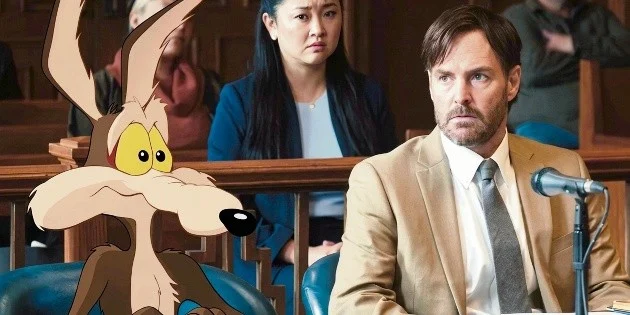
For decades, Wile E. Coyote has pursued the Road Runner with a tenacity that defies all logic, a Sisyphean struggle played out across the arid landscapes of the American Southwest. His arsenal, invariably sourced from the mysterious ACME Corporation, has included everything from rockets and catapults to dynamite and elaborate traps. The outcome has been remarkably consistent: explosive malfunctions, crushing defeats, or precipitous falls, all humorously at his own expense. The enduring gag has always been the Coyote’s unwavering, yet perpetually futile, attempts, eliciting laughter from generations of audiences. But what if, after countless failures, Wile E. Coyote decided to pivot, not to another ill-fated chase, but to seek justice against the very entity that supplied his defective tools?
This compelling premise forms the core of "Coyote vs. ACME," a film that reimagines the eternal Looney Tunes underdog as a determined litigant, ready to challenge a colossal corporation in court. Yet, in a twist of meta-narrative that blurs the lines between fiction and reality, the film’s own journey mirrored its plot, embarking on a protracted battle against its parent studio, Warner Bros. For nearly three years, "Coyote vs. ACME" appeared destined to share the Coyote’s familiar fate: a spectacular, yet unseen, failure.
The Creative Genesis: A Coyote Beyond the Cartoon
The vision for "Coyote vs. ACME" was helmed by director Dave Green, known for his work on "Teenage Mutant Ninja Turtles: Out of the Shadows." Green found inspiration in an intriguing confluence of cinematic traditions: the anarchic spirit of classic Looney Tunes shorts and the groundbreaking live-action/animation hybrid pioneered by "Who Framed Roger Rabbit?" His ambition was to blend animated characters seamlessly with live actors, crafting a narrative that explored a deceptively simple yet profound question: What happens to Wile E. Coyote when the cartoon short ends?
The film’s conceptual foundation was laid by a satirical column penned by Ian Frazier, originally published in "Shouts & Murmurs" in The New Yorker. Frazier’s piece humorously depicted Wile E. Coyote filing a lawsuit against ACME, meticulously detailing the endless list of product failures and personal injuries he sustained. This served as a springboard for a story where the Coyote finally grasps that his misfortunes extend beyond the elusive Road Runner; they are fundamentally rooted in the shoddy craftsmanship of ACME’s wares.
To represent the beleaguered Coyote, the film cast Will Forte as his earnest human attorney, an individual thrust into the absurd yet earnest world of cartoon litigation. Lana Condor joined the cast as Paige Avery, the lawyer’s bright and resourceful niece, who becomes intricately involved in this unprecedented legal battle. The formula promised a vibrant mix of humor, high-stakes action, cutting-edge animation, and a classic David-versus-Goliath narrative. Beneath the surface of explosions and chase sequences, the film tapped into a universally relatable modern dilemma: the struggle of an individual against an overwhelming corporate entity that appears to hold all the advantages. For Condor, this thematic resonance was a crucial element, allowing the film to connect with audiences beyond mere nostalgia for Looney Tunes. The Coyote, after all, has always been the quintessential underdog, a symbol of perseverance against insurmountable odds.
A Shocking Reversal: The "Cinematic Funeral"
The production of "Coyote vs. ACME" proceeded through its various stages, culminating in a completed film. Director Dave Green had finalized his cut, the cast had delivered their performances, and, critically, the studio had conducted test screenings. According to those involved in the project, the audience reactions were overwhelmingly positive, suggesting a strong critical and commercial reception. Will Forte, eager to see the culmination of their efforts, anticipated the film’s release. However, just days before a planned screening, a seismic announcement shattered these expectations: Warner Bros. had decided to cancel "Coyote vs. ACME."
This was not a mere postponement, nor a shift to a direct-to-streaming platform, nor a demand for reshoots. The studio had made the unprecedented decision to completely archive the film, effectively erasing it from existence for financial purposes. Forte, like many others involved, initially assumed there must be an obvious explanation, perhaps a critical flaw in the final product. "If they’re canceling the movie, it has to be bad," he recalled thinking. The actor and his wife gathered with members of the cast and crew, an assembly that eerily resembled a cinematic funeral, bidding farewell to a film that seemed destined never to see the light of day.
But then, a pivotal moment occurred: Forte saw the film. His initial assumption was spectacularly disproven. The movie, he discovered, was not bad at all. On the contrary, it was precisely the kind of film he had hoped it would be—a genuinely funny, heartfelt, and entertaining Looney Tunes adventure. His sadness morphed into confusion, then into frustration, and finally into outright anger. The question echoed through the minds of everyone involved: If the film was good, why had Warner Bros. buried it?
The Corporate Mandate: A Strategy Shift at Warner Bros. Discovery
The true explanation behind the cancellation had little to do with negative audience reactions and everything to do with a radical shift in corporate strategy at Warner Bros. David Zaslav, the newly appointed CEO of the recently merged Warner Bros. Discovery (WBD), had embarked on an aggressive restructuring plan. This strategy aimed to pivot the studio away from the previous administration’s heavy investment in direct-to-HBO Max projects, a legacy of the AT&T ownership era, and instead prioritize debt reduction and high-profile theatrical releases.
In this new, fiscally conservative landscape, "Coyote vs. ACME" became a financial liability. The film had incurred a production cost of approximately $70 million. Releasing it theatrically would necessitate an additional substantial expenditure, estimated between $30 million and $40 million, for promotion and distribution. For the newly formed WBD, this additional investment, particularly for a project greenlit under a different strategic vision, appeared unjustifiable.
The solution, though controversial, was a financial maneuver known as a "tax write-off." By shelving the completed film and declaring it a loss, the studio could claim a significant tax deduction, recouping a portion of its production costs without incurring the additional marketing and distribution expenses. This allowed WBD to immediately realize a tax benefit, contributing to their debt reduction goals, while effectively erasing the film from their asset ledger. "Coyote vs. ACME" was not an isolated case; it joined other completed projects, notably the superhero film "Batgirl" and the animated feature "Scoob! Holiday Haunt," in being relegated to the studio’s vaults as part of this aggressive cost-cutting measure. This move sent a chilling message throughout Hollywood about the precarious nature of creative work under corporate ownership.
An Unforeseen Mirror: Art Imitating Life
The profound irony of the situation was not lost on Dave Green, the film’s director. Within the narrative of "Coyote vs. ACME," the protagonist gradually realizes that his misfortunes are not solely his fault. For years, he has relied on products from a company that, in theory, should aid him, yet consistently leads to his spectacular accidents. His decision to sue ACME becomes a quest for accountability. Off-screen, the film itself found itself grappling with an astonishingly similar predicament: a creative work, painstakingly crafted by artists, suddenly trapped and nearly destroyed by the cold, calculated decisions of a sprawling corporation.
Green openly acknowledged that after the cancellation, it became impossible to view the film through the same lens. The story acquired a potent, almost prophetic, meta-dimension. Wile E. Coyote’s struggle against a seemingly omnipotent corporation mirrored the film’s own fight for survival against a studio perceived as too powerful to challenge. The parallels were stark, illuminating the fragile relationship between artistic endeavor and corporate bottom lines.
A Wave of Indignation and the Fight for Release
The news of "Coyote vs. ACME"’s cancellation ignited a firestorm of indignation across Hollywood and among the broader public. Prominent directors and producers, including the acclaimed duo Christopher Miller and Phil Lord ("Spider-Man: Into the Spider-Verse," "The LEGO Movie"), as well as Daniel Kwan and Daniel Scheinert ("Everything Everywhere All at Once"), vocally condemned the unprecedented act of shelving a completed film. Their collective outcry underscored a deep concern for creative integrity, the value of artistic labor, and the dangerous precedent such actions could set for the industry.
The discussion quickly transcended the boundaries of the entertainment industry, reaching the political arena. Democratic Congressman Joaquín Castro of Texas publicly called for a federal investigation into Warner Bros.’s decision, citing potential anti-competitive practices and a disregard for public interest in finished works. This intervention elevated the debate, suggesting that such corporate actions might have broader implications beyond mere business strategy.
Simultaneously, a groundswell of public support emerged on social media. The hashtag #ReleaseCoyoteVsACME gained significant traction, becoming a rallying cry for fans and industry professionals alike, demanding that the film finally be shown to the public. Eric Bauza, the versatile voice actor behind iconic Looney Tunes characters such as Daffy Duck and Bugs Bunny, emerged as a passionate advocate for the campaign. His most notable protest occurred at the 2024 Annie Awards, where he used the platform to plead for the film’s release, delivering his impassioned message in the unmistakable voice of Daffy Duck.
The archived film rapidly transformed into a symbol of a much larger, existential question facing the entertainment industry: What becomes of a completed artistic work when corporate financial decisions are prioritized over creative merit or audience demand? It highlighted the tension between art as cultural product and art as corporate asset.
The Unlikely Return: A Cinematic Resurrection
Against all odds and prevailing industry cynicism, the narrative of "Coyote vs. ACME" took an unexpected turn towards redemption. Following sustained public pressure and, likely, a reassessment of its financial position, Warner Bros. made the decision to put the film up for sale. The eventual buyer was Ketchup Entertainment, an independent distributor known for its work with other animated features, including another Looney Tunes production, "The Day the Earth Blew Up."
Ketchup Entertainment acquired the film for approximately $50 million. This transaction transformed a project that was on the brink of becoming a mere tax deduction into a cinematic release with a tangible future. The deal represented a significant recovery for WBD, recouping a substantial portion of the production cost while avoiding the additional marketing spend, and, crucially, mitigating the intense public and industry backlash. The film’s theatrical premiere in Mexico is currently scheduled for August 27, marking a triumphant moment for a project once thought lost.
Nearly three years after that solemn "cinematic funeral," Wile E. Coyote will finally have his day in court, not just on screen, but also in the public consciousness. Director Dave Green, reflecting on the long and arduous journey, confessed that he still struggles to fully believe it. After years of agonizing uncertainty, the director admits to still feeling as if he is dreaming.
From Pandemic-Era Production to a Transformed Cinematic Landscape
It is crucial to remember that "Coyote vs. ACME" originally received its green light during the tumultuous period of the global pandemic. At that time, Hollywood was desperately attempting to adapt to a rapidly transforming industry, with movie theaters struggling for survival and streaming platforms experiencing an unprecedented boom. The initial strategy to potentially launch such a film directly to streaming was very much a product of that era.
However, having successfully navigated the perils of cancellation and corporate limbo, the film now arrives in a vastly different theatrical landscape. Cinematic exhibition has demonstrated remarkable resilience, with recent blockbusters and critically acclaimed films proving that a hungry audience still exists for compelling stories experienced on the big screen. In this revitalized context, the return of "Coyote vs. ACME" takes on an even deeper significance.
Its release is not merely the debut of another Looney Tunes comedy. It is the arrival of a film that, without ever intending to, became an integral part of a larger, ongoing dialogue about the future of cinema, the ethical responsibilities of major studios, and the intrinsic value of a completed artistic work. The saga of "Coyote vs. ACME" has provided a powerful real-world example of the struggle for creative integrity against the often-impersonal forces of corporate finance.
Dave Green encapsulates this journey with an optimistic perspective: despite the incessant shifts and challenges within the industry, artists continue to possess an unyielding impulse to create. And as long as that creative spark endures, he asserts, the cinematic business will persist.
Indeed, for decades, Wile E. Coyote has tumbled down precipices, endured explosions, been flattened, and risen again, time after time. Now, he embarks on a new mission: not to capture the Road Runner, nor to acquire another faulty ACME rocket. This time, Wile E. Coyote seeks justice. And after almost three years, his compelling case will finally be heard on the silver screen.

0 Comments