
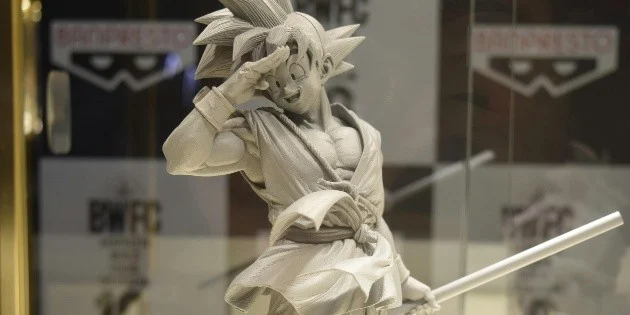
Toei Animation officially released the inaugural trailer for the highly anticipated remake of the Dragon Ball Super: Beerus anime series on September 2, confirming its premiere later this year. This ambitious new rendition of Akira Toriyama’s iconic manga promises a significant overhaul of visual elements and a re-envisioned narrative, aiming to deliver an entirely fresh experience distinct from the original 131-episode run that began in 2015. The announcement has sent ripples of excitement across the global Dragon Ball fandom, eager to witness a revitalized take on the initial arcs of the Super saga.
The Enduring Legacy of Dragon Ball and the Genesis of Super
The Dragon Ball franchise, a cornerstone of Japanese pop culture, has captivated generations worldwide since Akira Toriyama first serialized his manga in Weekly Shōnen Jump in 1984. From Goku’s early adventures to the epic battles that defined Dragon Ball Z, the series has consistently pushed boundaries in storytelling, character development, and action sequences. Dragon Ball Super emerged in 2015 as the first new television anime series in 18 years, picking up after the defeat of Majin Buu and expanding the universe to include multiple universes, Gods of Destruction, Angels, and powerful new transformations.
However, the initial reception of Dragon Ball Super was mixed, particularly regarding its early animation quality and its adaptation of the first two story arcs, "Battle of Gods" and "Resurrection ‘F’," which had previously been told in critically acclaimed theatrical films. Many fans felt the anime versions of these arcs suffered from pacing issues and visual inconsistencies compared to their cinematic predecessors and Toriyama’s manga vision. This historical context provides crucial insight into the rationale behind Toei Animation’s decision to embark on a remake of these foundational arcs, specifically focusing on the Beerus saga. The objective is clearly to align the televised narrative more closely with the artistic integrity and quality expected from the modern Dragon Ball brand, leveraging advancements in animation technology and a deeper understanding of fan expectations.
A Chronology of Anticipation: From Announcement to Premiere
The journey to this remake began with a tantalizing tease last year. While the initial report mistakenly cited "Dragon Ball Games Battle Hour 2026," it is understood that the project was officially announced during the Dragon Ball Games Battle Hour 2024 event, a global online and offline celebration dedicated to the franchise, held in Los Angeles. This announcement sparked immediate speculation and excitement, as fans pondered the scope and nature of this new undertaking.
Fast forward to September 2, 2024, when Toei Animation officially dropped the first trailer, titled "Super Surge," on its YouTube channel. This nearly two-minute preview offered a compelling glimpse into the revitalized animation style, showcasing redrawn cuts, reconstructed narrative sequences, and a palpable sense of renewed energy. The trailer confirmed that the production would encompass the first three major narrative arcs of the Dragon Ball Super saga: the Battle of Gods, Resurrection ‘F’, and the God of Destruction Champa arcs.
The countdown to the premiere is now officially underway. The series is slated to debut on Sunday, October 11, 2024, broadcasting via Fuji TV in Japan. This prime-time slot underscores the significance Toei Animation places on this remake within its domestic market. While Japanese audiences have a firm date, the eagerly awaited arrival in international territories, particularly Mexico and the broader Latin American region, remains unconfirmed, fueling both anticipation and a degree of impatience among the franchise’s vast non-Japanese fanbase.
Visual and Narrative Enhancements: A Promise of Fidelity and Immersion
The core promise of this remake revolves around "improved visual elements" and a "completely new experience." This is a direct response to the aforementioned criticisms of the original Dragon Ball Super anime’s early episodes. Modern animation techniques, potentially including a more consistent art style, fluid character movements, and dynamic battle choreography, are expected to elevate the viewing experience significantly. The "Super Surge" trailer itself provided ample evidence of this commitment, displaying crisp line work, vibrant color palettes, and enhanced special effects that promise more impactful energy blasts and martial arts exchanges.
Beyond aesthetics, the remake aims for a "reconstructed narrative" and a representation "more faithful to the manga original." The original Dragon Ball Super anime initially ran concurrently with the manga, which was illustrated by Toyotarou under Toriyama’s supervision. This often led to discrepancies in pacing, plot details, and character development between the two mediums. The remake offers an opportunity to rectify these divergences, potentially incorporating elements from the manga that were omitted or altered in the 2015 anime. This could mean more nuanced character interactions, expanded lore details, and a more cohesive narrative flow that aligns precisely with Toriyama’s vision as executed in the manga.
Furthermore, the inclusion of "material from the first 46 episodes of the anime original" suggests a careful curation process. Rather than a mere re-animation, the production team appears to be re-evaluating which elements to retain, refine, or introduce, ensuring that the remake serves as the definitive adaptation of these foundational arcs. This meticulous approach is designed to cater to both long-time fans seeking a superior version and new viewers who will be introduced to the Dragon Ball Super narrative through a polished and cohesive entry point.
Unpacking the Revitalized Arcs: Gods, Emperors, and Universal Tournaments
The remake will meticulously cover the initial and pivotal sagas that introduced audiences to the expanded Dragon Ball universe.
The Battle of Gods Arc: This arc introduces Lord Beerus, the God of Destruction from Universe 7, a powerful and capricious deity who awakens from a long slumber after hearing a prophecy about his defeat by a "Saiyan God." His arrival on Earth, initially for a dessert tasting, quickly escalates into a universe-threatening confrontation. This arc is monumental for several reasons:
- Introduction of Divine Beings: Beerus and his attendant Whis fundamentally shift the power hierarchy of the Dragon Ball universe, establishing a new tier of cosmic power beyond anything previously seen.
- Super Saiyan God Transformation: Goku’s first transformation into a Super Saiyan God, achieved through a ritual involving five other Saiyans, marks a critical evolution in Saiyan power. This form, characterized by its slender build and fiery red aura, offers a stark contrast to previous Super Saiyan forms and introduces the concept of ki control over raw power.
- Goku’s New Path: The battle with Beerus, though technically a loss for Goku, opens his eyes to new realms of power and martial arts training under Whis, setting him on a path to surpass even the Gods.
- Character Depth: Beerus himself is a complex character, not purely evil but rather fulfilling a cosmic role, adding philosophical layers to the narrative.
The Resurrection ‘F’ Arc: This saga brings back one of Dragon Ball‘s most iconic villains, Frieza, in a spectacular return. After being resurrected by his loyal subordinates and undergoing intense training, Frieza achieves a new "Golden Frieza" form, seeking revenge against Goku and Vegeta. Key aspects include:
- Frieza’s Return: A fan-favorite villain, Frieza’s resurrection signifies the enduring threat he poses and his unwavering grudge against the Saiyans.
- Golden Frieza: This new form showcases Frieza’s potential for growth, pushing Goku and Vegeta to their limits and forcing them to unveil their Super Saiyan Blue forms, a transformation achieved through divine ki training.
- Team Earth’s Defense: The arc features a memorable ensemble battle as Earth’s strongest fighters unite to fend off Frieza’s massive army, highlighting the importance of their combined efforts.
- Lessons in Training: The arc further emphasizes the meticulous training under Whis, revealing its crucial role in mastering divine ki and reaching new power levels.
The God of Destruction Champa Arc: Expanding beyond Universe 7, this arc introduces Champa, Beerus’s obese and equally competitive twin brother, who is the God of Destruction of Universe 6. Champa challenges Beerus to a tournament between their respective universes, with the prize being Earth and its delicious food. This arc is vital for:
- Multiversal Expansion: It officially opens up the Dragon Ball narrative to the existence of twelve universes, each with its own God of Destruction and Angel attendant, vastly expanding the scope of the franchise.
- New Characters: Audiences are introduced to memorable characters from Universe 6, including Hit (a legendary assassin), Cabba (a Saiyan from Universe 6), Frost (Universe 6’s Frieza counterpart), and the powerful warrior Botamo.
- Universal Tournament: The tournament format provides a platform for diverse fighting styles, unexpected alliances, and the exploration of different cultures and species across the universes.
- Saiyan Evolution: Goku and Vegeta push their Super Saiyan Blue forms further, demonstrating new techniques and strategies against powerful opponents.
By dedicating significant attention to these arcs, the remake is poised to provide a cohesive and high-quality foundation for the subsequent events of Dragon Ball Super, ensuring that the initial narrative build-up is as compelling and visually stunning as possible.
Sonic Identity: The New Themes and Their Significance
The auditory experience is an integral part of any anime, and Dragon Ball is no exception. The announcement of the opening and ending themes for the remake adds another layer of excitement. The opening theme, "ONOGAMI," will be performed by Megatera Zero, while the ending theme, "Kan Peki No Peki," will be handled by VK Blanka.
Music plays a crucial role in setting the tone, building anticipation, and evoking emotions in Dragon Ball. Iconic opening themes like "Cha-La Head-Cha-La" and "We Gotta Power" are ingrained in the collective memory of fans worldwide. The selection of new artists and tracks for the remake signals a fresh musical identity while aiming to maintain the high-energy and emotional resonance characteristic of the franchise. Megatera Zero and VK Blanka, known for their distinct musical styles, are expected to infuse the series with a contemporary sound that resonates with both long-time devotees and a new generation of viewers. The themes will not only underscore the dynamic action but also capture the emotional depth and evolving narrative of Goku and his companions.
The Global Dubbing Dilemma: Latin America’s Special Connection
While Japanese audiences gear up for the October 11 premiere, the international release strategy remains a key point of discussion. For regions like Mexico and Latin America, the absence of a confirmed release date is a significant concern. Dragon Ball holds a unique cultural status in these territories, often transcending mere entertainment to become a generational touchstone. The series has historically achieved monumental ratings and fostered an incredibly passionate fanbase.
Central to this connection is the iconic Spanish voice cast. The prospect of a remake naturally raises questions about the participation of original voice actors such as Mario Castañeda (Goku), René García (Vegeta), Laura Torres (Gohan/Goten), and many others who have become synonymous with their characters for Spanish-speaking audiences. Their voices are not just translations; they are an integral part of the Dragon Ball experience for millions. The uncertainty surrounding their involvement in the remake’s dubbing has generated considerable discussion and expectation among fans. Securing the original cast would undoubtedly be a massive win, preserving the authenticity and nostalgic value that fans deeply cherish. However, factors such as scheduling, contractual agreements, and production logistics can often make such reunions challenging.
For international distribution, Toei Animation will likely partner with major streaming platforms or licensing companies. Given the global reach of Dragon Ball Super, platforms like Crunchyroll, Funimation (now integrated into Crunchyroll), or even Netflix could be potential candidates for simulcasting or delayed streaming, complete with various language dubs and subtitles. The strategy for these regions will dictate how quickly and accessibly the remake reaches its massive audience outside of Japan.
Broader Impact and Implications for the Dragon Ball Franchise
This remake of Dragon Ball Super: Beerus is more than just a re-telling; it represents a strategic move by Toei Animation with significant implications for the entire Dragon Ball franchise.
Fan Re-engagement and New Audience Acquisition: The improved visuals and refined narrative are designed to re-engage fans who might have been disappointed by the original anime’s early production quality. It also serves as an ideal entry point for new viewers, providing a polished and coherent introduction to Dragon Ball Super without the need to watch the earlier movies or original anime episodes. This dual approach aims to expand and solidify the franchise’s global fanbase.
Franchise Consistency and Quality Control: By aligning the anime more closely with Toyotarou’s manga and Akira Toriyama’s original vision, Toei is signaling a commitment to a higher standard of narrative and artistic consistency across all Dragon Ball media. This could set a precedent for future anime adaptations or new Dragon Ball Super content, ensuring a more cohesive universe. The success of this remake might also influence decisions regarding remakes of other Dragon Ball arcs or even entirely new series.
Economic Impact and Merchandise: A successful remake will inevitably drive renewed interest in Dragon Ball merchandise, including action figures, apparel, video games, and manga sales. Increased viewership on streaming platforms will also contribute to subscription numbers and ad revenue. This fresh content injects new life into the franchise’s vast commercial ecosystem.
Industry Trendsetter: The anime industry has seen a trend of remakes and reboots (e.g., Fullmetal Alchemist: Brotherhood, Sailor Moon Crystal, Fruits Basket) that aim to provide more faithful adaptations or higher production values. Dragon Ball Super: Beerus could become a high-profile example of this trend, demonstrating the commercial and artistic viability of revisiting popular properties with a renewed vision.
Potential for Future Anime: Perhaps the most exciting implication for fans is what this remake might signify for the future of Dragon Ball Super anime. With the manga having progressed far beyond where the original anime concluded, a high-quality remake of the initial arcs could be a precursor to a brand-new Dragon Ball Super anime series, finally adapting the Galactic Patrol Prisoner arc, Granolah the Survivor arc, and the Super Hero arc to the screen. This remake could be seen as a litmus test, gauging fan reception and setting the stage for the next chapter of Goku and Vegeta’s adventures.
The release of the "Super Surge" trailer and the confirmation of the 2024 premiere have unequivocally ignited the global Dragon Ball community. With promises of enhanced visuals, a more faithful narrative, and the reintroduction of iconic characters and pivotal battles, the Dragon Ball Super: Beerus remake stands as one of the most anticipated anime events of the year. As the world awaits its debut, the stage is set for a revitalized saga that aims to honor its legendary past while forging an exciting new future for the beloved franchise.

0 Comments