
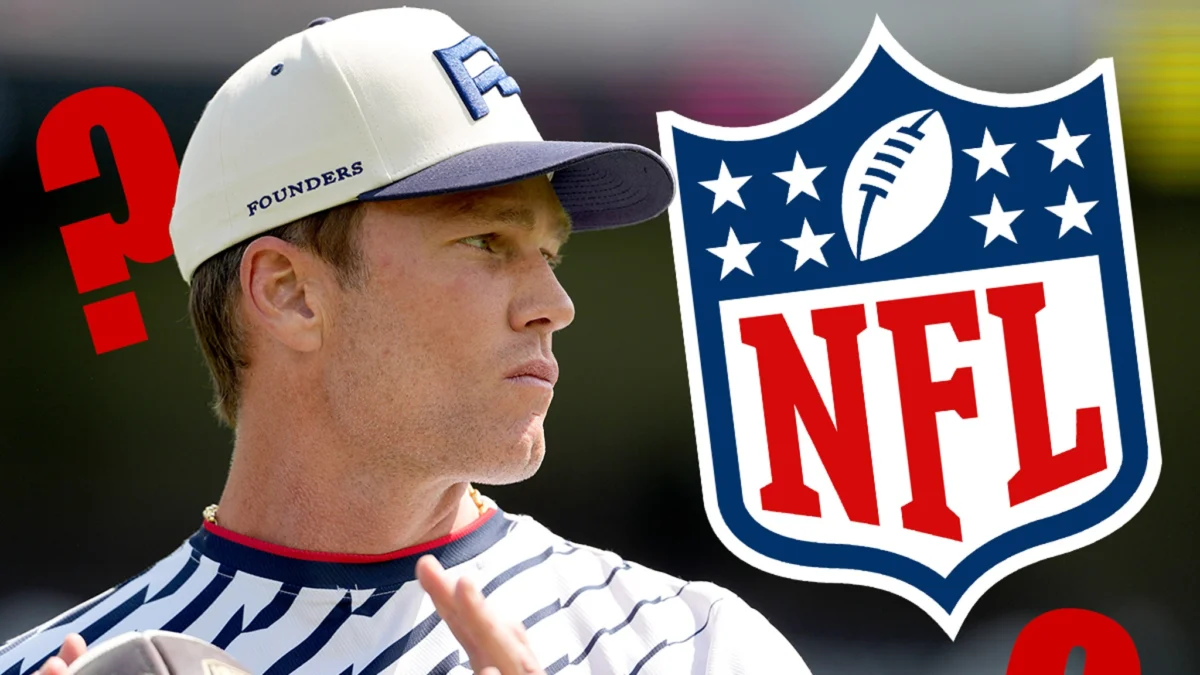
Published March 26, 2026, the National Football League has firmly shut down any possibility of legendary quarterback Tom Brady returning to the gridiron for the Las Vegas Raiders, a team in which he holds a minority ownership stake. The revelation came directly from Brady himself during an interview with CNBC, where he admitted to having "inquired" about the feasibility of stepping in as an emergency quarterback for the Silver and Black. However, the league’s response was unequivocal: such a dual role is strictly prohibited under current NFL regulations, primarily due to an explicit policy enacted in 2023 that bars team owners or employees from holding equity in a club while actively playing.
The Unthinkable Inquiry: Brady as Player-Owner
The notion of Tom Brady, arguably the greatest quarterback in NFL history, making yet another return to professional football, especially for a team he partially owns, sent ripples through the sports world. Brady, who officially retired "for good" in February 2023 after a storied 23-season career, has since embarked on a multifaceted post-playing journey, including a high-profile broadcasting deal with FOX and his venture into sports team ownership. His inquiry into playing for the Raiders, while perhaps stemming from a hypothetical "emergency" scenario, highlighted the unique challenges and regulatory complexities that arise when a figure of his stature seeks to blur the lines between player and proprietor.
During his CNBC appearance, which occurred shortly after his participation in the Fanatics Flag Football Classic, Brady was directly asked about the possibility of donning pads again if the Raiders found themselves in dire need of quarterbacking talent. His response was candid: "I actually have inquired, and they don’t like that idea very much. We explored a lot of different things, and I’m very happily retired. Let me just say that, too." This statement, while confirming the exploration of the idea, also reinforced his contentment with retirement, suggesting the inquiry was more a logistical exploration than a serious contemplation of an immediate comeback. Nevertheless, the mere thought of TB12 returning, even as an emergency option, reignited the perennial discussion surrounding his unparalleled competitive drive and his seemingly boundless connection to the game.
The NFL’s Resounding ‘No’: Rulebook Realities
The National Football League’s swift and definitive rejection of Brady’s hypothetical return as a player-owner is rooted in long-standing principles designed to uphold the integrity of the game, competitive balance, and prevent conflicts of interest. The league’s stance, communicated to CNBC, elucidated that for Brady to play, he would first be required to divest entirely from his minority ownership stake in the Las Vegas Raiders. This requirement is not arbitrary but is specifically mandated by a rule instituted in 2023, which explicitly prohibits active players or team employees from holding equity in any NFL club.
The 2023 Policy: A Clear Prohibition
The 2023 rule represents a formalization and strengthening of existing ethical guidelines. While the spirit of preventing conflicts of interest has always been present, the specific codification of this prohibition was a proactive measure by the league to adapt to the evolving landscape of sports business, where former athletes increasingly transition into ownership or executive roles. The policy ensures that no individual can simultaneously hold a competitive position on the field and an ownership stake off it, thereby eliminating potential scenarios where personal financial interests could influence on-field decisions, roster construction, or salary negotiations.
The NFL’s rationale is multifaceted. Firstly, an active player with an ownership stake could be perceived as having an unfair advantage in contract negotiations, potentially benefiting from a dual role in salary cap management or player acquisitions. Secondly, it could create an untenable conflict of loyalty – would the player prioritize the team’s financial health as an owner or their individual performance and compensation as a player? Thirdly, and perhaps most critically, it could undermine the perception of fair play and competitive integrity across the league. Other teams and players might view such a arrangement as inherently biased, questioning the impartiality of decisions made by a player who also holds a stake in the club’s financial success.
Beyond Ownership: Salary Cap Hurdles
Beyond the immediate conflict of interest posed by Brady’s ownership, the league also cited "salary cap issues" as another significant impediment to any potential playing comeback. The NFL’s salary cap is a complex financial mechanism designed to ensure competitive balance by limiting the amount of money teams can spend on player salaries. Integrating a player of Brady’s caliber, even on an "emergency" basis, would necessitate a contract that adheres to these strict financial rules.
While the specifics of a potential emergency contract were not detailed, any deal would count against the Raiders’ salary cap. This could create intricate challenges, especially for a team already managing its roster under tight financial constraints. The league would scrutinize any proposed contract to ensure it wasn’t structured in a way that circumvented the cap, perhaps by offering deferred compensation through his ownership stake or other indirect benefits. This adds another layer of regulatory complexity, reinforcing the league’s commitment to maintaining a level playing field for all 32 franchises.
Brady’s Post-Playing Ventures: A Multifaceted Engagement
Tom Brady’s post-retirement activities demonstrate his continued, albeit non-playing, deep involvement with the NFL and the broader sports landscape. His transition from player to entrepreneur, media personality, and team owner has been swift and comprehensive.
From the Booth to the Boardroom
Brady’s most prominent public role since retiring has been his preparation to become FOX Sports’ lead NFL analyst, a position that commands significant influence and visibility. This role places him at the forefront of dissecting games, offering expert commentary, and shaping public perception of the league. His insights, drawn from an unparalleled career, are highly anticipated by fans and industry insiders alike.
Simultaneously, his venture into sports ownership began with his minority stake in the Las Vegas Raiders. This move, which received NFL approval in October 2023 after initial announcements in May 2023, marked a significant pivot for Brady, allowing him to remain intimately connected to the competitive fabric of the league from a strategic and business perspective. His relationship with Raiders owner Mark Davis, which reportedly played a key role in facilitating the ownership deal, highlights Brady’s enduring connections within the NFL power structure. Additionally, Brady has expanded his ownership portfolio beyond the NFL, investing in other sports franchises, including a WNBA team (Las Vegas Aces) and an E1 World Championship (electric boat racing) team. These diverse ventures underscore his ambition to build a substantial business empire post-playing career.
A Chronology of Retirement and Re-Engagement
Understanding Brady’s current situation requires a brief look back at his recent professional timeline:
- February 1, 2022: Brady initially announces his retirement from the NFL after 22 seasons, all but three with the New England Patriots.
- March 13, 2022: Just 40 days later, Brady reverses his decision, announcing his return to the Tampa Bay Buccaneers for the 2022 season.
- February 1, 2023: Brady announces his "definitive" retirement from the NFL, emphasizing that it is "for good" this time.
- May 2023: Reports surface that Brady is in discussions to acquire a minority stake in the Las Vegas Raiders.
- October 2023: The NFL officially approves Brady’s minority ownership stake in the Raiders, making him a part-owner.
- March 26, 2026: Brady reveals during a CNBC interview that he inquired with the NFL about playing for the Raiders as an emergency quarterback, and the league rejected the idea due to conflict of interest rules.
The Path to Raiders Ownership
Brady’s journey to Raiders ownership was not instantaneous. The initial reports in May 2023 sparked considerable discussion, given his long and successful career as a player. The league’s approval process for ownership changes is rigorous, involving extensive background checks, financial disclosures, and a vote by the other NFL owners. The delay between the initial reports and the final approval in October 2023 indicated the thoroughness of this process, ensuring that all league rules and ethical considerations were met. His stake, while minority, is significant enough to tie his business interests directly to the success of the Raiders franchise, further complicating any potential desire to return to playing.
Precedents and Paradoxes: Player Returns in the NFL
While Brady’s specific scenario as a player-owner is unique, the concept of a veteran quarterback returning to the league after a period of absence is not entirely unprecedented. The article itself references Philip Rivers, who made a "shocking return to the league last season at 44-years-old." This would imply that in the 2025 NFL season, Rivers, who originally retired in January 2021, returned to play. Such instances, while rare, highlight the enduring appeal and physical longevity some elite quarterbacks possess.
However, the key distinction lies in the circumstances. Rivers, presumably, did not hold an ownership stake in the team he returned to play for. His comeback would have been a straightforward player transaction, subject only to standard roster rules, salary cap considerations, and the physical demands of the game. Brady’s situation is fundamentally different due to the direct conflict between his competitive role and his financial interest in the team.
Historically, other players have contemplated or executed comebacks. Brett Favre famously retired and un-retired multiple times. Michael Jordan, though in a different sport, also famously returned to play for the Washington Wizards, a team in which he held an ownership stake and a front-office role. However, even Jordan had to divest his ownership shares to play, underscoring the universal principle across professional sports leagues that direct financial interest and active playing roles are generally incompatible. The NFL’s 2023 rule serves as a robust barrier to prevent such a scenario, prioritizing institutional integrity over individual aspirations.
Implications for League Integrity and Future Models
The NFL’s firm stance on Tom Brady’s inquiry carries significant implications for the league’s integrity, competitive balance, and the future evolution of player-owner relationships.
Maintaining Competitive Balance
At its core, the NFL’s decision is about preserving competitive balance. The league thrives on the perception that all 32 teams operate under the same set of rules and constraints. Allowing an owner, even a minority one, to step onto the field as a player could create a precedent that destabilizes this balance. It could lead to questions about player recruitment, strategic decisions, and financial dealings within the franchise. The clear separation between management/ownership and playing personnel is a cornerstone of professional sports, ensuring that decisions are made with the collective interest of the team (and the league) in mind, free from the direct conflicts that could arise from a player also being a part-owner.
The Evolving Landscape of Player-Owner Dynamics
As athletes accumulate significant wealth during their playing careers, the desire to transition into ownership roles is growing. Brady is a prime example of this trend, using his substantial earnings and business acumen to invest in sports franchises. While the NFL encourages former players to remain involved in the league through various capacities – coaching, front office, media – it is equally firm on maintaining clear boundaries when it comes to ownership. The explicit 2023 rule serves as a clear guideline for future player-entrepreneurs, setting expectations about the limitations of combining active playing careers with ownership stakes. It signals that while the league values the input and investment of its former stars, it will not compromise on the foundational principles of fair competition and ethical governance.
Conclusion: A Chapter Closed, A Legacy Enduring
Tom Brady’s inquiry into a hypothetical return as a player-owner for the Las Vegas Raiders, though ultimately rejected, serves as a testament to his unparalleled competitive spirit and his enduring connection to the game of football. It also underscores the robust regulatory framework of the NFL, designed to protect the integrity of the sport and ensure a level playing field for all participants.
While the prospect of seeing Brady in a Raiders uniform, even for an emergency, will remain a tantalizing "what if" for fans, the league’s rules are clear and non-negotiable. Brady is firmly entrenched in his retirement, happily pursuing new ventures as a highly respected minority owner and a prominent media analyst. His legacy as the greatest quarterback of all time is secure, and his post-playing career continues to unfold in exciting new directions, albeit with a definitive separation between the boardroom and the battlefield. The NFL’s "No" closes this particular chapter, reaffirming that even for a legend like Tom Brady, the rules of the game extend beyond the field.

0 Comments