
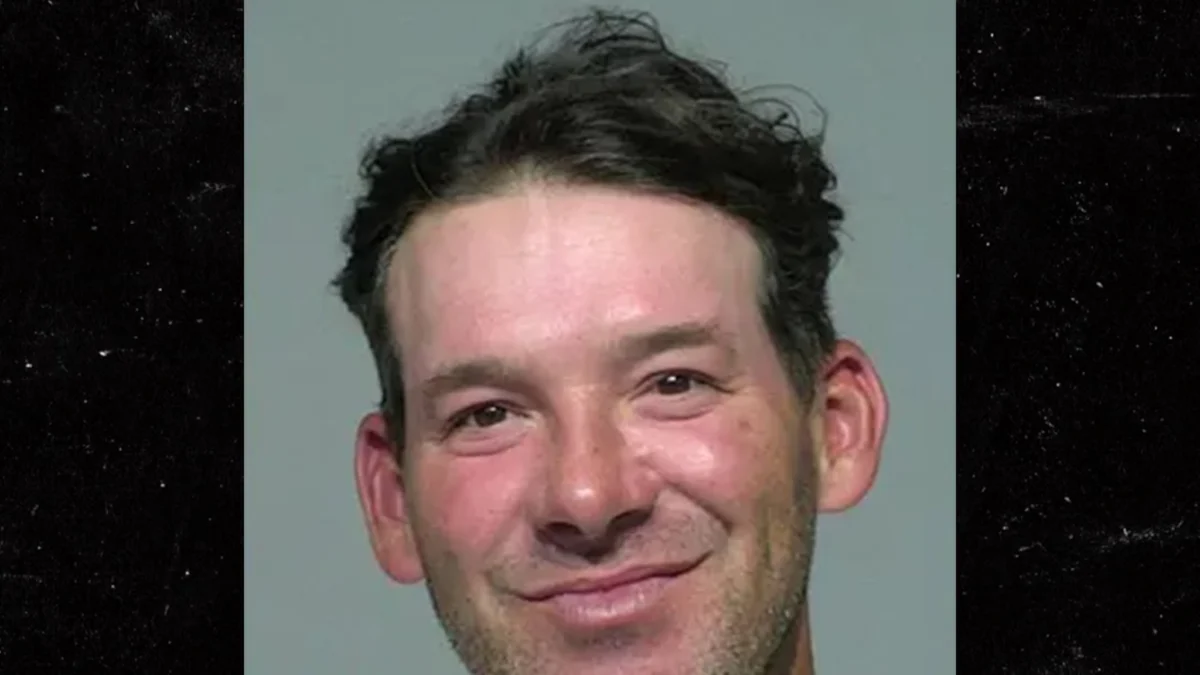
Former Dallas Cowboys star quarterback and highly respected CBS Sports NFL analyst, Tony Romo, was arrested Thursday night in Milwaukee, Wisconsin, on charges of operating a vehicle while under the influence (OWI). The news, first reported by local outlet Fox 6 Milwaukee, sent ripples through the sports world, casting a shadow over the usually polished public image of one of football’s most recognizable personalities. Romo, 46, was reportedly taken into custody by the Milwaukee County Sheriff’s Office after failing multiple field sobriety tests, with officials confirming that a mug shot was taken during the booking process. The incident marks a significant and unexpected legal challenge for Romo, who has enjoyed a successful transition from a celebrated playing career to an equally prominent role in sports broadcasting.
The Arrest and Initial Details
The events leading to Tony Romo’s arrest unfolded on the evening of Thursday, July 23, 2026, in Milwaukee. Specific details regarding the initial traffic stop, such as the location or the reason Romo was pulled over, have not yet been publicly released by authorities. However, reports from Fox 6, citing the Milwaukee County Sheriff’s Office, indicate that law enforcement officers initiated contact with Romo, leading to suspicions of impaired driving.
Following the initial interaction, officers administered a series of standardized field sobriety tests (SFSTs), designed to assess a driver’s physical and cognitive impairment. These tests typically include the horizontal gaze nystagmus (HGN), walk-and-turn, and one-leg stand. According to the Milwaukee County Sheriff’s Office, Romo performed poorly on these evaluations, providing probable cause for his arrest. He was subsequently taken into custody and transported to the Milwaukee County Jail, where he underwent the standard booking procedure, which included fingerprinting and the taking of a mug shot.
The arrest occurred during a period when Romo, known for his rigorous preparation and professional demeanor, would typically be gearing up for the upcoming NFL season, preparing for his role as a lead analyst for CBS Sports. The timing of the incident adds another layer of scrutiny, as it precedes what would be a busy schedule for the former quarterback. As of the initial reports, details about his bail, release, or a scheduled initial court appearance were beginning to emerge, with Fox 6 indicating that a first court date has been set, though the specifics were not immediately available. The legal process is now officially underway, and further information is anticipated as the case progresses through the Wisconsin judicial system.
Understanding OWI Laws in Wisconsin
Wisconsin employs the term "Operating While Intoxicated" (OWI) to describe what is commonly referred to as Driving Under the Influence (DUI) or Driving While Intoxicated (DWI) in other states. The OWI statute in Wisconsin makes it illegal to operate a motor vehicle while under the influence of an intoxicant, controlled substance, or any combination thereof, to a degree that renders the person incapable of safely driving. The legal limit for blood alcohol content (BAC) for most drivers in Wisconsin is 0.08%. For commercial drivers, the limit is stricter at 0.04%, and for drivers under the age of 21, a "not a drop" policy effectively sets the limit at 0.00% BAC.
A first-offense OWI in Wisconsin is typically treated as a civil forfeiture, rather than a criminal offense, provided there are no aggravating factors such as an extremely high BAC, the presence of a minor in the vehicle, or an accident resulting in injury. While not a criminal conviction in the same vein as a felony or misdemeanor, a first OWI still carries significant penalties. These can include substantial fines, often ranging from $150 to $300, plus court costs and surcharges. Additionally, a driver’s license revocation period is mandatory, typically lasting from six to nine months.
Beyond financial penalties and license suspension, individuals convicted of a first OWI in Wisconsin are usually required to undergo an alcohol and drug assessment through an approved agency. Based on this assessment, a Driver Safety Plan (DSP) is developed, which may mandate participation in traffic safety school, alcohol education programs, or even counseling. Another common penalty is the installation of an Ignition Interlock Device (IID) on all vehicles owned by the individual for a period of up to one year, which requires the driver to pass a breathalyzer test before the vehicle will start. While jail time is generally not imposed for a first OWI without aggravating circumstances, the cumulative impact of fines, fees, assessments, and the inconvenience of an IID can be substantial. Subsequent OWI offenses in Wisconsin escalate rapidly in severity, carrying mandatory jail time, longer license revocations, and higher fines, underscoring the state’s commitment to deterring impaired driving. Romo’s legal team will undoubtedly navigate these specific statutes as they address the charges.
Tony Romo: From Undrafted to Elite Analyst
Tony Romo’s career trajectory is a testament to perseverance and talent, marking him as one of the more unique figures in modern sports. Born in San Diego, California, Romo played college football at Eastern Illinois University, an FCS school, where he garnered national attention and won the Walter Payton Award as the top player in I-AA football. Despite his collegiate success, Romo went undrafted in the 2003 NFL Draft, a setback that would define the underdog narrative of his early career.
He signed with the Dallas Cowboys as a free agent and spent his initial years as a backup, patiently developing his skills. His breakthrough came in 2006 when he replaced Drew Bledsoe as the starting quarterback mid-season. Romo quickly established himself as a dynamic passer, known for his improvisational skills and ability to extend plays. Over his 14-year career, all with the Cowboys, Romo earned four Pro Bowl selections and set numerous franchise records, including passing yards and touchdowns. Despite his individual brilliance, team success, particularly in the playoffs, often eluded him, leading to a complex legacy among fans and media. Injuries, especially to his back and collarbone, plagued the latter part of his playing career, ultimately leading to his retirement in April 2017.
Upon retiring from playing, Romo made an unprecedented leap directly into the lead analyst role for CBS Sports’ NFL coverage, bypassing the typical entry-level positions. His immediate success in the broadcast booth was remarkable. Romo quickly became a fan favorite and critical darling for his uncanny ability to predict plays before they happened, his enthusiastic and accessible commentary, and his genuine passion for the game. His chemistry with play-by-play announcer Jim Nantz revitalized CBS’s NFL broadcasts, and his contract was reportedly extended in 2020 for a staggering amount, cementing his status as one of the highest-paid sports broadcasters. Romo’s transition was so seamless and successful that it redefined expectations for retired athletes entering media, solidifying his public image as not just a talented athlete, but a shrewd and articulate analyst. This carefully crafted public persona, built on professionalism and a deep understanding of football, now faces an unforeseen challenge with the OWI arrest.
Potential Reactions and Broader Implications
The arrest of a high-profile figure like Tony Romo for OWI carries significant weight, prompting anticipated reactions from various stakeholders and raising questions about broader implications.
Law Enforcement and Legal Process: The Milwaukee County Sheriff’s Office is expected to maintain a professional and objective stance, emphasizing that their actions were based on standard procedure and evidence, regardless of the individual’s celebrity status. They will likely release further details as legally permissible, especially concerning the specific charges and the timeline for court appearances. Romo’s legal team will undoubtedly prepare a robust defense, exploring all avenues, including the legality of the stop, the administration of field sobriety tests, and any potential challenges to toxicology results. The initial court appearance will be crucial for entering a plea and setting the stage for future proceedings.
CBS Sports: Romo’s employer, CBS Sports, will face immediate pressure to address the situation. Given his prominent role and significant financial investment, the network will likely issue a statement acknowledging the arrest, expressing concern, and indicating that they are "monitoring the situation" or "gathering more information." It is plausible that CBS has a conduct clause in Romo’s contract that addresses legal infractions. Depending on the progression of the case and internal policies, potential actions could range from a public reprimand, a temporary suspension from broadcasting duties, or, in more severe hypothetical scenarios, a re-evaluation of his long-term role, particularly if a conviction occurs and public backlash is substantial. However, networks often await the legal process to unfold before taking definitive disciplinary action, especially for a first-time offense.
National Football League (NFL): While Romo is retired, the NFL often maintains a degree of interest in the conduct of its former players, particularly those who remain highly visible. The league has a stringent personal conduct policy for active players, but it also emphasizes responsible behavior for its alumni. While the NFL may not take direct action against Romo, they could issue a statement reiterating their commitment to public safety and discouraging impaired driving, indirectly referencing the incident without directly condemning Romo.
Sponsors and Endorsements: Romo, like many high-profile athletes and broadcasters, likely holds several endorsement deals with various brands. These contracts often contain "morality clauses" that allow companies to terminate agreements if an individual’s public conduct negatively impacts the brand’s image. This OWI arrest could trigger reviews by his sponsors, potentially leading to the loss of lucrative deals or a temporary suspension of promotional activities, depending on the severity of the legal outcome and the public’s reaction.
Public Perception and Fan Base: Romo has cultivated a largely positive public image as a charismatic, intelligent, and family-oriented individual. This incident is a significant deviation from that perception. Initial reactions from fans and the public are likely to be mixed, ranging from disappointment and criticism to understanding and support, particularly given the prevalence of such incidents and the general perception of a first-time OWI. Social media will undoubtedly be abuzz with commentary, shaping the immediate public narrative. The long-term impact on his public standing will depend heavily on how he addresses the situation, the outcome of the legal proceedings, and his subsequent behavior.
Broader Societal Impact: Romo’s arrest also serves as a stark reminder that impaired driving is a serious issue that affects individuals from all walks of life, regardless of their celebrity status. It underscores the ongoing challenges faced by law enforcement and advocacy groups like Mothers Against Drunk Driving (MADD) in combating OWI/DUI offenses. Public figures, by virtue of their visibility, often become unintentional examples, highlighting the legal and personal consequences of such actions.
The Pervasive Issue of Impaired Driving Among Public Figures
Tony Romo’s arrest, while notable due to his celebrity, is unfortunately not an isolated incident when it comes to public figures, and particularly athletes, facing charges related to impaired driving. Over the years, countless professional athletes, actors, musicians, and politicians have found themselves in similar legal predicaments, underscoring a pervasive societal issue that transcends socio-economic status.
The reasons behind this trend are complex. High-pressure environments, demanding travel schedules, and a culture that sometimes normalizes heavy drinking, particularly in certain professional sports circles, can contribute to poor decision-making. Athletes, often with significant financial resources, may also develop a false sense of invulnerability or believe they can avoid consequences. However, the legal system, by and large, treats all individuals equally under OWI/DUI statutes, and celebrity status rarely provides a shield from the initial arrest and charges.
The scrutiny that public figures face, however, is undeniably amplified. An OWI arrest for a celebrity often garners national headlines, while a similar incident involving a private citizen might only appear in local police blotters. This heightened visibility means that public figures often become de facto cautionary tales, their mistakes serving as stark reminders of the dangers and legal ramifications of impaired driving. Organizations like MADD frequently leverage such incidents to raise awareness, emphasizing that no one is above the law and that the consequences of impaired driving can be devastating, leading to injuries, fatalities, and profound personal and legal repercussions.
For athletes, in particular, these incidents can have far-reaching consequences beyond legal penalties. They can damage carefully cultivated public images, jeopardize lucrative endorsement deals, strain relationships with teams and leagues, and even impact career trajectories. Many sports leagues have strict personal conduct policies that impose suspensions and fines on players involved in such incidents, reflecting a commitment to upholding a certain standard of behavior for their athletes who serve as role models. While Romo is retired from playing, his current role as a prominent broadcaster places him under a similar public microscope.
The conversation around these incidents often shifts from individual culpability to broader questions about accountability, the pressures of fame, and the societal responsibility to prevent impaired driving. Romo’s case will undoubtedly reignite these discussions, reminding the public that the fight against impaired driving remains an ongoing and critical endeavor.
As the legal proceedings against Tony Romo commence, the sports world and the public will be closely watching for further developments. The situation remains fluid, and additional information regarding the specific charges, his court appearance, and any statements from his representatives or CBS Sports are anticipated in the coming days and weeks. The incident serves as a stark reminder of the serious consequences associated with operating a vehicle while under the influence, even for those accustomed to the bright lights of public adoration.

0 Comments