
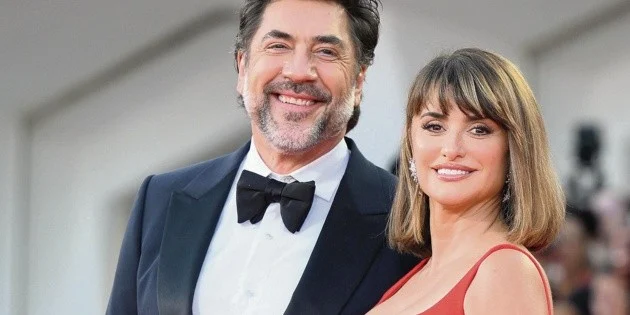
The venerable Venice International Film Festival, a beacon of cinematic excellence and a vital platform for artistic expression, recently captivated audiences with a profound exploration of human fragility, presenting two distinct yet complementary perspectives. On one hand, the intimate vulnerabilities inherent in long-term relationships were laid bare through the much-anticipated film "Búnker," starring the acclaimed Spanish power couple Javier Bardem and Penélope Cruz. On the other, the broader anxieties of collective fear, societal decay, and the specter of global collapse found a voice in the debut feature "Salón de belleza" by Mexican director Nathalia Acevedo, presented within the prestigious Venice Days (Giornate degli Autori) section. This dual focus underscored the festival’s enduring commitment to showcasing narratives that resonate deeply with the contemporary human condition, prompting introspection on both personal and communal levels.
A Deep Dive into Intimate Fragility: "Búnker" Starring Bardem and Cruz
The day’s spotlight at the Lido was undeniably seized by "Búnker," a film that navigates the intricate emotional landscape of a marriage strained by nearly two decades of shared life. Directed by the French filmmaker Florian Zeller, renowned for his incisive psychological dramas like the Oscar-winning "The Father" (2020) and "The Son" (2022), "Búnker" places Bardem and Cruz at the heart of a narrative designed to unearth the subtle tensions and profound doubts that can emerge within an enduring partnership. Their involvement, as one of the most celebrated and globally recognized acting duos, immediately elevated the film’s profile, making it a strong contender for the coveted Golden Lion.
The plot centers on Miguel, a successful architect, who contemplates accepting a commission from a tech billionaire: the construction of a luxurious, state-of-the-art survival bunker. This lucrative yet ethically ambiguous project becomes a catalyst for profound discord with his wife, Sofía. Her strong reservations about the venture not only challenge Miguel’s professional ambition but also ignite a deeper questioning of his character and the foundation of their more than 17-year relationship. The bunker, initially a symbol of extreme preparedness for a dystopian future, transforms into a metaphor for the emotional walls and protective mechanisms that couples build, sometimes inadvertently, within their own relationships. Zeller’s signature style, characterized by non-linear narratives and a masterful manipulation of perspective, promises to offer a nuanced and often unsettling portrayal of their unraveling intimacy.
The Allure of Reality Versus Fiction: Bardem and Cruz’s Perspective
A significant draw of "Búnker" stems from the intriguing parallels between the fictional couple and its real-life interpreters. Javier Bardem and Penélope Cruz, who married in 2010 and share two children, have cultivated a public image of a strong, enduring partnership, making their portrayal of a couple in crisis particularly compelling. This meta-narrative layer invites audiences to ponder the extent to which their on-screen chemistry and dramatic conflict draw from or diverge from their personal experiences.
When questioned by the press about any similarities between the film’s events and their own lives, Bardem offered a categorical denial, emphasizing their professional prowess: "Nothing. We are very good at creating fiction and reality. If not, we wouldn’t have survived this job." This statement underscores the rigorous discipline and artistic detachment required to embody complex characters, even when those characters mirror aspects of their public persona. Cruz echoed this sentiment, adding, "We love our profession and we have a good balance with our personal lives." Her comments highlight the critical distinction between the roles they inhabit and the private lives they meticulously guard, a necessary boundary for maintaining both their artistic integrity and personal well-being amidst intense public scrutiny.
Cruz further elaborated on her connection to the character of Sofía, revealing a deep resonance with the role’s more principled stance. "There were several themes that interested me, but there was one that made it necessary for me, and that is being able to give a voice to this woman who says so many things that are very similar to what I think," she explained. This suggests that Sofía’s ethical dilemmas and her resistance to Miguel’s choices are not merely plot devices but embody a perspective that Cruz herself identifies with, lending an authentic emotional weight to her performance.
Florian Zeller’s Vision: Capturing a Unique Chemistry
For director Florian Zeller, the decision to cast Bardem and Cruz was deliberate and central to his artistic vision. As both the film’s director and co-writer, Zeller articulated his conviction that only this real-life couple possessed the unique ability to embody the intricacies of the fictional pair’s crisis. "From the beginning, I was interested in having them together on screen," Zeller commented. "Because I thought it would be a unique way to capture something special as a real couple." This directorial choice highlights a belief that their shared history and inherent connection, even if strictly professional on set, would infuse the on-screen relationship with an unparalleled depth and authenticity, allowing the audience to perceive a nuanced layer of unspoken understanding and historical weight in their interactions.
The ensemble cast of "Búnker," which was filmed in both English and Spanish, further enriches its narrative tapestry. Paul Dano, known for his versatile performances, portrays the enigmatic tech billionaire, adding a layer of contemporary relevance and ethical ambiguity to the story. Patrick Schwarzenegger appears as a writer, potentially offering an external perspective or another layer of intellectual engagement with the themes, while Stephen Graham rounds out the cast as a neighbor, perhaps serving as a grounded counterpoint to the more abstract anxieties of the main characters. This diverse cast promises a rich interplay of performances, contributing to the film’s potential impact.
A Storied Cinematic Partnership: Bardem and Cruz’s Collaborations
Javier Bardem, 57, and Penélope Cruz, 52, boast a remarkable shared cinematic history that spans over three decades and more than ten films. Their collaboration began famously with the sensual and groundbreaking "Jamón, jamón" (1992), a film that launched their careers and established their potent on-screen chemistry. Since then, they have reunited for various projects, showcasing their versatility across genres, from the psychological drama "Live Flesh" (1997) to the Woody Allen comedy "Vicky Cristina Barcelona" (2008), for which Cruz earned her first Academy Award. Their most recent collaboration prior to "Búnker" was the intricate thriller "Everybody Knows" (2018), directed by Asghar Farhadi, where they again explored the complexities of a long-standing relationship amidst a crisis.
Both actors are no strangers to the highest echelons of cinematic recognition. Each holds an Academy Award for Best Supporting Actor/Actress – Cruz for "Vicky Cristina Barcelona" and Bardem for "No Country for Old Men" (2007). Their individual careers are replete with accolades and critically acclaimed performances. Cruz, a muse for Pedro Almodóvar, notably won the Coppa Volpi for Best Actress at the Venice Film Festival in 2021 for her role in Almodóvar’s "Parallel Mothers." Bardem has also achieved rare distinction at the Lido, winning the Coppa Volpi twice for his performances in "The Sea Inside" (2004) and "Before Night Falls" (2000), a double honor few actors can claim. Their consistent presence and triumphs at major film festivals like Venice and Cannes underscore their status as global cinematic icons. Just recently, they both appeared at the Cannes Film Festival with separate projects: Bardem in "The Good Boss" (El buen patrón), portraying an authoritarian factory owner, and Cruz in "Official Competition" (Competencia oficial), playing a flamboyant cabaret singer. Their ability to deliver powerful performances independently while also returning to collaborate on projects like "Búnker" speaks volumes about their mutual respect and artistic synergy.
"Salón de belleza": A Collective Reflection on Societal Vulnerability
While "Búnker" delved into personal anxieties, Nathalia Acevedo’s directorial debut, "Salón de belleza," offered a compelling counterpoint by examining the collective dimension of human fragility. Presented in the esteemed Venice Days section, a parallel and independent program known for highlighting innovative and distinctive voices in contemporary cinema, Acevedo’s film tackled themes of fear, disease, and the looming threat of social collapse. This section, often a launchpad for emerging talents, provided an ideal platform for Acevedo to introduce her unique perspective on pressing global concerns.
"Salón de belleza" is reportedly a powerful and unsettling work, reflecting on how societies grapple with widespread panic and the breakdown of established norms. While specific plot details were kept under wraps to preserve the element of discovery for festival-goers, the thematic focus suggests a narrative that resonates deeply with recent global events, from pandemics to geopolitical uncertainties. Acevedo’s film, by exploring the psychological and social ramifications of such widespread anxieties, positions itself as a timely commentary on the resilience and vulnerabilities of human communities when faced with existential threats. Her debut at Venice is a significant milestone, marking her as a promising new voice in Mexican and international cinema, and signaling the festival’s ongoing commitment to fostering diverse filmmaking talents.
The Venice Film Festival: A Cradle of Cinematic Exploration
The Venice International Film Festival, or Mostra Internazionale d’Arte Cinematografica della Biennale di Venezia, holds the distinction of being the oldest film festival in the world, founded in 1932. As part of the larger Venice Biennale, a major cultural exhibition that includes art, architecture, dance, music, and theater, the film festival has consistently served as a vital international showcase for cinematic innovation and excellence. Its primary aim is to raise awareness and promote international cinema in all its forms, as art, entertainment, and industry, in a spirit of freedom and dialogue.
The festival’s competitive sections, particularly the main competition for the Golden Lion, are among the most prestigious in the global film circuit. A win at Venice often propels a film into the Oscar conversation and significantly boosts its international distribution. Beyond the main competition, sections like Venice Days (Giornate degli Autori), established in 2004, offer a curated selection of films that prioritize originality, independent vision, and often, a more challenging or experimental approach to storytelling. These sections provide crucial exposure for independent filmmakers and debut directors, offering them a platform alongside established masters. The selection of both "Búnker" for the main competition and "Salón de belleza" for Venice Days underscores the festival’s comprehensive approach to celebrating cinema, recognizing both mainstream appeal and cutting-edge artistry.
Themes of Fragility: A Mirror to Contemporary Society
The parallel narratives of "Búnker" and "Salón de belleza" collectively form a powerful mirror reflecting the multifaceted anxieties prevalent in contemporary society. The intimate fragility explored in "Búnker"—the erosion of trust, the questioning of values within a long-term relationship, and the existential dread of a future requiring a physical "bunker"—speaks to a universal human experience of personal vulnerability. In an era marked by rapid social change and digital connectivity, the film reminds audiences of the enduring challenges of maintaining authentic human connection and navigating personal crises.
Conversely, "Salón de belleza" addresses the collective fragility of societies grappling with external threats and the potential for systemic breakdown. The film’s exploration of fear, disease, and social collapse resonates deeply with a world that has recently navigated global pandemics, climate anxieties, and geopolitical instability. Together, these films articulate a comprehensive vision of human vulnerability, from the microscopic scale of individual relationships to the macroscopic scale of global communities. The festival’s programming decision to feature both narratives side-by-side highlights a conscious effort to engage with the most pressing psychological and sociological concerns of our time, offering cinema as a medium for reflection, empathy, and perhaps, a deeper understanding of our shared human condition.
Looking Ahead: The Road to the Golden Lion and Beyond
As the Venice Film Festival progresses, "Búnker" will remain a prominent contender for the Golden Lion, with its high-profile cast, established director, and compelling themes making it a significant entry. The critical reception and audience reactions in the coming days will be crucial in determining its trajectory, both within the festival and on the international awards circuit. For Nathalia Acevedo’s "Salón de belleza," its inclusion in Venice Days already signifies a strong endorsement of her emerging talent. The exposure gained at Venice will undoubtedly open doors for international distribution and future projects, establishing her as a director to watch.
The presence of such thematically rich and artistically diverse films at one of the world’s premier film festivals reaffirms Venice’s role not just as a showcase for cinematic artistry but as a vital cultural barometer. By presenting narratives that probe the depths of human fragility, both personal and collective, the festival continues to foster dialogue, challenge perspectives, and solidify its reputation as a crucial nexus for global cinema. The resonance of these stories, particularly in a world still grappling with profound uncertainties, ensures their impact will extend far beyond the canals of Venice, sparking conversations and reflections among audiences worldwide.

0 Comments