
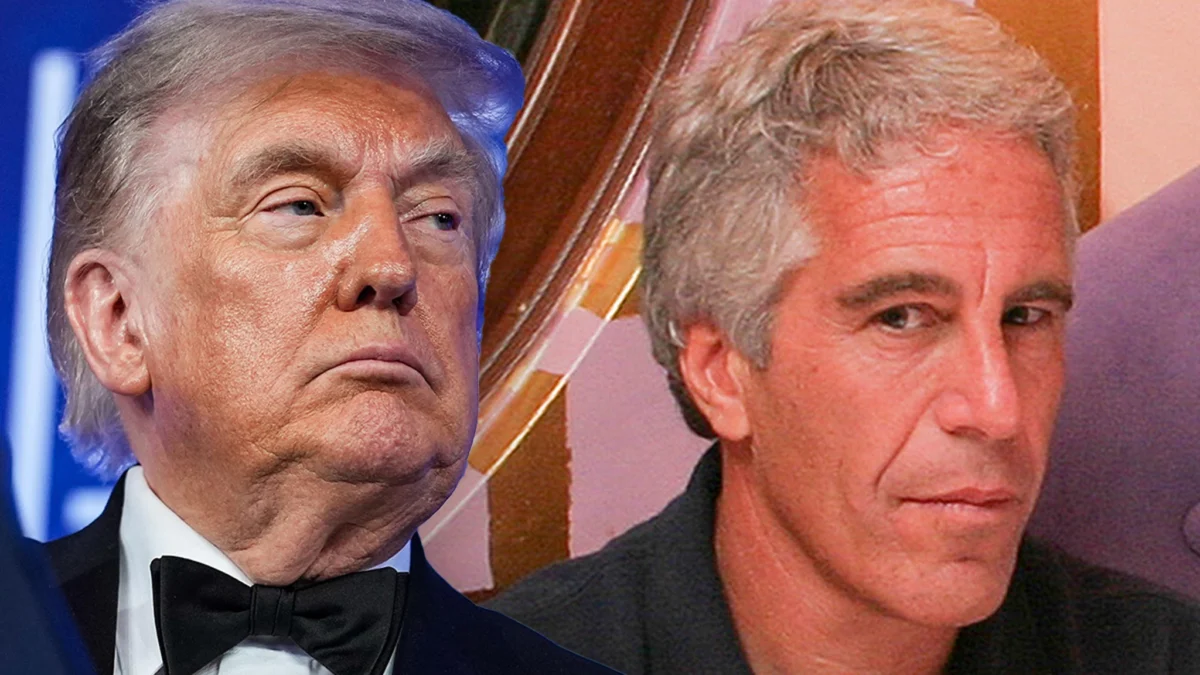
The annual White House Correspondents’ Dinner, typically a night of lighthearted roasts and a celebration of press freedom, took a distinctly tense turn on Friday, July 24, 2026, when President Donald Trump reacted with a smile and a shrug to the announcement of a prestigious journalism award recognizing The Wall Street Journal’s investigative reporting into his past association with the late convicted financier and sex offender, Jeffrey Epstein. The moment, occurring in the packed ballroom of D.C.’s Waldorf Astoria hotel, underscored the persistent shadow cast by the Epstein saga over national politics and highlighted the ongoing scrutiny faced by powerful figures linked to the disgraced financier.
A Night of Unsettling Revelations
The evening’s most talked-about segment unfolded when veteran CNN anchor Wolf Blitzer, serving as a presenter, announced that The Wall Street Journal was the recipient of the 2026 Katharine Graham Award for Courage and Accountability. This esteemed award was bestowed upon the newspaper for its groundbreaking exposé on President Trump’s relationship with Epstein, a story that, as Blitzer noted, directly contributed to the subsequent public release of thousands of pages of previously concealed "Epstein Files."
As Blitzer detailed the Journal’s achievements, President Trump, seated among the distinguished guests, was observed by attendees and cameras. His reaction to the mention of Epstein and the contentious reporting was a noticeable smile and a shrug of his shoulders. The report had not only delved into Trump’s past connections but also highlighted the President’s subsequent legal actions against the publication. Blitzer informed the audience that President Trump had filed a substantial $20 billion lawsuit against The Wall Street Journal, a legal challenge that controversially included the home address of Khadeeja Safdar, one of the lead reporters on the investigative team. The announcement further revealed that Safdar’s family had been compelled to relocate due to their address becoming public, a detail that elicited a palpable discomfort among many in the room, yet Trump maintained his demeanor.
Following Blitzer’s remarks, Khadeeja Safdar approached the stage to accept the award. In a moment described by many as profoundly awkward, President Trump rose from his seat and extended his hand to Safdar, shaking it as she passed. This brief interaction, captured by numerous cameras, became an immediate focal point, symbolizing the complex and often adversarial relationship between the executive branch and the investigative press.

The Wall Street Journal’s Award-Winning Investigation
The Katharine Graham Award for Courage and Accountability, named after the legendary publisher of The Washington Post, honors journalistic endeavors that demonstrate exceptional bravery and commitment to truth-telling, particularly in the face of significant pressure or potential repercussions. The Wall Street Journal’s winning investigation exemplified these principles. Its reporting had meticulously detailed aspects of President Trump’s past association with Jeffrey Epstein, including a "provocative letter" allegedly bearing Trump’s signature. This letter, reportedly included in a photo album given to Epstein for his 50th birthday, contained a drawing of a naked woman and raised questions about the nature and extent of their relationship. The Journal’s willingness to publish such a sensitive story, despite the direct threat of a massive lawsuit from a sitting president, was cited as a prime example of journalistic courage.
The implications of the lawsuit filed by President Trump against The Wall Street Journal extended beyond the financial demand. The inclusion of a reporter’s personal home address in legal documentation was widely condemned by press freedom organizations and journalistic ethics watchdogs. Such actions are often perceived as attempts to intimidate journalists and their families, potentially creating a chilling effect on investigative reporting into powerful figures. The forced relocation of Khadeeja Safdar’s family served as a stark, real-world consequence of this aggressive legal tactic, further emphasizing the courage required by the Journal’s team.
The Enduring Shadow of Jeffrey Epstein
Jeffrey Epstein, a wealthy financier, became a figure of international notoriety following his conviction for sex offenses involving underage girls and his subsequent death in a New York jail in 2019 while awaiting trial on new sex trafficking charges. His extensive network of powerful and influential acquaintances across business, politics, and royalty became a subject of intense public and journalistic scrutiny. The revelations surrounding Epstein’s activities and his connections to prominent individuals have fueled persistent demands for transparency and accountability.
President Trump’s relationship with Epstein dates back decades, with both men frequenting the same social circles in New York and Palm Beach. While Trump has publicly distanced himself from Epstein following the financier’s legal troubles, referring to him as someone he "knew like everybody knew him," the Wall Street Journal’s reporting, alongside other media investigations, has consistently sought to clarify the extent and nature of their past interactions. The "provocative letter" and other uncovered details served as concrete evidence challenging the narrative of a casual acquaintance.
Crucially, The Wall Street Journal’s investigation was credited with triggering the release of the "Epstein Files." These documents, comprising thousands of pages of depositions, emails, and other legal records, had been sealed for years. Their public disclosure shed new light on Epstein’s alleged co-conspirators, victims’ testimonies, and the inner workings of his illicit enterprise. The release of these files has since spurred further investigations and renewed calls for justice for Epstein’s victims. President Trump had previously dismissed the "Epstein Files" as a "hoax," a stance that stood in stark contrast to the journalistic achievement being honored at the dinner.
The White House Correspondents’ Dinner: A Microcosm of Tensions
The White House Correspondents’ Dinner, an annual gathering of journalists, politicians, and celebrities, holds a unique place in American political culture. Ostensibly a celebration of the First Amendment and the important role of a free press, it also serves as a rare occasion for the President to engage with the journalists who cover them, often with humor. However, the 2026 dinner highlighted the deep fissures and tensions that continue to define the relationship between the Trump administration and a significant portion of the media.
The atmosphere at the dinner is usually one of self-deprecating jokes and mutual, if sometimes forced, conviviality. For Wolf Blitzer to directly confront President Trump with the details of the Epstein investigation, the lawsuit, and the impact on a reporter’s family, all while the President sat mere feet away, represented a significant departure from the typical script. It transformed a usually ceremonial event into a moment of pointed accountability, bringing the often-abstract battles over press freedom and journalistic integrity into stark, personal relief.
The reactions from various quarters were immediate. Journalists and media analysts widely lauded The Wall Street Journal for its tenacity and courage, viewing the award as a vindication of rigorous investigative reporting. Concerns about the implications of the President’s lawsuit and the targeting of a reporter’s home address were reiterated across newsrooms and press advocacy groups. On the other hand, supporters of President Trump likely viewed his calm demeanor and shrug as a dismissal of what they might consider biased or politically motivated attacks.
Broader Implications and Ongoing Scrutiny
The incident at the Correspondents’ Dinner serves as a powerful reminder of the enduring significance of the Jeffrey Epstein saga and its continued relevance to public figures, including the President of the United States. Despite the passage of years since Epstein’s death, the questions surrounding his network, the extent of complicity, and the pursuit of justice for his victims remain pressing.
The recognition of The Wall Street Journal’s work underscores the vital role of investigative journalism in a democratic society, particularly in holding powerful individuals accountable. It also highlights the increasing challenges faced by journalists, who are often subjected to aggressive legal tactics and personal attacks when their reporting touches sensitive subjects involving political figures. The incident is likely to be remembered as one of the most contentious and symbolic moments in the history of the White House Correspondents’ Dinner, a stark illustration of the ongoing battle between transparency and attempts to suppress inconvenient truths. The smile and shrug from President Trump, rather than diffusing the tension, solidified the image of an administration often at odds with the very institutions designed to hold it accountable, ensuring that the specter of Jeffrey Epstein continues to loom large over the political landscape.

0 Comments